Mountain Gorilla Facts: What to Know Before Trekking
Understanding Mountain Gorilla Facts before embarking on a gorilla trekking adventure in Uganda or Rwanda is essential for any traveler planning this once-in-a-lifetime wildlife experience. Mountain gorillas are among the rarest primates on Earth, and encountering them in their natural habitat is one of the most powerful wildlife experiences in Africa.
These gentle giants live deep within the dense tropical forests of East and Central Africa, primarily in Uganda’s Bwindi Impenetrable National Park and Mgahinga Gorilla National Park, as well as Rwanda’s Volcanoes National Park and the Virunga region of the Democratic Republic of Congo. Gorilla trekking allows visitors to hike through lush rainforests in search of habituated gorilla families, spending a precious hour observing them in their natural environment.
For travelers combining gorilla trekking with other Uganda safari experiences such as a Murchison Falls National Park safari, understanding gorilla behavior, conservation rules, trekking conditions, and preparation tips significantly enhances the overall journey.
Where Mountain Gorillas Live
One of the most important Mountain Gorilla Facts is their extremely limited habitat range. Mountain gorillas live only in a few protected forest regions within East and Central Africa. Unlike other primates found across multiple countries, mountain gorillas are confined to specific high-altitude volcanic and montane forests.
In Uganda, gorilla trekking takes place mainly in Bwindi Impenetrable National Park and Mgahinga Gorilla National Park. Bwindi alone hosts nearly half of the world’s remaining mountain gorilla population, making it the most important gorilla trekking destination globally.
In Rwanda, gorillas are found in Volcanoes National Park, part of the Virunga mountain range. The Democratic Republic of Congo also hosts gorillas in Virunga National Park, although tourism conditions vary depending on security situations.
These forests are characterized by dense vegetation, steep slopes, and high humidity, creating a challenging but rewarding trekking environment.
How Many Mountain Gorillas Are Left
A critical Mountain Gorilla Fact is their conservation status. Mountain gorillas are classified as endangered, although their population has slowly increased due to successful conservation efforts.
Current estimates place the global population at just over 1,000 individuals. This is one of the rare conservation success stories in Africa, as their numbers were once dangerously low due to poaching, habitat loss, and human-wildlife conflict.
Strict protection measures, eco-tourism revenue, and international conservation programs have helped stabilize and gradually increase gorilla populations in Uganda, Rwanda, and the DRC.
Every gorilla trekking permit purchased directly contributes to their survival, making responsible tourism a key part of conservation efforts.
Gorilla Family Structure and Behavior
Understanding gorilla social structure is one of the most fascinating Mountain Gorilla Facts for travelers preparing for trekking.
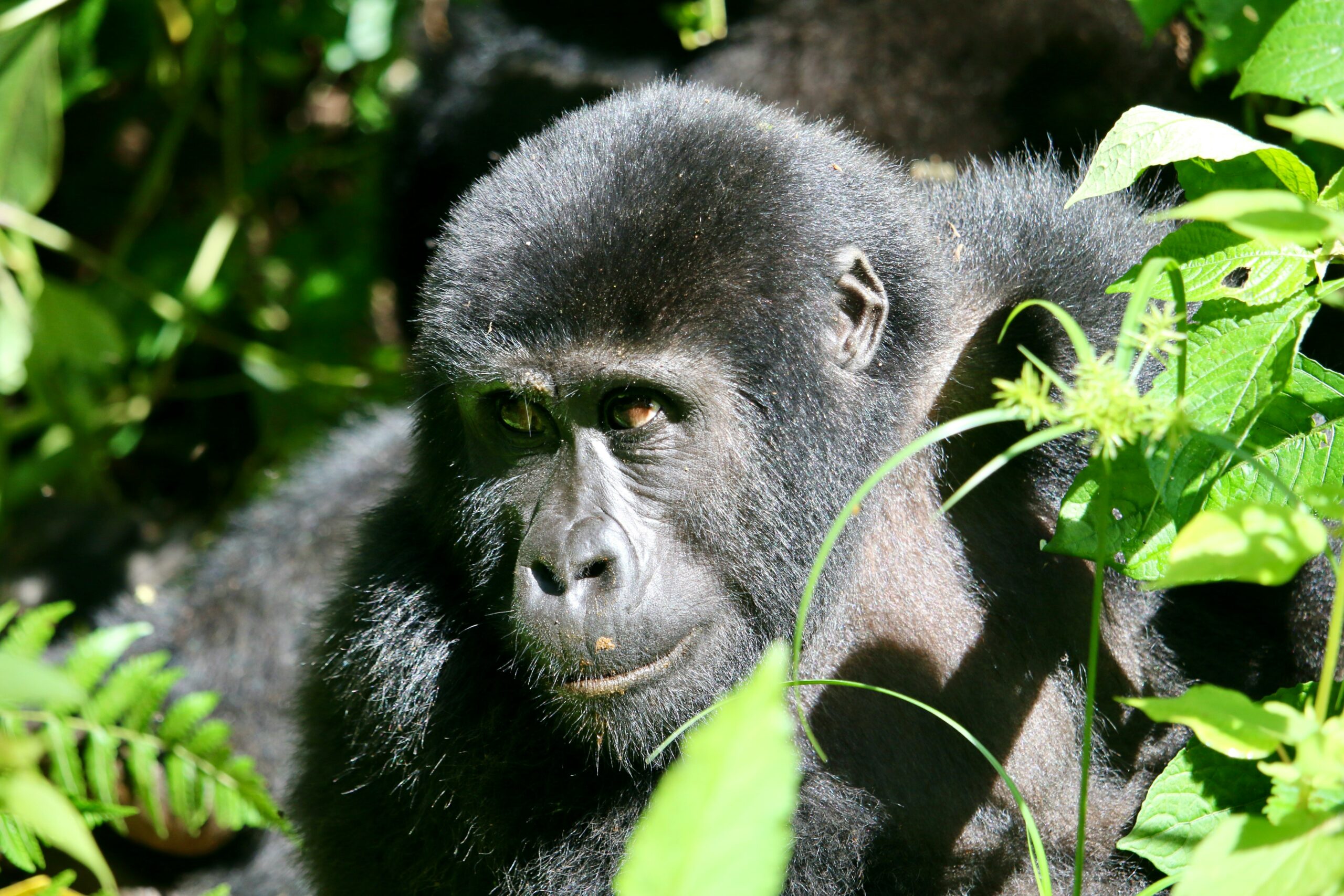
Mountain gorillas live in family groups known as troops or families. Each group is typically led by a dominant silverback male, who is responsible for protecting the group, making decisions, and maintaining order.
A gorilla family can include females, infants, juveniles, and sometimes younger subordinate males. Group sizes vary but often range between 5 and 20 individuals, although some larger groups exist.
Gorillas are generally peaceful and gentle animals despite their powerful appearance. They spend most of their time feeding, grooming, resting, and interacting socially.
Silverbacks play a protective role but are not aggressive unless they feel threatened. Their displays, such as chest beating or vocalizations, are usually meant for communication rather than attack.
What Gorillas Eat
Mountain gorillas are primarily herbivores, and this is one of the most important Mountain Gorilla Facts for understanding their behavior during trekking.
Their diet consists mainly of leaves, shoots, stems, fruits, and bamboo. They spend a large portion of their day feeding due to the low nutritional density of their vegetation-based diet.
Gorillas require large areas of forest to find sufficient food, which is why habitat conservation is critical for their survival. During trekking, visitors often observe them feeding calmly on vegetation or moving slowly through the forest in search of food.
Gorilla Trekking Experience Explained
Gorilla trekking is one of Africa’s most unique wildlife experiences. It involves hiking through dense tropical forests under the guidance of professional rangers to locate a habituated gorilla family.
Treks can last anywhere from one hour to several hours depending on the location of the gorilla group. The terrain is often steep, muddy, and physically demanding, but the reward of spending time with gorillas makes the experience unforgettable.
Once the gorilla family is found, visitors are allowed to spend one hour observing them from a safe distance. This time allows for photography, observation, and quiet appreciation of their behavior.
A gorilla trekking Uganda experience is carefully regulated to minimize stress on the animals and ensure their long-term protection.
Gorilla Trekking Rules and Etiquette
One of the most important Mountain Gorilla Facts before trekking is understanding the strict rules designed to protect both visitors and gorillas.
Visitors must maintain a minimum distance from the gorillas, usually about 7 meters, although gorillas may sometimes move closer on their own. Flash photography is not allowed because it can disturb the animals.
Visitors are required to avoid loud noises, sudden movements, or direct eye contact with gorillas, as these can be interpreted as threats.
If a gorilla charges, visitors are advised to remain calm, avoid running, and follow ranger instructions.
Trekking groups are limited in size, usually with a maximum of 8 visitors per gorilla family per day, to reduce human impact.
These rules ensure responsible tourism and protect the fragile gorilla habitat.
Best Time for Gorilla Trekking
Gorilla trekking is available throughout the year, but some periods offer more favorable conditions.
The dry seasons, typically from June to September and December to February, are considered the best times for trekking because forest trails are less muddy and easier to navigate.
However, the rainy seasons from March to May and October to November also offer excellent experiences, especially for travelers who prefer fewer crowds and lush green forest scenery.
A Uganda safari gorilla trekking itinerary can be combined with savannah safaris in parks like Murchison Falls National Park, Queen Elizabeth National Park, or Lake Mburo National Park.
Physical Fitness and Trekking Difficulty
Gorilla trekking requires moderate to high physical fitness depending on the location of the gorilla family.
Some gorilla groups live relatively close to park headquarters, while others require several hours of hiking through steep terrain.
Porters are available to assist travelers with carrying bags and providing support during the trek. Hiring a porter is highly recommended as it also supports local communities.
Preparation through light exercise and walking practice before the trek can significantly improve comfort during the experience.
What to Pack for Gorilla Trekking
Packing appropriately is essential for a successful trekking experience.
Travelers should carry waterproof hiking boots, long-sleeved clothing, gloves, rain jackets, insect repellent, and gaiters for protection against mud and insects.
Binoculars and cameras with zoom lenses are recommended for photography. Lightweight backpacks are ideal for carrying essentials during the trek.
A gorilla trekking Uganda experience often involves wet and muddy conditions, especially in rainforest environments, making proper gear essential.
Conservation and Community Impact
Gorilla tourism plays a critical role in conservation and community development.
Revenue from gorilla trekking permits supports anti-poaching efforts, habitat protection, ranger salaries, and local community projects around national parks.
Many communities near gorilla habitats benefit from tourism through employment opportunities, craft sales, cultural experiences, and infrastructure development.
A Mountain Gorilla Facts overview would be incomplete without recognizing the strong link between tourism and conservation success.
Gorilla Habituation Experience
For travelers seeking a deeper encounter, the gorilla habituation experience offers extended time with semi-habituated gorilla families.
Unlike standard trekking, this experience allows visitors to spend up to four hours with gorillas under supervision of researchers and rangers.
It is available only in select areas such as Bwindi Impenetrable National Park and provides a more immersive understanding of gorilla behavior.
Combining Gorilla Trekking with Murchison Falls Safaris
Many travelers combine gorilla trekking with a Murchison Falls National Park safari to create a complete Uganda wildlife itinerary.
This combination allows visitors to experience both mountain gorillas in rainforest environments and classic African savannah wildlife including lions, elephants, giraffes, and Nile river ecosystems.
The contrast between dense jungle trekking and open savannah game drives makes Uganda one of Africa’s most diverse safari destinations.
Health and Safety Tips
Travelers should ensure they are in good health before trekking because gorillas are susceptible to human diseases.
Visitors with flu, cough, or contagious illnesses may be restricted from trekking for conservation reasons.
Travel insurance, proper hydration, and following ranger instructions are essential for a safe experience.
Conclusion
Understanding Mountain Gorilla Facts before trekking enhances appreciation, preparation, and overall enjoyment of one of Africa’s most extraordinary wildlife encounters. Mountain gorillas are rare, intelligent, and deeply social animals whose survival depends on responsible tourism and conservation efforts.
A gorilla trekking experience in Uganda or Rwanda offers not only close encounters with these gentle giants but also a deeper understanding of rainforest ecosystems and conservation success stories.
When combined with other Uganda safari experiences such as Murchison Falls National Park, gorilla trekking becomes part of a broader journey through some of Africa’s most diverse landscapes.
To plan your Uganda safari or gorilla trekking adventure, explore customized itineraries, here.