Murchison Falls National Park Map and Zones Explained
Understanding the layout of Murchison Falls National Park is one of the most important steps in planning a successful safari. As Uganda’s largest and oldest national park, covering approximately 3,893 square kilometres, the park is far more expansive than many first-time visitors expect. Its vast wilderness, divided by the mighty Victoria Nile, contains diverse landscapes, multiple wildlife habitats, numerous game drive circuits, several park gates, airstrips, accommodation options, and activity zones. Having a good understanding of the Murchison Falls National Park map allows visitors to make informed decisions about where to stay, which routes to take, and how to maximize their safari experience.
Unlike smaller parks where most attractions are located within a compact area, Murchison Falls National Park offers a variety of ecosystems that each provide unique wildlife encounters. The northern savannah is renowned for its exceptional game viewing, while the southern sector is dominated by forests, riverine habitats, and access to the famous waterfall. The Victoria Nile forms the park’s defining feature, connecting these landscapes while supporting one of Africa’s richest concentrations of aquatic wildlife.
Whether you are visiting for a classic wildlife safari, birdwatching expedition, photography tour, chimpanzee trekking adventure, or luxury holiday, understanding the different zones of the park will help you plan a more rewarding itinerary.
An Overview of the Murchison Falls National Park Map
The Murchison Falls National Park map reveals a remarkably diverse protected area stretching across northwestern Uganda within the Albertine Rift Valley. The park spans the districts of Nwoya, Buliisa, Kiryandongo, Masindi, and Pakwach, making it one of Uganda’s largest conservation landscapes.
The Victoria Nile enters the park from the east after leaving Lake Kyoga. As it flows westward, it reaches the spectacular Murchison Falls, where it is forced through a narrow seven-metre-wide gorge before plunging approximately 43 metres into the Devil’s Cauldron. From there, the river continues through the park before eventually emptying into Lake Albert.
This river effectively divides the park into two primary safari regions: the northern sector and the southern sector. Each offers distinct landscapes, wildlife, and visitor experiences.
The park also forms part of the larger Murchison Falls Conservation Area, which includes Bugungu Wildlife Reserve to the southwest and Karuma Wildlife Reserve to the southeast. Together, these protected areas safeguard a vast ecosystem that supports healthy populations of mammals, birds, reptiles, and plant species.
The Northern Sector: Uganda’s Premier Game Viewing Area
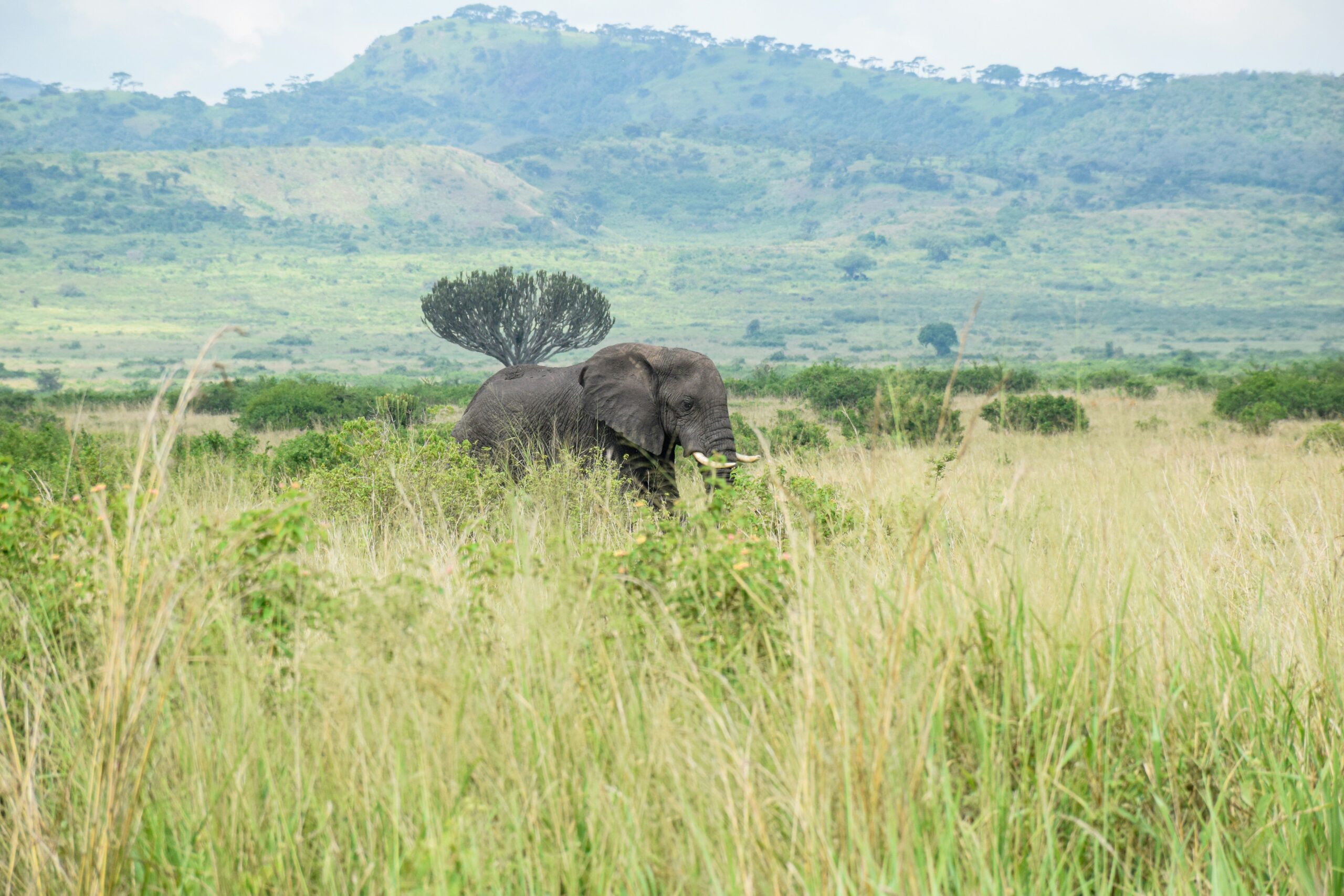
The northern section of Murchison Falls National Park is the most visited area and is widely regarded as Uganda’s finest destination for traditional game drives. Characterized by open savannah grasslands, acacia woodlands, borassus palm forests, and rolling plains, this region provides excellent visibility for wildlife viewing throughout the year.
The landscape supports large populations of African elephants, Rothschild’s giraffes, buffaloes, Uganda kob, Jackson’s hartebeest, waterbuck, oribi, bushbuck, warthogs, lions, and leopards. The openness of the terrain allows visitors to observe animals over considerable distances, making the northern plains particularly rewarding for photographers.
Several of the park’s best-known game drive circuits are located here. The Buligi Game Track is the most famous, winding through some of the richest wildlife habitats in the park. Early morning drives along this route often reveal lions resting after a night of hunting, elephants feeding among the acacias, and giraffes browsing peacefully across the plains.
The Albert Track extends toward Lake Albert, offering beautiful views over the escarpment while providing opportunities to encounter antelope species and birds of prey. The Victoria Track passes through varied habitats where visitors may encounter large herds of buffalo alongside elephants and numerous bird species.
Because wildlife densities are highest within the northern sector, most visitors choose to spend at least two nights in this part of the park.
The Southern Sector: Waterfalls, Forests and Scenic Landscapes
While the northern plains are famous for wildlife, the southern sector offers an entirely different experience. Dense woodland, riverine forests, and dramatic landscapes dominate this side of Murchison Falls National Park, making it ideal for visitors interested in scenery, nature walks, and chimpanzee trekking.
The highlight is undoubtedly the Top of Murchison Falls, one of Uganda’s most spectacular natural attractions. From the viewing platforms above the gorge, visitors witness the immense force of the Victoria Nile as it crashes through the narrow rock passage before plunging into the valley below. The thunderous roar, constant mist, and frequent rainbows create unforgettable photographic opportunities.
The southern sector also provides access to Budongo Forest Reserve, located just outside the park boundary. This ancient mahogany forest is internationally recognized for its habituated chimpanzee communities and exceptional birdlife. Many visitors combine wildlife safaris with chimpanzee trekking, making the southern region an essential part of a complete Murchison Falls itinerary.
Although game viewing is less concentrated than in the northern plains, visitors may still encounter elephants, buffaloes, primates, and numerous bird species while exploring this section of the park.
The Victoria Nile: The Heart of the Park
No feature shapes the Murchison Falls National Park map more than the Victoria Nile. Flowing directly through the center of the park, the river creates one of East Africa’s richest wildlife corridors.
The Nile supports enormous populations of hippopotamuses, some of Africa’s largest Nile crocodiles, and countless waterbirds. Along its banks, elephants frequently gather to drink, buffaloes wallow in muddy shallows, and antelope species graze nearby while remaining alert for predators.
The river also forms the setting for the park’s renowned boat safaris. Cruises to the bottom of the falls provide close encounters with aquatic wildlife before reaching the base of the dramatic waterfall. Downstream cruises toward the Nile Delta offer excellent opportunities to search for the elusive Shoebill Stork, one of Africa’s most sought-after bird species.
Understanding the river’s position on the park map helps visitors appreciate how it connects the various safari experiences available within the conservation area.
Game Drive Zones Explained
The northern plains contain several designated game viewing zones that differ in habitat and wildlife distribution. Experienced safari guides select routes according to seasonal conditions, recent wildlife sightings, and visitor interests.
The Buligi area remains the most productive region for large mammals throughout much of the year. Open grasslands provide excellent visibility for predators and herbivores alike, while scattered acacia trees offer shade for elephants and giraffes.
The Albert area gradually transitions toward the escarpment overlooking Lake Albert. This region combines scenic landscapes with rewarding wildlife viewing and attracts numerous raptors taking advantage of thermal air currents.
The Victoria area features a mixture of woodland and open plains where visitors often encounter buffaloes, antelope, and occasionally leopards hidden among thicker vegetation.
Because wildlife movements change with rainfall and food availability, no single zone guarantees sightings. Professional guides continuously adapt game drive routes to maximize opportunities.
The Nile Delta Zone
At the western end of the park, where the Victoria Nile enters Lake Albert, lies one of Uganda’s most important wetland ecosystems. The Nile Delta is particularly famous among birdwatchers because it offers one of the country’s highest chances of observing the prehistoric-looking Shoebill Stork.
Papyrus swamps, shallow channels, and seasonal floodplains create ideal habitats for numerous aquatic bird species. The area also attracts hippos, crocodiles, elephants, and buffaloes, making it equally rewarding for wildlife enthusiasts.
Boat excursions into the delta are highly recommended for visitors interested in photography or birdwatching.
Budongo Forest Access Zone
Although technically managed separately from the national park, Budongo Forest is closely connected to the Murchison Falls National Park experience. Located on the southern side of the conservation area, the forest is easily accessible from several lodges.
Budongo is best known for its chimpanzee trekking experiences, allowing visitors to spend time observing one of humanity’s closest relatives in its natural habitat. The forest also supports black-and-white colobus monkeys, red-tailed monkeys, blue monkeys, and more than 360 bird species.
Many safari itineraries combine morning game drives with afternoon chimpanzee trekking, offering visitors an exceptional diversity of wildlife within a single trip.
Major Park Gates
Understanding the park’s entrance gates helps visitors choose the most efficient travel route. Kichumbanyobo Gate serves travellers approaching from Masindi and Kampala and provides convenient access to the southern sector and Top of the Falls.
Tangi Gate is commonly used by visitors heading directly to the northern game viewing areas from Karuma. Mubako Gate offers access to Paraa and several riverside lodges, while Wankwar Gate is useful for visitors travelling from West Nile or Pakwach. Chobe Gate provides entry to the eastern side of the conservation area, particularly for guests staying near Chobe Safari Lodge.
Choosing the correct entrance gate can significantly reduce travel time, especially for visitors with limited safari schedules.
Airstrips Within the Park
For travelers seeking greater convenience, Murchison Falls National Park can be reached by scheduled or charter flights from Entebbe International Airport or Kajjansi Airfield.
Pakuba Airstrip is the busiest and provides easy access to the northern safari lodges. Chobe Airstrip primarily serves visitors staying in the eastern sector, while Bugungu Airstrip offers another option for accessing the southern part of the conservation area.
Flying reduces travel time considerably, making short luxury safaris practical even for visitors with limited holiday schedules.
Accommodation Zones
The location of your lodge influences both travel times and safari experiences. Lodges in the northern sector place guests close to the main game drive circuits, allowing early departures when wildlife activity is at its peak.
Properties such as Pakuba Safari Lodge provide convenient access to the Buligi area, while Paraa Safari Lodge occupies a central location near the ferry crossing and boat cruise departure point.
On the southern side, Baker’s Lodge offers peaceful riverfront accommodation close to Budongo Forest and the Top of the Falls. Chobe Safari Lodge provides luxury accommodation overlooking the Nile in the eastern sector, while Nile Safari Lodge offers one of Uganda’s finest luxury safari experiences with exceptional river views.
Selecting accommodation according to your planned activities helps maximize time spent enjoying the park rather than travelling between attractions.
Planning Your Safari Using the Park Map
Studying the Murchison Falls National Park map before your visit allows you to create a balanced itinerary that includes wildlife viewing, boat cruises, waterfall visits, and optional chimpanzee trekking.
Most visitors begin with game drives in the northern plains before enjoying an afternoon boat cruise to the base of the falls. The following day often includes the Top of the Falls hike before continuing to Budongo Forest or returning to Kampala.
Longer itineraries provide opportunities to explore the Nile Delta, spend additional time photographing wildlife, or enjoy multiple game drives across different habitats.
At Murchison Falls Park Safari, we carefully design itineraries that minimize unnecessary travel while ensuring visitors experience every major highlight of the park. Whether you prefer a luxury safari, family holiday, birdwatching tour, or photography expedition, our experienced team can recommend the most suitable accommodation and travel routes based on your interests.
Visit Murchison falls park safari to discover our tailor-made safari packages, accommodation options, and travel planning services.
As you continue planning your journey, you may also find our guides on Murchison Falls National Park Complete Visitor Guide, Murchison Falls Park Entrance Fees, Best Time to Visit Murchison Falls National Park, Top Things to Do in Murchison Falls National Park, Murchison Falls Accommodation Guide, and Budongo Forest Chimpanzee Trekking helpful in preparing for your safari.
Conclusion
A clear understanding of the Murchison Falls National Park map transforms an ordinary safari into a well-planned adventure. From the wildlife-rich northern plains and the dramatic southern waterfalls to the bird-filled Nile Delta and neighboring Budongo Forest, every zone contributes something unique to Uganda’s premier national park. By choosing the right accommodation, entrance gate, and activity schedule, visitors can experience the extraordinary diversity that has made Murchison Falls National Park one of Africa’s most rewarding safari destinations.