Crocodile Sightings at Murchison Falls: What to Know
The crocodile sightings at Murchison Falls are among the most powerful wildlife experiences in Uganda’s largest national park. Along the Victoria Nile in Murchison Falls National Park, massive Nile crocodiles dominate the river ecosystem, often lying motionless on sandy banks or slowly gliding through deep channels beneath pods of hippos. These ancient reptiles, virtually unchanged for millions of years, are one of the defining species of the Nile and a major highlight of any safari in the park.
Unlike some safari destinations where crocodiles are rare or difficult to locate, Murchison Falls National Park offers almost guaranteed sightings during boat cruises along the river. The combination of permanent water, abundant prey, and warm tropical conditions creates ideal habitats for large crocodile populations. Visitors often see multiple individuals within minutes of starting a boat safari, especially in the calmer sections of the Nile near hippo pools and river bends.
For many travelers, seeing crocodiles in their natural environment—sometimes stretching over four to five meters in length—is both fascinating and slightly intimidating. This guide explains everything you need to know about crocodile sightings at Murchison Falls, including where to see them, their behavior, safety tips, best viewing times, and how they fit into a full safari experience.
Understanding Crocodiles in Murchison Falls National Park
The crocodiles found in Murchison Falls National Park are primarily Nile crocodiles, one of the largest reptile species in the world. These powerful predators have adapted perfectly to life in the river ecosystem, playing a crucial role in maintaining balance within the aquatic food chain.
They feed on a variety of prey including fish, birds, antelope, and occasionally large mammals such as young buffalo or weakened animals that come too close to the water. Their presence helps regulate populations of aquatic species and contributes to the ecological health of the Nile system.
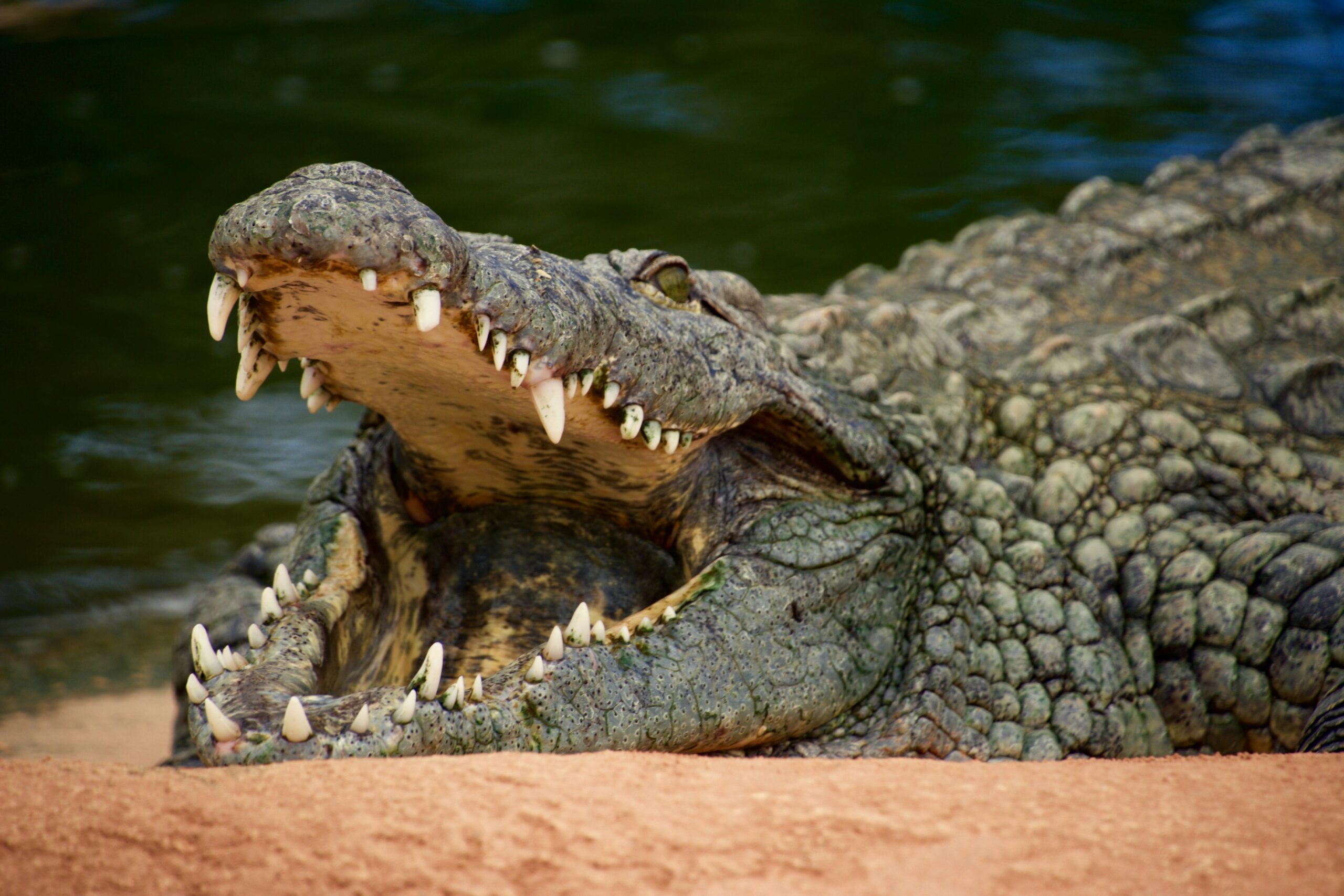
Crocodiles in the park are most commonly seen basking on riverbanks during the day, where they regulate their body temperature by absorbing sunlight. At night or during cooler conditions, they become more active in the water, hunting or moving between different river sections.
The size of crocodiles in Murchison Falls National Park is particularly impressive. Some individuals exceed five meters in length, making them among the largest Nile crocodiles in East Africa.
Where Crocodiles Are Most Commonly Seen
One of the most exciting aspects of crocodile sightings at Murchison Falls is how widespread they are along the Victoria Nile. Unlike some wildlife species that are restricted to specific zones, crocodiles can be seen throughout much of the river system.
The most reliable viewing areas are the calmer stretches of the Nile between Paraa and the base of Murchison Falls. Here, wide sandbanks provide perfect basking spots, and deep channels offer safe resting areas for large individuals.
The riverbanks near hippo pools are also prime locations. Crocodiles often position themselves close to hippo pods, taking advantage of food opportunities and minimizing energy expenditure. Although hippos and crocodiles generally tolerate each other, they maintain respectful distance due to their different behavioral patterns.
Downstream toward the Nile Delta, crocodiles are frequently observed alongside rich birdlife and papyrus wetlands. This area provides quieter environments where crocodiles can move between channels and feed more freely.
Even in upstream sections approaching the falls, crocodiles can be seen navigating stronger currents or resting in sheltered inlets.
The Boat Cruise Experience and Crocodile Viewing
The Nile boat cruise in Murchison Falls National Park is the most important and rewarding way to experience crocodile sightings. As the boat moves along the river, crocodiles become increasingly visible along the banks, often blending into the environment until the guide points them out.
Some individuals remain completely still for long periods, relying on camouflage and patience. Others slowly slide into the water as the boat approaches, revealing their full size only briefly before disappearing beneath the surface.
The combination of crocodiles, hippos, elephants, and birds along the same stretch of river creates one of the richest wildlife viewing experiences in Uganda. The boat allows safe proximity while maintaining respectful distance, ensuring both safety and excellent observation opportunities.
As the cruise approaches the base of Murchison Falls, crocodile sightings often become more dramatic due to increased water movement and tighter river channels. The contrast between the calm hippo pools and the powerful waterfall nearby creates a unique ecological transition zone.
Crocodile Behavior You Can Observe
One of the most fascinating aspects of crocodile sightings at Murchison Falls is the opportunity to observe natural behavior in detail.
Basking behavior is the most commonly seen activity. Crocodiles lie motionless on riverbanks with mouths slightly open, regulating body temperature and conserving energy. This position also helps them remain alert to potential prey movement.
Hunting behavior is less frequently observed but extremely dramatic when it occurs. Crocodiles rely on stealth and sudden bursts of speed, often striking from beneath the water surface. While most hunting takes place at night, occasional daytime attempts may be seen near river edges.
Social interactions among crocodiles are subtle but present. Larger individuals dominate prime basking areas, while smaller crocodiles are often forced to occupy less favorable positions.
During the breeding season, females guard nesting areas along sandy riverbanks, although these sites are usually well concealed and protected.
Crocodile Size and Why Murchison Falls Is Special
One of the reasons Murchison Falls National Park is famous for crocodile viewing is the exceptional size of individuals found here. The abundance of food resources in the Nile, including fish, birds, and mammals, supports long-lived and well-fed crocodiles.
Some of the largest crocodiles are estimated to be several decades old. Their size and dominance make them key predators within the river ecosystem.
This abundance and size make the park one of the best places in East Africa to observe Nile crocodiles in natural, undisturbed conditions.
Crocodiles and Hippos: A Shared Ecosystem
The relationship between crocodiles and hippos is one of the most interesting ecological dynamics in Murchison Falls National Park. Both species share the same river environment but occupy different ecological niches.
Hippos dominate deeper waters and spend most of the day submerged, while crocodiles often occupy river edges and basking zones. Although they occasionally share space, interactions between the two species are generally neutral unless territory or space is challenged.
This coexistence creates some of the most visually striking scenes in the park, especially when crocodiles lie near tightly packed hippo pods in calm sections of the Nile.
Safety During Crocodile Sightings
Although crocodiles are fascinating to observe, they are also powerful predators, and safety is a key priority during any visit to Murchison Falls National Park.
All boat cruises are operated by experienced guides who maintain safe distances from crocodiles at all times. Visitors are instructed to remain seated during cruises and avoid leaning over the boat edges.
On land, crocodile sightings are less common but still possible along riverbanks. Visitors should always remain within designated safe areas and follow ranger instructions when near water edges.
Crocodiles are generally not aggressive toward boats unless provoked, and incidents are extremely rare when proper guidelines are followed.
Best Time for Crocodile Sightings
Crocodiles can be seen throughout the year in Murchison Falls National Park, but certain times of day offer better viewing opportunities.
Early morning boat cruises provide excellent visibility as crocodiles are often still basking after cooler nights. Late afternoon cruises are also highly productive, as crocodiles return to basking positions before nightfall.
Midday sightings are still possible but may involve more submerged individuals due to higher temperatures.
Seasonally, dry months from June to September and December to February offer clearer conditions for photography and easier river navigation, although crocodile visibility remains consistent year-round.
Crocodiles and Photography Opportunities
For wildlife photographers, crocodile sightings at Murchison Falls offer excellent opportunities to capture texture, scale, and natural behavior.
The contrast between crocodiles and the reflective Nile surface creates striking compositions, especially during golden hour lighting. Close-up shots of basking crocodiles reveal intricate skin patterns and powerful physical structure.
Wide-angle shots often include crocodiles alongside hippos, birds, and river landscapes, helping tell a complete ecological story of the Nile ecosystem.
Combining Crocodile Sightings with Other Safari Experiences
Crocodile viewing is just one part of a much larger safari experience in Murchison Falls National Park. Most itineraries combine river cruises with game drives across the northern savannah, visits to the Top of the Falls, and optional chimpanzee trekking in Budongo Forest.
This combination allows visitors to experience multiple ecosystems within a single journey, from open plains and dense forests to powerful river systems.
At Murchison Falls Park Safari, we design itineraries that ensure crocodile sightings are integrated into the best possible sections of the Nile cruise, maximizing wildlife diversity and viewing quality.
Why Crocodile Sightings Are a Must-See Experience
The crocodile sightings at Murchison Falls offer a rare opportunity to observe one of Africa’s oldest surviving predators in its natural habitat. Their presence adds depth and intensity to the Nile ecosystem, transforming a scenic river cruise into a fully immersive wildlife experience.
Unlike many safari sightings that depend on chance, crocodiles in the park are consistently visible, making them a reliable highlight for all visitors.
Final Thoughts
Experiencing crocodile sightings at Murchison Falls National Park is both thrilling and educational. From massive individuals basking on riverbanks to stealthy movements beneath hippo pods, crocodiles play a vital role in the ecological balance of the Nile.
Combined with hippos, elephants, birds, and dramatic landscapes, they form an essential part of what makes Murchison Falls National Park one of the most rewarding safari destinations in Uganda.