Mabamba Swamp Birding: Shoebill and More – Uganda’s Ultimate Birdwatching Experience
Uganda is widely celebrated as one of Africa’s richest birding destinations, and among all its wetlands, Mabamba Swamp stands out as one of the most rewarding and accessible birdwatching locations in the country. Located on the northern shores of Lake Victoria, just a short drive and boat ride from Entebbe, Mabamba Swamp is world-famous for one extraordinary reason—the Shoebill Stork, one of the most sought-after birds in Africa.
For bird enthusiasts, photographers, and nature travelers, Mabamba Swamp birding offers an unforgettable experience that combines calm waters, lush papyrus vegetation, and exceptional bird diversity. It is one of the few places in the world where visitors have a high chance of spotting the prehistoric-looking Shoebill in its natural habitat.
Beyond the Shoebill, Mabamba Swamp is home to hundreds of bird species, including papyrus specialists, waterbirds, migratory species, and rare wetland dwellers. This makes it not just a Shoebill hotspot, but a complete birding paradise for anyone exploring Uganda’s natural beauty.
For travelers planning a wider Uganda safari that includes destinations such as Murchison Falls National Park, Queen Elizabeth National Park, or Bwindi Impenetrable Forest, Mabamba Swamp offers a perfect introduction or conclusion to your birding journey.
Where is Mabamba Swamp Located?
Mabamba Swamp Uganda is located on the northwestern shores of Lake Victoria, approximately 50 kilometers from Kampala and about 20 kilometers from Entebbe. The swamp stretches across a vast wetland system made up of papyrus channels, open water channels, and marshy vegetation.
Its proximity to Entebbe International Airport makes it one of the most convenient birding destinations in East Africa. Many travelers visit Mabamba either immediately after arrival in Uganda or just before departure, making it an ideal short excursion for birdwatchers with limited time.
Despite its accessibility, the swamp retains a strong sense of wilderness. Once you enter the narrow channels by canoe, the noise of urban life disappears, replaced by the quiet sounds of waterbirds, rustling papyrus, and distant calls of fish eagles.
The Shoebill: Uganda’s Iconic Bird
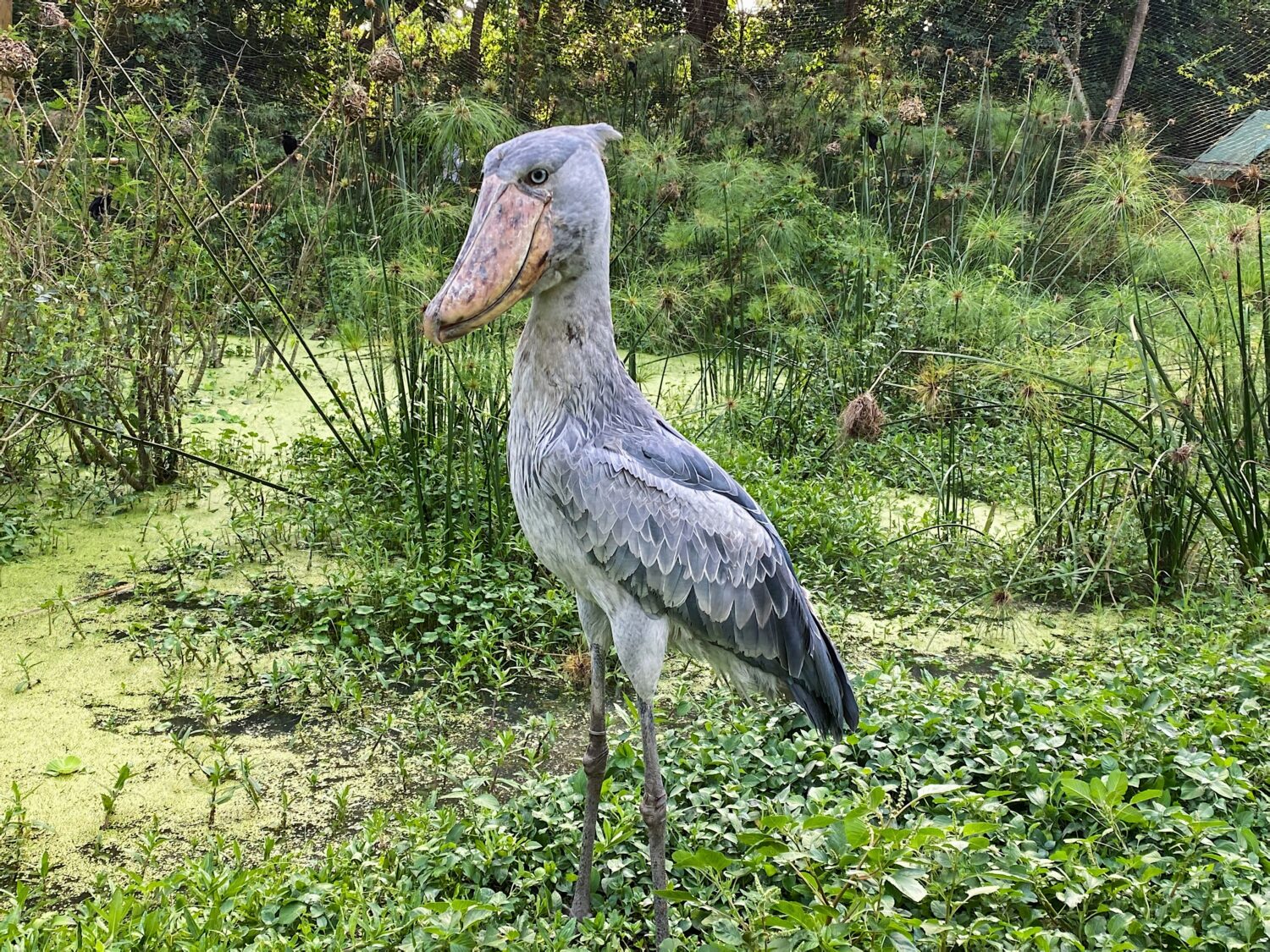
The highlight of Mabamba Swamp birding is undoubtedly the Shoebill Stork, one of the most iconic and mysterious birds in the world. With its massive shoe-shaped bill, piercing eyes, and statue-like stillness, the Shoebill often looks more like a prehistoric creature than a modern bird.
Scientifically known as Balaeniceps rex, the Shoebill is a rare wetland species found in only a few countries in East and Central Africa. Uganda is one of its strongest strongholds, and Mabamba Swamp offers one of the highest chances of spotting it in the wild.
Shoebills are patient hunters, often standing motionless in shallow waters for long periods before striking fish with remarkable speed. Watching this behavior in Mabamba Swamp is a deeply rewarding experience for birders and photographers alike.
Unlike many wildlife encounters, Shoebill sightings require patience and skilled local guides who know the swamp’s hidden channels. Their expertise significantly increases the chances of a successful sighting.
Birdwatching Experience in Mabamba Swamp
A typical Mabamba Swamp birding tour begins with a drive from Kampala or Entebbe to the landing site, followed by a canoe ride guided by local bird experts. The swamp is best explored in traditional wooden canoes or motorized boats that navigate narrow papyrus channels.
As you move deeper into the wetland, the diversity of birdlife becomes immediately apparent. The swamp supports a rich ecosystem where water, vegetation, and fish create ideal conditions for bird survival.
Birdwatching in Mabamba is quiet and immersive. Guides slowly paddle through channels while scanning the vegetation for movement. The experience is not rushed, and patience is rewarded with close encounters with some of Africa’s most fascinating wetland birds.
Birds You Can See in Mabamba Swamp
While the Shoebill is the main attraction, Mabamba Swamp birding offers far more than a single species. The wetland is home to over 260 recorded bird species, making it one of Uganda’s most important birding sites.
Some of the most commonly observed species include the African Jacana, Malachite Kingfisher, Pied Kingfisher, Purple Heron, African Fish Eagle, and Black Crake. The swamp also supports rare papyrus specialists such as the Papyrus Gonolek, Papyrus Yellow Warbler, and White-winged Warbler.
Migratory birds also visit Mabamba seasonally, adding even more diversity to the ecosystem. During peak birding seasons, the swamp becomes a dynamic mix of resident and migratory species, offering excellent opportunities for photography and observation.
The combination of open water, dense papyrus, and floating vegetation creates multiple habitats within a relatively small area, which is why bird diversity is so high.
Best Time to Visit Mabamba Swamp
Mabamba Swamp birding can be enjoyed throughout the year, but certain periods offer better conditions for birdwatching.
Early morning hours are generally the best time to visit, as birds are most active during cooler temperatures. Shoebill sightings are also more likely during these hours when they are hunting.
The dry seasons from June to September and December to February provide more stable weather conditions and easier travel routes. However, the swamp remains accessible during rainy seasons, and bird activity often increases due to higher water levels and food availability.
Because Mabamba is close to Entebbe, it is often included as a half-day or full-day excursion, making it highly flexible for travelers.
How Mabamba Fits into a Uganda Birding Safari
One of the advantages of Mabamba Swamp birding is its ability to complement larger Uganda safari itineraries. It serves as an excellent starting or ending point for birding safaris that extend into Uganda’s national parks.
From Mabamba, travelers often continue to Murchison Falls National Park, which is one of Uganda’s best birding destinations. The park is home to over 450 bird species, including additional Shoebill populations in the Nile Delta area.
Other birding-rich destinations include Queen Elizabeth National Park, known for its crater lakes and savannah species, and Bwindi Impenetrable Forest, which hosts Albertine Rift endemics.
Combining Mabamba Swamp with these destinations creates one of the most comprehensive birdwatching experiences in Africa.
Photography Opportunities in Mabamba Swamp
For wildlife photographers, Mabamba Swamp Uganda is a dream location. The still waters, soft light, and dense vegetation create perfect conditions for capturing wetland birds in their natural environment.
The Shoebill is particularly photogenic due to its unique appearance and slow movements. Photographers often spend extended time observing and waiting for the perfect shot as the bird hunts or interacts with its surroundings.
Other species, such as kingfishers and herons, also provide excellent photographic opportunities due to their vibrant colors and dynamic behavior.
Early morning light enhances the swamp’s atmosphere, creating soft reflections and misty conditions that elevate the overall photography experience.
Conservation Importance of Mabamba Swamp
Beyond tourism, Mabamba Swamp birding plays an important role in conservation. The wetland is part of the Lake Victoria ecosystem, which supports fisheries, water regulation, and biodiversity conservation.
Local communities play a key role in protecting the swamp, with many trained as bird guides and conservation stewards. Bird tourism provides alternative livelihoods that reduce pressure on wetland resources and promote sustainable development.
Revenue from birdwatching tours directly supports conservation efforts, helping protect the Shoebill and other wetland species from habitat loss and human disturbance.
Cultural Encounters Around Mabamba
While Mabamba is primarily known for birding, visitors also have opportunities to engage with local communities around the wetland. Fishing villages near the swamp offer insight into traditional livelihoods centered on Lake Victoria.
Travelers often interact with local canoe operators, fishermen, and guides who share knowledge about the swamp’s ecology and cultural importance. These interactions add depth to the birding experience and highlight the connection between communities and the wetland ecosystem.
Combining Mabamba with Murchison Falls Birding
For travelers interested in serious birdwatching, combining Mabamba Swamp birding with Murchison Falls National Park creates an unmatched Uganda birding circuit.
While Mabamba offers the best chance to see the Shoebill up close, Murchison Falls provides a broader ecosystem with savannah, river, and delta habitats. The Nile Delta region is also one of the most reliable locations for Shoebill sightings in Uganda.
Together, these destinations offer a complete birding experience that showcases Uganda’s incredible avian diversity.
Why Mabamba Swamp Should Be on Your Uganda Itinerary
Few birding destinations in Africa offer the combination of accessibility, diversity, and rarity that Mabamba Swamp Uganda provides. The opportunity to see the Shoebill in its natural habitat is a once-in-a-lifetime experience for many travelers.
The swamp’s peaceful atmosphere, expert local guides, and rich birdlife make it an essential stop for anyone visiting Uganda, whether on a dedicated birding tour or a broader safari adventure.
At Murchison Fall Park Safari, we include Mabamba Swamp in many of our Uganda birding and wildlife itineraries. Whether combined with Murchison Falls National Park, Queen Elizabeth National Park, or Bwindi Impenetrable Forest, it adds exceptional value to any safari experience.
Visit Murchison falls park safari to explore our Uganda safari packages and birding tours designed for nature lovers and wildlife enthusiasts.