Crocodile Encounters Murchison Falls: The Ultimate Nile Predator Experience
Introduction to Crocodile Encounters in Murchison Falls
A Crocodile Encounters Murchison Falls experience introduces one of the most powerful predators in Africa within its natural domain. Along the Nile River, crocodiles dominate the water’s edge with silent authority. They rest along sandbanks, drift beneath the surface, and strike with precision when opportunity appears.
Murchison Falls National Park offers one of the best locations in Africa to observe crocodiles Murchison Falls in large numbers. The Nile provides a permanent ecosystem where prey arrives daily, creating consistent hunting conditions. This environment supports massive Nile crocodiles, some exceeding five meters in length.
Unlike brief sightings on land safaris, crocodile encounters here unfold over extended periods. Boat safaris place you within their territory, allowing you to observe their behavior, movement, and interactions with other wildlife. The experience feels raw, controlled, and deeply immersive.
Why Murchison Falls is a Prime Crocodile Habitat
The Nile River defines the success of nile crocodiles Uganda populations in Murchison Falls. Its steady flow, warm temperatures, and abundant prey create an ideal environment for these reptiles to thrive.
The stretch between Paraa and the base of the falls holds the highest concentration. Here, the river slows, forming shallow banks where crocodiles bask in the sun. These resting areas allow them to regulate body temperature and conserve energy between hunts.
Fish populations remain high, and large mammals frequently approach the river to drink. This steady supply of prey supports a stable crocodile population. The presence of hippos also shapes the ecosystem, creating zones where crocodiles position themselves strategically.
The park’s relatively undisturbed environment further strengthens this balance. Limited human interference allows crocodiles to behave naturally, making encounters more authentic and predictable for visitors.
Understanding Nile Crocodile Behavior
A deeper understanding of crocodiles Murchison Falls enhances every sighting. Nile crocodiles operate with patience and efficiency. They rely on stealth rather than speed, often remaining motionless for extended periods before striking.
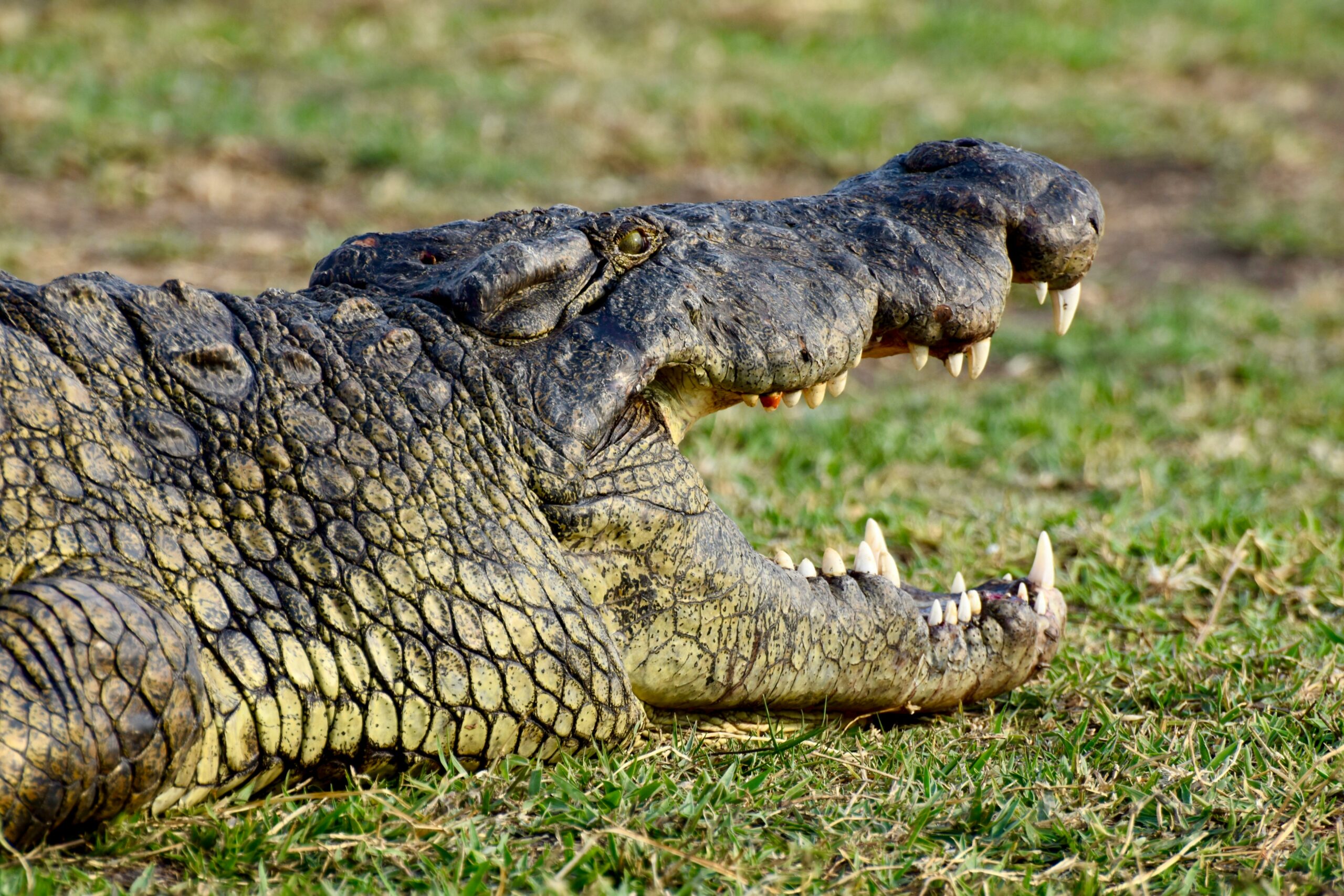
During the day, crocodiles spend most of their time basking on riverbanks. This behavior allows them to absorb heat and regulate metabolism. You will often see them lying still with open mouths, a cooling technique known as gaping.
In the water, they become nearly invisible. Only their eyes and nostrils remain above the surface, allowing them to monitor surroundings without detection. This positioning gives them a significant advantage over prey.
Hunting usually occurs at the water’s edge. Crocodiles wait for animals to approach before launching sudden attacks. Their powerful jaws and rapid movements leave little chance for escape.
Understanding these patterns helps you anticipate behavior during a reptile safari, making each encounter more meaningful.
Where to See Crocodiles in Murchison Falls
Certain locations within the park consistently deliver strong sightings of nile crocodiles Uganda.
The Nile Delta stands out as a prime area. This section, where the river meets Lake Albert, attracts high concentrations of fish and birds. Crocodiles gather here due to the steady availability of food.
The Paraa to Falls stretch offers another reliable zone. Sandbanks along this route host large groups of crocodiles basking together. Boat safaris pass close enough to observe their size and behavior clearly.
Shorelines near watering points also provide opportunities. Animals such as antelopes, buffaloes, and elephants frequently visit these areas, increasing the likelihood of predator-prey interactions.
You can explore detailed route options and safari planning guides on www.murchisonfallsparksafari.com
to maximize your wildlife viewing experience.
Crocodile Encounters During Boat Safaris
A boat safari remains the most effective way to experience Crocodile Encounters Murchison Falls. Unlike game drives, which offer limited river visibility, boat cruises bring you directly into crocodile territory.
As the boat moves slowly upstream, guides identify key basking zones. Crocodiles often lie motionless along the banks, allowing close observation without disturbance. Their size becomes more apparent at this distance, revealing powerful tails, armored skin, and sharp jaws.
Moments of activity create the most memorable encounters. A crocodile sliding into the water or shifting position exposes its strength and agility. Occasionally, you may witness hunting behavior or interactions with other wildlife.
The journey to the bottom of the falls adds another dimension. As the river narrows, the environment becomes more intense, with crocodiles positioned strategically along the edges.
For a complete experience, consider combining this with a hippo watching boat safari, which you can explore further on www.murchisonfallsparksafari.com
.
Crocodiles and the Nile Ecosystem
Crocodiles play a critical role in maintaining the balance of aquatic wildlife systems. As apex predators, they control populations of fish and other animals, preventing overpopulation and supporting ecosystem health.
Their presence also influences the behavior of other species. Animals approach the river with caution, and this awareness shapes daily movement patterns. Even hippos, despite their size, maintain distance in certain areas.
Bird species benefit indirectly from crocodile activity. Remains from feeding events provide food sources for scavengers, creating a chain of ecological interactions.
Understanding this balance transforms a reptile safari from simple observation into a deeper appreciation of the natural system.
Best Time for Crocodile Viewing
Timing influences the quality of crocodiles Murchison Falls sightings. Dry seasons, from December to February and June to September, provide the best conditions.
During these months, water levels stabilize, and animals gather more predictably along the river. Crocodiles spend more time basking, increasing visibility.
Morning and afternoon boat safaris each offer advantages. Morning light enhances clarity and detail, while afternoon sessions provide warmer tones and more dramatic scenery.
Even in wetter months, crocodile sightings remain consistent. However, higher water levels may disperse animals slightly, requiring more attentive observation.
Safety During Crocodile Encounters
A Crocodile Encounters Murchison Falls experience requires strict safety awareness. Crocodiles are highly dangerous, and maintaining distance remains essential.
Boat operators follow established protocols. Guides keep safe distances and monitor animal reactions continuously. Sudden movements or attempts to get closer can provoke unpredictable behavior.
Passengers must remain seated and follow instructions at all times. This discipline ensures that encounters remain controlled and safe.
Professional guiding standards in Murchison Falls allow you to experience these predators without unnecessary risk.
Photography Tips for Crocodile Safaris
Capturing Nile crocodiles Uganda requires a focused approach. Their stillness can make photography challenging, but patience leads to rewarding results.
Lighting plays a key role. Early morning and late afternoon provide softer conditions that highlight texture and detail. Harsh midday light can flatten images and reduce contrast.
Focus on composition. Position crocodiles within their environment to tell a broader story. Including riverbanks, water reflections, or nearby wildlife adds context.
A zoom lens allows close framing without disturbing the animal. Stability remains important, so maintaining a steady position on the boat improves image quality.
Combining Crocodile Safaris with Other Experiences
A visit to Murchison Falls becomes more complete when you combine Crocodile Encounters Murchison Falls with other activities.
Game drives across the northern sector reveal lions, giraffes, elephants, and antelopes. This contrast between land and water experiences creates a balanced safari.
Chimpanzee tracking in Budongo Forest introduces a different ecosystem, adding diversity to your itinerary.
The Top of the Falls hike provides a dramatic viewpoint of the Nile’s power, complementing the river-level perspective gained during boat safaris.
Explore full safari packages and combinations, here to design a well-rounded itinerary.
Accommodation Options Near Crocodile Hotspots
Choosing the right lodge enhances access to reptile safari experiences. Staying near the Nile reduces travel time and allows better scheduling of boat safaris.
Luxury options such as Nile Safari Lodge and Paraa Safari Lodge offer direct river access and premium comfort. Midrange lodges like Pakuba Safari Lodge provide excellent proximity with strong value.
Selecting accommodation close to Paraa ensures easy access to main boat departure points, maximizing your time on the water.
Why Crocodile Encounters Stand Out
A Crocodile Encounters Murchison Falls experience stands apart due to its intensity and authenticity. These reptiles represent one of the oldest surviving predator species, unchanged for millions of years.
Observing them in the Nile connects you to a raw and ancient aspect of nature. Their stillness, power, and sudden movement create a sense of respect and awareness.
Combined with the dramatic backdrop of Murchison Falls, this experience becomes one of the most memorable elements of any Uganda safari.
Plan Your Crocodile Safari in Murchison Falls
Planning a successful safari involves timing, location, and expert guidance. Working with experienced operators ensures that you access the best viewing areas and maintain safety throughout your journey.
At Murchison falls park safari, you can explore tailored itineraries, expert insights, and booking options that include crocodiles Murchison Falls, boat safaris, and complete wildlife experiences.
Whether you visit for a short trip or an extended safari, encountering Nile crocodiles along the river remains a defining highlight of Murchison Falls National Park.