Spotted Hyena Uganda: Nocturnal Safari Sightings
The spotted hyena is one of Africa’s most misunderstood yet fascinating predators. Often overshadowed by lions and leopards during safari discussions, the spotted hyena plays a vital role in maintaining healthy ecosystems across the continent. Intelligent, adaptable, and highly social, these nocturnal hunters are among the most successful carnivores in Africa. For travelers visiting Uganda, seeing a spotted hyena during a nighttime safari adds excitement, mystery, and a deeper understanding of the wilderness.
Uganda offers excellent opportunities to encounter hyenas in the wild, especially in major savannah parks such as Murchison Falls National Park, Queen Elizabeth National Park, and Kidepo Valley National Park. Although they are occasionally seen during daylight hours, hyenas become most active after sunset, when their haunting calls echo across the African plains.
For many safari travelers, the first sight of a spotted hyena under the glow of a safari spotlight is unforgettable. Their powerful jaws, sloping backs, alert ears, and glowing eyes create an intense wilderness atmosphere unlike any other safari experience. While popular culture has sometimes portrayed hyenas unfairly as cowardly scavengers, real hyenas are highly efficient predators, skilled hunters, and socially complex animals with remarkable intelligence.
Understanding the behavior of the spotted hyena in Uganda allows safari travelers to appreciate one of Africa’s most important and resilient predators.
Understanding the Spotted Hyena
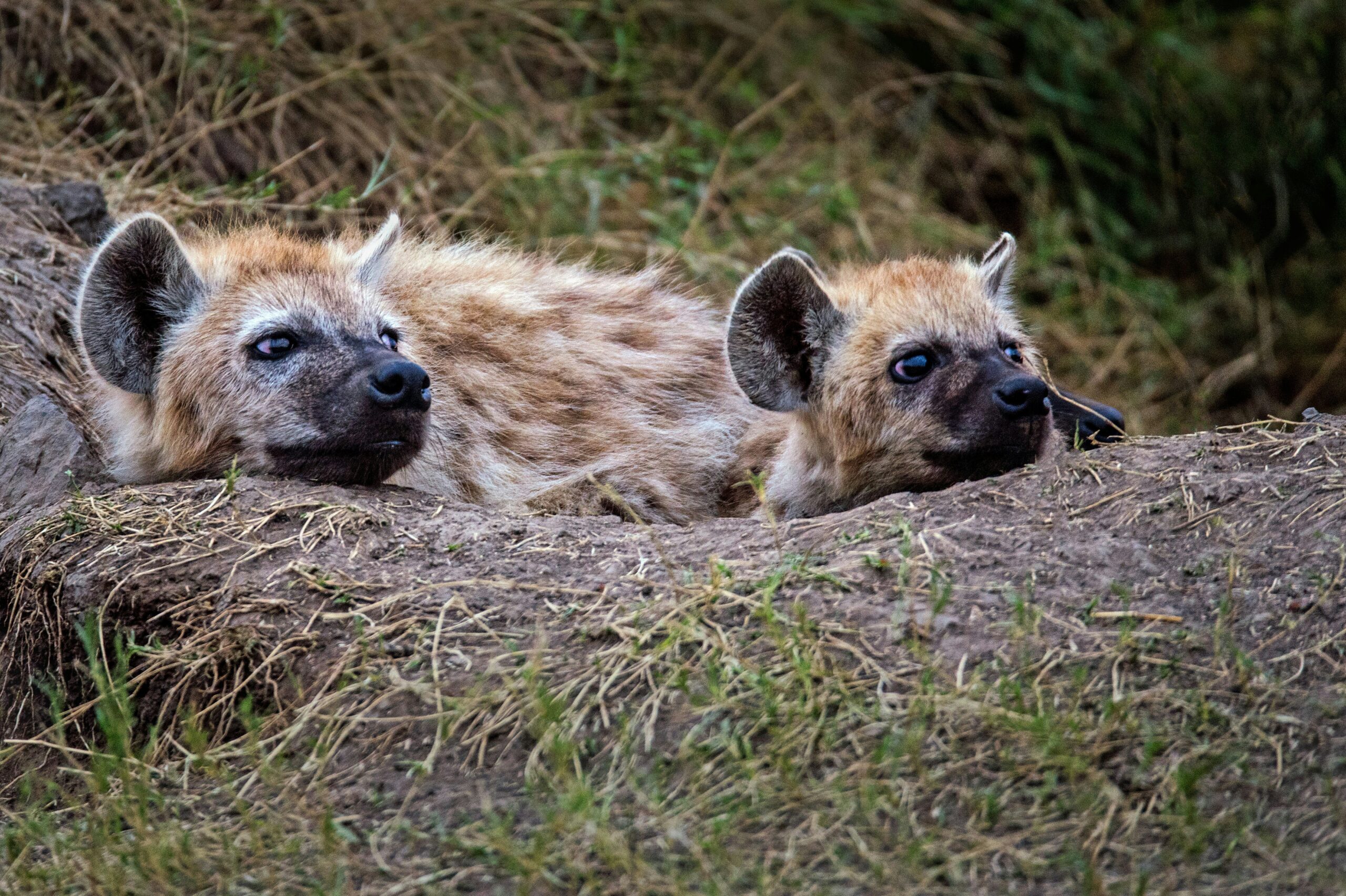
 The spotted hyena (Crocuta crocuta) is the largest hyena species in Africa and among the continent’s most successful carnivores. Adult hyenas can weigh between 45 and 90 kilograms and possess extremely powerful jaws capable of crushing large bones.
Their bodies are uniquely adapted for endurance and strength. The front legs are longer than the hind legs, creating the characteristic sloping back appearance. Their spotted coats provide camouflage within savannah grasslands and woodland habitats.
Unlike the negative image often associated with them, spotted hyenas are exceptionally intelligent animals with sophisticated communication systems and complex social hierarchies.
They live in organized groups called clans, which may contain dozens of individuals. Female hyenas dominate clan structures and are generally larger and more aggressive than males.
This social organization allows hyenas to hunt cooperatively, defend territory, and compete effectively against other predators.
Why Hyenas Are Most Active at Night
The spotted hyena is primarily nocturnal, meaning it becomes most active after sunset. This nighttime behavior provides several advantages within Uganda’s ecosystems.
Cooler nighttime temperatures reduce heat stress during long-distance movement and hunting activities. Darkness also improves hunting opportunities by allowing hyenas to approach prey more effectively.
Night activity helps hyenas avoid direct competition with humans and reduces conflict with larger predators during daylight hours.
In Uganda’s national parks, the sounds of hyenas calling at night create one of the most authentic safari atmospheres imaginable. Their eerie vocalizations, often described as laughter-like calls, are used for communication between clan members across large distances.
Night game drives therefore offer the best opportunities for observing natural hyena behavior.
Best Places to See Spotted Hyenas in Uganda
Uganda contains several excellent locations for viewing hyenas in the wild.
Murchison Falls National Park
Murchison Falls National Park is one of the best places in Uganda to encounter spotted hyenas. The park’s vast savannah plains, abundant prey populations, and healthy predator ecosystem provide ideal habitat for hyena clans.
Night game drives in the northern sector frequently reveal hyenas patrolling roads, scavenging near predator kills, or hunting small antelope species.
The combination of open landscapes and strong wildlife populations makes Murchison Falls especially rewarding for nocturnal safaris.
Queen Elizabeth National Park
Queen Elizabeth National Park supports significant hyena populations, particularly around the Kasenyi Plains where Uganda kob attract predators.
Visitors occasionally hear hyenas calling at night from nearby lodges, adding excitement to safari evenings.
Kidepo Valley National Park
Kidepo Valley National Park offers some of Uganda’s most authentic wilderness experiences and excellent predator viewing opportunities.
Hyenas thrive within the park’s remote savannah ecosystems where tourism pressure remains relatively low.
Lake Mburo National Park
Although smaller than other parks, Lake Mburo National Park also hosts spotted hyenas within its woodland and grassland habitats.
Night drives here can produce rewarding sightings because of the park’s compact and accessible landscapes.
Are Spotted Hyenas Scavengers or Hunters?
One of the biggest misconceptions about hyenas is the belief that they survive mainly by scavenging leftovers from lions and other predators.
In reality, spotted hyenas are highly capable hunters responsible for most of their own food. Studies across Africa show that hyenas frequently kill prey themselves rather than relying solely on scavenging.
Their hunting success comes from intelligence, endurance, teamwork, and strong jaws capable of consuming nearly every part of an animal.
Hyenas commonly hunt:
- Uganda kob
- Warthogs
- Young buffaloes
- Antelope
- Birds
- Small mammals
Although they do scavenge opportunistically, this behavior actually benefits ecosystems by helping remove carcasses and reduce disease spread.
Safari guides often explain that hyenas are among Africa’s most efficient carnivores, not merely scavengers.
Hyena Intelligence and Social Structure
The spotted hyena possesses remarkable intelligence comparable in some ways to primates.
Clan members communicate through vocal calls, scent marking, body posture, and social interactions. Their social systems are highly organized, with dominant females controlling access to food and territory.
Young hyenas learn hunting techniques and social rules through observation and interaction within the clan.
Researchers have documented problem-solving abilities, cooperation, memory, and strategic behavior among spotted hyenas.
This intelligence contributes significantly to their survival success across diverse African environments.
Hyenas and Other Predators in Uganda
Spotted hyenas maintain complicated relationships with other predators within Uganda’s ecosystems.
Lions
Lions and hyenas are fierce competitors. Both species target similar prey and often steal kills from each other.
Large hyena clans may intimidate smaller lion groups, while dominant lion prides can overpower hyenas at carcasses.
Leopards
Leopards usually avoid direct confrontation with hyenas because hyenas can steal kills and outnumber solitary cats.
This is one reason leopards often drag prey into trees for protection.
Crocodiles
Near rivers and wetlands, hyenas occasionally compete with crocodiles for carcasses or water access.
These predator interactions create dramatic safari moments and demonstrate the complexity of African ecosystems.
Why Night Safaris Are Essential for Hyena Sightings
Although daytime sightings are possible, nighttime safaris dramatically improve opportunities for observing natural hyena behavior.
Night drives reveal activities rarely seen during the day, including:
- Hunting
- Clan movement
- Vocal communication
- Territorial patrols
- Feeding interactions
The excitement of searching for glowing eyes in darkness adds an entirely different dimension to Uganda safaris.
Professional guides use spotlights carefully to locate wildlife while minimizing disturbance.
At Murchison Falls National Park, night drives offer some of Uganda’s best nocturnal predator experiences.
The Role of Hyenas in Ecosystems
The spotted hyena plays a critical ecological role in maintaining healthy wildlife ecosystems.
As both predator and scavenger, the hyena helps regulate prey populations and clean the environment by consuming carcasses.
Its powerful digestive system can process bones, skin, and tissue efficiently, leaving little waste behind.
This cleanup function reduces disease risk within ecosystems and contributes to ecological balance.
Without predators and scavengers like hyenas, African savannah systems would function very differently.
Best Time to See Hyenas in Uganda
Hyenas can be seen year-round in Uganda, though dry seasons generally provide the best safari conditions.
The periods from June to September and December to February offer:
- Better road access
- Easier wildlife visibility
- Concentrated prey populations
- More productive game drives
Night safaris during these seasons are especially rewarding because cooler conditions increase predator activity.
Even during rainy months, hyenas remain active and visible in many protected areas.
Hyena Photography Tips
Photographing hyenas can be challenging because most sightings occur at night or during low-light conditions.
Cameras with strong low-light performance and fast lenses improve nighttime photography results significantly.
Some of the best photographic moments include:
- Hyenas illuminated by safari spotlights
- Clan interactions
- Feeding scenes
- Silhouettes during sunset
- Portraits showing facial detail
- Movement across savannah landscapes
Patience is essential because hyenas often move constantly while searching for food.
Early morning and evening light also create excellent opportunities before full darkness arrives.
Conservation of Spotted Hyenas in Uganda
Although spotted hyenas remain relatively widespread across Africa, they still face threats including habitat loss, poisoning, persecution, and declining prey populations.
Negative cultural perceptions have historically contributed to human conflict with hyenas in some regions.
Uganda’s protected national parks provide essential refuge for healthy hyena populations while conservation education helps improve understanding of their ecological importance.
Tourism also contributes significantly to predator conservation by supporting national park management and anti-poaching efforts.
Responsible safari tourism therefore helps ensure the long-term survival of hyenas and other carnivores.
Combining Hyena Viewing with Other Uganda Safari Experiences
One of Uganda’s greatest safari strengths is its diversity of wildlife experiences.
Travelers searching for hyenas in Murchison Falls National Park can also enjoy:
- Big Five safaris
- Nile River boat cruises
- Birdwatching excursions
- Chimpanzee tracking
- Nature walks
- Cultural experiences
Many visitors combine savannah safaris with gorilla trekking in Bwindi Impenetrable National Park, creating one of Africa’s most varied wildlife itineraries.
This diversity makes Uganda uniquely rewarding for safari enthusiasts.
Planning Your Uganda Nocturnal Safari
Planning a successful nocturnal safari requires choosing parks that allow guided night game drives and experienced safari operators familiar with predator behavior.
At Murchison Falls Park Safari, we organize customized Uganda wildlife safaris designed to maximize opportunities for seeing spotted hyenas and other nocturnal predators safely and responsibly.
Our expert-guided safaris combine comfortable accommodations, strategic game drive schedules, and immersive wildlife experiences across Uganda’s top safari destinations.
Whether you are a wildlife photographer, predator enthusiast, or first-time safari traveler, encountering a spotted hyena in the wild is an unforgettable experience that reveals the hidden world of Africa after dark.
The spotted hyena remains one of Uganda’s most fascinating safari animals — intelligent, resilient, misunderstood, and essential to the balance of African wilderness.