Warthog Facts: Africa’s Comical Safari Animal
The warthog is one of Africa’s most entertaining and recognizable safari animals. With its oversized head, curved tusks, thin mane, and awkward-looking body, the warthog often appears almost cartoonish in the wild. Yet behind its comical appearance lies an intelligent, adaptable, and surprisingly resilient animal perfectly suited for survival in Africa’s challenging savannah ecosystems.
Visitors on a Uganda safari frequently encounter warthogs running through open grasslands with their tails raised straight into the air, creating one of the funniest and most memorable scenes in African wildlife viewing. Despite their unusual appearance, warthogs are fascinating animals with complex behavior, strong survival instincts, and an important ecological role within Uganda’s national parks.
In destinations such as Murchison Falls National Park, Queen Elizabeth National Park, Lake Mburo National Park, and Kidepo Valley National Park, warthogs are among the most commonly sighted mammals during game drives. Their confidence around safari vehicles and active daytime behavior make them excellent subjects for wildlife photography and observation.
For many travelers, the warthog becomes an unexpected safari favorite because of its personality, adaptability, and constant comic behavior. Whether kneeling while feeding, sprinting awkwardly across the plains, or disappearing tail-first into burrows, warthogs add energy and humor to every African safari experience.
Understanding the African Warthog
The African warthog (Phacochoerus africanus) belongs to the pig family and is native to sub-Saharan Africa. It thrives in savannahs, grasslands, open woodlands, and areas close to water sources where vegetation remains available throughout the year.
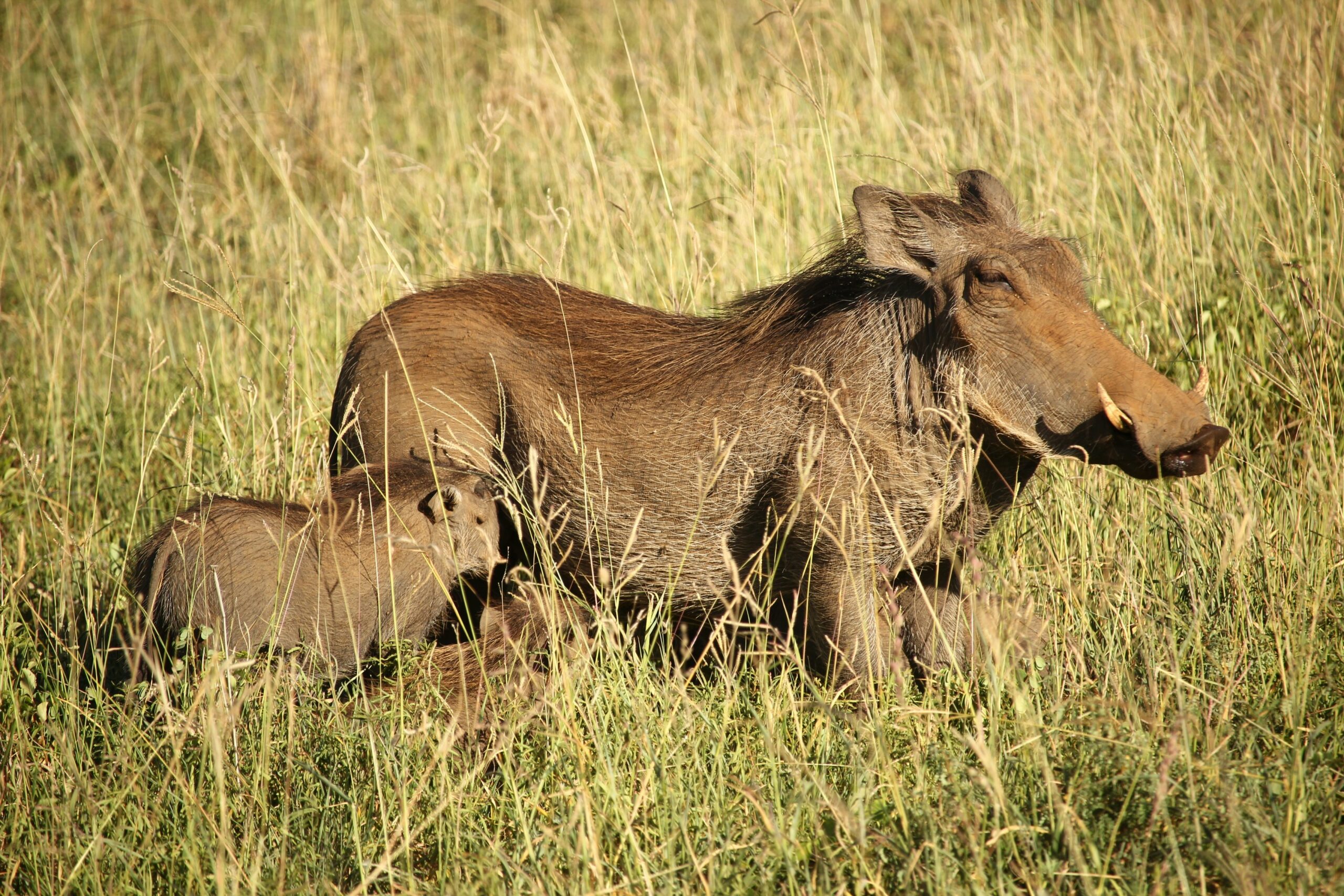
Adult warthogs usually weigh between 50 and 150 kilograms, with males being larger than females. Their most distinctive features include large facial warts, upward-curving tusks, sparse body hair, and elongated snouts used for digging and feeding.
Despite their rough appearance, warthogs are highly specialized animals adapted perfectly to life in African wilderness areas. Their powerful snouts allow them to root through soil searching for roots, bulbs, grasses, insects, and small invertebrates.
The tusks, which are enlarged canine teeth, serve important defensive functions against predators and rival warthogs.
Why Warthogs Are Considered Africa’s Funniest Safari Animal
 The warthog has earned a reputation as Africa’s comical safari animal because of its unusual behavior and appearance. Few wildlife species provide as many entertaining moments during game drives.
One of the funniest behaviors occurs when warthogs run. Their tails stand upright like antennae as they sprint across the savannah, often with surprising speed despite their awkward shape. Guides frequently joke that the raised tail acts like a “follow me” signal for piglets running behind their mothers through tall grass.
Another amusing habit is the way warthogs kneel on their front knees while grazing. Because of their relatively short necks and large heads, kneeling allows them to feed more comfortably on short grasses.
Warthogs also back into burrows rear-first so they can face outward toward potential danger. This defensive strategy may look unusual, but it allows them to use their tusks immediately if threatened.
Their expressive faces, energetic movements, and fearless personalities make them constant sources of entertainment during safari experiences.
Where to See Warthogs in Uganda
Uganda offers excellent opportunities to observe warthogs in the wild, especially in savannah national parks.
Murchison Falls National Park
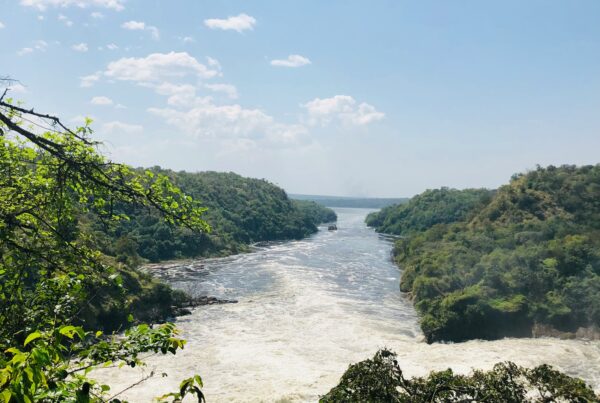
Murchison Falls National Park is one of the best places in Uganda to see warthogs. The park’s open grasslands and riverine habitats provide ideal conditions for large warthog populations.
During game drives, warthogs are commonly seen feeding near roadsides, crossing tracks, or resting beneath small trees during hotter parts of the day.
Because the park supports abundant predator populations, warthogs remain highly alert and active throughout the savannah ecosystem.
Queen Elizabeth National Park
Queen Elizabeth National Park also hosts large numbers of warthogs, especially around the Kasenyi Plains and Mweya Peninsula areas.
The combination of grasslands and wetlands provides rich feeding grounds for these adaptable animals.
Lake Mburo National Park
Lake Mburo National Park offers excellent close-range warthog sightings due to its compact size and open landscapes.
Visitors frequently encounter warthogs alongside zebras, impalas, buffaloes, and giraffes during game drives and walking safaris.
Kidepo Valley National Park
Kidepo Valley National Park provides more remote and wilderness-focused warthog encounters within dramatic northeastern landscapes.
The park’s untouched savannah scenery creates exceptional wildlife photography opportunities.
Warthog Behavior and Survival Skills
Although warthogs appear comical, they are surprisingly intelligent and highly adaptable animals.
One of their most important survival strategies involves using abandoned burrows created by aardvarks. Warthogs rarely dig their own shelters but instead modify existing burrows for protection against predators and harsh weather.
At night, entire family groups may sleep together inside burrows for safety.
Warthogs are also highly alert animals with excellent hearing and strong awareness of danger. Even while feeding, they remain cautious and ready to flee if predators approach.
Their speed is often underestimated. Warthogs can run remarkably fast when escaping lions, leopards, hyenas, or wild dogs.
Although generally peaceful, warthogs can become aggressive when cornered. Their tusks are capable of inflicting serious injuries, particularly during defensive encounters.
Warthogs and Predators in Uganda
The warthog occupies an important position within Uganda’s predator-prey ecosystem.
Young piglets are especially vulnerable to predators including:
- Lions
- Leopards
- Hyenas
- African wild dogs
- Crocodiles
- Large eagles
Adult warthogs also face danger, though their speed, awareness, and tusks improve survival chances significantly.
When threatened, warthogs usually sprint toward nearby burrows or dense vegetation. If escape becomes impossible, they may turn aggressively toward predators using their tusks defensively.
Leopards are among the most successful warthog hunters because of their stealth and ambush tactics.
These predator-prey interactions contribute to the dynamic balance within Uganda’s ecosystems.
Warthog Family Life
Warthogs live in family groups called sounders, usually consisting of females and piglets. Adult males often live alone or form temporary bachelor groups outside breeding periods.
Piglets are extremely playful and frequently seen running, chasing each other, or following adults closely during feeding activities.
Mothers are highly protective and carefully guide young piglets through dangerous environments filled with predators.
Family bonds within sounders help improve survival rates and provide social protection.
Observing warthog family interactions during safari adds another layer of appreciation for these fascinating animals.
The Ecological Importance of Warthogs
The African warthog plays an important ecological role within savannah ecosystems.
As grazers and root feeders, warthogs help maintain grassland balance and contribute to soil turnover through digging activity.
Their abandoned burrows provide shelter for other animals including reptiles, birds, and small mammals.
Warthogs also serve as prey for major predators, supporting healthy carnivore populations across Uganda’s national parks.
This ecological contribution highlights the importance of even seemingly humorous animals within complex wildlife systems.
Best Time to See Warthogs in Uganda
Warthogs can be seen throughout the year in Uganda because they are resident animals within the country’s protected areas.
The dry seasons from June to September and December to February generally provide the best wildlife viewing conditions because vegetation becomes shorter and animals gather near water sources.
Morning and late afternoon game drives are particularly rewarding because warthogs become more active during cooler temperatures.
During hotter midday hours, they often rest in shade or inside burrows.
The rainy seasons also create beautiful green landscapes and excellent photography opportunities.
Warthog Photography Tips
Photographing warthogs can produce some of the most entertaining wildlife images from an African safari.
Their expressive faces, awkward movements, and social behavior create endless photographic possibilities.
Some of the best moments to capture include:
- Warthogs running with raised tails
- Kneeling while feeding
- Piglets following mothers
- Mud bathing
- Defensive postures
- Burrow entrances
Because warthogs are often comfortable around safari vehicles, photographers can usually enjoy relatively close encounters.
Golden morning and evening light works especially well for enhancing their textured skin and tusks.
Patience and quick reactions help capture spontaneous comedic behavior.
Warthogs and Safari Tourism in Uganda
Although often overshadowed by lions, elephants, and gorillas, warthogs contribute significantly to Uganda’s safari experience.
Their constant activity and entertaining behavior provide variety during game drives and create memorable moments for travelers of all ages.
Families especially enjoy watching warthogs because of their playful personalities and resemblance to familiar animated characters.
Warthogs also help enrich Uganda’s reputation as a destination offering complete and diverse wildlife encounters.
From predators and primates to birds and smaller mammals, Uganda delivers immersive safari experiences across multiple ecosystems.
Conservation of Warthogs in Uganda
Unlike some endangered African wildlife species, warthogs currently maintain relatively stable populations in many protected areas.
However, habitat loss, human encroachment, disease, and hunting can still affect local populations outside national parks.
Uganda Wildlife Authority continues protecting savannah ecosystems essential for warthog survival through conservation programs and anti-poaching efforts.
Responsible tourism helps support these initiatives while generating economic benefits for surrounding communities.
Safari travelers therefore contribute indirectly to long-term wildlife conservation simply by visiting Uganda’s national parks responsibly.
Combining Warthog Viewing with Other Safari Activities
One of Uganda’s greatest strengths is the ability to combine multiple wildlife experiences within a single safari itinerary.
Visitors searching for warthogs in Murchison Falls National Park can also enjoy:
- Big Five safaris
- Nile River boat cruises
- Birdwatching tours
- Chimpanzee tracking
- Nature walks
- Cultural visits
Many travelers combine Murchison Falls with Bwindi Impenetrable National Park for gorilla trekking adventures.
This incredible diversity makes Uganda one of Africa’s most rewarding safari destinations.
Planning Your Uganda Safari
Planning a successful Uganda safari involves choosing the right national parks, accommodations, and travel seasons.
At Murchison Falls Park Safari, we organize customized wildlife safaris designed to showcase Uganda’s extraordinary biodiversity, including warthogs, elephants, lions, giraffes, buffaloes, leopards, and hundreds of bird species.
Our expert-guided safaris combine comfortable accommodations with immersive wildlife experiences tailored for photographers, families, birdwatchers, and adventure travelers.
Whether you are visiting Uganda for the first time or returning for another African safari adventure, the warthog remains one of the continent’s most unforgettable and entertaining wildlife species.
Its humor, resilience, and adaptability perfectly represent the unpredictable magic of African wilderness.