
Tree-Climbing Lions of Ishasha: Queen Elizabeth’s Highlight
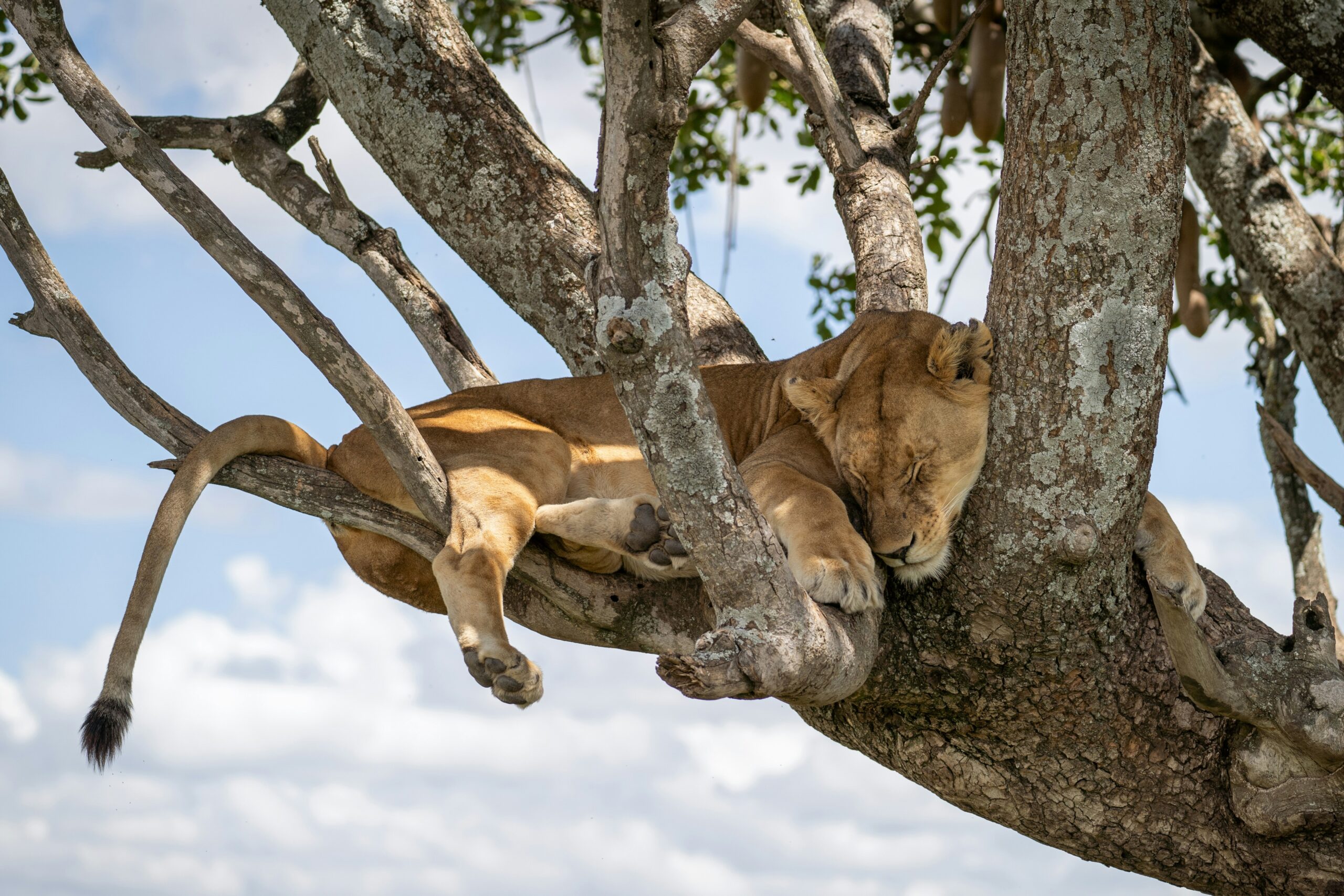
The tree-climbing lions of Ishasha are one of Uganda’s most fascinating and rare wildlife spectacles, found in the southern sector of Queen Elizabeth National Park. Unlike typical African lions that spend most of their time on the ground, these unique lions have developed the unusual behavior of resting and lounging in large fig and acacia trees.
For travelers exploring Uganda’s safari circuit, the Ishasha sector offers something truly distinctive. While Murchison Falls National Park is known for its powerful Nile River, dramatic waterfalls, and open savannah game drives, Ishasha adds another layer of wildlife intrigue through its iconic tree-climbing lions. Together, these destinations form part of Uganda’s most rewarding safari experiences.
The tree-climbing lions in Ishasha are not just a visual attraction; they represent a behavioral adaptation that continues to puzzle scientists and fascinate visitors. This guide explores everything you need to know about them, including where to see them, why they climb trees, when to visit, and how Ishasha fits into a broader Uganda safari itinerary.
Where Is Ishasha and Why It Matters
The Ishasha sector is located in the southern part of Queen Elizabeth National Park, near the border with the Democratic Republic of Congo. It lies along the route connecting Queen Elizabeth National Park with Bwindi Impenetrable Forest, making it a key stop for travelers combining savannah game drives with gorilla trekking.
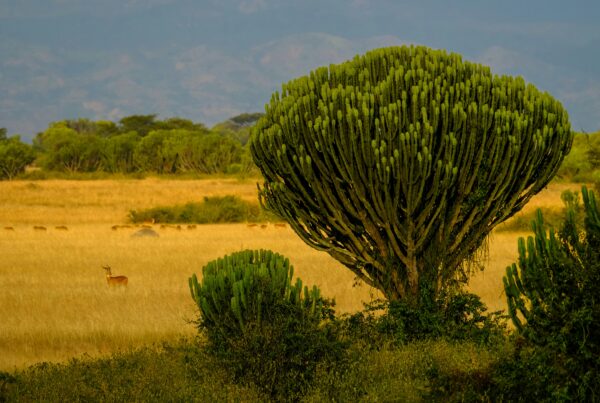
This remote and less-developed section of the park is characterized by open grasslands, scattered fig trees, and seasonal river systems. Unlike the more visited northern sector of Queen Elizabeth National Park, Ishasha remains quieter and less crowded, which enhances the authenticity of wildlife viewing.
It is within this landscape that the famous tree-climbing lions of Ishasha have become a signature attraction of Uganda safaris.
Why Tree-Climbing Lions Are So Rare
Tree-climbing behavior in lions is extremely rare in Africa. While lions are capable climbers, they typically remain ground-dwelling predators. The Ishasha lions are one of only a few known populations in the world that regularly climb trees.
Scientists and researchers have proposed several theories to explain this behavior. One widely accepted explanation is thermoregulation. The Ishasha region can become very hot during midday, and climbing trees allows lions to escape the heat of the ground while catching cooler breezes in the canopy.
Another theory suggests that climbing helps lions avoid biting insects and parasites commonly found in grasslands. Elevated resting positions may also provide better vantage points for spotting prey or monitoring territory.
Whatever the exact reason, the result is one of the most unique wildlife behaviors in Africa, making the tree-climbing lions of Ishasha a must-see highlight for any Uganda safari.
Best Trees for Lion Sightings in Ishasha
The lions of Ishasha are most often seen resting in large fig trees and acacia trees scattered across the savannah. These trees have strong horizontal branches that support the weight of adult lions, allowing them to lie comfortably in elevated positions.
Fig trees are particularly important because they provide wide, stable platforms and good shade during hot afternoons. Lions often drape themselves across branches or rest in forked sections where the trunk splits.
Acacia trees, while less common for large groups, are also used occasionally, especially by younger lions or individuals seeking shade and vantage points.
The sight of a fully grown lion resting casually in a tree is both surreal and unforgettable, and it is this behavior that has made Ishasha globally famous.
When to See Tree-Climbing Lions in Ishasha
The best time to see the tree-climbing lions of Ishasha is during the dry seasons, from June to September and December to February. During these months, vegetation is thinner, and lions are more likely to be visible in trees or open areas.
Midday hours are particularly good for sightings, as lions often climb trees to escape the heat. Early morning and late afternoon game drives can also be productive, especially when lions descend to hunt or move between territories.
However, sightings are never guaranteed. Lions may spend long periods on the ground or in dense vegetation, which is why patience and guided game drives are essential.
Behavior of Tree-Climbing Lions
One of the most fascinating aspects of the Ishasha tree-climbing lions is their relaxed behavior while in trees. Unlike other predators that remain alert and tense, these lions often appear completely at ease, stretching out across branches or sleeping for hours in elevated positions.
Groups are commonly observed together in trees, including adult females, cubs, and occasionally males. Cubs are especially playful, often climbing higher branches or interacting with siblings while adults rest nearby.
Despite their relaxed appearance, these lions remain highly alert to their surroundings. They will quickly descend when prey is spotted or when movement in the surrounding grasslands indicates hunting opportunities.
This combination of relaxation and readiness is part of what makes them so fascinating to observe in the wild.
Ishasha Game Drives and Lion Viewing Experience
Game drives in the Ishasha sector offer one of the most unique safari experiences in Queen Elizabeth National Park. Unlike the northern sector, which features crater lakes and busier safari routes, Ishasha provides open savannah landscapes with fewer vehicles and more intimate wildlife encounters.
The main game drive circuit runs through the southern plains, where fig trees dot the landscape and lions are often found resting above ground level. Experienced guides scan tree branches carefully, as lions are not always immediately visible from a distance.
When spotted, vehicles often stop to allow visitors to observe the lions quietly, creating one of the most memorable safari moments in Uganda.
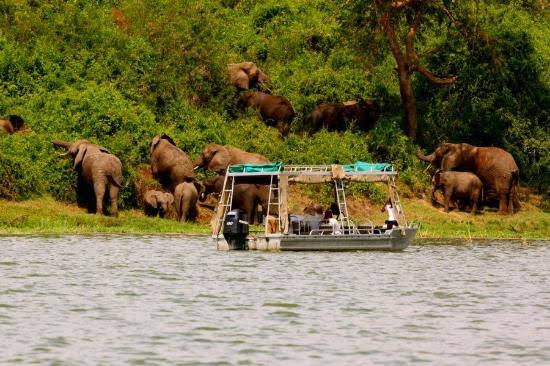
In addition to lions, Ishasha is also home to elephants, buffaloes, Uganda kob, topis, and a variety of bird species, making it a diverse but less crowded safari destination.
How Ishasha Connects to Uganda Safari Routes
The Ishasha sector plays a strategic role in Uganda safari itineraries, especially for travelers moving between Queen Elizabeth National Park and Bwindi Impenetrable Forest.
Many safari routes pass through Ishasha en route to gorilla trekking destinations, allowing travelers to combine savannah wildlife experiences with rainforest primate encounters in a single journey.
This combination makes Ishasha an essential stop for those planning a complete Uganda safari circuit.
For travelers exploring western Uganda, Ishasha often serves as a transition point between two very different ecosystems.
Comparison with Murchison Falls National Park
While Ishasha is famous for its tree-climbing lions, Murchison Falls National Park offers a completely different safari experience.
Murchison Falls is characterized by vast savannah plains, the powerful Victoria Nile, boat cruises, and the iconic waterfall where the Nile squeezes through a narrow gorge. Wildlife is more widely distributed, and sightings include elephants, giraffes, lions, buffaloes, hippos, and crocodiles.
In contrast, Ishasha is more specialized, focusing on unique lion behavior and open savannah scenery with fewer tourist vehicles.
For many travelers, combining both destinations provides a balanced Uganda safari experience that includes both dramatic landscapes and rare wildlife behavior.
At Murchison Falls Park Safari, we design itineraries that integrate both Queen Elizabeth and Murchison Falls experiences where appropriate, ensuring travelers experience Uganda’s full wildlife diversity.
Photography Opportunities in Ishasha
The tree-climbing lions of Ishasha are among the most photogenic wildlife subjects in Uganda. Their elevated positions in fig trees create dramatic compositions, especially during golden hour lighting.
Wide-angle shots often capture lions against expansive savannah backgrounds, while zoom lenses allow detailed portraits of resting or sleeping individuals in trees.
The contrast between lion fur and green foliage also creates visually striking imagery, making Ishasha a favorite destination for wildlife photographers.
Conservation and Protection of Ishasha Lions
The tree-climbing lions are protected under the broader conservation framework of Queen Elizabeth National Park, managed by the Uganda Wildlife Authority.
Conservation efforts focus on anti-poaching patrols, habitat protection, and community engagement programs that reduce human-wildlife conflict.
Tourism also plays a key role in conservation by generating revenue that supports park management and local communities.
Maintaining the Ishasha ecosystem is essential for preserving this rare behavioral adaptation in lions.
Combining Ishasha with Other Uganda Safari Destinations
Ishasha is often included in longer Uganda safari itineraries that also feature Murchison Falls National Park, Bwindi Impenetrable Forest, and Kibale National Park.
This combination allows travelers to experience tree-climbing lions, gorilla trekking, chimpanzee tracking, and classic savannah game drives within one journey.
At Murchison falls park safari, we offer customized itineraries that include Ishasha as part of multi-park safari experiences across Uganda.
Related guides include Murchison Falls National Park Complete Visitor Guide, Best Time to Visit Murchison Falls National Park, Murchison Falls vs Queen Elizabeth National Park, and Top Things to Do in Murchison Falls National Park.
Final Thoughts
The tree-climbing lions of Ishasha remain one of Africa’s most unique wildlife attractions. Their rare behavior, combined with the quiet beauty of the Ishasha savannah, creates a safari experience unlike any other in Uganda.
While Murchison Falls National Park offers scale, diversity, and dramatic landscapes, Ishasha delivers intimacy and rare behavioral sightings that are difficult to find elsewhere.
Together, they represent the richness and diversity of Uganda’s safari circuit, offering travelers unforgettable wildlife experiences across different ecosystems.