Gorilla Research Uganda: The Science Behind Mountain Gorilla Conservation
Mountain gorillas are among the world’s most remarkable and endangered primates, capturing the imagination of scientists, conservationists, and wildlife enthusiasts for decades. Uganda is home to nearly half of the global population of these magnificent animals, making the country one of the most important destinations for gorilla research in Uganda and conservation efforts worldwide. While thousands of visitors travel to Uganda each year to experience gorilla trekking, far fewer understand the extensive scientific work taking place behind the scenes to ensure these great apes continue to survive in the wild.
The story of mountain gorilla conservation is one of Africa’s greatest wildlife success stories. Unlike many endangered species whose populations continue to decline, mountain gorillas have experienced a gradual increase in numbers over the past several decades. This achievement has been made possible through dedicated research, long-term monitoring, veterinary care, habitat protection, community involvement, and responsible tourism.
Understanding the science behind gorillas provides a deeper appreciation for every gorilla trekking experience. Every permit purchased, every visitor guided through the forest, and every conservation initiative contributes to years of scientific research designed to protect one of humanity’s closest relatives.
This guide explores the fascinating world of gorilla research in Uganda, explaining how scientists study mountain gorillas, why research matters, and how travelers directly support conservation through sustainable tourism.
Why Uganda Is a Global Center for Gorilla Research
Uganda occupies a unique position in global gorilla conservation because it protects almost half of the world’s remaining mountain gorillas within Bwindi Impenetrable National Park and Mgahinga Gorilla National Park. These forests provide ideal conditions for long-term scientific studies due to their stable gorilla populations, protected habitats, and well-established conservation programs.
For decades, researchers from Uganda and around the world have collaborated with the Uganda Wildlife Authority, conservation organizations, universities, and veterinary teams to better understand mountain gorilla ecology, behavior, genetics, health, and social dynamics.
The information gathered through gorilla research in Uganda not only benefits Uganda’s gorillas but also contributes to international conservation strategies used throughout the Virunga Conservation Area shared by Uganda, Rwanda, and the Democratic Republic of Congo.
Understanding Mountain Gorilla Biology
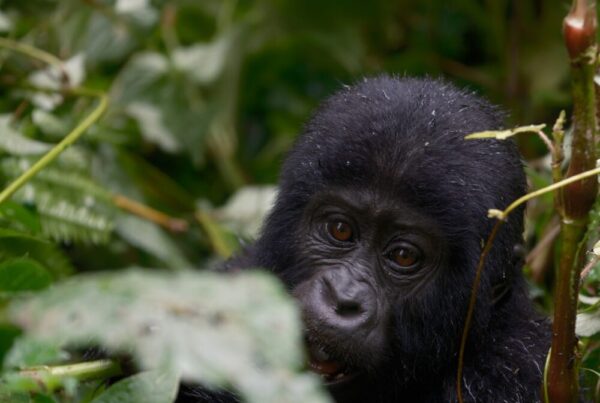
Scientific research begins with understanding the biology of mountain gorillas. These great apes belong to the eastern gorilla species (Gorilla beringei beringei) and are among the closest living relatives of humans, sharing approximately 98 percent of our DNA.
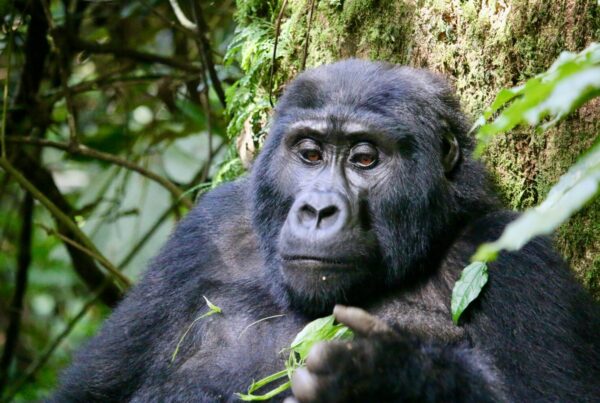
Adult male gorillas, known as silverbacks, can weigh more than 180 kilograms and serve as leaders and protectors of their family groups. Adult females are considerably smaller but play equally important roles in raising offspring and maintaining group cohesion.
Mountain gorillas are primarily herbivorous, feeding on leaves, stems, bamboo shoots, fruits, vines, and wild celery. Researchers study their diets to understand how seasonal food availability affects health, movement patterns, and reproduction.
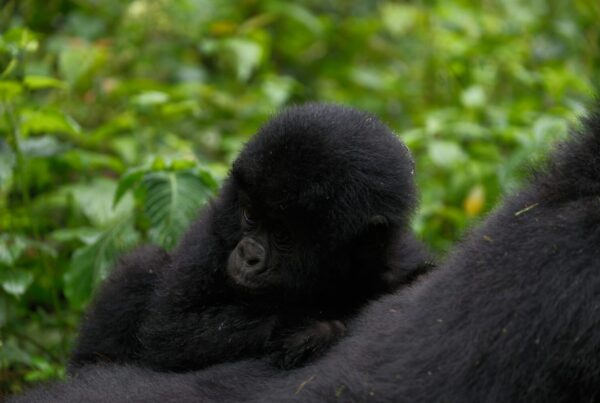
Because gorillas reproduce slowly, with females typically giving birth every four to five years, population recovery depends heavily on long-term survival and effective conservation.
The Importance of Long-Term Monitoring
One of the most valuable aspects of gorilla research in Uganda is continuous monitoring.
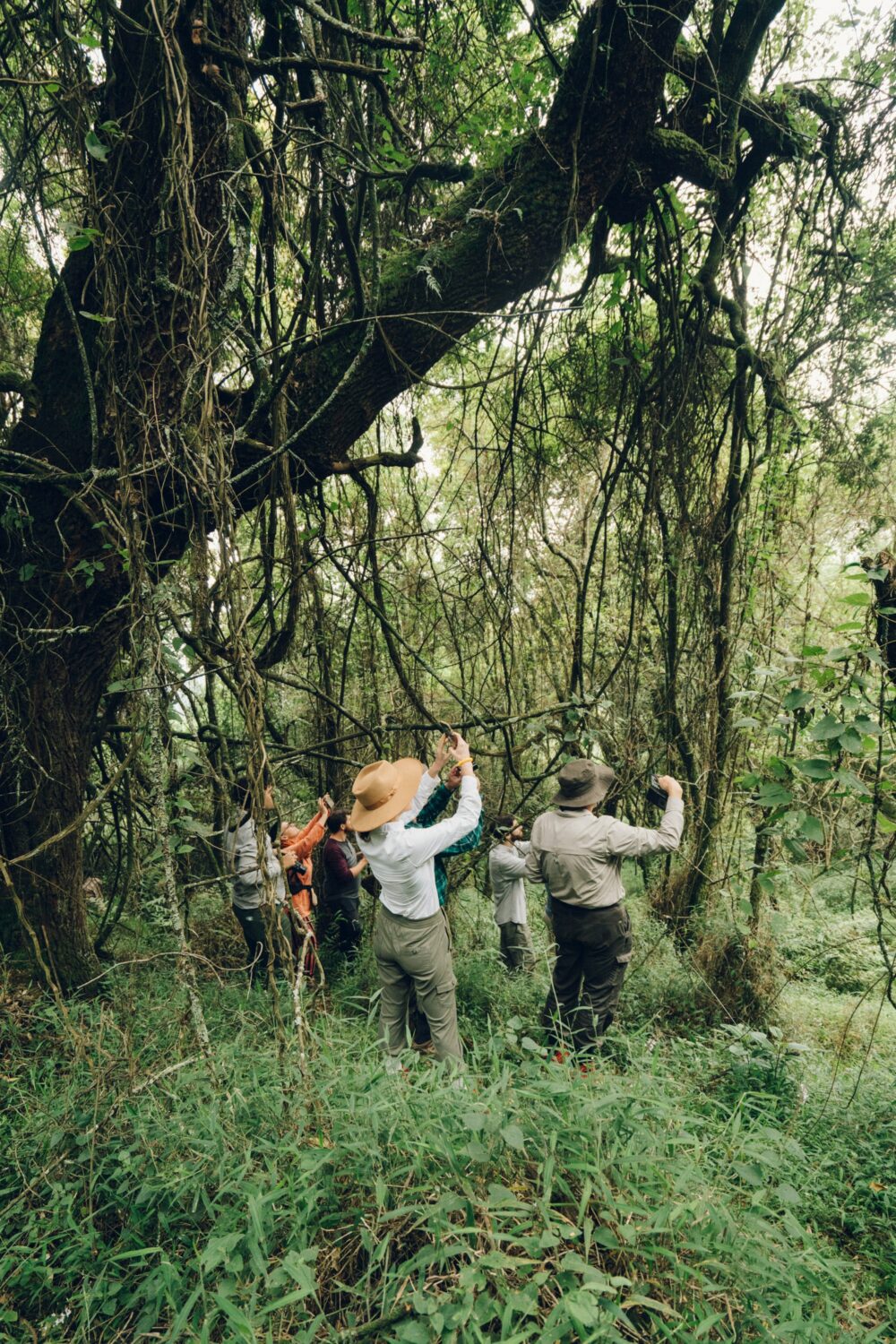
Habituated gorilla families are observed daily by trained trackers and researchers who record births, deaths, migrations, illnesses, injuries, social interactions, and behavioral changes.
This long-term data allows scientists to identify population trends that would otherwise remain invisible. Researchers can detect changes in reproductive success, infant survival, disease outbreaks, and habitat use over many years.
Daily monitoring also enables rapid veterinary intervention whenever gorillas become injured or threatened by human-related hazards such as snares.
Without consistent monitoring, many conservation successes achieved over recent decades would not have been possible.
Gorilla Habituation and Scientific Research
Before tourists can visit a gorilla family, the group must undergo a carefully managed process known as habituation.
Habituation involves gradually introducing gorillas to the presence of researchers over several years until they become comfortable with humans observing them from safe distances without altering their natural behavior.
Scientists conducting gorilla research in Uganda play an essential role during this process by documenting behavioral responses and ensuring habituation occurs slowly and responsibly.
Only after extensive evaluation does the Uganda Wildlife Authority approve a family for tourism.
This scientific approach ensures gorilla welfare remains the highest priority while allowing sustainable tourism to support conservation.
Studying Gorilla Social Behavior
Mountain gorillas live in complex social groups led by dominant silverbacks.
Researchers devote considerable attention to understanding these social structures because they influence breeding success, infant survival, conflict resolution, and overall group stability.
Observations reveal fascinating behaviors including grooming, play, vocal communication, food sharing, maternal care, and leadership dynamics.
Silverbacks not only defend their families against threats but also mediate disputes within the group, demonstrating remarkable social intelligence.
Long-term behavioral research helps conservationists predict how gorilla groups may respond to environmental changes or human activities.
Gorilla Communication
Another important field within gorilla research in Uganda focuses on communication.
Mountain gorillas communicate through vocalizations, facial expressions, body posture, chest beating, scent, and physical gestures.
Scientists have identified dozens of vocal sounds used in different situations, including feeding, warning, reassurance, and social bonding.
Understanding these communication systems helps researchers interpret gorilla behavior more accurately while improving conservation management strategies.
For visitors, recognizing these behaviors during gorilla trekking greatly enhances the experience.
Gorilla Health Research
Protecting gorilla health remains one of the highest priorities in Uganda’s conservation efforts.
Because humans and gorillas share so much genetic similarity, diseases can easily spread between species.
Researchers monitor respiratory illnesses, parasites, injuries, nutrition, reproductive health, and aging through regular field observations and veterinary examinations.
The internationally respected Gorilla Doctors program works alongside Ugandan authorities to provide emergency veterinary care whenever necessary.
Veterinary teams treat snare injuries, infections, trauma, and other life-threatening conditions while minimizing human interference.
Health research has significantly improved survival rates among Uganda’s gorilla populations.
Genetics and Population Research
Modern gorilla research in Uganda increasingly incorporates genetic science.
Researchers collect non-invasive samples such as feces to analyze DNA without disturbing the animals.
Genetic studies provide valuable information about family relationships, breeding patterns, population diversity, and long-term evolutionary health.
Maintaining strong genetic diversity is essential because small isolated populations face increased risks of inbreeding.
These findings guide conservation planning across Uganda and neighboring countries.
Habitat and Climate Research
Scientists also investigate how environmental changes affect gorilla habitats.
Bwindi Impenetrable National Park contains one of Africa’s oldest forests, supporting exceptional biodiversity alongside mountain gorillas.
Researchers monitor vegetation changes, food availability, rainfall patterns, forest regeneration, and climate variability to understand how ecosystems influence gorilla populations.
Climate research has become increasingly important as changing weather patterns affect forest ecology and food resources.
Protecting habitat remains one of the most effective long-term conservation strategies.
Human-Wildlife Interaction Research
As tourism grows, researchers continue studying how human activities influence gorilla behavior.
Strict trekking regulations—including maintaining a minimum viewing distance, limiting group sizes to eight visitors, wearing masks when required, and spending only one hour with gorillas—are based directly on scientific findings.
These guidelines reduce stress, minimize disease transmission, and preserve natural behaviors.
Every rule followed during gorilla trekking reflects decades of gorilla research in Uganda rather than arbitrary decisions.
Community Conservation Research
Scientists recognize that gorilla conservation depends not only on protecting forests but also on supporting neighboring communities.
Research examines how tourism income, education, employment, healthcare, and sustainable agriculture influence conservation attitudes.
Revenue generated through Bwindi gorilla permits funds community development projects, schools, health facilities, roads, and livelihood programs.
This partnership reduces pressure on forests while creating long-term incentives for conservation.
Uganda’s integrated approach has become an international model for community-based wildlife conservation.
Technology in Gorilla Research
Advances in technology have transformed gorilla research in Uganda.
GPS mapping allows researchers to monitor gorilla movements and habitat use with greater accuracy.
Camera traps provide valuable information about wildlife activity in remote forest areas, while drones are occasionally used for habitat mapping without disturbing wildlife.
Digital databases enable long-term analysis of health records, family histories, and behavioral observations spanning several decades.
These technological tools strengthen conservation planning while improving scientific understanding.
How Gorilla Tourism Supports Scientific Research
Every visitor participating in gorilla trekking contributes directly to research and conservation.
Permit revenue supports ranger patrols, scientific monitoring, veterinary programs, habitat protection, infrastructure development, and community conservation initiatives.
Without responsible tourism, many research programs would struggle to secure sustainable funding.
When travelers purchase Bwindi gorilla permits, they become active participants in one of the world’s most successful wildlife conservation efforts.
Visiting Bwindi to Experience Conservation Firsthand
A visit to Bwindi Impenetrable National Park offers more than an extraordinary wildlife encounter.
It provides an opportunity to witness the results of decades of research, conservation, and collaboration between scientists, park authorities, local communities, and responsible tourism operators.
Seeing a gorilla family thriving in its natural habitat becomes even more meaningful when visitors understand the scientific work that has made this success possible.
Many travelers leave Uganda with a deeper appreciation not only for gorillas themselves but also for the remarkable conservation achievements behind every trekking experience.
Combine Gorilla Trekking with Uganda’s Other Wildlife Destinations
While gorilla trekking is often the highlight of a Uganda safari, combining it with other destinations creates a richer understanding of the country’s biodiversity.
Many visitors begin their journey in Murchison Falls National Park, exploring its abundant wildlife, spectacular Nile boat cruises, and dramatic waterfall before continuing to Kibale Forest National Park for chimpanzee trekking and Queen Elizabeth National Park for classic savannah safaris.
Ending the journey in Bwindi allows travelers to experience Uganda’s incredible ecological diversity while supporting conservation across multiple protected areas.
At Murchison Fall Park Safari, we design personalized itineraries that combine gorilla trekking with Uganda’s leading wildlife destinations while ensuring every journey supports responsible tourism and conservation.
Visit Murchison falls park safari to explore our Uganda safari packages and discover the fascinating science behind mountain gorilla conservation.