Verreaux’s Eagle Uganda: Rare Mountain Raptor and Where to See It
Uganda is widely recognized as one of Africa’s finest wildlife destinations, famous for mountain gorillas, chimpanzees, tree-climbing lions, and the spectacular Murchison Falls. Yet beyond these iconic attractions lies another extraordinary natural treasure that captivates dedicated birdwatchers and wildlife enthusiasts alike—the Verreaux’s Eagle Uganda. Known for its immense size, striking black plumage, and exceptional hunting abilities, this magnificent bird of prey ranks among the continent’s most impressive raptors.
Although sightings are relatively uncommon compared to more widespread eagle species, observing a Verreaux’s Eagle soaring effortlessly above Uganda’s rugged mountain landscapes is a memorable experience. Its graceful flight, commanding presence, and preference for dramatic cliffs make it one of the most sought-after birds for avid birders visiting the Pearl of Africa.
Uganda is home to more than 1,090 recorded bird species, representing over half of Africa’s bird diversity. This remarkable richness makes the country one of the world’s premier birdwatching destinations. While species such as the Shoebill Stork, African Fish Eagle, and Great Blue Turaco often dominate safari itineraries, the Verreaux’s Eagle deserves equal attention for its rarity and ecological significance.
Whether you are planning a dedicated birding safari or combining birdwatching with gorilla trekking, wildlife viewing, or nature walks, learning about Verreaux’s Eagle Uganda adds another fascinating dimension to your adventure with Murchison Falls Park Safari.
Meet the Majestic Verreaux’s Eagle
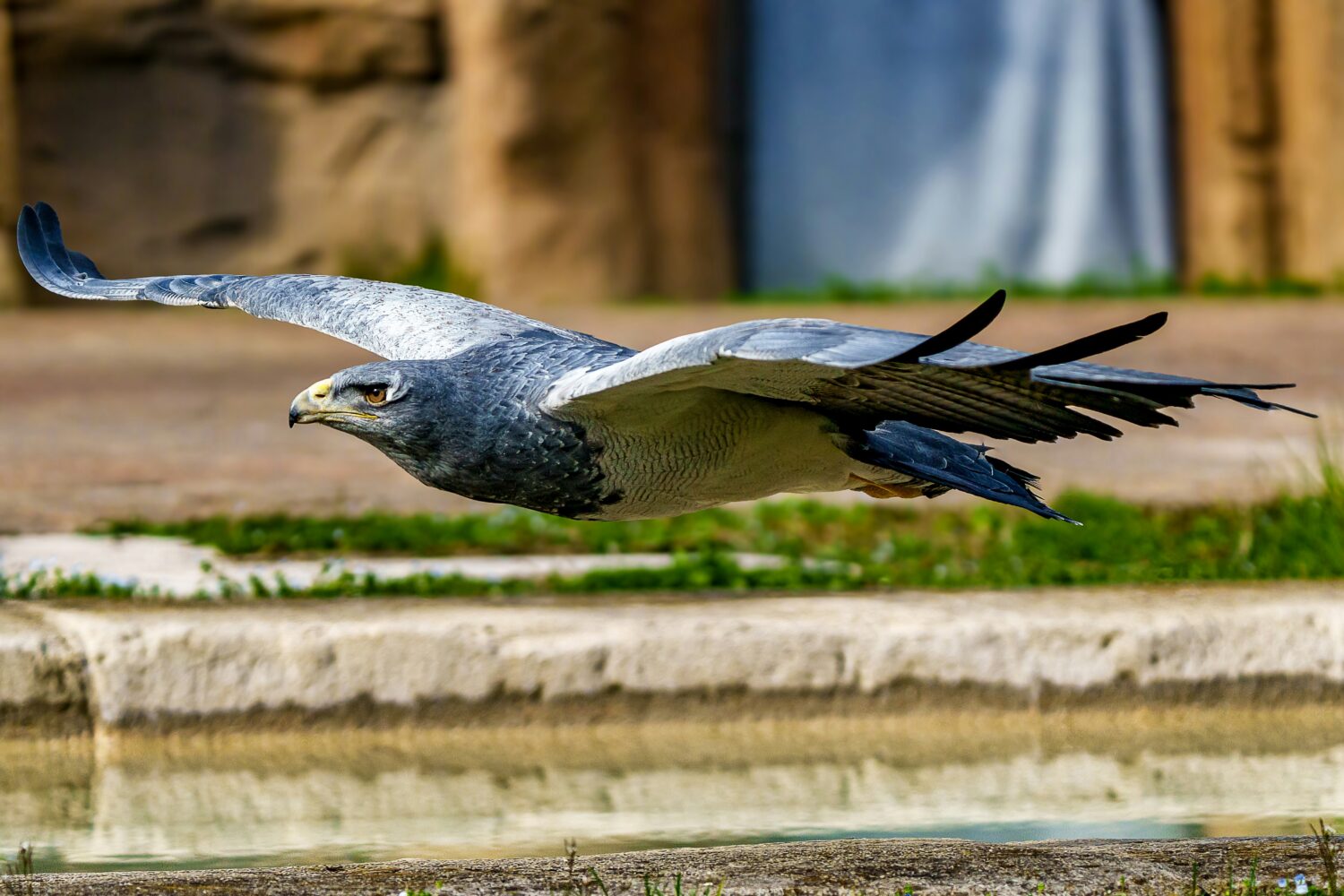
The Verreaux’s Eagle (Aquila verreauxii), sometimes called the Black Eagle, is one of Africa’s largest and most powerful birds of prey. Named after French naturalists Jules and Édouard Verreaux, this eagle is instantly recognizable by its glossy black feathers, broad wings, and distinctive white V-shaped patch across its back, which becomes especially visible during flight.
Adult birds typically measure between 75 and 96 centimeters in length, with an impressive wingspan reaching up to 2.3 meters. Females are generally larger than males, a common characteristic among birds of prey.
Unlike many eagle species that inhabit open savannahs or forests, Verreaux’s Eagle is closely associated with mountainous terrain, rocky escarpments, and steep cliffs. These dramatic landscapes provide ideal nesting sites and excellent vantage points for hunting.
Despite its formidable appearance, the eagle spends much of its day soaring effortlessly on thermal air currents, conserving energy while scanning the landscape for prey.
Why Uganda is an Excellent Destination for Verreaux’s Eagle
Uganda’s varied topography creates ideal habitats for mountain-dwelling raptors. The country’s western highlands, volcanic mountains, deep valleys, and rocky cliffs provide the conditions that Verreaux’s Eagle requires for nesting and hunting.
The Albertine Rift, one of Africa’s richest biodiversity hotspots, supports healthy populations of many specialized bird species, including several globally threatened and endemic birds. This region combines ancient forests, montane grasslands, rocky outcrops, and volcanic slopes that offer excellent opportunities to encounter rare raptors.
Although sightings cannot be guaranteed due to the species’ naturally low population density and expansive territories, experienced bird guides know the most productive observation points and seasonal behaviors that improve the chances of success.
For birdwatchers seeking unique African raptors, Uganda remains one of the continent’s most rewarding destinations.
Physical Characteristics of the Verreaux’s Eagle
One of the reasons the Verreaux’s Eagle Uganda attracts so much admiration is its striking appearance.
The adult bird displays glossy jet-black plumage over most of its body. When viewed from behind during flight, a bold white V-shaped marking across the shoulders contrasts dramatically with the dark feathers, making identification relatively straightforward even at considerable distances.
Its powerful yellow legs support enormous talons capable of capturing surprisingly large prey. The hooked black bill is perfectly designed for tearing flesh, while the eagle’s exceptionally keen eyesight enables it to detect movement from remarkable heights.
Juvenile birds differ significantly from adults, displaying lighter brown plumage that gradually darkens over several years before reaching full adult coloration.
Their broad wings and long tail provide excellent maneuverability, allowing them to navigate steep mountain valleys with remarkable agility.
Where to See Verreaux’s Eagle Uganda
Although not widespread throughout the country, several protected areas offer suitable habitats for this magnificent raptor.
Rwenzori Mountains National Park
The Rwenzori Mountains National Park provides some of Uganda’s finest habitat for Verreaux’s Eagle. Towering peaks, rocky cliffs, alpine vegetation, and dramatic valleys closely resemble the environments favored by this species across Africa.
During mountain treks, birdwatchers occasionally observe eagles soaring above cliffs or circling high on rising thermals. Early mornings with clear weather often provide the best viewing opportunities.
The Rwenzori Mountains are also home to many Albertine Rift endemics, making the region exceptional for serious birding enthusiasts.
Mgahinga Gorilla National Park
Located within the Virunga Volcanoes, Mgahinga Gorilla National Park offers another excellent location for observing mountain raptors.
Its volcanic slopes, bamboo forests, and rocky escarpments provide suitable nesting and hunting habitats.
Visitors participating in golden monkey tracking, gorilla trekking, or volcano hiking should always remain alert for soaring eagles overhead.
Mount Elgon National Park
Eastern Uganda’s Mount Elgon National Park contains extensive montane habitats where large raptors may occasionally be encountered.
The park’s cliffs, forest edges, and open moorlands create favorable hunting conditions for birds that require expansive territories.
Kidepo Valley National Park
Although better known for savannah wildlife, portions of Kidepo Valley National Park include rugged mountain terrain and rocky outcrops that occasionally support Verreaux’s Eagle and other large birds of prey.
Its remote wilderness and relatively low visitor numbers provide outstanding birdwatching experiences.
Hunting Skills of the Verreaux’s Eagle
The Verreaux’s Eagle is among Africa’s most specialized predators.
Across much of its range, it feeds primarily on rock hyraxes—small, rabbit-sized mammals that inhabit rocky cliffs and mountain slopes. In regions where hyrax populations are abundant, they may comprise more than 90 percent of the eagle’s diet.
Uganda’s mountainous regions support healthy hyrax populations, making them an important food source for resident eagle pairs.
The eagle often hunts by soaring silently above mountain slopes before diving at extraordinary speed to capture unsuspecting prey with its massive talons.
Nesting and Breeding Behavior
Breeding pairs establish territories that may extend across dozens of square kilometers.
Nests are typically constructed on inaccessible cliff ledges where predators cannot easily reach them. Some pairs reuse the same nesting site for many years, adding fresh sticks and vegetation each breeding season.
The female usually lays one or two eggs, although only one chick often survives to fledging due to competition between siblings.
Both parents participate in incubation, feeding, and protecting the chick until it becomes capable of independent flight several months later.
Because breeding success depends on stable habitats and abundant prey, preserving mountain ecosystems remains essential for the species’ long-term survival.
The Role of Verreaux’s Eagle in Uganda’s Ecosystem
As one of Uganda’s apex avian predators, the Verreaux’s Eagle plays an important ecological role.
By regulating populations of hyraxes and other mammals, it helps maintain balanced mountain ecosystems.
Healthy eagle populations often indicate healthy prey populations and relatively undisturbed habitats.
Protecting this remarkable raptor therefore benefits countless other plant and animal species sharing the same mountain environments.
Birdwatching Safaris in Uganda
Uganda has become one of Africa’s leading destinations for birdwatching tourism.
More than 1,090 bird species occur within a relatively compact area, allowing visitors to observe exceptional diversity during short itineraries.
Birding excursions frequently combine multiple habitats including tropical rainforests, wetlands, savannahs, lakeshores, mountains, and river systems.
For many international birders, adding the Verreaux’s Eagle Uganda to their life list represents one of the highlights of an East African expedition.
Best Time to See Verreaux’s Eagle Uganda
Although resident throughout the year, weather conditions influence viewing opportunities.
The dry seasons generally provide the most favorable birdwatching conditions:
December to February
and
June to August
During these months, clearer skies improve visibility while hiking trails remain more accessible.
Morning hours are particularly productive as warming air creates thermals that encourage soaring behavior.
Birdwatchers should carry binoculars and maintain regular scans of ridgelines and cliff faces throughout mountain excursions.
Bird Photography Tips
Photographing large soaring raptors presents unique challenges.
A telephoto lens between 400mm and 600mm offers excellent reach without disturbing wildlife.
Fast shutter speeds help freeze birds in flight.
Morning light often provides the most attractive illumination against Uganda’s mountain scenery.
Patience remains essential. Many successful wildlife photographers spend extended periods watching cliff faces before eagles appear.
Always prioritize ethical wildlife observation by maintaining appropriate distances from nesting sites.
Conservation Status and Challenges
The Verreaux’s Eagle is currently classified globally as Least Concern by the International Union for Conservation of Nature (IUCN). However, local populations face increasing pressures across parts of Africa.
Habitat loss resulting from expanding agriculture continues reducing available mountain ecosystems.
Human disturbance near nesting cliffs occasionally affects breeding success.
Declining prey populations may reduce reproductive success in some areas.
Electrocution on poorly designed power infrastructure presents additional risks outside protected areas.
Fortunately, Uganda’s national parks provide extensive protected habitats where eagle populations continue benefiting from conservation management.
Responsible ecotourism also generates valuable funding that supports habitat protection, ranger patrols, research, and community conservation initiatives.
Why Every Wildlife Enthusiast Should Look for Verreaux’s Eagle Uganda
While gorillas and lions often dominate travel plans, Uganda’s birdlife provides equally unforgettable experiences.
Watching a Verreaux’s Eagle glide effortlessly above mist-covered mountains reminds visitors that Africa’s biodiversity extends far beyond mammals.
Its elegance, power, and rarity create a rewarding challenge for experienced birders while inspiring first-time safari visitors to appreciate the richness of Uganda’s natural heritage.
Whether soaring above the Rwenzori Mountains or circling volcanic cliffs in Mgahinga, this magnificent eagle represents one of Uganda’s most remarkable avian treasures.
Experience Uganda’s Incredible Birdlife with Murchison Falls Park Safari
At Murchison Falls Park Safari, we design personalized birdwatching and wildlife itineraries that showcase Uganda’s extraordinary biodiversity. Whether your interests include Verreaux’s Eagle Uganda, the Shoebill Stork, Albertine Rift endemics, mountain gorillas, chimpanzees, or classic game viewing, our experienced guides ensure a rewarding and unforgettable safari.
Visit www.murchisonfallsparksafari.com to explore our birding tours, wildlife safaris, gorilla trekking adventures, and customized Uganda travel packages. Let us help you discover the rare mountain raptors and countless other natural wonders that make Uganda the Pearl of Africa.