
Uganda Safari for Christian Pilgrimage Travelers: Namugongo and Beyond
Long before Uganda became known internationally for mountain gorillas and the source of the Nile, it earned a different kind of global significance: as the site of one of Christianity’s most remarkable stories of faith and martyrdom. For Christian travelers, Uganda pilgrimage safari journeys offer something few other African destinations can match, the chance to walk sacred ground where faith was tested and ultimately triumphed, paired seamlessly with extraordinary wildlife encounters found nowhere else on earth. This is a country where a morning spent in prayerful reflection at a shrine can be followed, just days later, by an afternoon watching elephants move across the plains of Murchison Falls, a combination that makes Uganda one of the most spiritually and experientially rich destinations available to Christian travelers today.
The Story Behind Namugongo
At the heart of any Christian pilgrimage to Uganda lies Namugongo, located roughly fifteen kilometers northeast of central Kampala in the Kiira Municipality of Wakiso District. The story behind this sacred ground begins in the 1880s, during a period of profound religious and political tension at the royal court of Buganda. As Christian missionaries introduced the faith to the kingdom, growing numbers of young men in the royal court converted, a shift that Kabaka Mwanga II came to view as a direct threat to his authority and to Buganda’s traditional customs. What followed was a brutal campaign of persecution against these converts, beginning with the execution of Joseph Mukasa Balikuddembe in 1885 and culminating on June 3, 1886, when twenty-three Anglican and twenty-two Catholic converts were burned alive at Namugongo for refusing to renounce their newfound Christian faith.
Many of these martyrs were remarkably young, some still in their teenage years, and their courage in the face of execution rather than abandoning their faith has resonated across the Christian world for well over a century. The twenty-two Catholic martyrs were beatified by Pope Benedict XV in 1920 and canonized as saints by Pope Paul VI on October 18, 1964, during a ceremony at St. Peter’s Basilica in Rome. Pope Paul VI later became the first pope to visit the African continent, making a pilgrimage to Uganda between July 31 and August 2, 1969, a visit that further cemented Namugongo’s place among the world’s significant Christian pilgrimage sites. Pope Francis visited the shrine again in 2015, underscoring its continued importance within the global Catholic Church.
Visiting the Namugongo Martyrs Shrine Today
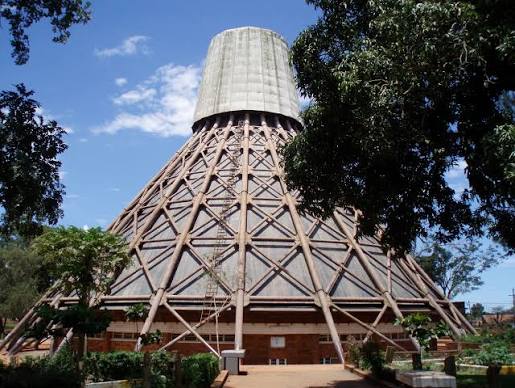
Today, the Namugongo Martyrs Shrine stands divided into two sections, a Catholic basilica and an Anglican shrine, each honoring the converts who died defending their faith. The Catholic Basilica of the Uganda Martyrs was designed in the shape of a traditional African hut, its structure supported by twenty-two copper pillars symbolizing the twenty-two canonized Catholic martyrs. At the center of the basilica grounds sits a lake, excavated in honor of the martyrs, where pilgrims often draw water believed by many to hold healing significance. A pavilion positioned in the middle of the lake serves as the setting for major celebrations, offering a striking vantage point across the entire shrine grounds.
Guided tours of the shrine typically include the Martyrs’ Lake, the site’s museum and memorial grounds, and the Ndazabazadde tree, sometimes referred to as the Torture Tree, connected to the history of the persecution that unfolded at this site. These tours combine historical context with space for genuine spiritual reflection, and visitors consistently describe a profound sense of reverence upon approaching the grounds, whether traveling as part of a large pilgrimage group or visiting quietly on an otherwise ordinary day.
Every year on June 3rd, Uganda Martyrs Day transforms the shrine into one of the largest annual religious gatherings on the African continent, drawing over a million pilgrims from Uganda and neighboring countries including Kenya, Tanzania, Rwanda, and the Democratic Republic of Congo, alongside growing numbers of international visitors from the United States, Europe, and Asia. Christian travelers planning a trip specifically around this date should expect significant crowds, extended security screening, and an atmosphere unlike almost anywhere else in East Africa, vibrant, deeply moving, and unmistakably communal in its expression of faith. Travelers who prefer a quieter, more contemplative visit can experience the shrine’s full historical and spiritual depth at any point throughout the year, without the scale of the June 3rd commemorations.
Munyonyo: Where the Martyrdom Story Began
Christian pilgrims visiting Namugongo often extend their journey to Munyonyo, located along the shores of Lake Victoria within greater Kampala, where an earlier and equally significant chapter of the martyrdom story unfolded. It was at Munyonyo that Charles Lwanga, recognized as the leader of Uganda’s Christian community during this period, baptized several converts, including the young Saint Kizito, shortly before the wave of executions that would claim their lives at Namugongo. The Munyonyo Martyrs Shrine commemorates this earlier moment in the story, offering pilgrims a fuller picture of the events leading up to June 3, 1886, and providing a quieter, more reflective counterpart to the larger, more visited grounds at Namugongo itself.
Building a Complete Christian Heritage Itinerary in Kampala
Beyond Namugongo and Munyonyo, Kampala offers Christian travelers a broader landscape of religious heritage worth incorporating into a pilgrimage itinerary. Namirembe Cathedral, the historic Anglican cathedral perched on one of Kampala’s famous hills, and Rubaga Cathedral, its Catholic counterpart on a neighboring hill, both offer striking architecture and deep historical significance tied to the early spread of Christianity through the Buganda kingdom. Together with Namugongo and Munyonyo, these sites allow Christian travelers to trace the arc of Uganda’s Christian history across a single, well-organized day or two in and around Kampala before continuing on to the country’s national parks.
Many pilgrimage tour operators in Uganda structure this heritage circuit as a natural complement to the beginning or end of a broader safari itinerary, allowing travelers arriving through Entebbe International Airport to spend their first day or two exploring these sacred sites in Kampala before heading out toward Murchison Falls, Queen Elizabeth National Park, or Bwindi Impenetrable Forest for the wildlife portion of their journey.
Pairing Pilgrimage with Uganda’s Wildlife Experience
What makes Uganda particularly compelling for Christian travelers is how naturally a pilgrimage to Namugongo pairs with the country’s world-class safari offerings. A journey that begins in prayerful reflection at the site of the Uganda Martyrs can continue northward to Murchison Falls National Park, where the Nile forces itself through a narrow gorge before plunging in a thunderous cascade, a landscape many travelers describe as its own kind of spiritual encounter with the scale and power of creation. Boat cruises along the river below the falls offer close sightings of elephants, hippos, and crocodiles, while game drives across the park’s northern savannah bring travelers face to face with lions, giraffes, and some of Uganda’s largest elephant herds.
Travelers continuing westward to Queen Elizabeth National Park encounter the famous tree-climbing lions of the Ishasha sector alongside a boat safari along the Kazinga Channel, dense with hippos and birdlife. For Christian travelers with a particular interest in extending their journey toward one of the natural world’s most extraordinary encounters, gorilla trekking in Bwindi Impenetrable Forest offers a profound, almost reverent experience in its own right, standing quietly within meters of a wild mountain gorilla family in their natural forest habitat, an encounter many travelers describe in terms that echo the same sense of awe and humility they carried away from Namugongo.
Practical Considerations for Pilgrimage Travelers
Christian travelers planning a pilgrimage-focused Uganda trip should factor religious heritage sites into their itinerary timeline alongside standard safari logistics. Visiting Namugongo, Munyonyo, and Kampala’s cathedral sites typically requires a day or two at the start or end of a trip, easily combined with an overnight stay in Kampala or Entebbe before or after the safari portion of the journey begins. Travelers planning to visit specifically around Uganda Martyrs Day on June 3rd should book accommodation in Kampala well in advance, given the scale of visitors the shrine draws during this period, and should build extra time into their schedule for the crowds, security screening, and traffic that accompany the day’s commemorations.
Modest, respectful dress is appropriate at all of Uganda’s religious heritage sites, consistent with expectations at churches, cathedrals, and shrines in most parts of the world, and travelers should approach these sites with the same quiet reverence they would bring to any significant place of Christian pilgrimage. Guided tours, available at Namugongo and several other heritage sites around Kampala, add considerable depth to a visit, offering historical context that transforms a simple site visit into a genuinely meaningful pilgrimage experience.
A Journey of Faith and Wonder
For Christian travelers, Uganda offers a rare combination rarely found together in a single destination: a profound and historically significant pilgrimage experience paired with some of the most extraordinary wildlife encounters available anywhere in the world. A trip that begins at the Namugongo Martyrs Shrine, tracing the courage of young converts who chose their faith over their lives, and continues toward the thundering waters of Murchison Falls or a quiet forest encounter with mountain gorillas in Bwindi, offers travelers a journey that moves both the spirit and the senses in equal measure.
Christian travelers planning a Uganda pilgrimage safari can explore itineraries combining Namugongo, Munyonyo, and Kampala’s religious heritage sites with wildlife experiences across Murchison Falls National Park, Queen Elizabeth National Park, and gorilla trekking in Bwindi at murchisonfallsparksafari.com. For details on trekking logistics and permit requirements for the wildlife portion of the journey, the site’s gorilla trekking page offers further information, and the team is available through the contact page to help build a complete itinerary that honors both faith and adventure in equal measure.