Grey Crowned Crane Uganda: National Bird Guide
The Grey Crowned Crane Uganda is one of the most recognizable and celebrated birds in East Africa. Known for its elegant appearance, golden crown of stiff feathers, graceful movements, and striking colors, this remarkable bird holds a special place in Uganda’s identity as the country’s national bird. It appears proudly on Uganda’s national flag and coat of arms, symbolizing peace, beauty, and the rich natural heritage of the country.
For birdwatchers, photographers, safari enthusiasts, and wildlife travelers, encountering the Grey Crowned Crane in Uganda is an unforgettable experience. Whether spotted walking gracefully through wetlands, dancing in open grasslands, or flying across savannah skies, the bird leaves a lasting impression because of its beauty and unique behavior.
Uganda is one of the best places in Africa to observe crowned cranes in the wild. The country’s diverse wetlands, floodplains, grasslands, and protected areas provide ideal habitats for these elegant birds. Travelers on Uganda safaris often encounter them in national parks, community wetlands, and rural landscapes across the country.
This guide explores everything travelers need to know about the Grey Crowned Crane Uganda, including its physical appearance, habitat, conservation status, behavior, best viewing locations, photography opportunities, and its importance in Uganda’s culture and tourism.
Why the Grey Crowned Crane is Uganda’s National Bird
 The Grey Crowned Crane was chosen as the Uganda national bird because of its calm nature, elegance, and cultural significance. Historically, the bird was admired for its gentle behavior and graceful presence, qualities that symbolized the aspirations of the Ugandan people.
The bird’s image was incorporated into Uganda’s national identity during the colonial era and later retained after independence. Today, the crowned crane remains one of the country’s strongest wildlife symbols and is recognized internationally as an emblem of Uganda.
Unlike aggressive bird species, the Grey Crowned Crane is known for its peaceful behavior and social interactions. Its graceful courtship dances and majestic appearance contribute to its symbolic importance.
For many Ugandans, the bird represents harmony, resilience, and the beauty of the country’s natural environment.
Physical Appearance of the Grey Crowned Crane
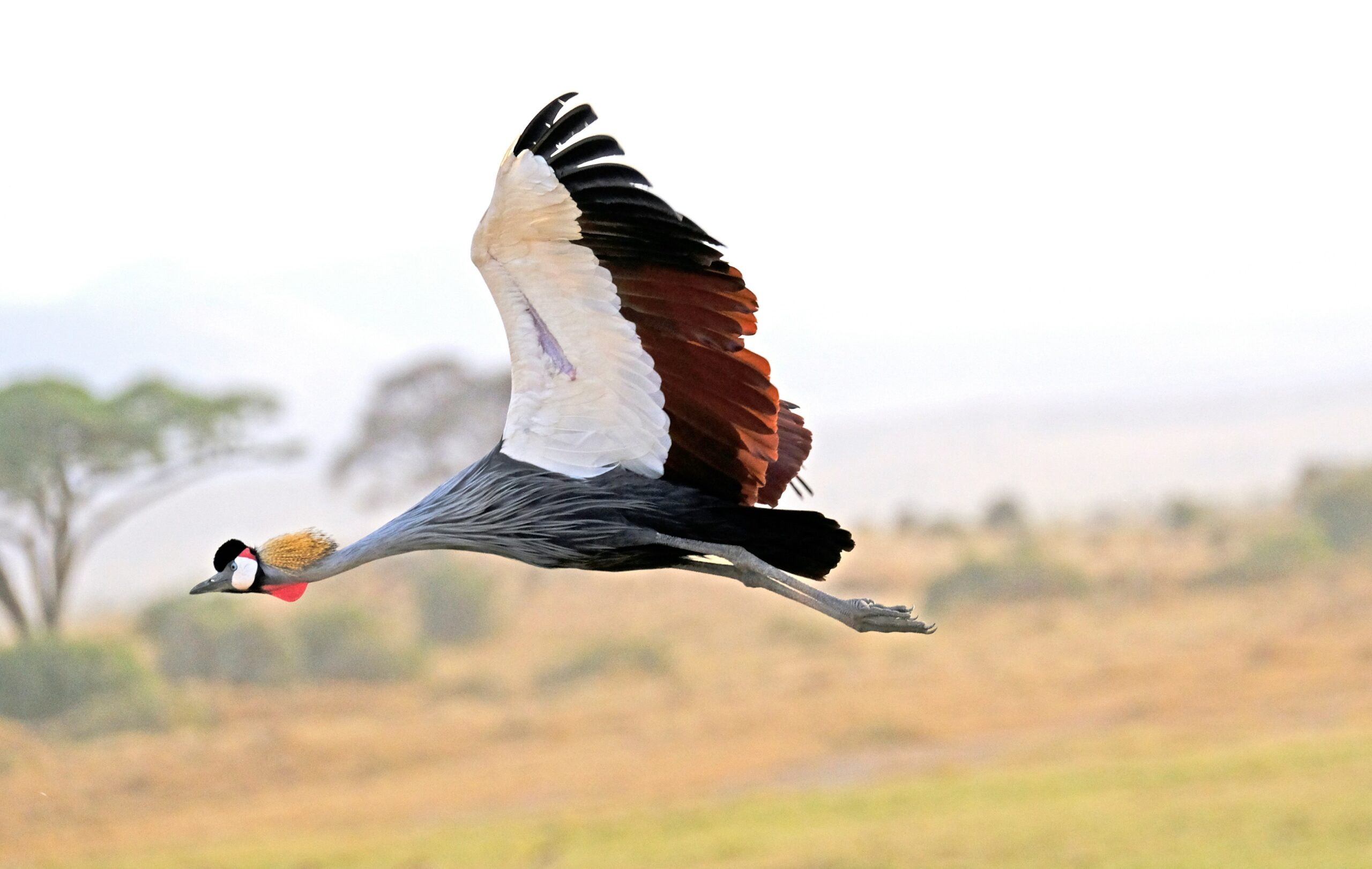
The Grey Crowned Crane Uganda is one of Africa’s most visually striking birds. Adults can grow up to one meter tall with long black legs and broad wings that display white, chestnut, and golden feathers during flight.
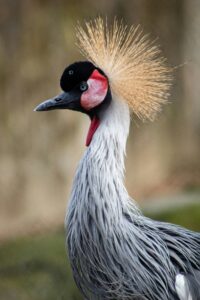
Its most distinctive feature is the crown of stiff golden feathers that forms a radiant halo around the head. This golden crest gives the bird its “crowned” name and makes it easy to identify even from a distance.
The crane also has a white face with bright red throat pouches and patches of red and white skin beneath the eyes. Its slender neck and graceful posture contribute to its elegant appearance.
Males and females look similar, although males are usually slightly larger. Juveniles appear duller with less developed crowns and browner plumage.
The bird’s appearance becomes especially spectacular during mating displays when pairs dance, bow, leap into the air, and spread their wings dramatically.
Habitat and Distribution in Uganda
The Grey Crowned Crane Uganda thrives in wetland ecosystems and open grasslands throughout the country. It is commonly found near marshes, swamps, floodplains, lakeshores, and agricultural fields.
Uganda’s varied ecosystems provide excellent conditions for crowned cranes because they depend heavily on wetlands for feeding, breeding, and nesting.
The birds are distributed across many regions of Uganda, including protected national parks and rural landscapes. Travelers often encounter them while driving through countryside roads, especially near water sources and open savannahs.
Important crane habitats include Murchison Falls National Park, Queen Elizabeth National Park, Lake Mburo National Park, Semuliki Wildlife Reserve, and wetlands surrounding Lake Victoria.
They are also frequently seen in community-managed wetlands and agricultural areas where they feed on seeds, insects, frogs, and small aquatic creatures.
Best Places to See Grey Crowned Cranes in Uganda
Uganda offers numerous excellent locations for observing crowned cranes in the wild. One of the best places is Murchison Falls National Park, where cranes are commonly seen in open grasslands and wetland areas near the Nile River.
During game drives in Murchison Falls, visitors often spot cranes walking through savannah plains alongside antelopes, giraffes, and buffaloes. The park’s combination of wildlife and birdlife makes it one of Uganda’s top safari destinations.
Queen Elizabeth National Park is another excellent location for seeing the Grey Crowned Crane Uganda. The park’s wetlands and crater lake regions support healthy crane populations. Boat safaris along the Kazinga Channel also provide opportunities to observe cranes feeding near the shoreline.
Lake Mburo National Park is especially rewarding for birdwatchers because the park contains extensive wetlands and open grasslands. Crowned cranes are frequently seen during game drives and walking safaris.
Mabamba Swamp near Entebbe, famous for shoebill storks, also supports crowned cranes and numerous wetland bird species.
Even travelers exploring rural Uganda outside national parks may encounter cranes in cultivated farmlands and marshy areas.
Behavior and Social Life
One of the most fascinating aspects of the Uganda national bird is its behavior. Grey Crowned Cranes are highly social birds often seen in pairs or family groups.
Their courtship displays are among the most spectacular behaviors in the bird world. During mating rituals, cranes dance by jumping, bowing, flapping their wings, and tossing grass into the air.
These elaborate dances strengthen pair bonds and are sometimes performed even outside breeding periods.
Unlike many crane species that roost in trees rarely, Grey Crowned Cranes possess a unique ability to perch in trees because of their long hind toes. This adaptation helps protect them from predators while resting at night.
The birds communicate using loud trumpeting calls that can travel long distances across wetlands and grasslands.
Crowned cranes are generally monogamous and often maintain long-term pair bonds.
Feeding Habits of Grey Crowned Cranes
The Grey Crowned Crane Uganda is an omnivorous bird with a varied diet. It feeds on seeds, grains, insects, frogs, lizards, worms, small fish, and aquatic invertebrates.
The birds forage slowly while walking through grasslands and shallow wetlands, carefully searching for food in vegetation and muddy areas.
Agricultural lands sometimes attract crowned cranes because they feed on crops and insects found in cultivated fields. This occasionally creates conflict with farmers, especially in regions where wetland habitats are declining.
Their feeding behavior contributes positively to ecosystems by helping control insect populations and dispersing seeds across wetland environments.
Breeding and Nesting
Breeding usually occurs during rainy seasons when wetland conditions provide abundant food and safe nesting areas.
Grey Crowned Cranes build nests using grasses and wetland vegetation in shallow marshes or flooded areas. These nests are often hidden among dense reeds and grasses for protection.
Females typically lay two to five eggs, and both parents participate in incubation and chick care.
Young cranes remain with their parents for several months while learning feeding techniques and survival behaviors.
Because breeding depends heavily on healthy wetlands, habitat destruction poses serious threats to crane reproduction success.
Conservation Status and Threats
Although the Grey Crowned Crane Uganda remains widely recognized, its population has declined significantly across East Africa in recent decades.
The species is currently classified as endangered due to habitat loss, wetland destruction, illegal trade, egg collection, and human disturbance.
Wetlands are increasingly being drained for agriculture, urban expansion, and infrastructure development. These activities reduce feeding and nesting habitats essential for crane survival.
In some areas, cranes are captured illegally for private collections or traditional practices.
Uganda Wildlife Authority, conservation organizations, local communities, and birding groups continue working together to protect crane habitats and increase conservation awareness.
Eco-tourism also contributes to conservation by generating income linked to protecting wetlands and wildlife.
Importance of Wetlands for Crane Survival
Wetlands play a critical role in the survival of the Grey Crowned Crane Uganda. These ecosystems provide breeding grounds, feeding areas, shelter, and water resources necessary for the species.
Uganda’s wetlands also support fish populations, water purification, flood control, and biodiversity conservation.
Protecting wetlands benefits not only crowned cranes but also numerous bird species including shoebills, herons, kingfishers, and migratory birds.
Travelers participating in birdwatching safaris indirectly support wetland conservation through tourism revenue and environmental awareness.
Birdwatching Safaris in Uganda
Uganda is one of Africa’s leading birdwatching destinations with over 1,090 bird species recorded across the country.
Birders visiting Uganda often search specifically for the Grey Crowned Crane Uganda alongside other iconic species such as shoebill storks, African green broadbills, turacos, bee-eaters, and hornbills.
Specialized Uganda birding safaris combine wetlands, savannahs, forests, and mountain habitats to maximize species diversity.
Murchison Falls National Park, Queen Elizabeth National Park, Kibale Forest, Bwindi Impenetrable National Park, and Mabamba Swamp are among the country’s top birding destinations.
Professional bird guides help visitors identify species, understand bird behavior, and locate rare sightings.
Photography Opportunities
Photographing crowned cranes is highly rewarding because of their striking appearance and graceful behavior.
Early morning and late afternoon lighting conditions provide the best opportunities for capturing dramatic images.
The birds’ courtship dances, wing displays, and reflections in wetland waters create stunning compositions for wildlife photographers.
Savannah landscapes in Murchison Falls and Queen Elizabeth National Park often provide beautiful natural backgrounds for crane photography.
Bird photographers should use zoom lenses and maintain respectful distances to avoid disturbing nesting or feeding birds.
Cultural Significance in Uganda
The Uganda national bird is deeply woven into the country’s culture and identity. It symbolizes national pride and appears in educational materials, tourism branding, official symbols, and conservation campaigns.
Traditional communities have long admired the crane for its elegance and peaceful nature.
The bird’s image on Uganda’s national flag makes it one of the few wildlife species directly represented within a national emblem globally.
Its presence reinforces Uganda’s reputation as a destination rich in biodiversity and natural heritage.
Combining Crane Watching with Other Safaris
One of the advantages of birdwatching in Uganda is the ability to combine crane sightings with other safari experiences.
Travelers can observe crowned cranes during classic wildlife safaris, gorilla trekking tours, chimpanzee tracking excursions, and boat cruises.
A safari combining Murchison Falls National Park, Queen Elizabeth National Park, and Bwindi Impenetrable National Park provides opportunities to see cranes alongside lions, elephants, gorillas, chimpanzees, hippos, and numerous bird species.
The diversity of Uganda’s wildlife experiences makes it one of Africa’s most rewarding safari destinations.
Why Travelers Should Look for Grey Crowned Cranes
Seeing the Grey Crowned Crane Uganda in the wild is more than just a birdwatching experience. It represents a connection to Uganda’s identity, ecosystems, and conservation story.
The crane’s beauty, graceful movements, and ecological importance make it one of Africa’s most memorable birds.
Whether encountered during a game drive, wetland excursion, or countryside journey, the crowned crane adds elegance and meaning to any Uganda safari.
For birdwatchers, photographers, and nature lovers, it remains one of the highlights of exploring Uganda’s incredible biodiversity.