

Murchison Falls Historical Sites
Murchison Falls National Park is widely celebrated for its wildlife and the dramatic force of the Nile, yet beneath its landscapes lies a layered past shaped by exploration, indigenous heritage, and colonial encounters. Exploring historical sites Murchison reveals stories that connect the river, the land, and the people who have interacted with it for centuries. These narratives add depth to a safari, transforming it from a visual experience into an intellectual and cultural journey.
Through immersive heritage tours, visitors begin to understand how uganda colonial history and local traditions intersect in this region. The result is a more complete appreciation of Murchison Falls, where every viewpoint, trail, and river crossing carries a story.
The Origins of History in Murchison Falls
Long before the arrival of European explorers, the Murchison Falls region supported thriving communities that depended on the Nile for survival. The river provided water, fertile land, and a route for movement and trade. Oral traditions passed through generations preserve the earliest accounts of life in the area, offering a perspective that predates written records.
These indigenous narratives form a critical foundation of historical sites Murchison, reminding visitors that the history of the region did not begin with exploration. Instead, it evolved over time, shaped by local knowledge, cultural practices, and deep connections to the environment.
The Age of Exploration and the Nile
The global fascination with the Nile brought European explorers into the region during the 19th century. Their journeys aimed to uncover the source of the river, a mystery that had captivated geographers for centuries. As these expeditions moved through Uganda, they documented landscapes, waterways, and communities, leaving behind records that would later define uganda colonial history.
Among the most notable figures were John Hanning Speke and James Grant, whose travels contributed significantly to the mapping of the Nile. Their work drew international attention to the region and positioned Murchison Falls as a key point of interest. Today, these journeys form an essential part of heritage tours, connecting visitors to the era when exploration reshaped global understanding of Africa.
Samuel Baker and the Naming of Murchison Falls
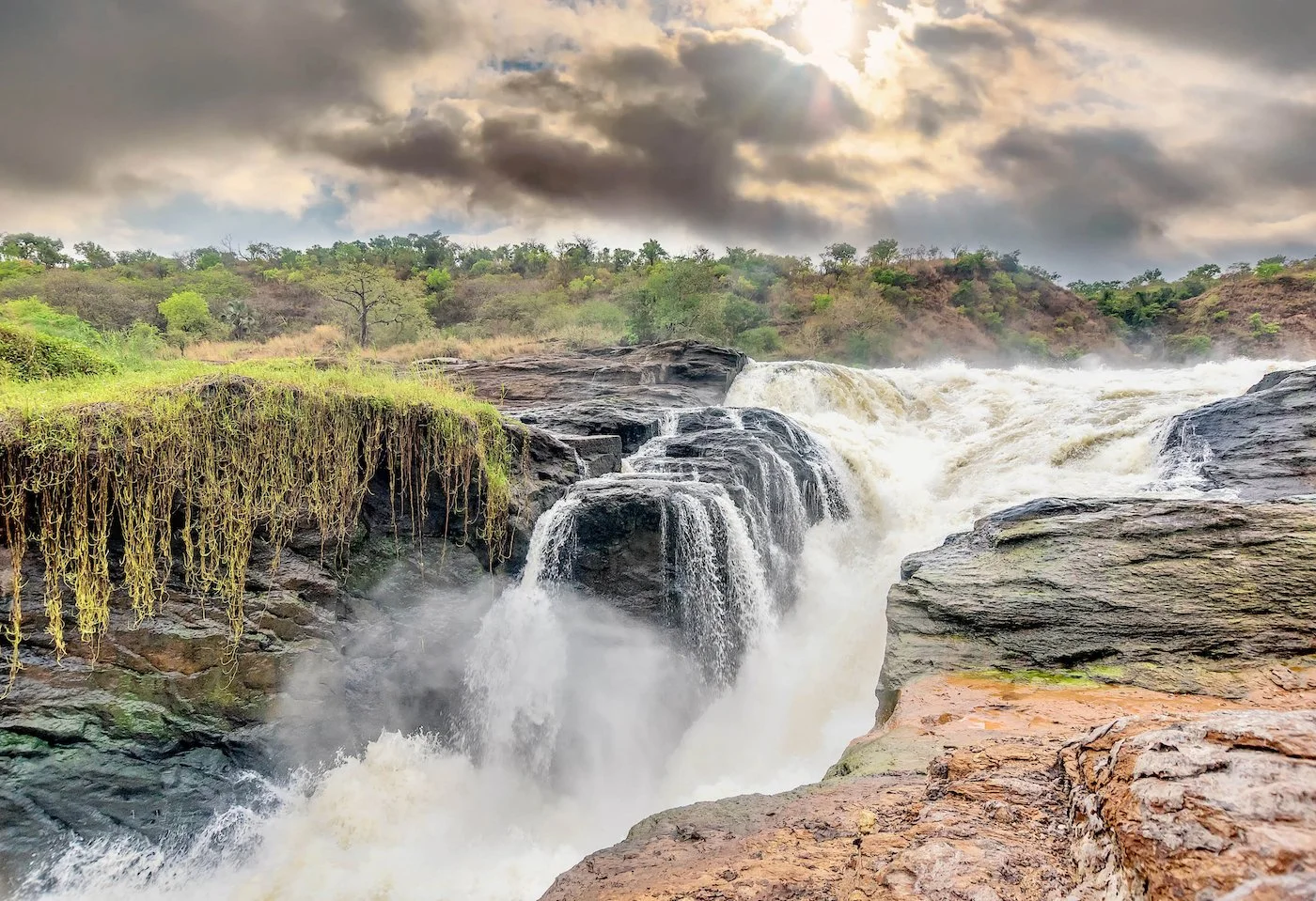
One of the most defining historical moments in the region occurred in 1864, when Sir Samuel Baker and his wife Florence reached the powerful waterfall along the Nile. Captivated by its force and beauty, Baker named it “Murchison Falls” in honor of Sir Roderick Murchison, then President of the Royal Geographical Society.
This naming marked a turning point, embedding the falls within the narrative of European exploration. While the site already held significance for local communities, its new name reflected the influence of colonial perspectives. Today, the falls remain one of the most iconic historical sites Murchison, representing both natural wonder and historical transformation.
Colonial Presence and Its Influence
As exploration gave way to colonial administration, the Murchison Falls region became part of broader governance structures introduced by the British. Roads, administrative centers, and trade routes developed, altering the social and economic landscape.
The legacy of this period is still visible in place names, infrastructure, and historical accounts. Understanding uganda colonial history in Murchison Falls involves recognizing both the changes introduced during this era and the resilience of local communities who adapted to them.
For visitors, these insights enrich heritage tours, providing context for the modern-day park and its surrounding areas.
Indigenous Heritage and Cultural Continuity
While colonial narratives often dominate written history, the enduring presence of indigenous cultures offers a more balanced perspective. Communities such as the Alur, Acholi, and Banyoro have maintained traditions that reflect their relationship with the land.
Their stories, rituals, and practices continue to shape the identity of the region. Exploring historical sites Murchison through this lens allows visitors to appreciate the continuity of culture alongside historical change. It also highlights the importance of preserving these traditions as part of Uganda’s broader heritage.
Key Historical Locations in Murchison Falls
The top of Murchison Falls stands as both a natural and historical landmark. This is where early explorers witnessed the Nile forcing its way through a narrow gorge, creating one of the most powerful waterfalls in the world. Standing at this point today, visitors can imagine the awe experienced by those who first documented it.
Baker’s Trail offers another connection to the past. Walking along sections of this route provides a tangible link to the journey undertaken by Samuel Baker. The trail combines physical exploration with storytelling, making it a central feature of heritage tours.
The Karuma area, located along the Nile, also holds historical importance. It served as a crossing point and a site of interaction between communities. Exploring this region reveals how geography influenced movement and trade, adding depth to uganda colonial history.
Pakwach, situated near the northern sector of the park, has long been a hub for trade and travel. Its location along the Nile made it a strategic point for both indigenous communities and colonial administration. Today, it remains an important reference point for understanding historical sites Murchison.
The Role of Heritage Tours in Modern Safaris
Modern heritage tours in Murchison Falls are designed to connect visitors with these historical narratives. Guided by knowledgeable experts, these tours provide context, interpretation, and storytelling that bring the past to life.
Rather than presenting history as static information, these experiences encourage engagement. Visitors walk the same paths, view the same landscapes, and hear the stories that shaped the region. This approach transforms history into an active part of the safari experience.
Blending History with Wildlife Experiences
A safari in Murchison Falls naturally focuses on wildlife, yet combining it with historical exploration creates a more complete journey. Game drives reveal the park’s biodiversity, while visits to historical sites Murchison provide context for the land itself.
The Nile, for example, is not only a habitat for animals but also a central feature in exploration and trade. Understanding its historical significance enhances the experience of a boat cruise or a visit to the falls.
This integration of nature and history defines the value of heritage tours, making them an essential addition to any itinerary.
The Importance of Preserving Historical Sites
Preservation of historical sites ensures that future generations can continue to learn from and appreciate the past. Efforts to protect these locations involve collaboration between conservation authorities, local communities, and tourism stakeholders.
Responsible tourism plays a key role in this process. By visiting historical sites Murchison respectfully and supporting conservation initiatives, travelers contribute to the preservation of Uganda’s heritage.
Planning Your Historical Experience in Murchison Falls
Planning a historical exploration requires thoughtful integration into your safari itinerary. Guided tours offer the most comprehensive experience, ensuring that you gain accurate and meaningful insights.
Working with experienced safari planners allows you to combine heritage tours with wildlife activities, creating a balanced journey. Including stops at key locations such as the top of the falls, Baker’s Trail, and Pakwach ensures a well-rounded understanding of the region.
For tailored itineraries that include historical exploration, contact us and discover how to incorporate uganda colonial history into your safari.
Why History Enhances Your Safari
Understanding history transforms the way you experience a destination. It provides context, meaning, and connection. In Murchison Falls, history reveals how landscapes, wildlife, and communities have evolved together.
Exploring historical sites Murchison allows you to see beyond the surface, uncovering stories that enrich every moment of your journey. These experiences create lasting impressions, making your safari not only memorable but also meaningful.
Plan Your Safari
Step beyond wildlife and discover the stories that shaped Murchison Falls through immersive heritage tours. From the legacy of explorers to the depth of uganda colonial history, every site adds a new dimension to your journey.
Start planning your safari today with expert guidance and tailored itineraries, here and create a travel experience that blends history, culture, and adventure.