Primate Diversity Murchison Falls: A Complete Guide to Uganda’s Hidden Forest Primates
Overview
Murchison Falls National Park is widely known for powerful waterfalls, vast savannahs, and classic Big Five game drives. What many travelers overlook is its remarkable primate ecosystem. The park sits at the ecological meeting point of savannah, riverine forest, and tropical woodland, creating ideal conditions for a rich range of primates. This diversity makes primates Murchison Falls one of the most underrated wildlife experiences in Uganda.
Beyond the open plains filled with elephants and giraffes, Murchison shelters quiet forest corridors where monkeys leap through canopy layers and chimpanzees move in tightly structured social groups. For travelers seeking a deeper wildlife encounter, a primate safari in this park reveals a completely different side of Uganda—one defined by intelligence, social behavior, and constant movement.
The Ecological Zones Supporting Primate Life
The diversity of primates in Murchison Falls does not happen by chance. The park’s varied habitats provide the structure needed for different species to coexist without direct competition. The southern sector, particularly Budongo Forest, forms the core primate habitat. This is one of Uganda’s largest remaining natural forests, dominated by mahogany and ironwood trees, offering dense canopy cover and abundant food sources.
Riverine forests along the Nile create additional microhabitats where species like vervet monkeys and baboons thrive. Woodland and savannah edges also support adaptable primates that move between open and closed environments. This layered ecosystem is why monkey species Uganda are so well represented in Murchison compared to purely savannah parks.
Budongo Forest: The Primate Heart of Murchison
Budongo Forest stands out as the primary destination for primate tracking within Murchison Falls National Park. This forest is globally recognized for its chimpanzee population and long-term research history. The Kaniyo Pabidi and Busingiro sectors provide structured tracking experiences that allow visitors to enter the forest with trained guides.
Walking through Budongo is a shift in atmosphere. The air becomes cooler, the light filters through dense canopy, and the sounds change from distant wildlife calls to close-range primate communication. This is where primates Murchison Falls become most visible and interactive.
Chimpanzees dominate the experience, but they are not alone. Several monkey species move through the same forest layers, often spotted during chimp tracking excursions. This makes Budongo one of the most rewarding locations for a full primate safari in Uganda.
Chimpanzees of Murchison Falls
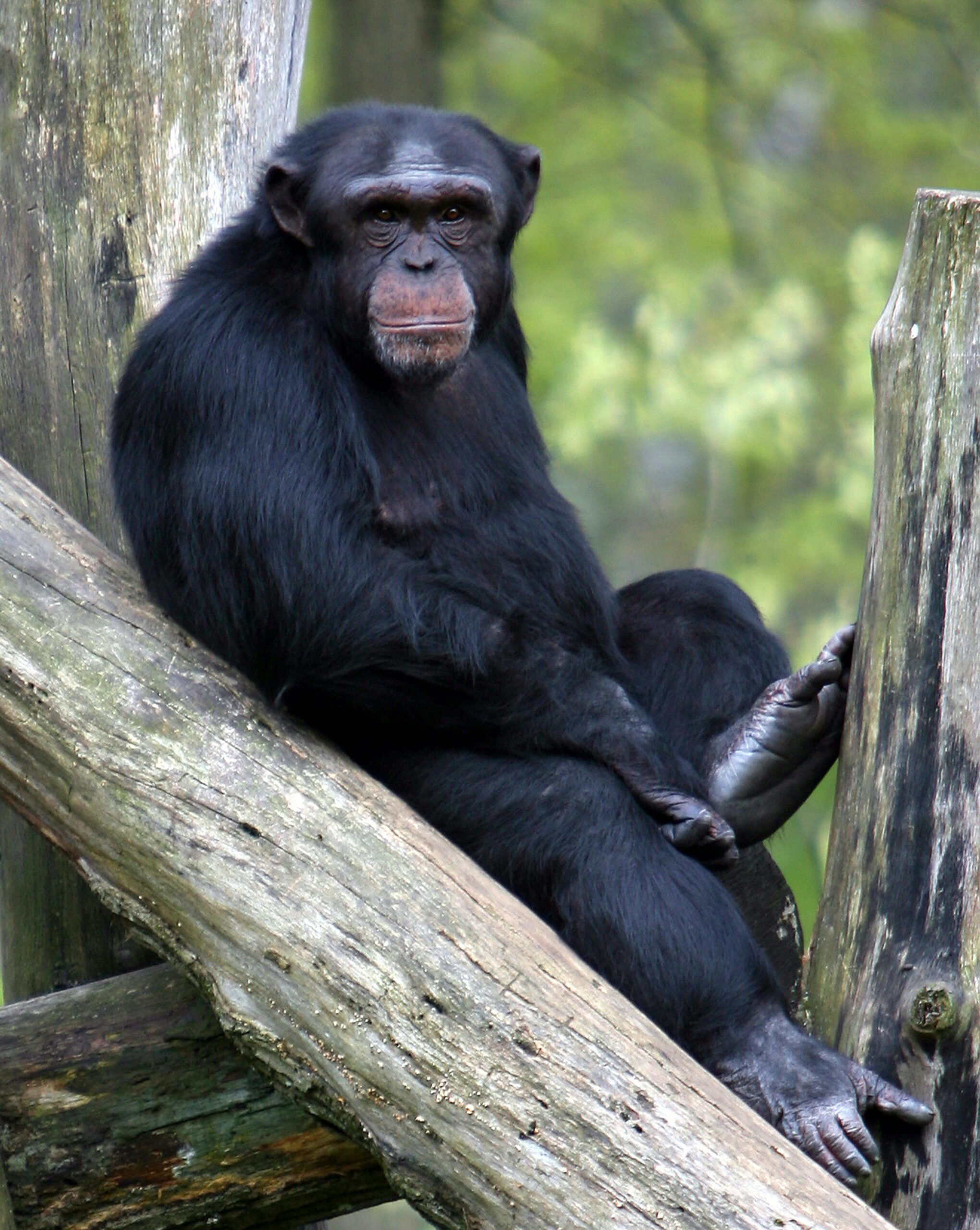
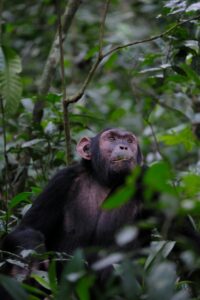 Chimpanzees are the flagship primate species in Murchison Falls, offering one of the most engaging wildlife encounters in Africa. Tracking begins early in the morning, guided by researchers and rangers who follow vocalizations and nesting patterns to locate troops.
Once found, chimpanzees reveal a complex social structure. They groom, communicate through calls, and move with coordinated intelligence. Watching them interact provides insight into behavior that closely mirrors human social systems. This experience elevates the park beyond traditional safaris, positioning it as a destination for immersive wildlife understanding.
Chimpanzee tracking also complements gorilla trekking itineraries across Uganda. Many travelers combine Kibale Forest and Bwindi with Murchison, creating a broader primate-focused journey that highlights the country’s reputation as the primate capital of East Africa.
Olive Baboons: The Most Visible Primates
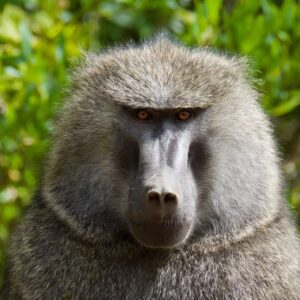 Olive baboons are the most commonly seen primates throughout Murchison Falls. They thrive in open areas, especially along park roads and near riverbanks. Their adaptability allows them to move between forest and savannah with ease.
Baboons live in large troops, often exceeding 50 individuals. Their social dynamics are highly structured, with clear hierarchies and constant interaction. Observing them during a game drive provides an accessible introduction to monkey species Uganda, especially for travelers who may not enter forested areas.
Despite their familiarity, baboons offer valuable behavioral insights. They display cooperation, competition, and communication patterns that reflect broader primate evolution.
Vervet Monkeys: Agile and Widespread
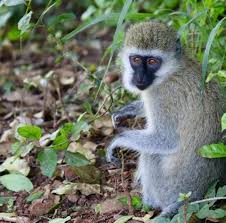 Vervet monkeys are another key species found across Murchison Falls. They are smaller than baboons but equally active, often seen darting through trees near lodges and picnic sites. Their distinctive black faces and grey bodies make them easy to identify.
These monkeys are highly adaptable and thrive in human-adjacent environments. They are known for their intelligence and quick reactions, often foraging opportunistically. In the context of a primate safari, vervet monkeys provide frequent sightings that complement rarer forest encounters.
Their presence across multiple habitats highlights the ecological flexibility that defines many primates Murchison Falls.
Black-and-White Colobus Monkeys
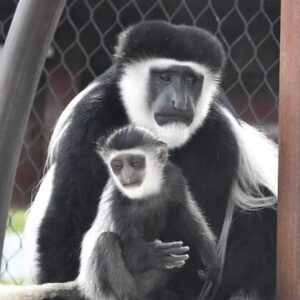 The black-and-white colobus monkey represents one of the most visually striking primates in the park. With long flowing tails and contrasting fur patterns, they are often seen high in the canopy, moving gracefully between branches.
Colobus monkeys are leaf-eaters, relying on forest vegetation rather than fruits. This dietary specialization allows them to occupy niches that other primates avoid. Their quiet, deliberate movement contrasts with the energetic behavior of vervet monkeys and baboons.
Spotting colobus monkeys requires patience and a keen eye, but their elegance adds depth to the overall experience of exploring monkey species Uganda.
Red-Tailed Monkeys and Blue Monkeys
Red-tailed monkeys and blue monkeys are more elusive but equally important components of Murchison’s primate diversity. They inhabit dense forest zones, particularly in Budongo, and are often encountered during guided walks.
Red-tailed monkeys are known for their colorful facial markings and long tails, while blue monkeys display subtle coloration with a more reserved behavior pattern. Both species contribute to the layered complexity of the forest ecosystem.
Their presence reinforces the idea that a primate safari in Murchison is not limited to one or two species, but rather a continuous discovery of different primate adaptations.
Nocturnal Primates: A Lesser-Known Dimension
While most visitors focus on daytime sightings, Murchison Falls also supports nocturnal primates such as bush babies. These small, wide-eyed creatures emerge after dark, moving silently through trees in search of insects and fruits.
Night walks, where permitted, reveal this hidden layer of primate life. Bush babies communicate through high-pitched calls and demonstrate remarkable agility. Including nocturnal exploration adds another dimension to understanding primates Murchison Falls.
Primate Behavior and Social Structures
One of the defining aspects of primate viewing is behavior. Unlike many large mammals, primates display constant interaction. Grooming, feeding, territorial displays, and communication occur throughout the day.
Chimpanzees form complex societies with shifting alliances. Baboons maintain strict hierarchies. Monkeys operate in smaller, more fluid groups. These dynamics create an engaging wildlife experience where no two sightings feel the same.
This behavioral richness is what makes monkey species Uganda so compelling for both first-time visitors and experienced wildlife enthusiasts.
Best Time for a Primate Safari in Murchison Falls
Primate viewing in Murchison Falls is possible year-round, but conditions vary with the seasons. The dry seasons from December to February and June to September provide easier forest access and clearer trails. During these months, tracking chimpanzees becomes more predictable.
The wet seasons bring lush vegetation and increased food availability, which can make primates more dispersed.
However, this is also when the forest appears most vibrant, offering excellent photography opportunities.
Choosing the right season depends on travel priorities, but a well-planned primate safari can succeed at any time of year.
Combining Primate Experiences with Classic Safaris
Murchison Falls offers a rare combination of primate tracking and traditional wildlife safaris. A typical itinerary may include morning chimpanzee tracking in Budongo followed by an afternoon game drive across the savannah.
The Nile boat cruise adds another dimension, where primates can be seen along riverbanks alongside hippos and crocodiles. This integration of ecosystems creates a balanced safari experience that few parks in Africa can match.
Travelers looking to expand their journey can combine Murchison with Kibale Forest for chimpanzees and Bwindi for gorilla trekking. This creates a comprehensive Uganda itinerary centered around primates Murchison Falls and beyond.
Conservation and Primate Protection
Conservation plays a critical role in maintaining primate populations within Murchison Falls. Uganda Wildlife Authority works alongside research institutions to monitor chimpanzee groups and protect forest habitats.
Budongo Forest, in particular, benefits from long-term conservation programs that focus on sustainable tourism and scientific research. These efforts ensure that future generations will continue to experience the richness of monkey species Uganda.
Responsible tourism practices, including guided tracking and strict visitor rules, help minimize human impact while supporting conservation funding.
Planning Your Primate Safari in Murchison Falls
A successful primate-focused safari requires thoughtful planning. Accommodation near Budongo Forest provides the best access to chimpanzee tracking. Lodges in the southern sector allow early departures into the forest, increasing the chances of successful sightings.
Permits for chimpanzee tracking should be booked in advance, especially during peak travel seasons. Combining forest activities with savannah exploration ensures a well-rounded itinerary that captures the full diversity of the park.
For travelers designing a Uganda safari, integrating primates Murchison Falls into the itinerary adds depth and variety beyond traditional wildlife viewing.
Internal Travel Inspiration and Related Experiences
For visitors exploring Murchison falls park safari, several related experiences complement this primate-focused guide. The Murchison Falls boat cruise offers opportunities to observe wildlife along the Nile, while game drives highlight the park’s Big Five potential.
Travelers interested in broader primate experiences can explore chimpanzee tracking in Budongo alongside gorilla trekking itineraries across Uganda. Combining these pages within your safari planning journey helps build a complete understanding of Uganda’s wildlife diversity.
Experience Primate Diversity in Murchison Falls
A journey into Murchison Falls National Park reveals far more than dramatic landscapes and large mammals. It opens the door to a world of intelligent, social, and highly adaptable species that define the region’s ecological richness.
From chimpanzees in Budongo Forest to baboons along the Nile, the diversity of primates Murchison Falls creates a safari experience that is both immersive and educational. It is this balance of adventure and insight that continues to draw travelers seeking something beyond the ordinary.
Start planning your primate safari and discover why Murchison Falls stands as one of Uganda’s most complete wildlife destinations.