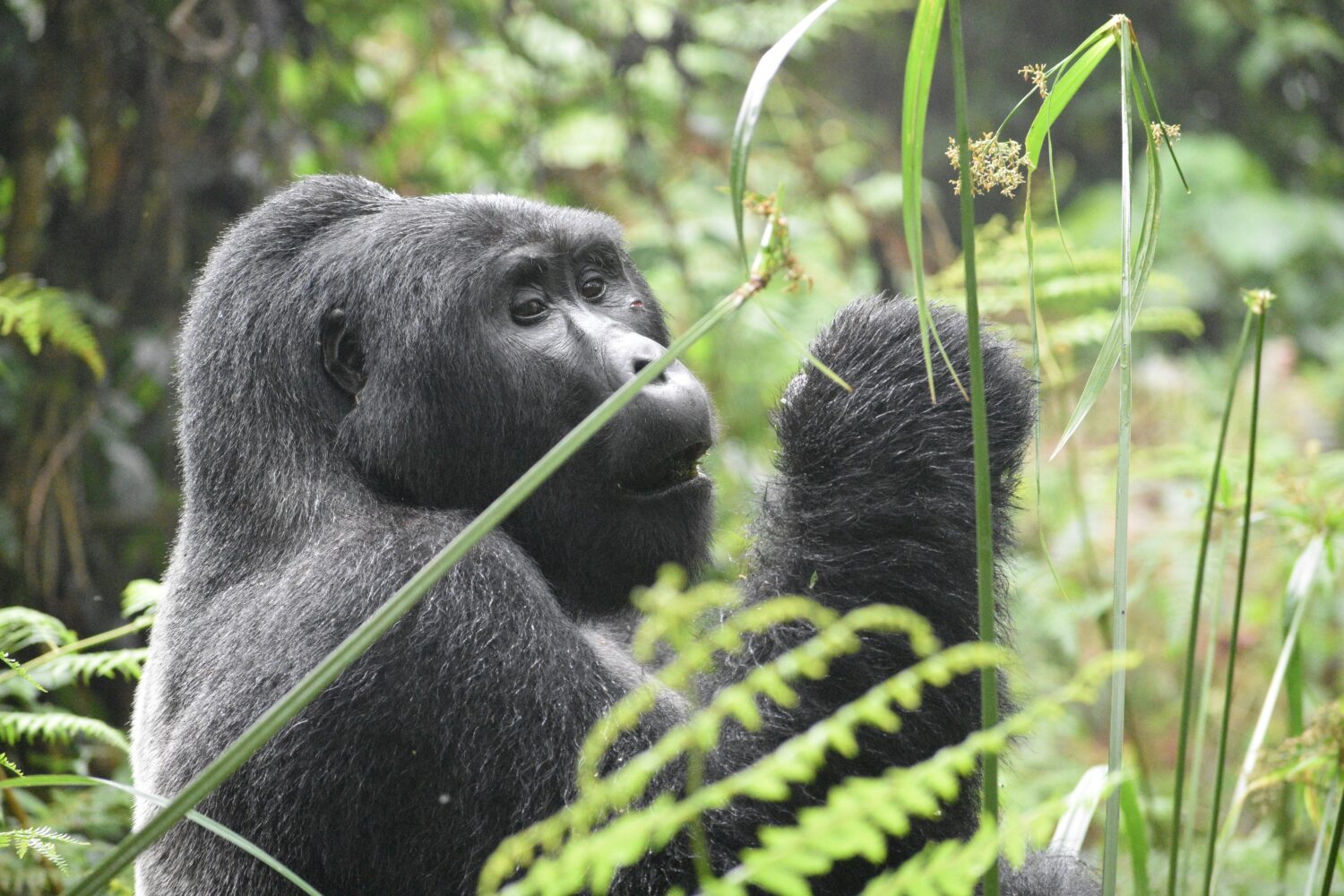
Mountain gorillas exist in exactly one place on the planet: the Virunga Massif and the surrounding forests that straddle the borders of Uganda, Rwanda, and the Democratic Republic of Congo. On paper, that makes a Uganda Rwanda Congo gorilla safari sound like the ultimate bucket-list trip — three countries, three national parks, one incredible species, all within a few hours’ drive of each other. It’s a genuinely tempting idea, and it’s one we get asked about often at Murchison Falls Park Safari.
But the honest answer to “is it possible” isn’t a simple yes. It depends heavily on timing, current security conditions in eastern Congo, your risk tolerance, and what you actually want out of the experience. This article breaks down what a three-country gorilla trip really involves in 2026, where the genuine obstacles are, and what we’d realistically recommend instead if your goal is simply to see mountain gorillas in the wild without unnecessary risk.
The Geography Behind the Idea
Bwindi Impenetrable National Park in southwestern Uganda, Volcanoes National Park in northern Rwanda, and Virunga National Park in eastern Congo all sit within the same broader ecosystem, separated in places by little more than a border post and a few kilometers of road. Bwindi holds the largest share of the world’s remaining mountain gorillas, spread across more than a dozen habituated families. Volcanoes National Park, across the border in Rwanda, shares the Virunga volcanic range and offers arguably the most polished, high-end gorilla trekking experience in the region. Virunga National Park, on the Congolese side of that same mountain range, is Africa’s oldest national park and home to additional gorilla families, along with the active Nyiragongo volcano.
Because these three parks are geographically close, tour companies have long marketed multi-country gorilla itineraries that string together treks in all three nations over a week or two. In stable years, this is a genuinely spectacular trip. The problem in 2026 is that “stable” doesn’t currently describe eastern Congo.
The Honest Situation in Congo Right Now
This is the part of the conversation most blog posts gloss over, and it’s the part that actually matters if you’re planning real travel dates. Eastern Congo, specifically the North Kivu region where Virunga National Park sits, has experienced serious armed conflict, including the capture of the city of Goma by the M23 militant group. As a direct result, Virunga National Park has been closed to gorilla trekking and volcano hikes for an extended period, with the park’s own management stating that treks remain closed until further notice. On top of the park closure itself, government travel advisories — including a “Do Not Travel” designation for North and South Kivu — reflect an ongoing risk of armed conflict and kidnapping in the immediate area.
None of this means the Congo will never reopen. Virunga has weathered closures before and reopened when conditions allowed, and there are tour operators and independent travelers who have visited during calmer windows, always accompanied by armed park rangers and operating only in tightly controlled southern sectors of the park. But as of 2026, Congo should not be treated as a reliable, bookable leg of a safari itinerary. If you’re planning travel dates months in advance, building your trip around a park that may or may not be open when you arrive is a real risk to your entire itinerary, your money, and — more importantly — your safety.
There is one nuance worth mentioning: Kahuzi-Biega National Park, further south in Congo and home to eastern lowland (Grauer’s) gorillas rather than mountain gorillas, has generally remained more accessible than Virunga, since it sits outside the most active conflict zones. It’s a different gorilla subspecies and a different experience, but it’s the more realistic Congo option for travelers determined to include the country in their plans.
What Actually Works: Uganda and Rwanda Together
Here’s the good news, and it’s genuinely good news: combining Uganda and Rwanda for gorilla trekking is entirely possible, safe, and well-established. Both countries run mature, professional tourism industries with strict permit systems, ranger-escorted treks, and decades of experience hosting international visitors. Crossing between them is straightforward at land borders like Katuna/Gatuna, and many travelers do exactly this — trekking in Bwindi for a few days, then crossing into Rwanda to trek in Volcanoes National Park, sometimes adding time in Kigali or on Lake Kivu.
The two experiences also complement each other nicely. Bwindi gorilla trekking tends to involve longer, steeper hikes through dense forest, since gorilla families here range across a large, rugged park. Volcanoes National Park treks in Rwanda are often shorter and more accessible, with well-organized logistics and a slightly more luxurious lodge scene nearby. Doing both gives you two distinct forest environments and two separate chances at a gorilla encounter, without touching an active conflict zone.
If your real goal is “see mountain gorillas in more than one country,” a Uganda and Rwanda gorilla safari delivers that experience fully and safely, without the uncertainty currently attached to Congo.
Permit Costs and What They Actually Buy You
Gorilla permit pricing varies significantly by country, and it’s one of the biggest factors in planning a multi-country trip. A Uganda gorilla trekking permit currently costs USD 800 per person, arranged through the Uganda Wildlife Authority. A Rwanda gorilla permit costs considerably more, at USD 1,500 per person, reflecting Rwanda’s positioning as a premium, lower-volume destination. Congo’s permits, when Virunga is operational, have historically been priced lowest of the three, often in the USD 400–450 range — part of why the country appeals to budget-conscious travelers, though price should never be the deciding factor when safety is in question.
Each permit buys you one hour with a habituated gorilla family, accompanied by armed rangers and experienced trackers, after a trek that can range from under an hour to several hours depending on where the gorillas are located that day. Uganda also offers a longer Gorilla Habituation Experience in Bwindi, giving visitors up to four hours with a semi-habituated family instead of the standard one-hour visit — a worthwhile upgrade for serious wildlife photographers or repeat visitors.
Ready to lock in your gorilla trekking dates? Check permit availability and book your Bwindi gorilla trek with our team before the peak season fills up.
Visas and Border Logistics for a Multi-Country Trip
A Uganda and Rwanda gorilla safari is logistically simple. Uganda requires an e-visa for most nationalities, applied for online in advance, while Rwanda offers similarly straightforward e-visa processing. Travelers combining both countries with a third East African Community destination may also consider the East Africa Tourist Visa, a joint USD 100 multiple-entry visa covering Uganda, Kenya, and Rwanda over 90 days — though for a trip limited to just Uganda and Rwanda, separate single-country visas are often the more cost-effective choice.
Congo is an entirely different matter. A DRC tourist visa must generally be arranged in advance, often with an invitation letter from a licensed operator, and pricing varies from roughly USD 100 to 400 depending on visa type and duration. Even when Virunga is operational, entering Congo involves more paperwork, more advance planning, and more dependency on a trusted local operator than crossing between Uganda and Rwanda ever does. A yellow fever vaccination certificate is required for entry into all three countries, and travelers should also budget for a pre-trip medical consultation given the physical demands of trekking at altitude through dense forest terrain.
So, Is a Three-Country Gorilla Safari Possible?
Technically, yes — in a stable year, with the right operator, the right permits, and careful attention to real-time security advisories, travelers have completed gorilla treks in Uganda, Rwanda, and Congo within a single trip. But “technically possible” and “currently advisable” are two different things. Given the closure of Virunga’s gorilla trekking program and the ongoing conflict in North Kivu as of 2026, we don’t recommend building a Congo leg into your itinerary right now, no matter how appealing the lower permit price might look.
What we do recommend, without reservation, is a combined Uganda and Rwanda gorilla trekking safari. It gives you everything that draws people to the three-country idea in the first place — multiple countries, multiple forest ecosystems, multiple chances to encounter mountain gorillas in the wild — without the uncertainty and risk currently attached to eastern Congo. Should conditions in the region genuinely stabilize and Virunga reopen its gorilla program on a sustained basis, that calculus may change, and we’ll update our guidance accordingly. Until then, Uganda and Rwanda remain the trusted, proven route to one of the most extraordinary wildlife experiences on Earth.
Planning a Uganda and Rwanda gorilla trekking trip? Talk to our safari planning team at Murchison Falls Park Safari for a realistic, safety-first itinerary and current permit availability.
Making the Most of Uganda and Rwanda Instead
If you decide to skip Congo for now, there’s no shortage of ways to round out a Uganda-Rwanda trip into something just as memorable as the three-country dream. Pairing gorilla trekking in Bwindi with a stop at Queen Elizabeth National Park for tree-climbing lions and boat cruises on the Kazinga Channel adds classic savannah game viewing to the forest experience. Chimpanzee trekking in Kibale Forest offers a different primate encounter entirely, while a few days along the Ugandan side of Lake Bunyonyi provides a scenic, relaxing bridge between trekking days. On the Rwanda side, Kigali’s genocide memorial and vibrant food scene, along with the golden monkey trekking option in Volcanoes National Park, give travelers meaningful ways to extend their time without needing to cross into Congo at all.
For travelers who remain determined to visit Congo specifically, our advice is simple: treat it as a separate, standalone trip rather than a leg bolted onto a Uganda-Rwanda itinerary, and only book it through an operator with direct, current relationships on the ground who can confirm real-time conditions before you travel — not months in advance based on outdated information.
Not sure whether to add Congo to your plans or stick with a safer two-country route? Contact Murchison Falls Park Safari for honest, current guidance based on what’s actually bookable right now.