

African Buffalo Dangers: What Guides Say
The African buffalo is one of the most feared and respected animals in Africa’s wilderness. Often underestimated by first-time safari travelers, this massive herbivore has earned a reputation among professional safari guides as one of the continent’s most unpredictable and dangerous animals. While many visitors focus their attention on lions, leopards, or elephants during a Uganda safari, experienced rangers frequently explain that buffaloes demand equal caution and respect.
In Uganda, the African buffalo is a major highlight of wildlife safaris, particularly in Murchison Falls National Park, where enormous herds roam freely across the savannah plains, riverbanks, and woodland habitats. Seeing hundreds of buffaloes moving together near the Nile River is one of the most dramatic safari experiences in East Africa. Their intimidating horns, muscular bodies, and alert behavior immediately reveal why they are part of Africa’s famous Big Five.
Safari travelers often ask which African animal is more powerful or more dangerous in the wild. Although predators like lions and leopards dominate through hunting skill and aggression, the African buffalo possesses incredible physical strength, herd coordination, and defensive courage. Unlike many prey species that flee immediately from danger, buffaloes are known to confront threats directly, including lions and humans when provoked.
Understanding the behavior of buffaloes is essential not only for safari safety but also for appreciating the complexity of African ecosystems. The African buffalo is far more than just a large grazing animal. It is a symbol of resilience, survival, and raw wilderness power.
Understanding the African Buffalo
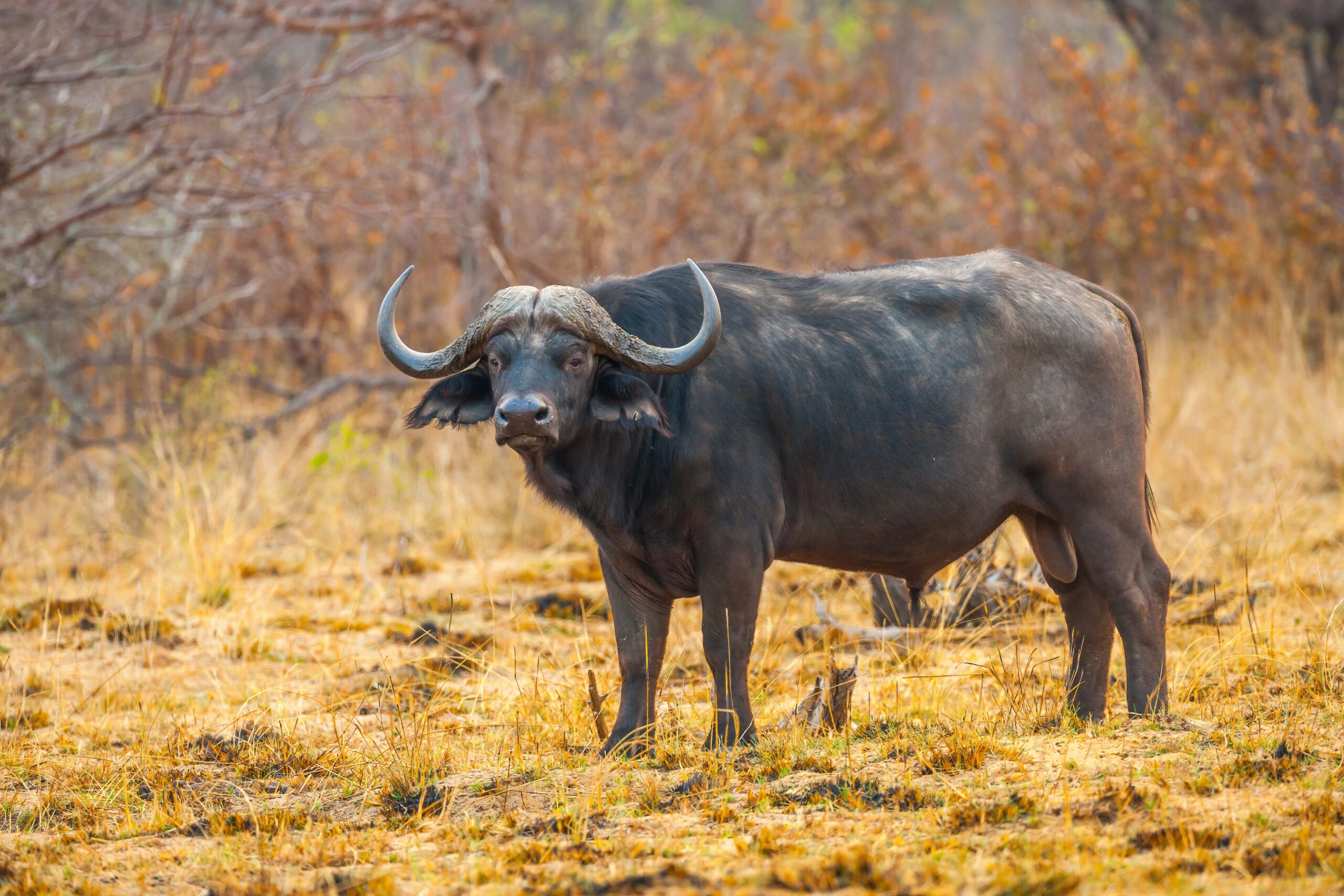
The African buffalo (Syncerus caffer) is one of Africa’s largest and strongest wild bovines. Adult males can weigh more than 800 kilograms, while females are slightly smaller but equally robust. Their bodies are heavily built with thick necks, broad shoulders, and sharp curved horns that serve both defensive and social purposes.
One of the buffalo’s most distinctive features is the horn structure found on mature males. The bases of the horns fuse together across the forehead, forming a thick shield known as a “boss.” This structure provides protection during battles and contributes to the buffalo’s intimidating appearance.
Buffaloes are highly social animals and usually live in herds ranging from small groups to gatherings of several hundred individuals. These herds move together through grasslands and wetlands in search of grazing areas and water.
In Uganda, buffaloes thrive in several national parks, but Murchison Falls National Park supports one of the country’s largest and most visible populations.
Why Safari Guides Fear Buffaloes
Professional safari guides spend years observing wildlife behavior, and many openly admit that buffaloes are among the animals they respect most. Unlike predators that often display obvious warning signs before attacking, buffaloes can react suddenly and aggressively when they feel threatened.
The danger associated with buffaloes comes largely from unpredictability. A buffalo may appear calm while grazing but can instantly become defensive if startled, cornered, injured, or separated from the herd.
Guides often explain that buffaloes possess remarkable memory and awareness. Injured buffaloes especially are considered extremely dangerous because they may hide in thick vegetation and charge unexpectedly when approached.
Older solitary males, commonly called “dagga boys,” are particularly feared. These bulls often leave herds and spend time resting in muddy areas. Because they are older and more irritable, they tend to react aggressively toward perceived threats.
Safari professionals consistently emphasize that buffaloes should never be underestimated. Their willingness to fight rather than flee makes them one of Africa’s most formidable animals.
Are African Buffaloes More Powerful Than Lions?
The debate over whether buffaloes are more powerful than lions is common among safari enthusiasts. Lions are apex predators known for coordinated hunting and strength, but buffaloes possess their own impressive advantages.
Physically, a mature buffalo is extremely powerful. Its muscular build, sharp horns, and heavy body make it a dangerous opponent even for large predators. Lions often hunt buffaloes in groups because attacking a healthy adult buffalo alone carries enormous risk.
There are many documented cases where buffaloes have injured or killed lions during defensive encounters. Buffalo herds frequently work together to protect calves and vulnerable members, charging predators collectively with surprising coordination.
This defensive bravery is one reason safari guides admire buffaloes so deeply. Unlike many herbivores that panic under pressure, buffaloes may stand their ground and fight aggressively.
In Uganda’s ecosystems, lions and buffaloes maintain a constant balance between predator and prey, creating some of the most dramatic wildlife interactions seen during safari game drives.
Buffalo Encounters in Murchison Falls National Park
 Murchison Falls National Park offers exceptional opportunities to observe African buffaloes in their natural habitat. The park’s open savannahs, wetlands, and river systems support thousands of buffaloes year-round.
Game drives across the Buligi sector often reveal massive herds grazing alongside giraffes, elephants, hartebeests, and Uganda kob. During dry periods, buffaloes gather near water sources, creating spectacular wildlife scenes against the backdrop of the Nile River.
Boat safaris to the base of Murchison Falls also provide excellent buffalo viewing opportunities. Herds frequently approach the riverbanks to drink or cool themselves during hot afternoons.
Because the park supports healthy populations of lions and leopards, predator-prey interactions involving buffaloes occasionally become thrilling safari moments.
The combination of rich biodiversity and dramatic landscapes makes Murchison Falls one of the best places in Africa to understand buffalo behavior within a complete ecosystem.
The Psychology of Buffalo Herds
One reason buffaloes are so effective at survival is their strong herd structure. Herds provide security through numbers and coordinated defense.
When danger approaches, buffaloes communicate through movement, posture, and vocal sounds. Adults often position themselves around calves while collectively facing threats.
This group mentality makes buffaloes especially difficult targets for predators. Lions usually attempt to isolate weaker individuals from the herd before attacking.
Buffaloes also demonstrate remarkable loyalty to injured or trapped members. Safari guides occasionally witness herds returning to confront predators in attempts to rescue calves or defend companions.
Such behavior highlights the intelligence and social complexity of these animals.
Why Buffaloes Attack Humans
Most buffalo attacks occur when animals feel threatened or surprised. Human encounters become particularly dangerous in situations involving wounded buffaloes or accidental close-range contact.
Buffaloes have poor eyesight compared to some wildlife species, but their hearing and sense of smell are excellent. Sudden movement, loud sounds, or direct approaches can trigger defensive reactions.
Walking safaris therefore require highly trained guides who understand buffalo behavior and maintain safe distances.
In Uganda’s protected national parks, safari regulations and professional guiding standards help minimize dangerous interactions while ensuring visitors enjoy safe wildlife experiences.
Best Time to See Buffaloes in Uganda
African buffaloes can be seen throughout the year in Uganda because they are resident animals within the country’s protected areas. However, the dry seasons generally provide the best wildlife viewing conditions.
The months from June to September and December to February are especially favorable because vegetation becomes shorter and animals gather more predictably around water sources.
Early morning and evening game drives often produce the most active buffalo sightings. During cooler temperatures, herds move extensively while grazing before resting during hotter midday hours.
The rainy seasons also create beautiful green landscapes, though dense vegetation may reduce visibility in some areas.
Buffalo Photography on Safari
Photographing buffaloes offers incredible opportunities for wildlife enthusiasts. Their rugged appearance, textured horns, and dramatic herd formations create visually powerful safari images.
Some of the most rewarding photography moments include buffaloes crossing dusty plains, standing near riverbanks, or interacting with predators.
Golden sunrise and sunset lighting enhances the buffalo’s dark body tones beautifully against Uganda’s savannah landscapes.
Telephoto lenses help capture close-up detail safely, while wide-angle compositions work well for large herd scenes.
Photographers should always follow guide instructions carefully because buffalo behavior can change rapidly.
African Buffaloes and Uganda’s Big Five Experience
The African buffalo is one of Africa’s legendary Big Five animals, alongside lions, elephants, leopards, and rhinos. Originally, the term referred to the five most difficult and dangerous animals to hunt on foot.
Today, the Big Five concept remains central to African safari tourism.
Uganda offers excellent opportunities to experience Big Five safaris, especially when combining Murchison Falls National Park with Ziwa Rhino Sanctuary, where rhinos can be tracked on foot.
The presence of buffaloes adds significantly to Uganda’s safari appeal because they contribute to healthy predator ecosystems and dynamic wildlife interactions.
Conservation of African Buffaloes in Uganda
Although buffalo populations remain relatively stable within Uganda’s protected areas, conservation challenges continue affecting wildlife habitats across Africa.
Threats include habitat loss, agricultural expansion, disease transmission from domestic livestock, poaching, and human-wildlife conflict.
Uganda Wildlife Authority works actively to protect buffalo populations through anti-poaching patrols, habitat management, and community conservation programs.
Tourism revenue generated by safari travel directly supports wildlife protection efforts and helps maintain Uganda’s national parks.
Responsible safari tourism therefore plays an important role in preserving buffalo populations and broader ecosystems.
Combining Buffalo Safaris with Other Uganda Experiences
One of Uganda’s greatest strengths as a safari destination is the diversity of experiences available within a single trip.
Travelers searching for buffaloes in Murchison Falls National Park can also enjoy Nile boat cruises, birdwatching excursions, chimpanzee tracking, nature walks, and cultural visits.
Many visitors combine Murchison Falls with gorilla trekking in Bwindi Impenetrable National Park, creating one of Africa’s most diverse wildlife itineraries.
This combination of primates, predators, birds, and savannah wildlife makes Uganda uniquely rewarding for safari enthusiasts.
Planning Your Uganda Buffalo Safari
Planning a successful buffalo safari requires choosing the right destinations, experienced guides, and comfortable accommodations close to wildlife-rich areas.
At Murchison Falls Park Safari, we organize customized Uganda wildlife safaris designed to provide immersive encounters with African buffaloes and other iconic species.
Our safari experiences combine expert guiding, carefully selected lodges, and access to Uganda’s best game-viewing areas.
Whether you are interested in wildlife photography, conservation, Big Five safaris, or authentic African wilderness experiences, Uganda offers unforgettable encounters with one of Africa’s most powerful and respected animals.
The African buffalo remains a true symbol of untamed Africa — powerful, fearless, unpredictable, and deeply connected to the spirit of the wild.