Bigodi Wetland Sanctuary: Birding Near Kibale Forest
The Bigodi Wetland Sanctuary birding near Kibale Forest experience is one of Uganda’s most rewarding community-based nature encounters, combining exceptional birdwatching, primate sightings, and immersive wetland walks just outside Kibale National Park. Often overshadowed by chimpanzee tracking in Kibale Forest, Bigodi Wetland offers a completely different ecosystem that completes the primate and birding circuit of western Uganda.
Located near Fort Portal in the shadow of the Rwenzori Mountains, Bigodi Wetland Sanctuary is a community-managed conservation success story. It protects a rich mosaic of swamp, papyrus channels, forest edges, and grassland habitats that support over 200 bird species and multiple primate species. For birders, it is one of the best places in Uganda to see rare and localized species in a compact, easily accessible area.
For travelers combining Murchison Falls National Park, Queen Elizabeth National Park, and Kibale Forest, Bigodi Wetland provides a perfect stopover for birding, cultural interaction, and ecological diversity.
Overview of Bigodi Wetland Sanctuary
The Bigodi Wetland Sanctuary birding near Kibale Forest experience takes place in a 4.5-kilometer community-managed swamp located in Magombe Wetland, just outside Kibale Forest National Park.
The sanctuary was established by the local community in partnership with conservation organizations to protect the wetland ecosystem and promote sustainable tourism. Revenue from tourism directly supports community development projects, education, and conservation initiatives.
Unlike large national parks, Bigodi offers a guided walking experience that allows visitors to explore narrow boardwalks, forest trails, and swamp edges at a slow and immersive pace.
This close interaction with nature makes it one of the most intimate birding experiences in Uganda.
Birding Highlights in Bigodi Wetland Sanctuary
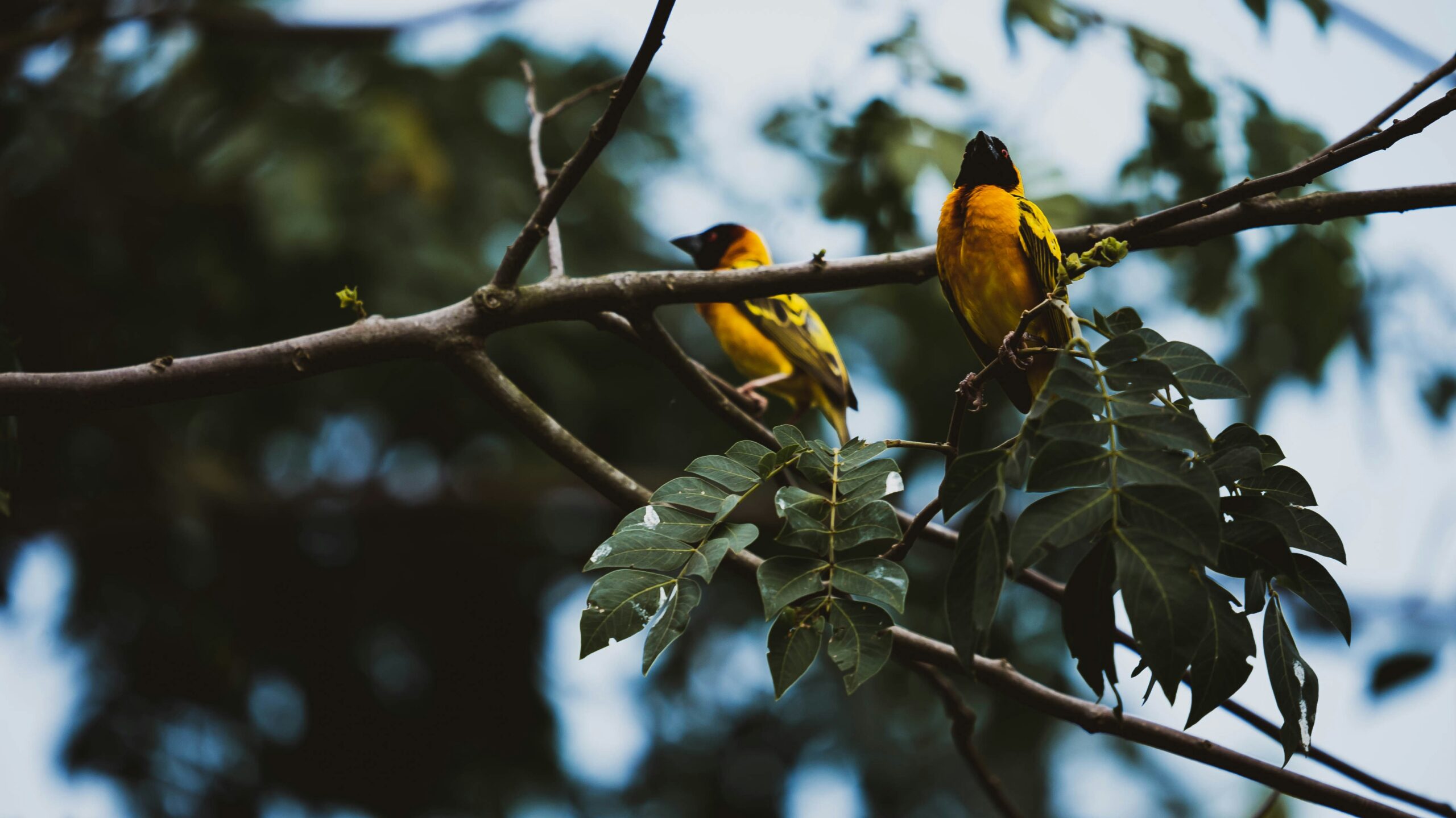
The main attraction of Bigodi Wetland Sanctuary birding near Kibale Forest is its exceptional bird diversity. The sanctuary is home to more than 200 recorded bird species, including some of Uganda’s most sought-after forest and wetland birds.
Among the most iconic species are the great blue turaco, white-winged warbler, black-and-white casqued hornbill, and papyrus gonolek. These species thrive in the wetland’s unique combination of swamp vegetation and forest edge habitats.
The great blue turaco is particularly famous for its striking blue and yellow plumage and is often seen gliding between forest trees along the wetland trail.
Papyrus specialists such as the papyrus gonolek and white-winged warbler are highly localized species that make Bigodi a must-visit destination for serious birders exploring western Uganda.
Primate Encounters in Bigodi Wetland
While birding is the main attraction, the Bigodi Wetland Sanctuary birding near Kibale Forest experience also includes excellent primate sightings.
The sanctuary is home to several primate species, including red colobus monkeys, black-and-white colobus monkeys, L’Hoest’s monkeys, vervet monkeys, and grey-cheeked mangabeys.
Chimpanzees from Kibale Forest are occasionally spotted at the forest edge, especially during early morning or late afternoon movements.
These primate encounters add an extra layer of excitement to the wetland walk, making Bigodi a dual-purpose destination for both birding and primate viewing.
The Community Tourism Model of Bigodi
One of the most important aspects of Bigodi Wetland Sanctuary birding near Kibale Forest is its strong community-based tourism model.
The sanctuary is managed by the local Bigodi community, who guide visitors through the wetland and share knowledge about local ecosystems, traditional uses of plants, and conservation efforts.
Revenue generated from tourism is reinvested into community projects such as schools, healthcare facilities, and environmental conservation programs.
This model ensures that tourism directly benefits local people while protecting the wetland ecosystem for future generations.
The Bigodi Wetland Walking Experience
A typical visit to the Bigodi Wetland Sanctuary birding near Kibale Forest begins with a guided walking tour led by trained local guides.
The walk takes visitors through narrow forest paths, wooden boardwalks, and swampy channels where bird activity is concentrated.
Guides help spot and identify bird species, primates, and plant life while explaining the ecological importance of the wetland system.
The slow-paced nature of the walk allows for close observation and photography, making it ideal for birders, nature lovers, and eco-travelers.
Best Time for Birding in Bigodi Wetland
The best time to experience Bigodi Wetland Sanctuary birding near Kibale Forest is during the dry seasons from June to September and December to February.
During these months, trails are easier to navigate, and bird activity is highly visible as species concentrate around water sources.
However, the wet seasons from March to May and October to November are also excellent for birding due to increased breeding activity and migratory bird presence.
Each season offers unique birding opportunities, making Bigodi a year-round destination.
Connection to Kibale National Park
Bigodi Wetland Sanctuary is closely connected to Kibale National Park, making it a natural extension of chimpanzee tracking experiences.
Many visitors combine chimpanzee trekking in Kibale Forest with a Bigodi wetland walk on the same or following day.
This combination provides a complete primate and birding experience, showcasing both forest and wetland ecosystems within a short distance.
The proximity of Bigodi to Kibale makes it an essential add-on for travelers exploring Uganda’s western safari circuit.
Photography Opportunities in Bigodi
The Bigodi Wetland Sanctuary birding near Kibale Forest experience offers excellent photography opportunities for both birds and primates.
The great blue turaco, hornbills, and papyrus specialists provide striking subjects against lush green backgrounds.
Early morning light enhances visibility and color contrast, making it the best time for photography.
The narrow boardwalks and forest edges also allow for close-range wildlife photography without disturbing natural behavior.
Conservation Importance of Bigodi Wetland
Bigodi Wetland plays a critical role in regional conservation efforts. As a buffer zone between human settlements and Kibale Forest, it helps protect biodiversity while maintaining ecological balance.
The wetland filters water systems, supports bird populations, and provides habitat for primates and other wildlife.
Community-led conservation ensures that the wetland remains protected while supporting sustainable livelihoods.
Tourism revenue directly contributes to conservation education and environmental protection initiatives.
Accessibility and Travel Information
The Bigodi Wetland Sanctuary birding near Kibale Forest is easily accessible from Fort Portal, which is approximately 40–45 minutes away by road.
It is also conveniently located for travelers visiting Kibale National Park, making it a common stop on Uganda safari itineraries.
Bigodi is often included in multi-destination tours that also feature Murchison Falls National Park, Queen Elizabeth National Park, and Bwindi Impenetrable Forest.
At Murchison Falls Park Safari, we incorporate Bigodi Wetland into customized safari itineraries for travelers seeking a complete birding and primate experience in Uganda.
Why Bigodi Is a Must-Visit Destination
The Bigodi Wetland Sanctuary birding near Kibale Forest experience stands out because it combines biodiversity, community tourism, and accessibility in one location.
It offers a rare opportunity to experience Uganda’s rich birdlife outside traditional national parks while directly supporting local communities.
For birders, photographers, and nature lovers, Bigodi is one of the most rewarding short excursions in western Uganda.
Final Thoughts
Bigodi Wetland Sanctuary birding near Kibale Forest is a hidden gem that complements chimpanzee tracking in Kibale and broader Uganda safari circuits. Its rich bird diversity, primate sightings, and strong community conservation model make it an essential stop for travelers exploring western Uganda.
When combined with destinations like Murchison Falls National Park, Queen Elizabeth National Park, and Bwindi Impenetrable Forest, Bigodi helps complete a full picture of Uganda’s ecological and cultural diversity.