
Weekend in Nairobi Before or After Your Uganda Safari
International flights to East Africa rarely land exactly where you want them to, and for a lot of travelers headed to Murchison Falls National Park, that means routing through Nairobi at some point along the way. Rather than treating that connection as dead time to be endured, it’s worth recognizing what it actually is: an easy, genuinely worthwhile opportunity to add a proper city weekend to your Uganda safari without adding significant cost or complexity to your trip. Nairobi and Entebbe sit just over an hour apart by air, with multiple daily flights connecting them, which makes a two-or-three-night Nairobi stopover one of the simplest and most rewarding additions available to any Uganda itinerary.
Why Nairobi Makes Sense as a Bookend
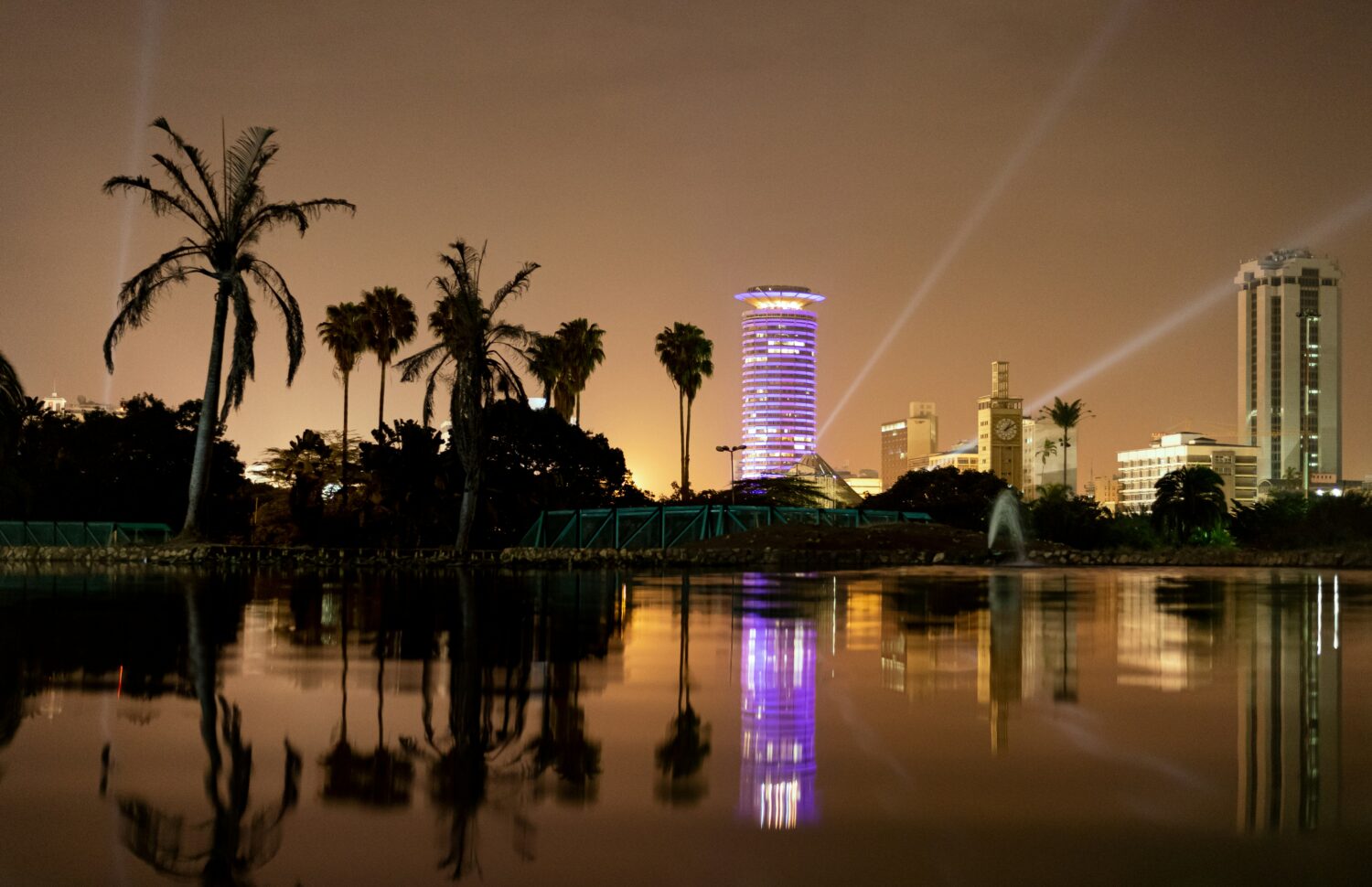
Kenya’s capital carries a reputation among some travelers as merely a transit hub, a place to pass through rather than actually visit, and that reputation has always undersold what the city genuinely offers. Nairobi is East Africa’s largest and most cosmopolitan city, home to a national park within its own city limits, one of the world’s most respected elephant orphanages, a thriving contemporary arts and dining scene, and enough genuinely distinctive attractions to fill a full weekend without ever feeling like padding around a connecting flight. Combined with the short, frequent, and reasonably priced flight connection to Entebbe — roughly an hour and fifteen minutes in the air, served multiple times daily by Kenya Airways and Uganda Airlines — a Nairobi stopover adds real value to a Uganda trip without meaningfully complicating your overall routing or budget.
The decision of whether to place your Nairobi stay before or after the Murchison Falls portion of your trip comes down largely to personal preference and jet lag management. Travelers arriving from long-haul flights sometimes prefer easing into East Africa with a lower-key Nairobi stay first, adjusting to the time zone and pace of the region before heading into the more physically demanding rhythm of a safari. Others prefer saving Nairobi for the end of the trip, treating it as a decompression stop with better shopping, dining, and connectivity than most safari lodges offer, easing the transition back to a long-haul flight home. Neither approach is objectively better, and the flight connection works equally well in either direction.
Day One: Nairobi National Park and the City’s Wild Side
If you have just one full day in Nairobi, spend the morning at Nairobi National Park, an experience that consistently surprises first-time visitors specifically because of how strange and wonderful the juxtaposition actually is. This is the only national park in the world located within a major capital city, with lions, giraffes, rhinos, and substantial plains game grazing against a genuinely striking backdrop of Nairobi’s skyline rising just beyond the park boundary. A three-to-four-hour morning game drive here gives you a legitimate taste of East African wildlife viewing before you’ve even reached Uganda, and for travelers whose Uganda itinerary is more forest and primate-focused than savanna-heavy, it’s a nice complement rather than pure repetition.
Immediately adjacent to the park, the David Sheldrick Wildlife Trust operates one of the world’s most respected elephant and rhino orphan rescue and rehabilitation programs, and its public visiting hour, when orphaned elephants are brought out for public viewing and feeding, is one of Nairobi’s most genuinely moving attractions. Watching young, rescued elephants interact with their keepers, some of whom have cared for individual animals for years, offers a different, more intimate kind of wildlife encounter than anything a standard game drive delivers, and it pairs naturally with a Nairobi National Park morning given their close proximity to each other.
Giraffe Centre, a short distance further, rounds out a wildlife-focused day nicely, giving visitors the chance to hand-feed endangered Rothschild’s giraffes at eye level from an elevated platform, an activity that’s as popular with adults as it is with children and photographs exceptionally well in the late afternoon light.
Day Two: Culture, Markets, and Nairobi’s Contemporary Side
A second day in Nairobi is best spent shifting away from wildlife entirely and into the city’s cultural and culinary identity, which has grown considerably more sophisticated and internationally recognized over the past decade. The Nairobi National Museum offers a genuinely worthwhile overview of Kenya’s natural and cultural history, including significant paleontological finds and a strong ethnographic collection covering the country’s diverse communities, and it’s a useful primer for travelers whose broader East African trip touches on multiple countries and cultures.
The Maasai Market, which rotates through different locations across the city depending on the day of the week, offers one of the best opportunities anywhere in the region for genuine, well-priced curio and craft shopping, with beadwork, textiles, and carved wood pieces from across Kenya and neighboring countries, and it rewards visitors who enjoy the process of respectful, good-natured bargaining as much as the shopping itself. Nairobi’s dining scene has also developed a genuinely strong reputation in recent years, ranging from excellent Kenyan nyama choma grill houses to a growing wave of contemporary restaurants blending East African ingredients with international techniques, giving food-focused travelers a meaningfully different culinary experience than what’s typically available at safari lodges further into the bush.
For travelers with a specific interest in coffee, given Kenya’s significant coffee-growing heritage, several excellent cafés and roasteries around the city offer tastings and a genuine window into an industry that’s shaped much of the country’s rural economy for generations.
Where to Stay
Nairobi’s accommodation options span an unusually wide range for a two-or-three-night stopover, from established international hotel chains in the central business district convenient for city-based activities, to boutique properties in the leafy Karen suburb, positioned closer to Nairobi National Park, the Sheldrick Trust, and the Giraffe Centre, making an early wildlife-focused morning considerably easier to manage without significant city traffic. Given Nairobi’s notoriously heavy traffic congestion, particularly during weekday rush hours, choosing accommodation based on proximity to whichever activities matter most to you, rather than purely on price or brand recognition, makes a genuine difference to how smoothly a short stopover actually unfolds.
Practical Logistics for the Nairobi-Entebbe Connection
The flight between Jomo Kenyatta International Airport in Nairobi and Entebbe International Airport takes roughly an hour and fifteen minutes, with Kenya Airways and Uganda Airlines both operating multiple daily nonstop flights along this route, giving travelers considerable flexibility in scheduling their connection around whatever activities they’ve planned on either end. Given the frequency of this route, building in a Nairobi stopover doesn’t typically require significant advance planning or add meaningful cost to a standard Uganda itinerary, particularly when booked as part of the same overall ticket rather than as a fully separate reservation.
It’s worth confirming visa requirements for Kenya specifically, since Kenya operates its own e-visa system separate from Uganda’s, and while East African Community citizens and holders of the East African Tourist Visa, which covers Uganda, Kenya, and Rwanda on a single visa, can move between these countries without additional paperwork, travelers from outside the region should confirm Kenya’s current entry requirements well before their trip, since these are distinct from Uganda’s own visa process and require separate application in most cases.
Building Nairobi Into Your Murchison Falls Itinerary
For travelers whose Uganda trip centers on Murchison Falls National Park, a Nairobi stopover fits most naturally either immediately before departure into Entebbe or immediately after your safari concludes, rather than as a mid-trip break, given the routing logistics involved. A typical structure might open with two nights in Nairobi covering the national park, the Sheldrick elephants, and a day of culture and shopping, before flying into Entebbe to begin the core Murchison Falls safari — game drives, the Nile boat cruise, and the hike to the top of the falls — with the Nairobi stopover functioning as a gentle, low-key introduction to East Africa before the more intensive safari days that follow.
Alternatively, placing the Nairobi stay at the end of the trip gives travelers a comfortable, well-connected city base to decompress in after the more remote, early-rising rhythm of a Murchison Falls itinerary, with considerably better shopping, dining, and city infrastructure than most safari lodges offer, making the final stretch before a long-haul flight home noticeably smoother.
Why This Addition Is Worth the Effort
It’s easy to treat a layover city as simply a box to check en route to the “real” destination, but Nairobi genuinely rewards travelers willing to give it a proper couple of days rather than rushing straight through. The city offers a legitimately different kind of East African experience than Uganda’s forest and savanna circuit — more urban, more culturally layered, and considerably easier to navigate for travelers wanting good food, reliable Wi-Fi, and a wider range of shopping than they’ll find anywhere in rural Uganda. Given how short and frequent the flight connection actually is, there’s very little practical reason not to build in at least a weekend here, whether as a gentle opening chapter to your trip or a comfortable closing one.
Planning Your Full Itinerary
Building a Nairobi stopover into a Murchison Falls-anchored Uganda trip is straightforward, but getting the sequencing and flight timing right, particularly around your international arrival and departure dates, benefits from working with an operator who can coordinate both halves of the trip together rather than booking them as entirely separate pieces. Our team at Murchison Falls Park Safari can help build exactly this kind of itinerary, connecting your Nairobi stopover with a well-paced Murchison Falls safari on the other end. Reach out through our contact page to start planning a trip that includes both destinations, or browse our current Murchison Falls safari packages to see how the core safari portion of your trip typically comes together. If you’re mapping out your overall trip budget across both cities, our guide to estimating your Uganda safari cost by month is a useful next step for the Ugandan leg specifically, and if you’re building a broader multi-country East African circuit, our guide to combining Uganda with neighboring destinations covers similar routing considerations worth reviewing alongside this one.
A short flight is often all that stands between a standard Uganda safari and a genuinely fuller East African trip. Nairobi, given how little it asks of your itinerary and how much it offers in return, is one of the easiest and most worthwhile additions available to travelers heading to Murchison Falls.