
Luggage Restrictions on Light Aircraft Flights in Uganda
Anyone who has driven the long, dusty stretch between Kampala and Murchison Falls National Park knows exactly why so many travelers choose to fly instead. A road transfer that eats up most of a day becomes a scenic hour in the air aboard a light aircraft, and suddenly there’s an extra afternoon free for a boat cruise to the base of the falls. But that convenience comes with a catch that surprises a lot of first-time visitors: the luggage restrictions on light aircraft flights in Uganda are far tighter than anything you’d encounter on a commercial jet, and packing without knowing them in advance can mean arriving at the airstrip with a bag that simply won’t fit.
This guide walks through what those restrictions actually look like, why they exist, and how to pack so that boarding day feels effortless rather than stressful.
Why small planes mean small bags
Light aircraft used for domestic travel in Uganda — mostly Cessna Caravans and similar single-engine turboprops operated by carriers like Aerolink Uganda and Bar Aviation — are built to land on short, sometimes unpaved airstrips tucked into national parks. Murchison Falls has its own strip at Pakuba, close to the park’s northern game-viewing circuit, and similar strips serve Bwindi, Kidepo, and Queen Elizabeth. These aircraft typically seat around nine to fourteen passengers, and their cargo holds are a fraction of the size of a commercial jet’s. Every kilogram matters for fuel calculations and safe takeoff weight, especially at higher-altitude strips or in hot midday air, which is precisely why airlines enforce such strict limits rather than leaving it to passenger discretion.
Understanding this context makes the rules feel less arbitrary. It isn’t that the airlines are being fussy about tidiness in the hold; it’s that the physics of a small aircraft leaves very little room for error.
The standard weight limit
Most operators flying into Murchison Falls and Uganda’s other parks cap total luggage weight at 15 kilograms (about 33 pounds) per passenger, and this figure typically includes everything you’re bringing on board — your main bag and any carry-on items combined, not 15 kilograms of checked luggage plus a separate hand-luggage allowance. Some airlines split this slightly differently, allowing roughly 10 to 12 kilograms of checked baggage and a smaller 3 to 5 kilogram carry-on for a camera bag, water bottle, or light jacket, but the combined total still lands close to that same 15-kilogram mark. It’s a significant drop from the 20 to 23 kilograms most international carriers allow in economy class, so travelers who fly into Entebbe with a large hard-shell suitcase often need to consolidate before their connecting flight to the park.
Anyone traveling with young children should also note that infants are usually granted a small additional allowance, often around 10 kilograms, but this varies by carrier and is worth confirming at the time of booking rather than assuming it applies automatically.
Soft bags only, and here’s why
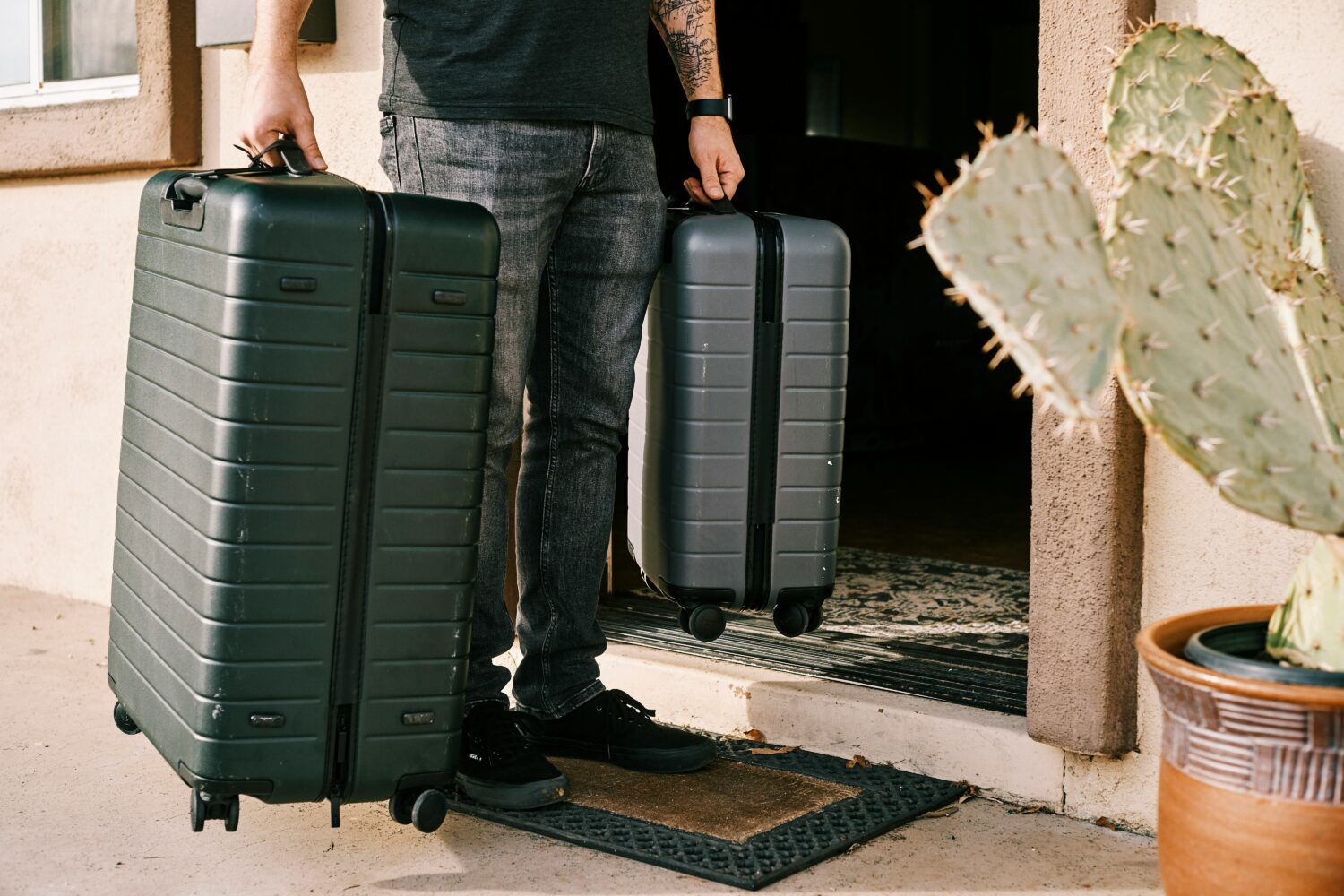
Perhaps the single most important rule to internalize is that hard-shell suitcases are not accepted on these flights. Every operator flying into Uganda’s parks requires a soft-sided duffel bag that can be squeezed, folded, and wedged into the irregular-shaped cargo hold of a small aircraft. A rigid case, no matter how compact, simply won’t conform to that space the way a duffel will, and ground staff will ask you to repack or leave the case behind if you show up with one.
A good rule of thumb is to choose a duffel with maximum dimensions of roughly 60 by 45 by 30 centimeters (about 24 by 18 by 13 inches), which fits comfortably within what most airlines specify. Backpacks work well too, provided they’re soft and collapsible rather than framed with a rigid internal structure. If you’re combining a fly-in safari with a longer regional trip that requires sturdier luggage, the practical solution is to pack a soft duffel inside your larger suitcase, then leave the hard case in storage at your Entebbe hotel or with your safari operator while you’re in the bush.
What happens if you go over the limit
Exceeding the allowance doesn’t necessarily mean you’ll be turned away, but it does mean extra cost and, depending on how full the flight is, some uncertainty. Airlines generally charge an excess baggage fee per additional kilogram, and on busy scheduled flights, particularly during the July-to-September and December-to-February peak seasons, there may simply be no spare capacity to carry overweight bags at all. Charter flights offer more flexibility since the aircraft isn’t shared with other travelers, but even then, the pilot has the final say based on weather, fuel load, and the number of passengers on board that day.
The safest approach is always to weigh your safari packing list at home before you leave, using a hand luggage scale, and to treat 15 kilograms as a hard ceiling rather than a rough guideline. It’s far easier to leave an extra sweater at your hotel in Kampala or Entebbe than to negotiate excess baggage fees at a remote airstrip with limited connectivity.
Packing smart for a Murchison Falls fly-in
Because space is so limited, the packing strategy for a light aircraft safari looks different from a typical vacation packing list. Layering becomes your best friend: Murchison Falls sits in a warm, humid part of Uganda, so lightweight, breathable clothing in neutral tones works for most of the day, with a single warm layer for early morning game drives when temperatures dip. Wearing your bulkiest items, like hiking boots or a fleece jacket, during the flight itself rather than packing them is a trick seasoned safari travelers use to shave weight off their bag without sacrificing anything they actually need.
Toiletries are worth trimming down to travel-sized containers, and it’s worth remembering that most safari lodges, including those around Murchison Falls, provide basic amenities like soap and sometimes insect repellent, which reduces what you need to carry. Camera equipment is often the trickiest item to budget for, since a telephoto lens and a spare body can eat up several kilograms on their own; many travelers choose to wear a camera bag as their designated small carry-on rather than counting it against their duffel’s weight, though this should always be confirmed with the airline in advance rather than assumed.
Documents, medication, and anything irreplaceable — passports, permits, prescription medicine — should stay in your carry-on rather than your checked duffel, partly because of the weight restrictions and partly as standard travel sense when flying between remote airstrips where lost luggage would be far harder to trace and recover than at a major international airport.
How this differs from road safaris
Travelers who are combining a fly-in visit to Murchison Falls with a road-based safari elsewhere in Uganda, perhaps continuing overland to Kibale National Park for chimpanzee tracking or onward to Queen Elizabeth National Park, should plan their luggage in two tiers. The soft duffel handles the flight legs, while a larger suitcase can travel by road with the safari vehicle for the portions of the trip that don’t involve small aircraft. Safari operators are generally happy to coordinate this kind of split luggage arrangement, and it’s a detail worth raising when you first book your itinerary rather than working out at the last minute.
Travelers heading on to gorilla trekking in Bwindi Impenetrable National Park should apply the same soft-bag rule if any leg of that journey involves a light aircraft connection, since the airstrips serving Bwindi carry the identical restrictions as those at Murchison Falls.
Booking your flight the right way
Because baggage policies can shift slightly between airlines and even between scheduled and chartered flights on the same route, the most reliable approach is to confirm the exact allowance at the time of booking rather than relying on a figure you read somewhere online months earlier. If you’re arranging your Murchison Falls trip through a tour operator, this is exactly the kind of detail a good one will flag for you unprompted, along with practical guidance on what to leave behind and how to store excess luggage safely while you’re away from your base hotel.
If you haven’t yet planned your route to Murchison Falls, our team can walk you through whether a light aircraft transfer or a scenic road journey suits your itinerary better, and can arrange your flight booking alongside your park permits and lodge reservations so nothing falls through the cracks. Get in touch through our contact page to start planning, or browse our Murchison Falls safari packages to see how a fly-in itinerary typically comes together over three or four days.
A few packing mistakes worth avoiding
The most common misstep isn’t bringing too many clothes; it’s underestimating the weight of shoes, electronics, and toiletries, which are often the heaviest items in a bag pound for pound. A second frequent mistake is packing a duffel that looks soft on the outside but has a rigid internal frame or thick padded base, which airlines may still reject at check-in because it doesn’t compress the way a true soft bag does. And a third is assuming that because international flights allow generous carry-on electronics like laptops and drones, domestic light aircraft will do the same; drones in particular are subject to their own regulations within Uganda’s national parks, and it’s worth checking current park rules before assuming you can bring one at all.
Packing light for these flights also has an unexpected upside: it forces a kind of minimalism that suits safari travel anyway. Dusty roads, close encounters with wildlife, and long days outdoors don’t call for an elaborate wardrobe, and most travelers find that a compact, well-chosen duffel actually makes the whole trip easier to manage, from lodge check-ins to quick transfers between activities.
Planning your Murchison Falls itinerary around flight logistics
Once the luggage question is settled, the rest of the planning becomes far simpler. A typical fly-in visit to Murchison Falls involves an early-morning departure from Entebbe or Kajjansi airstrip, a flight of around an hour to Pakuba, and same-day arrival in time for an afternoon boat cruise to the base of the falls or a late-afternoon game drive across the park’s northern sector. Because the flight itself takes such a small bite out of the day compared with the eight-hour road alternative, many travelers use the time saved to extend their stay by an extra night, which allows for both a sunrise game drive and the boat cruise without feeling rushed.
If your trip includes multiple parks, our team can sequence your flights and road transfers so that luggage handling stays simple throughout, and so you’re never caught off guard by a baggage rule you didn’t know about. For help building that itinerary, reach out through our plan your safari page, or explore our full range of Uganda safari tours for ideas on how Murchison Falls fits alongside destinations like Kidepo Valley or Queen Elizabeth National Park.
Flying into Uganda’s national parks is one of the more memorable parts of an East African safari, offering aerial views of the Nile, the escarpment, and herds of elephant and buffalo from above before you’ve even set foot on the ground. Packing the right bag, at the right weight, is a small piece of preparation that makes sure none of that experience gets held up at the airstrip.