Uganda Tourism Growth 2026: What 12% Visitor Growth Means for Your Trip
Uganda’s tourism sector has just posted one of its strongest years on record, with visitor numbers climbing by roughly 12 percent as travelers rediscover the country’s blend of wildlife density, landscape variety, and relatively uncrowded parks. For anyone weighing a trip to Uganda in the months ahead, that number is not just an industry talking point. It has real consequences for how early you should book, how much you should budget, and which parts of the country are best positioned to deliver the kind of safari experience that first drew you to East Africa in the first place. This piece breaks down what is actually driving Uganda tourism growth in 2026, why Murchison Falls National Park sits at the center of that story, and how you can plan a trip that benefits from the momentum rather than getting squeezed by it.
Why Uganda Is Suddenly on Everyone’s Radar
For much of the past two decades, Uganda’s tourism identity was built almost entirely around a single experience: sitting quietly a few meters from a wild mountain gorilla family in Bwindi Impenetrable Forest. That encounter remains one of the most profound wildlife moments available anywhere on the planet, and it is still the anchor of most itineraries. But the country has spent years quietly diversifying what it offers, and 2026 is the year that investment appears to be paying off in visitor numbers.
Uganda now markets itself around what regional tour operators have started calling the “Big Seven”: the traditional Big Five of lion, leopard, elephant, buffalo, and rhino, plus mountain gorillas and chimpanzees. No other single country on the continent can credibly offer all seven within its own borders, and that combination is proving to be a genuine differentiator rather than a marketing slogan. The revival of the Ziwa Rhino Sanctuary, alongside a recovering lion population in Kidepo Valley National Park, means a traveler can realistically plan a two-week loop that includes primates, plains game, and predators without needing to cross into a neighboring country. That kind of single-destination completeness is rare, and it is a major reason Uganda tourism growth has accelerated rather than plateaued.
Infrastructure has also caught up in ways that matter to ordinary travelers, not just industry analysts. Regional flight connections have become more frequent, new lodges have opened in previously underserved areas, and the East Africa Tourist Visa, which covers Uganda, Kenya, and Rwanda under a single permit, has made it far easier for tour operators to package multi-country itineraries that treat the region as one connected safari circuit. For a traveler comparing Uganda against Kenya or Tanzania, the practical friction of visiting has dropped considerably, even as the wildlife experience has arguably become richer.
What the Growth Actually Looks Like on the Ground
Numbers on a page rarely tell you what a destination feels like to visit, so it helps to translate the growth into what you will notice once you land in Entebbe. The most immediate effect is competition for the most in-demand experiences. Gorilla trekking permits, which were already tightly rationed to protect the habituated gorilla families, are being booked further in advance than in previous years. If your trip involves Bwindi or Mgahinga, treat permit booking as the first item on your planning list, not an afterthought you handle once flights are confirmed.
The second effect is that popular lodges, particularly those with prime river or waterfall frontage, are filling their high-season inventory earlier each year. New properties have opened to absorb some of that demand, but the best-located rooms in the most photographed parks still move quickly. This is especially true around Murchison Falls National Park, where a new low-impact lodge recently opened along the Nile, adding capacity while also signaling that operators expect the current growth trend to hold rather than reverse.
The third, more subtle effect is on pricing. Growth of this magnitude does not usually produce sudden price shocks in a destination like Uganda, where park fees are government-set and revised on a predictable annual cycle rather than adjusted reactively to demand. What it does produce is less availability at the lower end of the market during peak months, which effectively pushes more travelers toward mid-range and premium options simply because that is what remains open. If budget flexibility matters to your trip, this is the year to book earlier rather than later, or to consider shoulder-season travel when the parks are just as wildlife-rich but noticeably less crowded.
Murchison Falls and the Big Seven Advantage
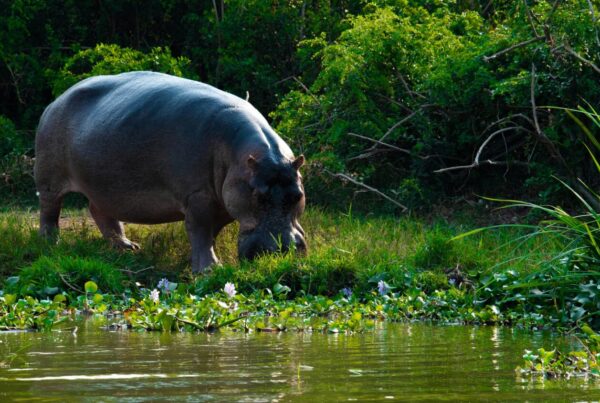
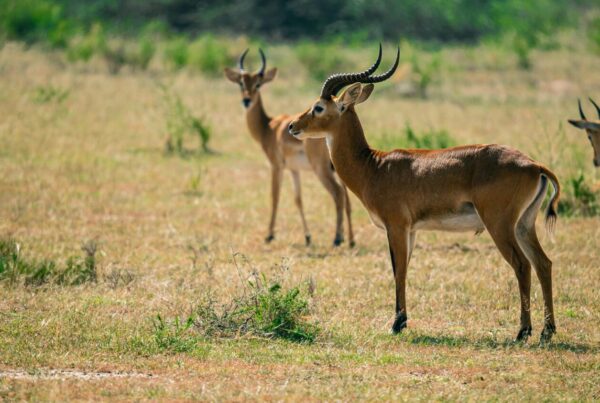
Murchison Falls National Park deserves particular attention in this growth story because it sits at the intersection of nearly everything driving Uganda’s renewed appeal. As Uganda’s largest national park, spanning roughly 3,840 square kilometers of savanna and riverine habitat, it offers the kind of classic East African game drive that many travelers associate with Kenya or Tanzania, but paired with an experience those countries cannot replicate: a boat cruise along the Nile toward a waterfall where the entire river is forced through a gap only a few meters wide before plunging with tremendous force. That single geological feature, alongside healthy populations of elephant, giraffe, buffalo, and lion, plus more than 450 recorded bird species, makes the park a natural centerpiece for any itinerary built around the Big Seven concept.
What makes 2026 a particularly interesting year to visit is that the park’s growth in popularity has not yet translated into the kind of vehicle congestion that affects some of the more famous circuits elsewhere in Africa. Travelers who have visited both regions consistently describe Murchison Falls as offering a similar caliber of wildlife sighting with far fewer other vehicles competing for the same view. That gap is narrowing as visitor numbers climb, which is precisely why planning ahead matters more this year than it did three or four years ago. If a Nile boat cruise, a hike to the top of the falls, and a Big Five game drive are all on your list, booking your accommodation and activities as a package well in advance protects both your itinerary and your budget.
If you have not yet built out your route, our [Murchison Falls safari packages] page walks through the most popular combinations, from short two-day add-ons for travelers extending a Bwindi gorilla trip to full seven-day itineraries built entirely around the park’s northern and southern banks.
The Ripple Effect Across the Rest of the Country
Growth in one flagship park tends to lift interest in the destinations around it, and that pattern is playing out clearly in Uganda this year. Kidepo Valley National Park, long considered the country’s most remote and least visited major park, is seeing increased attention as its lion and cheetah populations recover and as more operators build it into extended northern circuits alongside Murchison Falls. Kibale Forest, home to some of the highest chimpanzee densities in Africa, continues to benefit from travelers who want primate encounters beyond gorilla trekking but at a lower cost and with a shorter permit lead time. And Jinja, the source of the Nile and Uganda’s adventure sports hub, is increasingly positioned as a natural add-on for travelers who want white-water rafting or a more relaxed river town stop between wildlife-focused legs of their trip.
This kind of cross-park momentum matters for trip planning because it means Uganda is no longer a single-park or single-experience destination in the way it may have been perceived a decade ago. A traveler with ten to fourteen days can realistically combine Murchison Falls, Kibale, and Bwindi into one coherent loop without excessive backtracking, and growing domestic flight options between park airstrips have made that kind of multi-park circuit considerably more comfortable than it used to be by road alone. For travelers coming from Europe or Asia, this also changes the calculus on trip length. A visit that once felt like it justified only a single park now supports a fuller circuit within the same overall travel time investment, which is part of why average stays are lengthening even as visitor numbers grow.
For travelers weighing how to sequence a longer route, our [Uganda multi-park itinerary guide] breaks down realistic pacing between Murchison Falls, Kibale, and Bwindi, including where a domestic flight saves enough driving time to be worth the added cost.
Booking Earlier Is No Longer Just Advice, It Is a Strategy
In previous years, the recommendation to book several months ahead was mostly about securing gorilla permits, since those are capped by design regardless of overall demand. In 2026, that same logic now extends more broadly across accommodation, particularly for anyone whose dates fall within the traditional dry seasons of June through September or December through February, when wildlife viewing conditions in parks like Murchison Falls are at their best. As overall visitor volume climbs, the properties with the strongest reputations, the best river or falls views, and the most flexible cancellation terms are the ones filling up first.
This does not mean Uganda has become a difficult destination to visit. It remains considerably less congested than comparable safari countries, and travelers who book three to six months ahead of a peak-season trip will typically still find excellent options. It does mean that the informal, book-a-few-weeks-out approach that sometimes worked in quieter years is a riskier strategy today, especially for anyone with a fixed set of travel dates tied to flights or annual leave. Shoulder season travel, particularly in the transitional months between the two dry seasons, remains an excellent option for travelers who want more flexibility on booking timing without sacrificing much in terms of wildlife visibility.
Visa processing is another area where planning ahead pays off. Uganda’s e-visa system and the East Africa Tourist Visa are both efficient when applied for with reasonable lead time, but rising application volumes mean it is worth submitting well before departure rather than assuming same-week approval. Travelers should also be cautious of third-party websites charging inflated fees for visa processing that is meant to go through official government channels.
For a full walkthrough of the visa process, application timelines, and fee structures in your currency, see our [Uganda e-visa and entry requirements guide], which is updated regularly as processing rules change.
What This Means for Your Budget
Uganda has historically offered strong value relative to Kenya and Tanzania, particularly outside of gorilla permit costs, which are fixed regardless of destination growth. That value proposition largely holds in 2026, but the composition of a typical trip budget is shifting slightly. Park entrance fees remain government-regulated and have stayed consistent with the prior year’s rates, so the core cost of visiting places like Murchison Falls has not spiked. Where travelers are more likely to notice a difference is in accommodation availability at the lower price points during peak months, and in the increasing popularity of add-on experiences like chimpanzee tracking and white-water rafting, which extend both the length and the total cost of a typical itinerary even though the underlying park fees have not changed.
The practical takeaway is that a well-planned Uganda trip in 2026 still compares favorably to other major African safari destinations, but the travelers getting the best value are the ones locking in accommodation and permits early rather than pricing a trip out closer to departure, when the most competitively priced options in high-demand parks may already be booked.
Sustainability and the Long-Term Picture
Growth of this pace naturally raises questions about environmental and community impact, and it is a subject worth addressing honestly rather than glossing over. Uganda’s approach to tourism has generally leaned toward controlled growth rather than unrestricted expansion, most visibly in the gorilla permit system, which deliberately caps daily visitor numbers to specific habituated groups regardless of overall demand. Similar principles are increasingly being applied elsewhere, including new lodge developments in designated low-impact zones rather than unrestricted construction near sensitive habitats.
For individual travelers, the most meaningful contribution to sustainable growth is choosing operators and lodges that are transparent about their conservation and community partnerships, and spreading visits across the dry and shoulder seasons rather than concentrating exclusively on the two or three peak months. Tourism revenue continues to be one of the primary funding mechanisms for anti-poaching efforts and habitat protection across Uganda’s parks, which means responsible growth in visitor numbers, paired with well-managed capacity, tends to benefit the wildlife populations that make the country worth visiting in the first place.
Planning Your Own Trip Around the Momentum
The clearest signal to take from Uganda’s 2026 growth is not that the country has become harder to visit, but that it has become a more compelling one, and the window to experience its parks without significant crowding is narrowing gradually rather than closing outright. Travelers who book their gorilla permits, lodge accommodation, and domestic flights several months ahead of their intended dates are still finding excellent availability and pricing. Those who wait until the last minute are increasingly finding that the most desirable options, particularly around Murchison Falls and Bwindi, are already reserved.
If you are ready to start building your itinerary, our team works exclusively on Uganda-based safaris and can help you sequence a trip around Murchison Falls, the Big Seven experience, and any additional parks that fit your timeline and budget. Reach out through our plan your safari page to start with a custom itinerary, or browse our Murchison Falls safari packages for ready-built options across a range of trip lengths and budgets. Whichever route you choose, the best time to lock in your 2026 Uganda safari is now, while availability across the country’s flagship parks is still working in your favor.