
Pel’s Fishing Owl: The Holy Grail of Uganda Night Birding
Ask a hardcore birder anywhere in Africa which species they’d most want to see and Pel’s Fishing Owl comes up with a consistency that few other birds can match. It’s massive, strikingly colored, genuinely rare across nearly its entire range, and hidden in exactly the kind of dense, overhanging riverine forest that makes a sighting feel earned rather than handed to you. Uganda’s rivers, particularly the Nile as it approaches Murchison Falls, count among the better places on the continent to actually attempt one.
What Makes Pel’s Fishing Owl So Sought-After
Pel’s Fishing Owl, scientifically named Scotopelia peli, is a genuinely enormous owl, with a wingspan reaching up to 153 centimeters and a weight of up to 2.35 kilograms, making it one of the largest owl species found anywhere in Africa. Its rich ginger-rufous plumage, decorated with dark barring and scaling, gives it superb natural camouflage against tree bark and dappled riverine light, which is a significant part of why the species is so difficult to spot even in locations where it’s genuinely present. Unlike most owls, which hunt small mammals across open or wooded terrain, Pel’s Fishing Owl has evolved specifically to hunt from the water’s surface, and that specialization shapes nearly everything about where and how to find one.
A Genuinely Unusual Owl: Built for Fishing
The species’ name gives away its core adaptation, and the anatomical details behind it are genuinely fascinating. Pel’s Fishing Owl has fewer feathers on its legs and toes than most owl species, an adaptation that keeps it drier while hunting directly off the water’s surface, and its feet carry rough, spiny scales specifically adapted to grip slippery fish, a feature more commonly associated with fish-eating raptors like ospreys than with typical owls. Its primary diet consists of fish and frogs, snatched directly from the water’s surface in silent, precise strikes, and it favors slow-moving rivers lined with large overhanging trees that provide both a roosting spot during the day and a clear vantage point over the water for hunting once darkness falls.
Breeding Behavior
Pel’s Fishing Owl nests in hollows and forks of large trees, typically laying one or two eggs, though usually only a single chick survives to fledge even from a two-egg clutch. Females time their egg-laying to coincide with peak or falling water levels, ensuring that by the time chicks need feeding, water levels have dropped enough to concentrate fish into smaller, more huntable areas, a genuinely elegant piece of reproductive timing tied directly to the same seasonal water patterns that also govern the best times for birders to look for the species. Incubation runs around thirty-two days, handled entirely by the female while the male provides food throughout.
Where to Find Pel’s Fishing Owl in Uganda
Murchison Falls National Park: The Nile Delta and Base of the Falls
Murchison Falls National Park, and specifically the Nile Delta where the Victoria Nile meets Lake Albert, is consistently cited as one of Uganda’s strongest locations for this species, with regular sightings reported alongside other Nile Delta specialists like the shoebill and Goliath heron. The area at the base of the falls itself is specifically flagged by multiple birding guides as a particularly promising spot, where the combination of overhanging riverine trees and consistently available fish creates favorable roosting and hunting conditions. Murchison’s overall bird count exceeds 450 species, and Pel’s Fishing Owl sits among the park’s more genuinely prized sightings within that broader list.
Kazinga Channel in Queen Elizabeth National Park
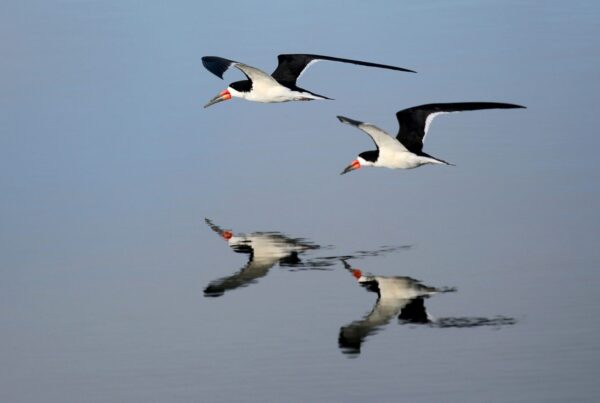
The Kazinga Channel, within Queen Elizabeth National Park, offers a second strong option, with the species reported roosting in riverside trees along the channel and occasionally visible during the standard boat cruise that most visitors already include in their itinerary. Combined with African skimmers, Goliath herons, and the channel’s broader concentration of water birds, a Kazinga Channel cruise gives travelers a realistic secondary chance at this species without requiring a dedicated night-birding excursion.
Best Time to Search for Pel’s Fishing Owl
Timing matters significantly for this species, and the dry season, generally cited as running from June through September, is consistently identified as the ideal window. Lower water levels during this period concentrate fish into smaller, more accessible pools and channels, making hunting easier for the owls and, in turn, making the birds themselves more active and visible to searching birders. As nocturnal hunters, Pel’s Fishing Owls are most active at night, particularly under moonlight and in the hours approaching dawn, though they roost predictably on large tree branches during the day, which is actually when most birders have their best realistic chance at a sighting.
How to Actually Search for One
Because Pel’s Fishing Owl spends daylight hours roosting rather than actively moving, the most effective search technique involves scanning the canopy of large trees overhanging lagoons, pools, and slow-moving river stretches during daylight, rather than attempting a purely nocturnal search, which is considerably harder given the species’ already excellent camouflage. Dusk searches can also be productive, catching the birds as they begin stirring toward evening hunting activity, and experienced local guides who know a specific stretch of riverine forest well are genuinely invaluable here, since roosting sites tend to be used repeatedly by the same individuals, and local knowledge of these specific trees dramatically improves search efficiency compared to scanning at random.
Why This Sighting Carries Such Weight for Birders
Pel’s Fishing Owl’s reputation as a genuine “holy grail” species among African birders comes down to a combination of factors that rarely align this favorably elsewhere on the continent: it’s large and visually striking enough to reward the effort of finding it, genuinely rare and difficult to locate even within suitable habitat, and restricted to a specific, narrow type of riverine forest that isn’t uniformly available across most safari destinations. Uganda’s combination of the Nile Delta at Murchison Falls and the Kazinga Channel gives the country two genuinely credible shots at the species within a single, otherwise standard wildlife-focused itinerary, a combination that’s harder to find in many other African birding destinations where a Pel’s search requires a dedicated, standalone trip.
Combining a Pel’s Fishing Owl Search with Your Broader Itinerary
Neither Murchison Falls nor Queen Elizabeth National Park requires travelers to sacrifice their core wildlife itinerary to pursue this species, which is part of what makes Uganda such a strong option for a Pel’s Fishing Owl attempt specifically. A Nile boat cruise at Murchison Falls, already a standard activity for the park’s classic game-viewing itinerary, doubles as a genuine opportunity to scan overhanging trees for a roosting owl, and the same applies to the Kazinga Channel cruise at Queen Elizabeth. Travelers with a more dedicated birding focus can add a specific early-morning or dusk search with a specialized local guide at either location, meaningfully improving the odds beyond what a standard cruise alone typically offers.
Setting Realistic Expectations
It’s worth being honest that, much like Uganda’s other genuinely elusive species, a Pel’s Fishing Owl sighting should be approached as a realistic possibility worth actively pursuing rather than a guaranteed outcome of any single visit. Even experienced guides working these rivers regularly describe sightings as uncommon, which is precisely what gives an actual encounter its weight among serious birders. Building a search for this species into a broader itinerary focused on Murchison’s or Queen Elizabeth’s full range of wildlife, rather than treating the owl as the sole objective, tends to produce a more satisfying trip regardless of whether the sighting ultimately comes together.
If you’re planning a Uganda birding trip and want to build in a dedicated search for Pel’s Fishing Owl along the Nile at Murchison Falls or the Kazinga Channel, our team at Murchison Falls Park Safari can arrange this alongside your standard game drives and boat cruises, with guides experienced in exactly this kind of species-specific search. Contact us to start planning a Uganda birding safari built around the continent’s most sought-after sightings.
For more on Uganda’s exceptional birdlife, our guides on the African Skimmer, the Papyrus Gonolek and wetland birding hotspots, and Murchison Falls National Park’s game drives and boat cruises are all available, here and pair well with this guide.