

Uganda vs Costa Rica: Which Wildlife Trip Suits European Travelers
European travelers searching for a wildlife adventure often find themselves comparing two very different corners of the world: Uganda, the heart of East Africa, and Costa Rica, the jewel of Central America. Both countries have built strong reputations as premier wildlife destinations, but they offer fundamentally different experiences in terms of flight logistics, cost, wildlife diversity, and the overall texture of the trip. For a European traveler trying to decide between a Uganda wildlife safari and a Costa Rica eco-tour, understanding these differences matters far more than simply picking whichever destination looks better in photographs. This comparison breaks down what each country actually offers, so travelers can choose the trip that truly suits their interests, budget, and time available.
Flight Time and Accessibility from Europe
For most Europeans, the practical starting point of any trip comparison is how easy the destination is to reach. Uganda has a clear advantage here for travelers departing from key European hubs. Uganda Airlines flies year-round non-stop from London Gatwick, Brussels Airlines connects Brussels to Entebbe non-stop, and KLM operates a daily non-stop route from Amsterdam. These are the only three genuine non-stop connections between Europe and Uganda, but for travelers based in the UK, Belgium, or the Netherlands, or those able to connect through those cities, the journey to Entebbe takes roughly eight hours, a manageable overnight flight that lands travelers ready to begin their safari the same day or the next morning.
Travelers from other parts of Europe typically connect through Doha with Qatar Airways, Istanbul with Turkish Airlines, or Nairobi with Kenya Airways, adding a layover but rarely extending total travel time beyond twelve to fourteen hours door to door.
Costa Rica, by contrast, sits much further from Europe geographically, and the flight options reflect that. There are very few direct flights between major European cities and San José, and those that exist tend to run seasonally rather than year-round. Most European travelers heading to Costa Rica end up connecting through Madrid, or more commonly through a United States hub such as Miami or Houston, which introduces the added complication of a US transit visa or ESTA requirement even for passengers who have no intention of staying in the United States. Total travel time from most European departure points to San José typically runs between fourteen and eighteen hours including connections, noticeably longer than the Uganda route for the majority of travelers.
For anyone comparing Uganda safari vs Costa Rica trip purely on the basis of convenience and jet lag, Uganda wins clearly for UK, Belgian, Dutch, and broadly Western European travelers, while Costa Rica remains more of a commitment in terms of both flight time and layover complexity.
Visa Requirements and Entry Logistics
Uganda has simplified its entry process considerably in recent years through the East Africa Tourist Visa and the standard Uganda e-visa system, both of which can be completed entirely online before departure. European travelers typically apply for their e-visa a few weeks ahead of travel, upload the required documents, and receive approval well before boarding their flight. The process is straightforward, though travelers should be cautious of third-party websites that charge inflated fees for a service that should be completed directly through Uganda’s official immigration portal.
Costa Rica, by comparison, allows most European Union passport holders to enter visa-free for tourism purposes, which on paper looks simpler than Uganda’s e-visa requirement. However, the trade-off often comes through the US layover many European travelers face when flying via an American hub, which reintroduces a visa or ESTA requirement that Uganda-bound travelers simply do not encounter when flying through London, Brussels, or Amsterdam.
Comparing the Wildlife Experience
 This is where the two destinations diverge most dramatically, and where personal travel priorities matter most. Uganda offers something almost no other country on earth can claim: the chance to trek with mountain gorillas in their natural forest habitat. Gorilla trekking in Uganda, primarily in Bwindi Impenetrable Forest, brings travelers within meters of these gentle giants, an encounter that regularly tops the bucket lists of wildlife travelers worldwide. Beyond gorillas, Uganda offers chimpanzee tracking in Kibale Forest, big game viewing across Murchison Falls National Park and Queen Elizabeth National Park, tree-climbing lions in the Ishasha sector, and one of the richest birding checklists on the continent, with over 1,000 recorded species drawing dedicated birders from across Europe.
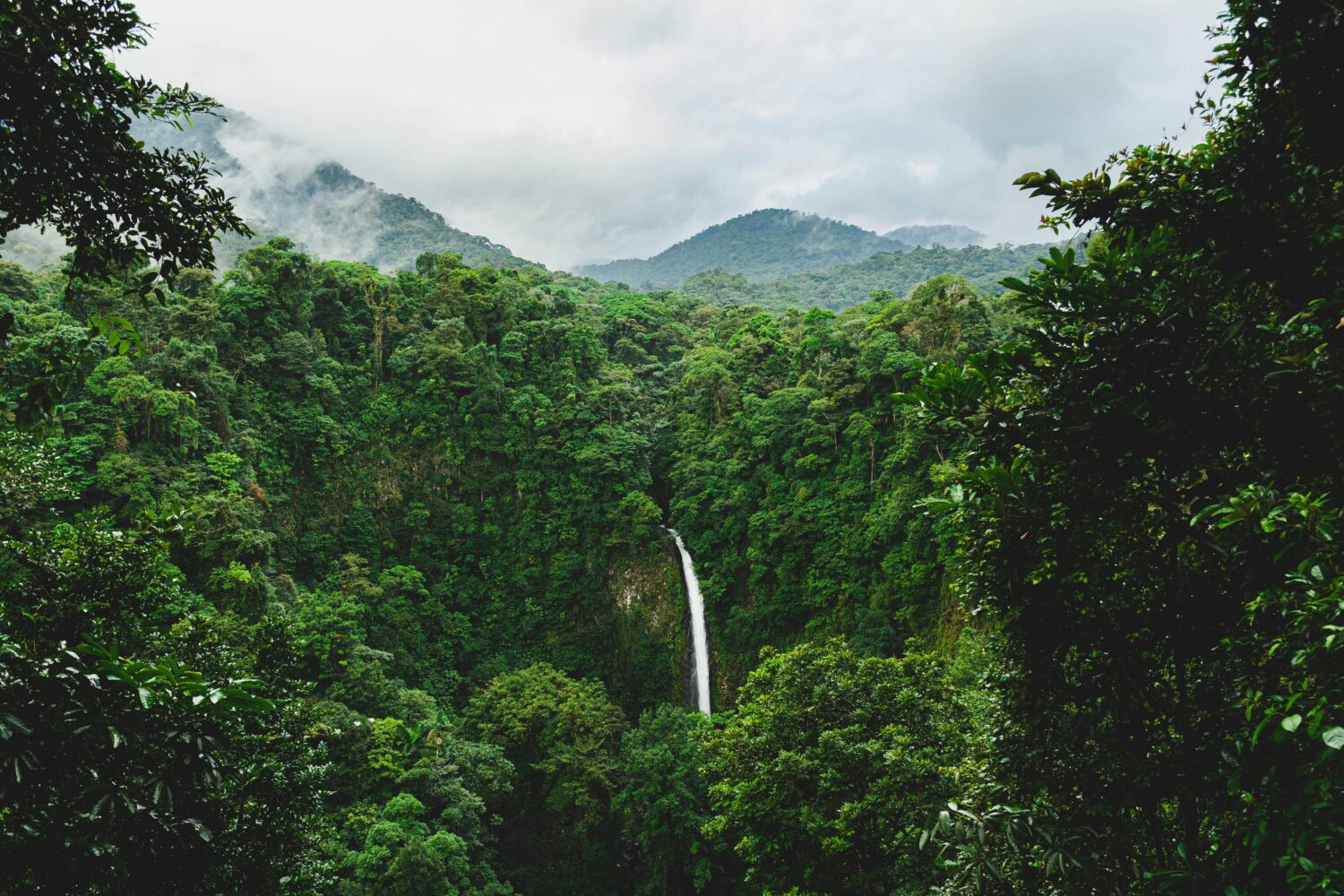
Costa Rica’s wildlife experience centers on its extraordinary biodiversity packed into a relatively small landmass. Travelers can expect encounters with sloths, toucans, howler monkeys, and an enormous variety of frogs, butterflies, and reptiles, particularly in reserves like Monteverde and Corcovado National Park. Costa Rica also offers exceptional marine life viewing, including sea turtle nesting on both coasts and strong opportunities for whale watching depending on the season.
The fundamental difference lies in scale and type of encounter. Uganda delivers large mammal safaris, primate trekking, and classic African savannah scenery, elephants, lions, hippos, and giraffes moving across open plains, alongside intimate forest encounters with gorillas and chimpanzees. Costa Rica delivers a smaller-scale, canopy-level, biodiversity-dense experience without large predators or the open savannah safari format at all. Travelers dreaming of classic safari imagery, game drives, and close primate encounters will find Uganda far closer to that vision, while those drawn to rainforest ecosystems, volcanoes, and coastal biodiversity will find Costa Rica a better match.
Cost Comparison for European Travelers
Cost is often the deciding factor once flights and wildlife interests have been weighed. Uganda has traditionally positioned itself as a more affordable safari destination compared to East African neighbors like Kenya and Tanzania, and this affordability generally extends to comparisons with Costa Rica as well, particularly once accommodation and activity costs are factored in. Gorilla trekking permits represent the single largest line item in a Uganda itinerary, but even accounting for permit costs, a well-planned Uganda wildlife safari often comes in more affordable than an equivalent multi-region Costa Rica itinerary, especially when travelers factor in Costa Rica’s higher-than-expected accommodation costs in popular eco-lodges and national park entrance fees that add up quickly across a multi-stop itinerary.
Ground transportation costs also differ. Uganda’s safari lodges frequently include game drives as part of the package, and multi-day itineraries covering several parks can be arranged efficiently with a private guide and vehicle. Costa Rica’s more spread-out attractions, from Arenal to Monteverde to the coastal regions, often require more driving between destinations, which adds both time and transportation cost to a trip that covers the country’s full range of ecosystems.
Best Time to Visit and Seasonal Considerations
Uganda’s dry seasons, running roughly from December through February and June through September, offer the best wildlife viewing conditions, with easier game drive access, drier trekking trails in Bwindi and Kibale, and generally clearer skies for photography. Uganda’s location near the equator means temperatures stay relatively consistent year-round, with rainfall patterns mattering more than temperature swings when planning a visit.
Costa Rica follows a similar dry-and-wet season structure, with its dry season running from December through April drawing the largest number of visitors, particularly from North America. European travelers planning a Costa Rica trip during this peak window should expect higher prices and busier trails, especially in well-known parks like Manuel Antonio. Uganda’s tourism infrastructure, while growing steadily, has not yet reached the same saturation point, meaning travelers visiting popular parks like Murchison Falls during peak season generally still encounter a less crowded, more intimate atmosphere than Costa Rica’s more established tourist circuit.
Health and Safety Preparations
Travelers heading to Uganda should prepare with a yellow fever vaccination, which is a mandatory entry requirement, along with malaria prophylaxis recommended for most regions of the country. Costa Rica does not require yellow fever vaccination for travelers arriving directly from Europe, and malaria risk is generally lower and more geographically limited within the country. Travelers weighing health preparation requirements should factor in the additional planning Uganda requires, though these steps are routine for most East Africa itineraries and are typically arranged easily through a travel clinic a few weeks before departure.
Accommodation Styles and Overall Trip Atmosphere
Uganda’s safari lodges range from comfortable mid-range properties to luxury tented camps overlooking the Nile in Murchison Falls or the plains of Queen Elizabeth National Park, offering an immersive bush atmosphere with the sounds of wildlife audible from camp at night. Costa Rica’s eco-lodges lean heavily into sustainable, jungle-immersed architecture, often built into hillsides or rainforest canopy, offering a different but equally atmospheric style of accommodation focused on blending into the surrounding ecosystem rather than overlooking open plains.
Travelers who picture their ideal wildlife trip as sundowners overlooking a river with elephants in the distance will find that atmosphere consistently in Uganda. Those who picture waking up to howler monkeys in the canopy outside a jungle lodge window will find that experience defines much of a Costa Rica itinerary.
Which Destination Suits Which Traveler
A European traveler drawn to classic safari scenery, large mammal encounters, and the rare opportunity to trek with mountain gorillas will find Uganda the stronger choice, particularly given the shorter, more direct flight options from London, Brussels, and Amsterdam. A traveler more interested in dense rainforest biodiversity, volcanic landscapes, and coastal wildlife, and less concerned about longer flight connections through the United States or Madrid, may find Costa Rica the better fit for their interests.
For travelers still undecided, it is worth noting that Uganda increasingly offers the kind of multi-day, multi-park itineraries that rival Costa Rica’s variety within a single country, pairing gorilla trekking with classic game drives, boat cruises along the Nile below Murchison Falls, and chimpanzee tracking, all achievable within a single well-planned two-week trip without the extensive internal travel that a comprehensive Costa Rica itinerary often demands.
European travelers ready to explore what a Uganda wildlife safari can offer are welcome to browse tailored itineraries at murchisonfallsparksafari.com, where trips can be built around Murchison Falls, gorilla trekking permits, and multi-park combinations designed specifically for travelers coming from the UK, Belgium, the Netherlands, and across the European continent. For those still weighing their options, the site’s gorilla trekking page offers a detailed look at permit costs, trekking logistics, and what to expect from Uganda’s flagship wildlife experience, and the team is available through the contact page to help build a custom itinerary suited to specific travel dates and interests.