Uganda Safari Dress Code for Airports, Cities and the Bush
Packing for a Uganda safari raises a question that trips up more travelers than almost any other logistical detail: what do you actually wear, and does it change depending on where you are? The honest answer is yes, and understanding the Uganda safari dress code across three distinct settings, the airport, the cities, and the bush itself, saves you from either overpacking specialized gear you never touch or under packing for a moment where the wrong outfit genuinely matters. This guide walks through all three contexts in detail, along with the practical reasoning behind each recommendation, so your suitcase works as hard as your itinerary does.
Why Context Matters More in Uganda Than You Might Expect
Uganda sits on the equator, which means temperatures stay relatively consistent year-round rather than swinging dramatically by season the way higher-latitude destinations do. What changes instead is altitude, time of day, and setting. Kampala and Entebbe sit at a fairly moderate elevation and feel warm and humid most of the year, while destinations like Bwindi in the southwest, sitting much higher, run noticeably cooler, particularly in early morning. Murchison Falls, in the drier northwestern savannah, tends to be hot and dusty during the day with a real chill once the sun drops. None of this demands an enormous wardrobe, but it does mean a single “safari outfit” concept, packed without variation, will leave you uncomfortable in at least one setting.
Beyond climate, there is a cultural dimension worth taking seriously. Uganda is a conservative country in terms of everyday dress norms, particularly outside tourist-facing hotels and lodges, and dressing with a degree of modesty in cities and towns is less about following a strict rule and more about showing basic respect for local norms, something that also tends to make interactions with locals warmer and easier throughout your trip.
What to Wear at the Airport
Entebbe International Airport is where most travelers begin and end their Uganda journey, and it deserves more thought than it typically gets, since arrival day often involves a long-haul flight, immigration processing, and sometimes an immediate connection onward to a lodge or a domestic flight to Murchison Falls. Comfort is the priority here, but a few practical considerations make a real difference.
Loose, breathable clothing suited to long-haul travel works well, since Entebbe’s climate is warm and humid regardless of what season you have left behind at home. Closed shoes rather than sandals are worth wearing through the airport itself, partly for comfort during a day that may involve standing in immigration lines and partly because you may be handling luggage or moving quickly between a scheduled flight and a waiting vehicle. If your itinerary includes a same-day connection to a domestic flight into Murchison Falls, keep in mind that small aircraft impose strict baggage weight limits, generally around fifteen kilograms in a soft-sided bag, so whatever you are wearing and carrying on arrival day should already reflect the lighter, more practical packing approach these onward flights require.
It is worth noting that Uganda requires all travelers to present a valid yellow fever vaccination certificate at immigration, and while this has nothing to do with clothing directly, arrival day tends to go more smoothly when you are dressed comfortably enough to handle a bit of standing and paperwork without added stress. If you have not yet finalized your health preparations for the trip, our guide to the Uganda safari vaccination timeline covers exactly what is required and when to arrange it.
Neutral, unremarkable clothing at the airport also has a quieter practical benefit, since it avoids drawing unnecessary attention in a busy transit environment where most travelers prefer to keep a low profile with luggage and documents in hand.
What to Wear in Kampala and Entebbe
Time spent in Uganda’s cities, whether a night in Entebbe before an early flight or a few days exploring Kampala’s markets, restaurants, and cultural sites, calls for a different wardrobe mindset than the bush portion of your trip. This is where the conservative dress norms mentioned earlier matter most directly.
For both men and women, clothing that covers the shoulders and reaches at least to the knee is a comfortable, respectful default in most everyday city settings, including markets, government buildings, and local restaurants outside of upscale international hotels, where norms relax somewhat. This does not mean packing formal wear, since Uganda’s cities are casual in tone overall, but it does mean leaving very short shorts, sleeveless tops, or swimwear-adjacent clothing for the pool or your hotel room rather than the street. Lightweight trousers, knee-length skirts or dresses, and short-sleeved or lightweight long-sleeved shirts cover this need comfortably in Kampala’s warm, humid climate without feeling restrictive.
Footwear in the cities can be considerably more relaxed than in the bush, since you are walking on paved or semi-paved surfaces rather than dusty trails. Comfortable closed shoes or sturdy sandals both work well, particularly given Kampala’s traffic and occasionally uneven sidewalks, where flip-flops can become impractical quickly.
Color choices in the cities are far less restrictive than they are in the bush, and this is a genuine point of relief for travelers who enjoy incorporating some personal style into their trip. Bright colors, patterns, and personal fashion choices are entirely appropriate in Kampala and Entebbe, since the practical reasons for neutral colors in the bush, discussed in detail below, simply do not apply in an urban setting. If you are attending anything more formal, such as a dinner at an upscale Kampala restaurant or a cultural performance, a slightly smarter outfit is a nice touch but genuinely optional, since Uganda’s hospitality industry is used to travelers arriving straight from game drives with limited luggage options.
Modesty considerations extend a bit further if your Kampala time includes visiting religious sites, whether churches, mosques, or other places of worship, where covering shoulders and knees more strictly, and in some cases covering hair, is expected regardless of gender. Carrying a lightweight scarf or wrap in your day bag during city sightseeing solves this easily without requiring a dedicated outfit change.
What to Wear on Game Drives and in the Bush
This is where the safari dress code becomes genuinely practical rather than simply a matter of comfort or cultural respect, and it is worth taking seriously, since the wrong clothing choices can affect both your comfort and, in some cases, the quality of your wildlife viewing experience.
Neutral colors are the single most important principle for bush clothing, and there are two distinct reasons behind this recommendation rather than just convention. The first is practical: khaki, olive, tan, and muted green tones blend into the savannah and woodland environments around Murchison Falls far better than bright colors or stark white, which can startle wildlife at closer range and occasionally draw unwanted attention from animals during walking safaris in particular. The second reason relates specifically to tsetse flies, which are present in parts of Uganda including areas around Murchison Falls and are genuinely attracted to dark blue and black colors in particular, along with bright colors more broadly. Choosing muted, neutral tones for game drive clothing meaningfully reduces the number of tsetse fly bites travelers experience, which is a detail seasoned safari guides mention often but first-time visitors rarely know in advance.
Layering matters enormously for bush days, since Murchison Falls swings from a genuinely cool early morning, particularly during dawn game drives when open-vehicle wind chill adds to the effect, to a hot, dry midday, and back to a cooler evening once the sun sets. A lightweight long-sleeved shirt over a t-shirt, paired with a packable fleece or light jacket for the coolest parts of the day, handles this range comfortably without requiring a dedicated outfit for every hour. Long sleeves and long trousers, rather than shorts and short sleeves, are worth prioritizing during game drives regardless of temperature, both for sun protection given Uganda’s intense equatorial sun and for a layer of protection against insects, including mosquitoes, which are most active around dawn and dusk.
Footwear for the bush deserves real thought rather than an afterthought. Sturdy, closed walking shoes or light hiking boots handle the dust, uneven ground, and occasional wet conditions around lodges and viewing platforms far better than sandals, and they matter even more if your Murchison Falls itinerary includes any walking activity beyond vehicle-based game drives. A neutral, broad-brimmed hat is worth packing as well, both for sun protection during open-vehicle game drives and because it complements the neutral-color principle already discussed.
A few practical additions round out a complete bush wardrobe. A buff or lightweight scarf handles dust on the sometimes-dry roads leading into and through the park, particularly during the drier months. Sunglasses with real UV protection matter given the strength of equatorial sun, especially on the water during a Nile boat cruise where reflected glare adds to the exposure. If your Murchison Falls stay includes the boat cruise to the base of the falls, a light rain layer is worth having on hand too, since spray from the falls themselves can catch you by surprise even on an otherwise dry day. Our detailed look at what a Murchison Falls boat cruise actually involves covers this and other practical details worth knowing before you board.
Evenings at the Lodge
Lodge evenings around Murchison Falls sit somewhere between city casual and bush practical, and most properties, whether budget or luxury, maintain a relaxed dress code for dinner that does not require anything beyond clean, comfortable clothing you would already have packed for the trip. A change out of dusty game-drive clothes into something lighter feels good after a full day outdoors, but this rarely needs to be anything more elaborate than a fresh t-shirt or light dress and a change of footwear. Lodges in and around the park understand their guests are traveling with limited luggage, particularly those who flew in rather than drove, and formality expectations reflect that reality throughout the property.
Evening temperatures do drop noticeably once the sun sets, particularly if you are dining outdoors or around a fire pit, which many Murchison Falls lodges offer as part of the evening experience, so keeping that packable fleece or light jacket within reach for dinner, not just for early morning game drives, is a small detail worth remembering.
Special Considerations for Combined Itineraries
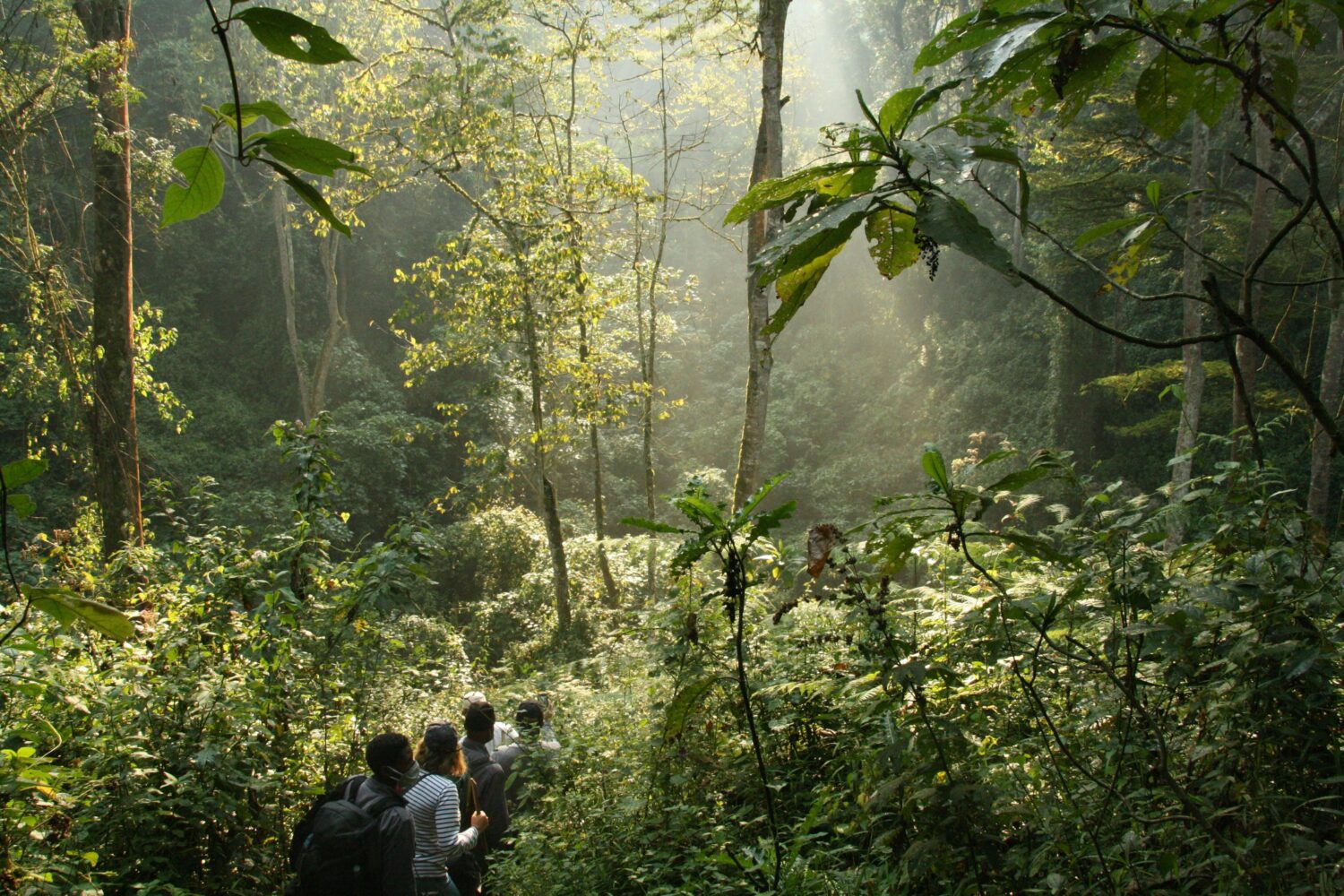
Travelers combining Murchison Falls with gorilla trekking in Bwindi face an additional wardrobe consideration worth planning for separately, since Bwindi’s higher elevation and denser forest terrain call for sturdier, more technical clothing than open savannah game drives require, including genuine waterproof layers and grip-soled hiking boots suited to steep, often muddy trails. If your trip includes this combination, it is worth reading our dedicated guide on gorilla trekking packing essentials alongside this article, since the two environments genuinely call for different gear rather than one universal packing list covering both.
Travelers extending their trip with a stop in Kampala for cultural sites, markets, or a business meeting alongside their safari should pack with both contexts in mind from the outset, since carrying one modest, versatile outfit suited to city and cultural settings alongside bush-appropriate neutral clothing covers nearly every scenario a typical Uganda itinerary presents without requiring excess luggage.
A Practical Packing Philosophy
Pulling all three settings together, the most efficient approach to a Uganda safari packing list is building around a small core of neutral-toned, breathable, long-sleeved and long-legged pieces that work for both bush days and, with minor adjustment, respectful city wandering, then adding a handful of specific items for each distinct context: comfortable, unremarkable clothing and closed shoes for the airport, one slightly more considered outfit for a city evening or cultural site, sturdy walking shoes and a hat for game drives, and layers that can be added or removed as temperature shifts through the day. This approach keeps luggage light, particularly important for anyone connecting onto a domestic flight into Murchison Falls with its strict weight limits, while ensuring you are appropriately dressed for every setting your itinerary actually includes.
Laundry service is available at most lodges around Murchison Falls, which is worth knowing if you are trying to pack light for a longer trip, since a smaller rotation of versatile pieces refreshed every few days often works better than attempting to pack a fresh outfit for every single day of a week-long itinerary.
Getting the Details Right for Your Specific Trip
Dress code questions often come up alongside broader packing and logistics questions, and the right answer sometimes depends on the specific pace and structure of your itinerary, whether you are flying or driving to the park, how many days you are spending in Kampala before or after, and whether gorilla trekking or a boat cruise features in your plans. If you would like tailored packing guidance based on your exact itinerary and travel dates, our team is glad to walk through it with you as part of your overall trip planning.
Ready to start building your Uganda safari itinerary, from what to pack to how to get to Murchison Falls in the first place? Reach out and we will help you plan a trip where every detail, right down to what is in your suitcase, is sorted well before you land.