Booking Gorilla Permits Directly vs Through a Tour Operator
For years, the question of whether to book a gorilla trekking permit directly through the Uganda Wildlife Authority or through a licensed tour operator was a genuinely open one, with reasonable arguments on both sides. That question looks different now. As of March 2026, UWA changed its booking policy in a way that removes much of the old direct-booking path for the vast majority of international travelers, and anyone researching this topic based on older articles is likely to end up with outdated expectations. This guide explains exactly what changed, what “direct booking” realistically means today, and how to think about the decision between a bare-bones permit booking and a full-service tour operator now that the rules have shifted.
What Changed, and Why It Matters
Historically, foreign travelers could, at least in theory, purchase a gorilla trekking permit straight from UWA’s own booking channels, cutting out any middleman and paying the government rate directly. As of March 1, 2026, that option is no longer available to foreign non-residents. All gorilla permit bookings for this category of visitor must now go through a licensed Ugandan tour operator, a change UWA introduced specifically to address a documented pattern of permit fraud, where scam websites and unlicensed agents were selling fake or non-existent permits to travelers, who then arrived at Bwindi or Mgahinga to discover their booking simply did not exist. East African citizens retain some direct booking options under the current structure, but that exception does not apply to the international travelers most safari operators serve.
This is a meaningful shift, and it means the old framing of “direct booking versus operator booking” as two genuinely competing paths no longer fully applies. What remains is a more nuanced choice: booking your permit through the narrowest possible operator relationship, essentially a transaction-only service that processes your permit and little else, versus booking through a full-service Uganda tour operator who handles your permit as one piece of a complete, planned trip. Understanding this distinction is now the real decision travelers face.
There is a second policy change worth knowing about alongside this one. UWA also eliminated the seven-day reservation hold that used to let travelers tentatively lock in a permit date before paying in full. Full payment is now required immediately to secure a booking. Combined with the operator-only booking requirement, this means permits, particularly for popular sectors and peak-season dates, move faster than they used to, and travelers who delay decision-making risk losing their preferred dates to someone else’s completed payment.
Understanding Current Permit Pricing
Before comparing booking approaches, it helps to know what you are actually paying for, since permit pricing is set entirely by UWA regardless of which operator processes your booking. The standard gorilla trekking permit for foreign non-residents costs eight hundred dollars per person during high season, covering park entrance, a professional ranger guide, security, and one hour with a habituated gorilla family once your group locates them. Foreign residents holding a valid East African work permit or residency pay a reduced rate of seven hundred dollars, and citizens of African nations outside the East African Community pay five hundred dollars. UWA has also reintroduced a low-season discount during April, May, and November, bringing the foreign non-resident rate down to six hundred dollars, though these discounted permits come with a notable trade-off: they are date-specific and cannot be rescheduled under any circumstances, unlike standard permits, which can sometimes be moved for a fee if requested well in advance of the original date.
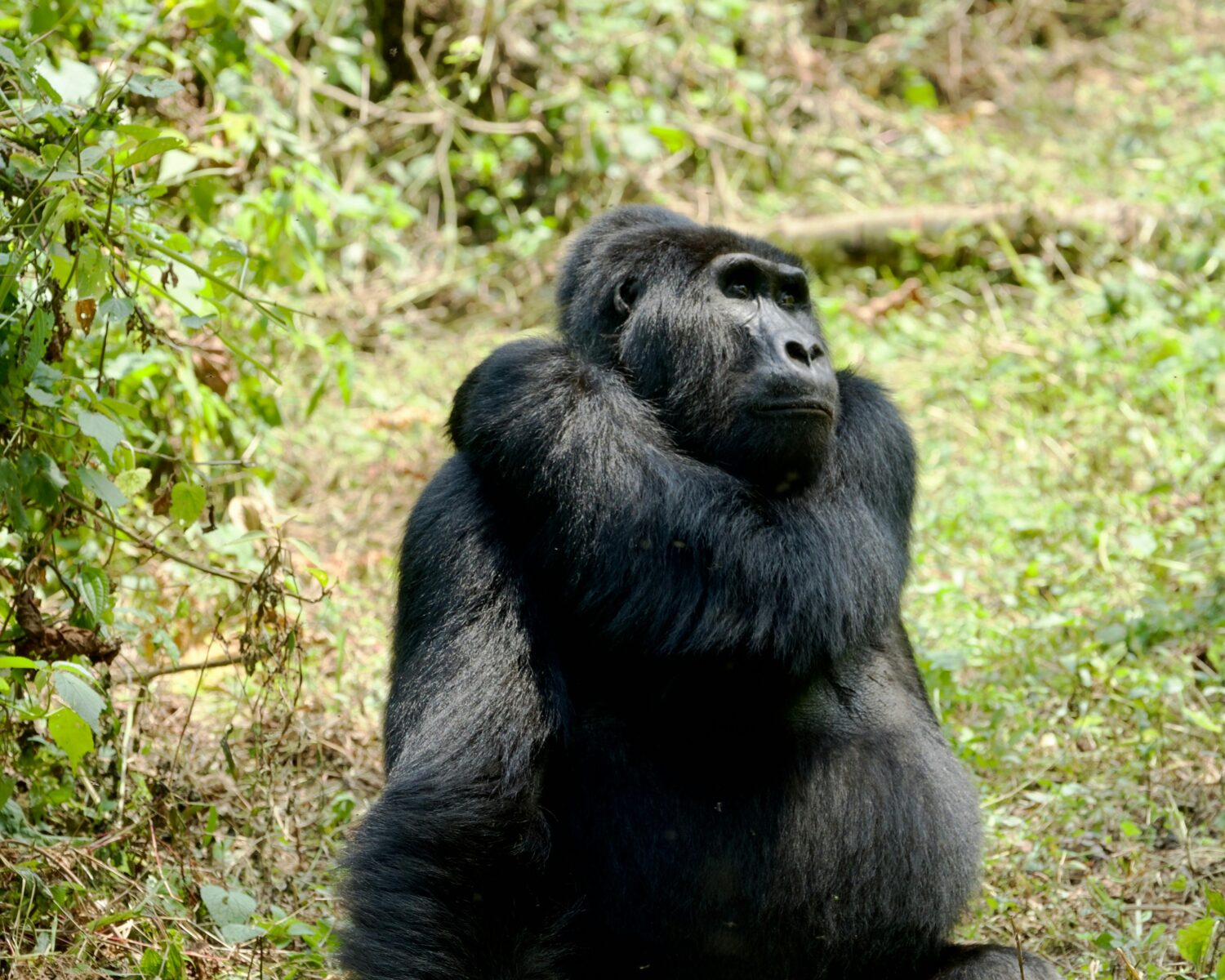
For travelers wanting a longer, more immersive encounter, the gorilla habituation experience allows up to four hours with a semi-habituated family in Bwindi’s Rushaga sector, currently priced well above the standard permit, and this option is popular with photographers and researchers who want more time than the standard one-hour trek allows.
Because these prices are fixed by UWA and identical no matter who processes the transaction, the “direct versus operator” decision has never really been about saving money on the permit itself. It has always been, and remains now more than ever, about the service wrapped around that permit.
What a Bare-Bones Permit Booking Looks Like
Under current rules, the closest thing to a direct booking is engaging a licensed operator purely to process your permit, with no additional planning services attached. This suits a narrow but real group of travelers: those who are already resident in East Africa or nearby, those with existing local contacts arranging their own transport and accommodation, or independent travelers piecing together a broader trip themselves who only need the permit itself handled by someone with proper UWA credentials.
The appeal here is speed and minimal overhead. You provide your preferred dates, sector, and passport details, the operator submits the booking and confirms availability, you pay the permit fee plus whatever modest processing arrangement the operator charges, and you receive your permit confirmation, ideally as an official UWA document with a verifiable QR code rather than a scanned image or a simple email confirmation, since counterfeit permits remain a real risk even in this regulated environment. Always confirm this document is genuine before wiring any balance, and be wary of any operator unwilling to provide it well before your trip.
The limitation is equally clear. A transaction-only booking leaves you responsible for everything else: transport to Bwindi or Mgahinga, which sits in a remote southwestern corner of Uganda far from Murchison Falls and most other parks, accommodation booked separately and coordinated against your permit date, a driver-guide for the actual trekking day, and contingency planning if anything shifts. For travelers without existing local knowledge, this can turn a straightforward-sounding booking into a logistically demanding trip to self-manage.
What a Full-Service Tour Operator Adds
A full-service operator handles the permit as one component of a coordinated itinerary rather than an isolated transaction. This typically means your permit date is chosen in coordination with your broader trip, whether that means pairing gorilla trekking with a stay at Murchison Falls, Queen Elizabeth National Park, or Lake Bunyonyi, arranging the significant road transfer between Bwindi and other parks, which can take a full day given Uganda’s terrain, and building in realistic buffer time around your trekking date in case of delays.
Operators also bring accumulated relationships with UWA and lodges near the trekking sectors, which matters more than it might initially seem. Bwindi has four distinct trekking sectors, Buhoma, Ruhija, Rushaga, and Nkuringo, each with different gorilla families, different terrain difficulty, and different proximity to accommodation options. Choosing the right sector for your fitness level, group composition, and lodge preference is a genuine planning decision, not just a permit selection, and this is where an experienced operator’s local knowledge tends to pay for itself, particularly for first-time visitors unfamiliar with the practical differences between sectors.
There is also a meaningful safety net built into working with an established operator. If a permit needs rescheduling due to illness, a missed connection, or any unforeseen disruption, an operator with an ongoing relationship with UWA and the flexibility to adjust surrounding logistics, transport, and lodge bookings can usually manage that far more smoothly than an independent traveler trying to coordinate multiple separate bookings on their own from abroad. Given that permits are non-refundable except in specific medically documented circumstances, having someone experienced managing that process on your behalf carries real value.
The Real Comparison in 2026
Given the current rules, the honest comparison is not “direct booking saves money and operator booking costs more,” since the permit price is identical either way and a processing fee for a bare-bones booking is often modest. The real comparison is between managing every other piece of your trip yourself, from transport and accommodation to sector selection and contingency planning, versus having a single operator coordinate all of it as one trip.
For travelers combining gorilla trekking with other Uganda destinations, which describes a large share of visitors, particularly those also visiting Murchison Falls for its Nile boat cruises and tree-climbing lions, a full-service operator is usually the more practical choice by a wide margin, simply because the logistics of connecting two very different regions of the country, one in the northwest and one in the deep southwest, benefit enormously from coordinated planning rather than travelers stitching separate bookings together across unfamiliar terrain. If you are planning exactly this kind of combined itinerary, our guide on pairing gorilla trekking with a Murchison Falls safari walks through how that route typically works, including realistic transfer times between the two parks.
For a narrower group of travelers, generally those already based in Uganda or East Africa, those with an existing local network handling their broader trip, or highly experienced independent travelers with prior Uganda experience, a transaction-only permit booking through a licensed operator remains a sensible, lower-touch option that respects both the current rules and their own planning preferences.
Red Flags Worth Knowing About Either Way
Regardless of which approach you choose, permit fraud remains the single biggest risk in this space, and it predates and outlasts the March 2026 policy change rather than being solved by it. Any operator, website, or individual offering a gorilla permit at a price notably below the official UWA tariff should be treated with suspicion, since permit pricing is fixed and does not vary by seller. Similarly, any booking that does not eventually produce an official UWA confirmation document, ideally verifiable through a QR code or direct confirmation with UWA itself, should not be trusted with a full payment. Reputable operators, whether offering bare-bones permit processing or full-service planning, will readily provide this documentation and will not pressure you into wiring money before you have seen it.
It is also worth confirming an operator’s licensing status independently rather than taking their word for it, since Uganda’s tourism sector, like most popular safari destinations, attracts a mix of long-established, properly licensed companies alongside newer or less scrupulous operators capitalizing on high demand. A quick verification through UWA or Uganda’s tourism board before committing funds is a small step that protects a significant investment, given that permits alone often represent close to a thousand dollars per person before any other costs are added.
Planning Your Permit Around the Right Season
Whichever booking route you choose, timing your application matters as much as choosing an operator. Peak season, running roughly June through October and December through February, sees the highest demand and requires booking six to ten months ahead to secure preferred dates and sectors, particularly for smaller or especially popular gorilla families. Low season, concentrated in April, May, and November, typically requires only three to six months of lead time and comes with the discounted permit pricing mentioned earlier, though travelers should weigh the non-reschedulable condition attached to those discounted permits against their own certainty about travel dates before committing.
Given that full payment is now required immediately upon booking rather than after a holding period, deciding on your dates before you begin the booking process, rather than during it, has become more important than it used to be. This is another area where a full-service operator’s experience helps, since they can often gauge realistic availability for your preferred sector and season before you commit to payment, reducing the chance of a rushed decision under pressure.
Making the Decision for Your Trip
If your Uganda trip involves only gorilla trekking, you have existing local support, and you are comfortable managing transport and accommodation independently, a licensed operator handling just your permit is a legitimate, cost-effective path that fully complies with current UWA rules. If your trip involves multiple parks, unfamiliar logistics, or you simply want the peace of mind of a single point of contact managing your entire itinerary from permit to pickup, a full-service operator is very likely worth the coordination it saves you, particularly given how demanding the Bwindi-to-Murchison-Falls or Bwindi-to-Queen-Elizabeth transfers can be without local guidance.
Either way, the permit itself costs the same, the rules now require a licensed operator regardless of which path you choose, and the real decision is how much of the surrounding trip you want handled for you versus managed on your own. If you are still deciding which approach fits your plans, our team can walk you through both options honestly, including realistic pricing for a full-service itinerary that pairs gorilla trekking with Murchison Falls. Get in touch and we will help you build a trip that fits both your budget and how much planning you want to take on yourself.