Canopy Walk at Kibale Forest: Treetop Adventure Guide
Ground-level forest walks and chimpanzee treks give you an eye-level view of Kibale Forest National Park’s incredible primate density, but there’s a genuinely different way to experience this same rainforest: from above, looking down into the canopy rather than up into it. Kibale’s elevated canopy walkway, located in the park’s northern Sebitoli sector, offers exactly that shift in perspective, putting visitors at the level where much of the forest’s real activity actually happens — the upper canopy, where primates move, birds nest, and the forest’s structure reveals itself in a way the ground floor simply doesn’t show. This guide walks through what the Sebitoli canopy walk actually involves, how it compares to Kibale’s better-known ground-based activities, and how to build it into a broader Uganda safari through western Uganda’s forest and primate circuit.
Why a Canopy-Level View Matters in Kibale Specifically
Kibale National Park is often described as the “Primate Capital of the World,” and for good reason — the park’s roughly seven hundred ninety-five square kilometers of moist evergreen forest, swamp, and grassland support thirteen primate species, an estimated fifteen hundred chimpanzees, and well over three hundred seventy recorded bird species, giving it one of the highest concentrations of primate biodiversity found anywhere on the African continent. The challenge with a purely ground-level experience, however, is that a substantial amount of that biodiversity actually lives and moves through the upper canopy rather than the forest floor. Red colobus monkeys, black-and-white colobus, grey-cheeked mangabeys, and L’Hoest’s monkeys spend much of their time high in the tree crowns, and a great deal of Kibale’s exceptional birdlife, including sought-after species like the African pitta and green-breasted pitta, nests and forages at heights that a standard forest trail simply doesn’t bring you close to.
An elevated walkway changes that relationship entirely. Instead of craning your neck upward hoping for a clear sightline through dense foliage, you’re moving through the canopy layer itself, at roughly the same height where much of this activity naturally occurs, which meaningfully improves both the viewing experience and the photography opportunities available to visitors specifically interested in canopy-dwelling species.
The Sebitoli Canopy Walkway
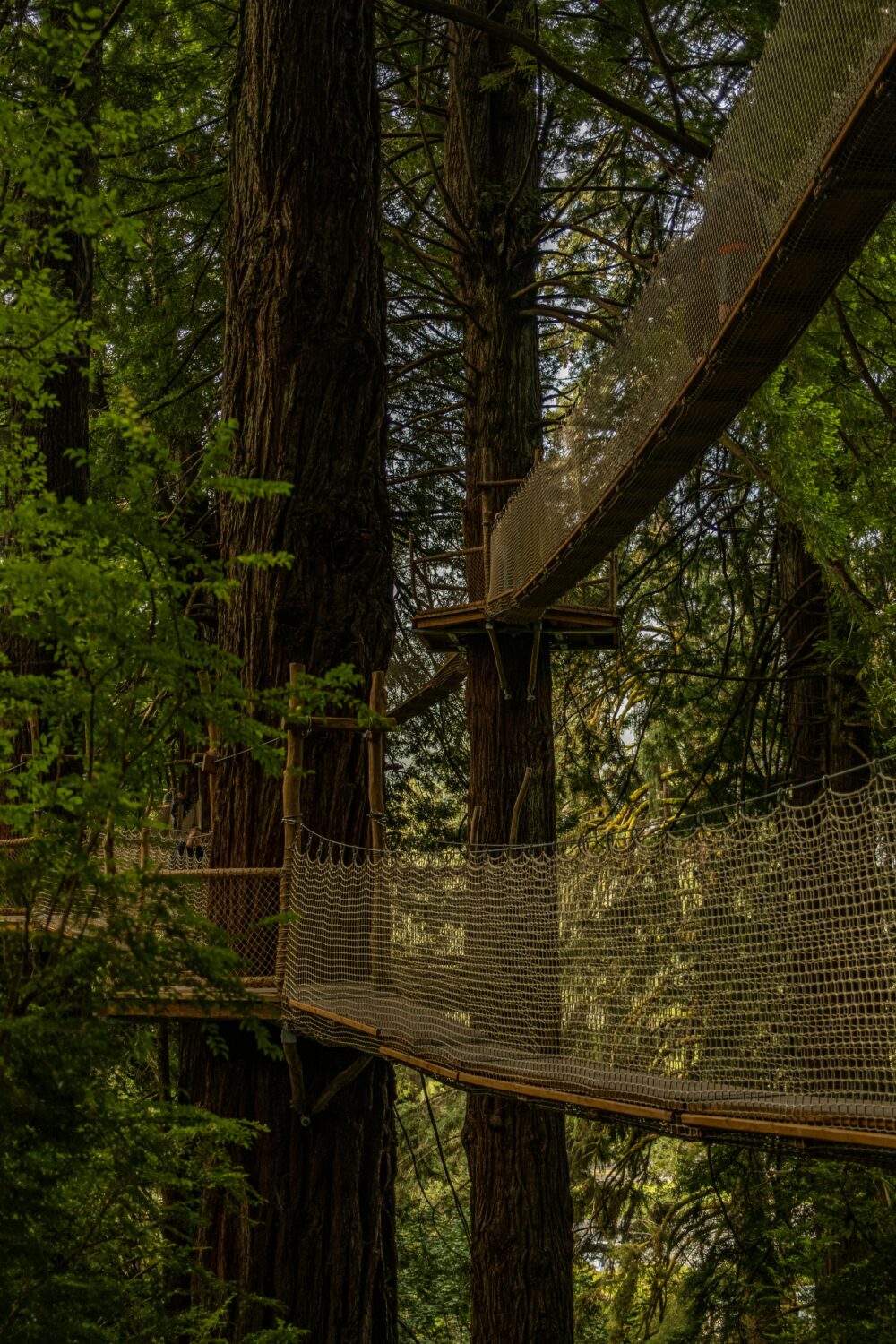
Kibale’s canopy walk is located in the Sebitoli tourism zone, a section in the park’s northern reaches roughly twenty kilometers from Fort Portal, reached through the dedicated Sebitoli visitor center. This sector was originally opened to tourism in the early 2000s specifically to ease visitor pressure on the Kanyanchu area further south, which remains the park’s primary hub for standard chimpanzee tracking, giving Sebitoli its own distinct identity as a somewhat quieter, less trafficked part of the park. The elevated walkway itself is designed to carry visitors along a raised path through the upper level of the forest, offering direct views into the canopy structure, the movement of primates through the treetops, and bird activity that’s considerably harder to observe from the ground.
It’s worth being straightforward about where this project currently stands: unlike the large, long-established canopy walkways found at Kakum National Park in Ghana or Nyungwe National Park in Rwanda, Kibale’s canopy walk infrastructure is a newer and more modest addition to the park’s tourism offering, and Uganda Wildlife Authority has continued to develop and expand elevated walkway infrastructure in the park in recent years as part of broader, internationally funded tourism development initiatives. Because this kind of infrastructure project can evolve in scope and exact opening status over time, it’s genuinely worth confirming current details directly with your tour operator or the Sebitoli visitor center closer to your travel dates, rather than assuming the walkway’s exact length or configuration matches what any single source describes. What’s consistent across current information is the underlying concept and location: an elevated forest-canopy experience specifically situated in Kibale’s Sebitoli sector, distinct from the ground-based chimpanzee tracking that happens primarily out of Kanyanchu.
What the Experience Actually Feels Like
Moving along an elevated forest walkway is a genuinely different sensory experience from a ground-level guided walk, and it’s worth understanding that difference before you go. At canopy height, the forest opens up in a way it simply doesn’t from below — instead of dense, layered green blocking sightlines in every direction, you get genuine visibility across sections of the forest structure, watching how different tree species stratify at different heights, and catching movement in the canopy that would otherwise go entirely unnoticed from the ground. Guides working the Sebitoli sector are typically well versed in identifying birdcalls and primate movement specifically from this elevated vantage point, adding real value to what could otherwise be a purely scenic walk.
The walkway experience pairs naturally with a broader guided nature walk through the Sebitoli sector’s forest trails at ground level, giving visitors both perspectives on the same stretch of rainforest within a single outing. Many visitors describe the combination as giving a far more complete picture of how the forest actually functions as a layered ecosystem than either a purely ground-level or purely elevated experience would provide on its own.
Comparing Sebitoli to Kanyanchu
Most visitors to Kibale spend the bulk of their time in the Kanyanchu sector, the park’s primary hub for both standard chimpanzee tracking and the full-day chimpanzee habituation experience, and it’s worth understanding how a Sebitoli canopy walk visit complements rather than competes with that core activity. Kanyanchu offers the park’s best odds of a genuine chimpanzee encounter, given the concentration of habituated communities and dedicated research infrastructure in that sector, and remains the activity most travelers prioritize on a first visit to Kibale. Sebitoli, by contrast, offers a quieter, less crowded forest experience with its own distinct wildlife viewing angle through the canopy walkway, along with generally good primate and bird sightings at ground level as well, since the sector sits within the same broader forest ecosystem.
For travelers with a single day in Kibale, prioritizing chimpanzee tracking or the habituation experience out of Kanyanchu remains the sensible default, given that this is genuinely the park’s signature activity and the reason most people build Kibale into their itinerary in the first place. For travelers with two days or more in the park, adding a half-day visit to Sebitoli for the canopy walk and its accompanying forest trails is a worthwhile way to see a different side of the same forest without significant additional travel, since the two sectors sit within reasonable driving distance of each other inside the park’s boundaries.
Wildlife You Might See From the Canopy
While chimpanzees themselves are more reliably encountered through Kanyanchu’s dedicated tracking activities, Kibale’s canopy-dwelling monkey species are genuinely well suited to an elevated viewing angle. Red colobus monkeys, one of Kibale’s specialty primates and a species travelers specifically come to Uganda hoping to see, spend the vast majority of their time high in the forest canopy, making an elevated walkway a meaningfully better vantage point than ground level for observing their social groups and movement patterns. Black-and-white colobus monkeys, with their striking black-and-white coloring and dramatic leaping movement between branches, are similarly canopy-dominant and reward patient observation from height. L’Hoest’s monkeys and grey-cheeked mangabeys round out the primate sightings most commonly reported from canopy-level vantage points in this part of the park.
Birdlife is arguably where an elevated perspective adds the most value relative to a ground-based walk. Kibale’s more than three hundred seventy recorded bird species include a number of canopy specialists that are genuinely difficult to observe well from the forest floor, and guides familiar with the Sebitoli walkway can often point out species by call well before they’re visible, giving visiting birders a meaningfully improved chance at species that would otherwise require considerable patience and luck from below.
Practical Details for Visiting
Sebitoli is reached via its own dedicated visitor center roughly twenty kilometers from Fort Portal, making it a manageable addition to an itinerary based around Kibale’s more central areas without requiring a significant separate journey. Given the elevated nature of the walkway, appropriate footwear with good grip matters more here than on a flat ground trail, and light, breathable clothing suited to forest humidity, along with insect repellent, remains standard preparation for any Kibale forest activity regardless of which sector you’re visiting. Because this is a comparatively newer addition to Kibale’s tourism infrastructure relative to the park’s long-established chimpanzee tracking programs, booking through an experienced local operator who can confirm current access, timing, and any recent changes to the walkway’s operation is a sensible approach, particularly for travelers planning well in advance of their trip.
Building Sebitoli Into Your Kibale Itinerary
A well-paced Kibale visit typically allocates a full day or more to the park given the range of activities available, and the canopy walk fits naturally as either a first-morning orientation to the forest before an afternoon chimpanzee tracking session out of Kanyanchu, or as a lower-intensity add-on day following a demanding full-day chimpanzee habituation experience, giving visitors a gentler, more contemplative forest activity after a physically taxing primate trek. Many travelers also combine a Sebitoli visit with a stop at the nearby Ndali-Kasenda Crater Field, a cluster of volcanic lakes just south of Fort Portal offering canoeing, swimming, and scenic viewpoints, rounding out a western Uganda circuit that touches forest, canopy, primates, and volcanic lake scenery all within a relatively compact geographic area.
Combining Kibale With a Murchison Falls Safari
For travelers whose primary safari anchor is Murchison Falls National Park in Uganda’s northwest, Kibale sits considerably further south and west, making a canopy walk and chimpanzee trekking combination a natural extension for a longer, multi-region itinerary rather than a standalone day trip. A common and rewarding structure opens with the raw power and open savanna wildlife of Murchison Falls in the north, before heading south through western Uganda toward Kibale for both ground-level chimpanzee tracking and the Sebitoli canopy walk, continuing on to Queen Elizabeth National Park’s Kazinga Channel or Bwindi Impenetrable National Park for gorilla trekking depending on how much time your trip allows.
Our team at Murchison Falls Park Safari can help build exactly this kind of multi-region itinerary, connecting the northern savanna experience of Murchison Falls with a western Uganda extension that includes both Kibale’s chimpanzee activities and its canopy walk. Reach out through our contact page to start planning a trip that includes this kind of forest and canopy variety alongside your core wildlife activities, or browse our current Murchison Falls safari packages to see how our anchor northern itinerary typically comes together before extending west. If chimpanzee trekking is already part of your western Uganda plans, our guide to the chimpanzee habituation experience in Kibale Forest pairs naturally with a Sebitoli canopy walk on the same leg of your trip, and our guide to the Ndali crater lakes covers the neighboring volcanic lake district worth adding to the same itinerary. If you’re mapping out the cost of a longer, multi-region Uganda circuit, our guide to estimating your Uganda safari cost by month is a useful next stop for budgeting purposes.
Kibale rightly built its reputation on ground-level chimpanzee encounters, but the Sebitoli canopy walk offers a genuinely different, complementary way to experience the same extraordinary forest — one that opens up the layer of the ecosystem where much of its most striking wildlife actually spends its days.