
Uganda and Egypt: Pairing the Source of the Nile with Its Mouth
Few rivers on Earth carry the kind of narrative weight the Nile does, and fewer still let a traveler experience both ends of that story within a single, well-planned trip. Uganda holds the river’s beginning, where Lake Victoria’s outflow tumbles over Bujagali’s rapids near Jinja and begins its six-thousand-five-hundred-kilometer journey north. Egypt holds its ending, where that same water, having crossed eleven countries and thousands of years of civilization, fans out into the Mediterranean through the Nile Delta near Alexandria. Combining a Uganda safari with an Egyptian extension isn’t just a geographically interesting itinerary — it’s one of the few trips that lets you physically trace a single river from its birth to its final release into the sea, tying together East Africa’s wildlife-rich highlands with the pyramids, temples, and desert monuments of one of the world’s oldest civilizations.
Why This Pairing Works So Well
Most multi-country African itineraries combine destinations for reasons of proximity or shared regional character — Uganda with Rwanda for gorilla trekking, Uganda with Kenya for a broader East African safari circuit. Uganda and Egypt work differently. They’re not geographically adjacent, and they don’t share an obvious cultural throughline beyond the river itself, which is exactly what makes the pairing so compelling as a deliberate, narrative-driven trip rather than a simple regional add-on. You’re not visiting two similar places for efficiency; you’re following a single natural feature across an entire continent, watching it transform from a churning, wildlife-lined river cutting through Murchison Falls National Park’s savanna into the slow, temple-flanked waterway that built and sustained ancient Egyptian civilization for millennia.
This kind of thematic travel has genuine appeal for a specific kind of traveler: the kind who wants their trip to tell a story rather than simply check off a list of bucket-list sights. A Uganda-Egypt itinerary does exactly that, and it works logistically too, since a direct EgyptAir connection between Entebbe and Cairo makes the actual transition between the two halves of the trip considerably more straightforward than the routing challenges involved in many other multi-country African combinations.
The Source: Uganda’s Nile Story
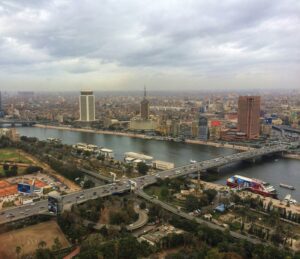 Uganda’s relationship with the Nile begins at Lake Victoria, Africa’s largest lake, whose outflow near Jinja marks the official source of the White Nile, one of the river’s two principal tributaries alongside the Blue Nile, which originates separately in Ethiopia’s highlands and joins the White Nile far to the north in Khartoum. Jinja itself has built a genuine tourism identity around this distinction, with river-source viewpoints, white-water rafting operations taking advantage of the Nile’s churning early rapids, and a general sense of pilgrimage for travelers who want to stand at the literal beginning of this legendary river.
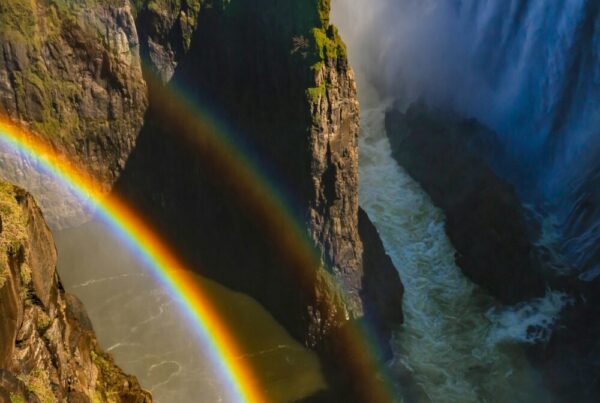
From Jinja, the story continues north to Murchison Falls National Park, where the Nile delivers its single most dramatic moment anywhere along its entire course. Here, the full volume of the river is forced through a gap barely seven meters wide before plunging forty-three meters down into the gorge below, a spectacle of raw hydraulic power that draws travelers from across the world specifically to witness it. The Murchison Falls safari experience built around this feature includes a boat cruise toward the base of the falls, passing hippos, crocodiles, and elephants drinking along the banks, along with a hike to the top of the falls themselves and game drives across the park’s northern savanna, home to lions, giraffes, and substantial elephant herds. This is the Nile at its wildest and most untamed — a river still carving its own path through volcanic rock and open grassland, largely indifferent to human settlement, moving through a landscape defined by wildlife rather than monuments.
The Journey Between: What the Nile Becomes
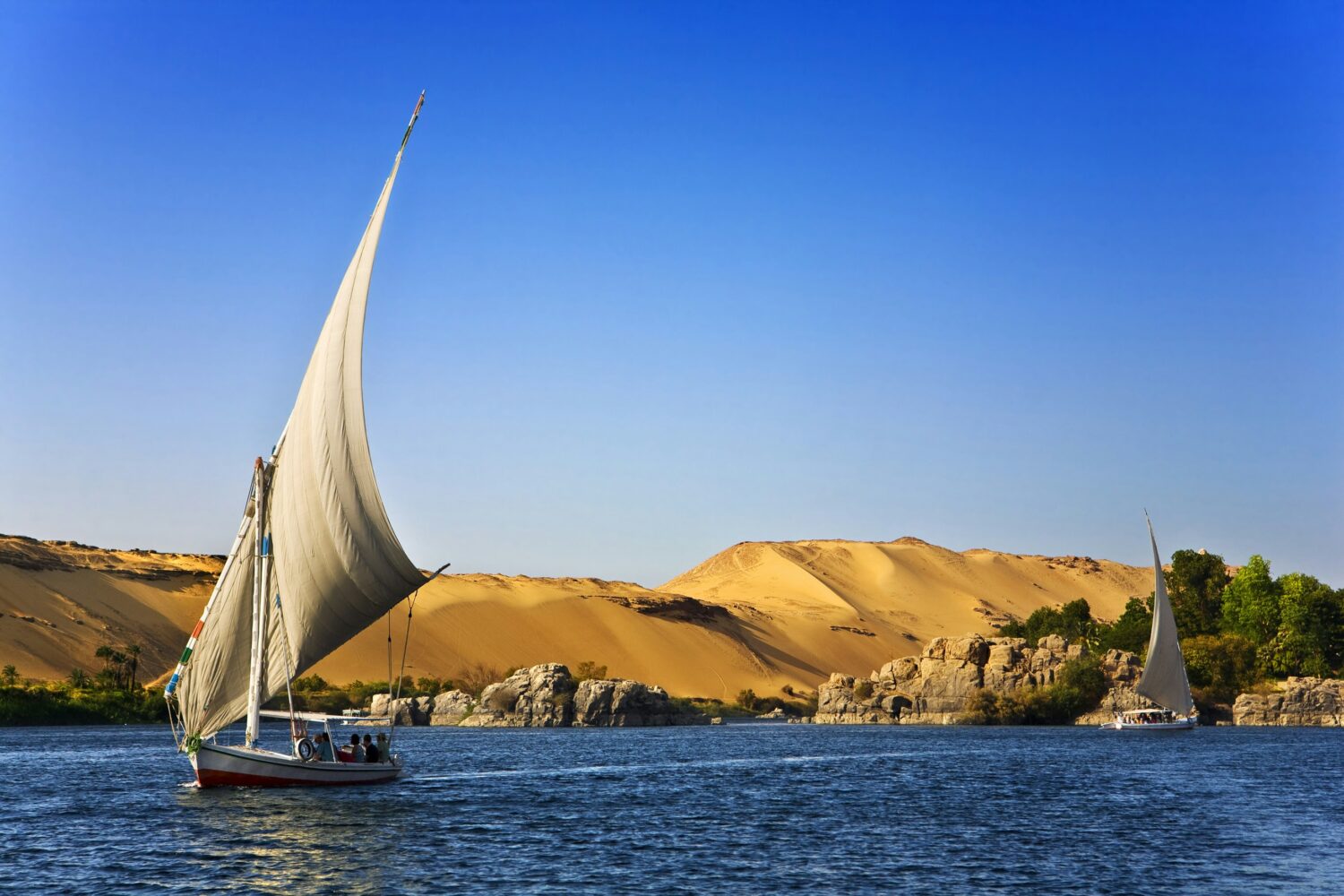
Between Uganda and Egypt, the Nile passes through South Sudan, where it widens into the vast Sudd wetland, one of the largest freshwater wetland systems on Earth, before continuing through Sudan itself and finally into Egypt, where the river’s character shifts entirely. By the time the Nile reaches Aswan in southern Egypt, it has left behind the equatorial rainfall and dense vegetation of its East African origins and entered a landscape of desert, temples, and millennia of continuous human civilization built directly along its banks. This transformation, from a wildlife-corridor river cutting through Ugandan savanna to a civilization-sustaining lifeline running through the Sahara, is genuinely one of the most dramatic environmental and cultural shifts any single river undergoes anywhere on the planet, and experiencing both ends of that transformation firsthand gives a depth to the Nile’s story that reading about it never quite achieves.
The Mouth: Egypt’s Nile Story
Where Uganda offers the Nile’s wild, youthful energy, Egypt offers its mature, civilization-defining final chapters. Cairo, sitting along the river roughly a hundred sixty kilometers south of where it finally splits and fans into the Mediterranean through the Nile Delta, anchors most Egypt itineraries and offers direct access to the Giza plateau, home to the Great Pyramid of Giza and the Sphinx, monuments whose construction depended entirely on the Nile’s ability to sustain the population, agriculture, and transportation networks that built ancient Egypt in the first place. The Egyptian Museum in Cairo, along with the newer Grand Egyptian Museum near Giza, houses the treasures of that civilization in extraordinary depth, including artifacts recovered from tombs along the Nile’s banks further south.
Traveling south from Cairo along the river itself, typically via a Nile cruise between Luxor and Aswan, brings you to the temple complexes of Karnak and Luxor, the Valley of the Kings, and Aswan’s High Dam and the relocated temples of Abu Simbel, all built directly along or moved to accommodate the same river whose source you may have stood beside in Jinja weeks earlier. A multi-day Nile cruise through this stretch remains one of the classic ways to experience Egypt, offering a slow, waterborne journey past temple complexes and riverside villages that echoes, in a very different register, the boat cruise you likely took below Murchison Falls.
Finally, for travelers who extend as far as Alexandria on Egypt’s Mediterranean coast, the Nile’s story reaches its actual conclusion, where the river’s delta empties into the sea after its entire multi-thousand-kilometer journey, closing the loop on a river you may have first encountered as a churning rapid in Jinja.
Building the Itinerary
A well-paced Uganda-Egypt combination typically runs somewhere between twelve and eighteen days total, split roughly in half between the two countries, though travelers with more limited time can compress each leg to a tighter five or six days while still hitting the essential highlights of both. The Uganda portion generally opens or closes the trip, depending on flight scheduling and personal preference, and centers on Murchison Falls National Park for three to four days, covering game drives, the Nile boat cruise, and the falls hike, with an optional day or two added in Jinja for those who want to specifically visit the river’s source point and, for the more adventurous, try white-water rafting on its early rapids.
The Egypt portion typically opens in Cairo for two to three days covering the Giza pyramids, the Sphinx, and the Egyptian Museum, before either flying or taking an overnight train south to Luxor to begin a three-to-four-night Nile cruise down to Aswan, taking in Karnak Temple, the Valley of the Kings, and the temples of Abu Simbel along the way. Travelers with additional time sometimes extend to Alexandria for a day or two, adding the Mediterranean coastal perspective and, fittingly, the Nile’s literal endpoint to the itinerary’s structure.
Getting Between Uganda and Egypt
The direct EgyptAir connection between Entebbe International Airport and Cairo International Airport is the most straightforward way to link the two legs of this trip, operating several nonstop flights weekly with a flight time of roughly five and a half hours, considerably shorter and simpler than the connecting itineraries required for many other multi-country African combinations. Ethiopian Airlines and Qatar Airways also serve this route with a single connecting stop, typically through Addis Ababa or Doha respectively, and can be worth considering if your dates or pricing favor a specific carrier, though the nonstop EgyptAir option remains the most time-efficient choice for travelers prioritizing a smooth transition between the two countries.
Visa and Entry Considerations
Uganda operates an e-visa system for most foreign visitors, processed online in advance of arrival, while Egypt offers both an e-visa option and visa-on-arrival for many nationalities at Cairo International Airport, though requirements vary by passport and it’s worth confirming current entry rules for your specific nationality well ahead of travel given how these regulations periodically shift. Yellow fever vaccination proof is a standard entry requirement for Uganda and worth carrying documentation for throughout your trip, including into Egypt, since some connecting itineraries through other African transit points may also request this proof depending on your specific routing.
Practical Considerations for Combining the Two Legs
The climatic and cultural contrast between the two countries is worth planning around directly. Uganda’s equatorial climate remains warm and relatively humid year-round with two dry and two wet seasons shaping the best timing for wildlife viewing, while Egypt’s desert climate runs considerably hotter in summer, making the cooler months of October through April the more comfortable window for exploring Cairo, Luxor, and Aswan without contending with extreme desert heat. Timing your trip for this shared cooler window, roughly November through February, tends to work well for both halves of the itinerary simultaneously, coinciding with one of Uganda’s dry seasons and Egypt’s most comfortable travel months alike.
Packing also shifts considerably between the two legs — neutral-toned safari clothing, insect protection, and layers for early morning game drives in Uganda give way to more modest, breathable clothing suited to Egypt’s cultural and religious norms around dress, particularly when visiting mosques or more conservative areas away from major tourist sites. Building in a buffer day between the two legs, rather than a same-day transfer straight from a Murchison Falls lodge onto an international flight, tends to make for a smoother, less rushed transition between what are, in almost every practical sense, two completely different travel environments.
Why This Trip Rewards Deeper Planning
A Uganda-Egypt combination isn’t the kind of itinerary that assembles itself from a standard package tour, and it benefits enormously from working with an operator who understands both the logistics of the Murchison Falls safari portion and the broader routing and timing considerations of linking it to an Egyptian Nile extension. Getting the sequencing, flight timing, and seasonal considerations right across two such different countries and climates is where a knowledgeable local team adds real value beyond simply booking two separate trips and hoping they connect smoothly.
Our team at Murchison Falls Park Safari specializes in the Ugandan half of exactly this kind of itinerary, building a Murchison Falls-anchored safari that connects seamlessly with an Egyptian Nile extension through our network of trusted partners. Reach out through our contact page to start planning a combined Uganda-Egypt trip that traces the Nile from source to sea, or browse our current Murchison Falls safari packages to see how the Ugandan portion of this journey typically comes together. If you’re mapping out your overall trip budget across both countries, our guide to estimating your Uganda safari cost by month is a useful starting point for the Ugandan leg specifically, and if you’re also considering Jinja’s white-water rafting or source-of-the-Nile activities as part of your itinerary, it’s worth discussing that addition directly with our team when you reach out.
Few journeys let you trace a single natural feature across an entire continent and thousands of years of human history in one deliberate trip. Uganda and Egypt, joined by the same river running from equatorial highlands to Mediterranean delta, offer exactly that — a Nile story told in full, from its churning, wildlife-lined beginning to its ancient, monument-lined end.