Solar-Powered Eco-Lodges in Uganda: Sustainable Stays Guide
Uganda’s reputation as a premier safari destination has long rested on its extraordinary wildlife, from mountain gorillas in Bwindi to the Nile-fed savannahs of Murchison Falls National Park. In recent years, however, the country has also quietly become a genuine leader in sustainable safari accommodation, with a growing number of properties running entirely, or almost entirely, on solar power. For travelers who care about the environmental footprint of their trip as much as the wildlife encounters themselves, solar-powered eco-lodges in Uganda now offer a genuinely compelling way to experience the country’s parks without contributing to the diesel generator hum that once defined remote safari accommodation across much of the continent.
This guide takes a detailed look at what makes a lodge genuinely sustainable, profiles several of Uganda’s standout solar-powered properties across the country’s major parks, and offers practical guidance for travelers hoping to build an eco-conscious safari itinerary without compromising on comfort or wildlife access. Our team has arranged stays at many of these properties for clients specifically prioritizing sustainable travel, and we understand exactly which lodges genuinely deliver on their environmental claims rather than simply using sustainability as a marketing label.
What Actually Makes a Lodge Sustainable
Before diving into specific properties, it is worth clarifying what genuine sustainability looks like in the context of Uganda’s safari lodges, since the term eco-lodge gets applied somewhat loosely across the broader tourism industry. The most meaningful indicator is a lodge’s primary power source. Properties that run entirely or almost entirely on solar energy eliminate the need for diesel generators, a shift that aligns directly with the United Nations Sustainable Development Goal focused on affordable and clean energy, and one that removes both the noise pollution and carbon emissions that generators bring to otherwise pristine wilderness settings.
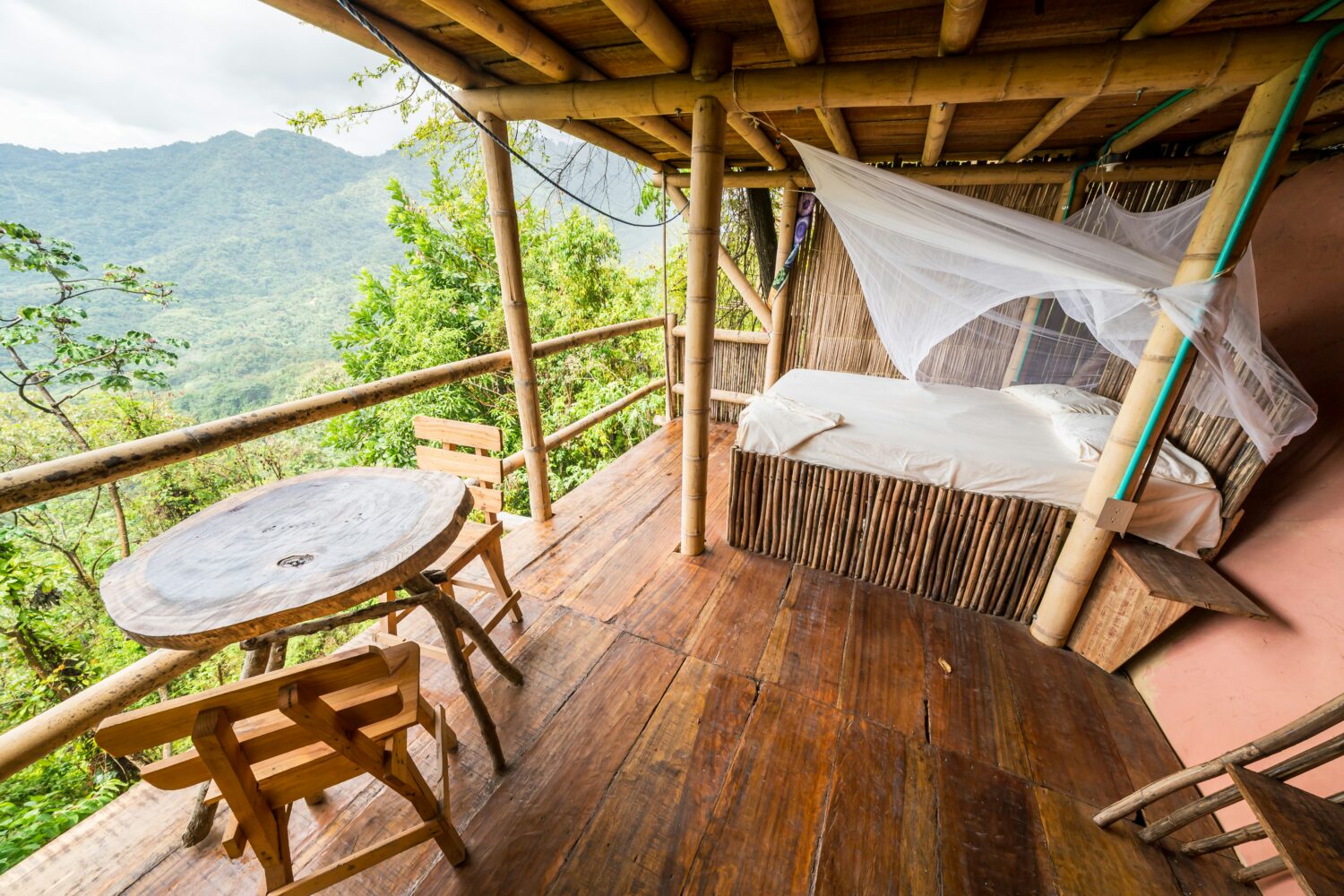
Beyond power generation, genuinely sustainable lodges typically incorporate several additional practices working in combination. Rainwater harvesting systems reduce dependence on local water sources in regions where water management matters considerably. Construction using locally sourced materials, timber, stone, and thatch rather than imported building products, both reduces the carbon footprint of construction itself and supports local building traditions and craftsmanship. Waste reduction measures, including composting toilets and organic waste management, minimize a lodge’s broader environmental footprint. Perhaps most importantly, meaningful community investment, through local employment, organic farming partnerships, and direct support for nearby schools or health clinics, ensures that a lodge’s sustainability commitment extends beyond environmental metrics into genuine social impact for the communities surrounding Uganda’s protected areas.
Solar-Powered Lodges Around Murchison Falls National Park
Murchison Falls National Park, Uganda’s largest and most visited protected area, has developed a genuinely strong cluster of solar-powered accommodation options in recent years. Baker’s Lodge, positioned along the Nile within the park, operates as an off-grid property built with low-impact materials and powered entirely by renewable energy, combining a genuinely luxurious guest experience with a meaningfully reduced environmental footprint. The lodge places particular emphasis on conservation engagement and community partnership, ensuring its operations deliver tangible benefit to both the surrounding ecosystem and the people living near the park boundary.
Murchison River Lodge, overlooking the park from the banks of the Nile, runs one hundred percent on solar power and has built a reputation for combining this environmental commitment with a relaxed, family-friendly atmosphere, making it a particularly appealing option for travelers seeking sustainable accommodation without sacrificing comfort or accessibility for younger guests. Pakuba Safari Lodge, situated on the eastern bank of the Albert Nile within the park itself, has undergone significant renovation specifically to incorporate sustainable practices, operating on an eleven-kilowatt solar grid that powers the property’s full daily operations, including lighting and heating, without any reliance on diesel generators.
Chobe Safari Lodge rounds out the park’s strongest sustainable accommodation options, running almost entirely on solar power while combining one hundred percent solar-powered rooms and facilities with water recycling systems and organic gardens that supply the property’s kitchen with fresh produce, all while maintaining the kind of genuine luxury experience that draws travelers to this stretch of the Nile in the first place. Budongo Eco Lodge offers a somewhat different angle on sustainability, functioning simultaneously as a research and conservation hub alongside its role as guest accommodation, giving travelers a particularly direct connection to the ongoing scientific work supporting Murchison Falls National Park’s broader conservation efforts.
Solar-Powered Lodges Around Bwindi Impenetrable National Park
Uganda’s gorilla trekking circuit around Bwindi Impenetrable National Park has similarly embraced solar power as a defining feature of its more environmentally conscious accommodation options. Buhoma Lodge, positioned near the park’s main entrance, stands as one of the most frequently cited examples of genuine eco-luxury in Uganda, built using local materials and powered by solar energy while functioning as an important contributor to gorilla conservation efforts and a meaningful source of local employment for residents of neighboring villages.
Clouds Mountain Gorilla Lodge, perched in the highlands surrounding Bwindi, combines solar-heated water and energy-efficient lighting with rainwater harvesting systems and direct support for local schools and health clinics, offering travelers a high-altitude, carbon-conscious base for gorilla trekking. Mahogany Springs takes a particularly comprehensive approach to sustainability, pairing its solar and rainwater harvesting infrastructure with a genuinely notable commitment to community employment, drawing roughly ninety percent of its staff from nearby communities, alongside a zero-waste kitchen built around farm-to-table dining using organic ingredients sourced locally.
Solar-Powered Lodges Elsewhere in Uganda
Sustainable accommodation options extend well beyond Murchison Falls and Bwindi into several of Uganda’s other major safari destinations. Mihingo Lodge, perched on a rocky outcrop overlooking Lake Mburo National Park, operates entirely on solar power and has built its reputation substantially around this environmental commitment, pairing renewable energy with a rainwater catchment system and direct contributions to local conservation projects surrounding the park. Kyambura Gorge Lodge, positioned near Queen Elizabeth National Park with sweeping views over the Kyambura Gorge, combines modern comfort with genuinely eco-conscious practices, including rainwater harvesting and organic farming that supplies the lodge’s kitchen directly.
Nile Safari Lodge, offering luxury accommodation along the river with strong wildlife viewing access, has positioned itself as a carbon-neutral property, reflecting a particularly ambitious sustainability commitment among Uganda’s higher-end safari lodges. Together, these properties demonstrate that solar power and genuine environmental commitment have become a meaningful differentiator across virtually every major region of Uganda’s safari circuit, rather than remaining confined to any single destination or accommodation tier.
Why Choose a Solar-Powered Eco-Lodge
Beyond the straightforward environmental benefit of reduced carbon emissions and eliminated generator noise, staying at a genuinely sustainable lodge offers several practical advantages that matter directly to the quality of a safari experience itself. Solar-powered properties tend to be considerably quieter than generator-dependent alternatives, an important consideration for travelers hoping to fall asleep to the sounds of the surrounding bush rather than the mechanical hum of diesel-powered infrastructure. Many of these same lodges, built with a broader sustainability ethos in mind, also tend to operate at smaller scale with fewer overall guests, translating into a more intimate, personalized safari experience with correspondingly more attentive staff and quieter wildlife viewing at shared water sources or communal lodge areas.
Choosing sustainable accommodation also allows travelers to feel genuinely confident that their tourism spending contributes meaningfully to the communities and ecosystems surrounding Uganda’s national parks, rather than functioning as a purely extractive form of tourism with limited local benefit. Given how directly many of these lodges tie their sustainability practices to local employment, organic farming partnerships, and direct support for nearby schools and health facilities, a stay at one of these properties represents a genuinely tangible way to support the long-term health of the communities that make Uganda’s safari industry possible in the first place.
What to Look for When Choosing a Sustainable Lodge
For travelers specifically prioritizing genuine sustainability rather than simply booking whichever property markets itself most prominently as eco-friendly, a few practical questions help separate meaningful commitment from surface-level branding. Confirming a lodge’s actual primary power source, rather than assuming solar panels visible on a rooftop indicate full solar dependence, gives a clearer picture of genuine environmental impact, since some properties supplement solar power with diesel backup during periods of low sunlight or high demand. Asking about water conservation practices, waste management systems, and the proportion of staff drawn from local communities offers further insight into whether a property’s sustainability commitment extends meaningfully beyond its energy source into genuine social and ecological impact.
Choosing lodges positioned close to the national parks themselves also reduces the overall travel footprint of a trip, minimizing transfer time between accommodation and daily wildlife activities while maximizing the time travelers spend actually engaging with the surrounding ecosystem rather than covering ground between distant lodges and park boundaries.
Building a Sustainable Uganda Safari Itinerary
For travelers hoping to weave several of these solar-powered properties into a single, comprehensive Uganda itinerary, the country’s geography works considerably in their favor. A circuit beginning with a stay at one of Murchison Falls National Park’s solar-powered lodges, Baker’s Lodge, Murchison River Lodge, or Chobe Safari Lodge among them, pairs naturally with an onward journey toward Queen Elizabeth National Park and Kyambura Gorge Lodge, before continuing to Bwindi Impenetrable National Park for gorilla trekking from Buhoma Lodge, Clouds Mountain Gorilla Lodge, or Mahogany Springs. Travelers extending their circuit further south can incorporate Mihingo Lodge around Lake Mburo National Park, giving a genuinely comprehensive, environmentally conscious tour across several of Uganda’s most significant wildlife destinations without sacrificing sustainability standards at any point along the route.
Planning Your Sustainable Uganda Safari
Building an itinerary around Uganda’s genuinely solar-powered, sustainability-focused lodges requires careful coordination given the specific properties involved and how they connect across the country’s broader safari circuit. Our team has extensive experience arranging exactly this kind of environmentally conscious itinerary, ensuring every stop on your journey reflects the sustainability standards that matter to you without compromising on wildlife access or overall comfort. Contact us today to start planning a Uganda safari built around solar-powered eco-lodges across Murchison Falls National Park, Bwindi Impenetrable National Park, and beyond, giving you the chance to experience Uganda’s extraordinary wildlife while supporting the renewable energy and community-focused tourism model that is increasingly defining the country’s approach to responsible travel.