Serval Cat Uganda: Where and When to Spot This Elusive Feline
Long-legged, enormous-eared, and built almost entirely for stealth, the serval ranks among the most visually striking cats in Africa, and also among the hardest to actually see in the wild. Uganda’s wetlands and grasslands offer genuine serval habitat across several parks, but this is a species that rewards patience, the right timing, and a properly organized night drive far more than it rewards hope alone. This guide covers exactly where servals turn up in Uganda, what makes them so difficult to spot, and how to give yourself the best realistic chance during your safari.
What Makes the Serval So Distinctive
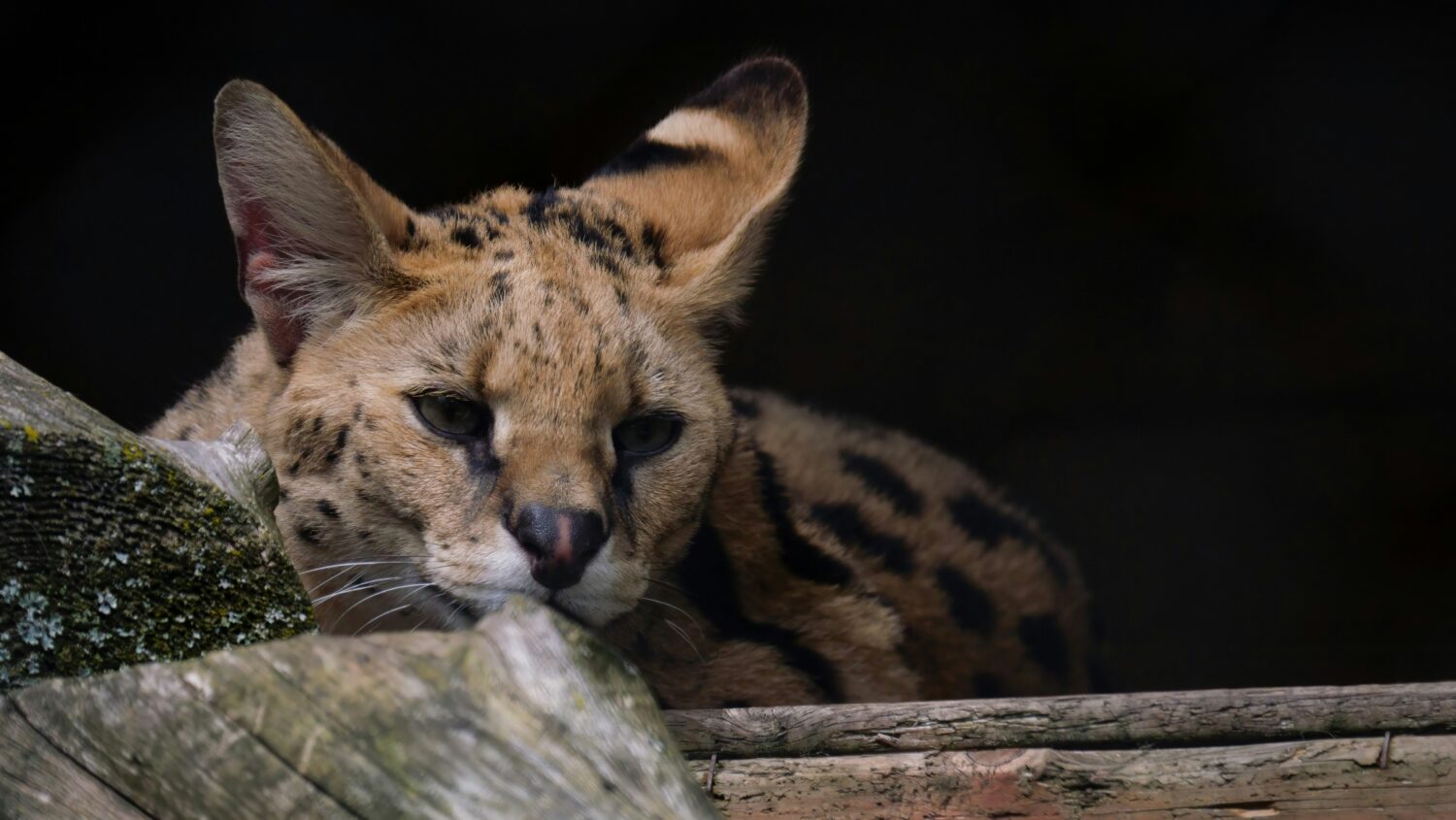
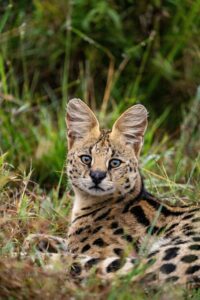
The serval, scientifically classified as Leptailurus serval, is the sole member of its genus, a taxonomic distinction it shares with a small handful of other unusual African mammals. Its most immediately striking feature is its build: the serval has the longest legs relative to body size of any cat species, an adaptation that lets it see over tall grass and pounce with remarkable vertical leaps to catch prey, including birds knocked out of the air mid-flight. Its coat, golden-yellow to buff with black spots and stripes, pairs with oversized ears, green eyes, and a short black-tipped tail to create one of the more visually unmistakable profiles among Africa’s smaller wild cats. Despite this striking appearance, the IUCN lists the serval as a species of least concern, meaning its global population remains relatively widespread, and the difficulty in seeing one in Uganda comes down entirely to behavior rather than scarcity.
 Why Servals Are So Hard to Spot
Servals are solitary, primarily nocturnal hunters, most active from dusk through the night as they stalk rodents and small birds through wetland and grassland habitat. This nocturnal pattern alone rules out standard daytime game drives almost entirely, and even during a dedicated night drive, servals rely on cover and stillness rather than open movement, making them considerably harder to spot than more visible nocturnal predators like hyenas or even leopards. A serval sighting is typically brief and requires an alert guide scanning tall grass edges with a spotlight rather than open ground, and even experienced trackers describe servals as one of the more genuinely elusive sightings available on a Uganda night drive.
Where to Look for Servals in Uganda
Uganda’s serval population is spread across several of its major parks, though sighting probability varies meaningfully by location.
Queen Elizabeth National Park
Queen Elizabeth National Park is consistently cited as Uganda’s strongest location for a realistic serval sighting, with the wetland and grassland habitat around the Kazinga Channel in particular flagged as a nocturnal hotspot for the species. The park’s Mweya Peninsula runs organized night game drives specifically designed to reveal nocturnal wildlife, with rangers using spotlights to pick out serval, civet, genet, hyena, and leopard activity that daytime visitors never see. Given Queen Elizabeth’s combination of suitable habitat and established night-drive infrastructure, this is generally the best single park to prioritize if a serval sighting is a specific goal of your trip.
Murchison Falls National Park
Murchison Falls National Park also offers a realistic chance at serval sightings, again primarily through organized night game drives, typically running around two hours and covering the park’s northern Buligi Peninsula circuit. Guides on these drives specifically watch for lions, leopards, spotted hyenas, and serval cats moving through the grassland, and while sightings remain a matter of luck rather than certainty, Murchison’s extensive savannah habitat gives the species room to range across a genuinely large area of suitable terrain.
Kidepo Valley National Park
Uganda’s remote northeastern Kidepo Valley National Park rounds out the country’s strongest serval habitat, with the park’s rugged, less-visited wilderness supporting a broader range of elusive predator species generally, including servals alongside caracals and even Uganda’s rare cheetah population. Kidepo’s remoteness means fewer visitors compete for guide attention on any given night drive, which some trackers consider an advantage for elusive species sightings.
Bwindi Impenetrable Forest
Servals have also been observed in and around Bwindi Impenetrable Forest, though this is considerably less reliable than the savannah parks given Bwindi’s dense forest habitat, which doesn’t match the open wetland and grassland terrain servals typically favor. A Bwindi serval sighting should be treated as a genuine bonus alongside gorilla trekking rather than something to specifically plan around.
Booking a Night Game Drive
Because servals are almost exclusively active after dark, a dedicated night game drive is the only realistic way to give yourself a meaningful chance at a sighting, rather than hoping to encounter one during a standard daytime outing. Night drives in Queen Elizabeth typically depart around six or seven in the evening, generally after dinner at your lodge, while Murchison Falls’ night drives commonly begin around eight and run roughly two hours through the park’s northern circuit. These drives require a 4×4 vehicle and are always conducted with a licensed Uganda Wildlife Authority ranger guide using spotlights, and it’s worth confirming with your specific lodge or operator whether night drives are offered as standard, since not every property runs them.
Tips for Improving Your Odds
A few practical habits genuinely improve your chances on a dedicated serval search. Staying quiet throughout the drive matters more than it might seem, since many nocturnal species, servals included, respond more to sound and movement than to the vehicle’s spotlight itself, and unnecessary noise can send a serval back into cover before your guide even has a chance to point it out. A red-filtered light rather than plain white spotlight disturbs nocturnal wildlife considerably less, and experienced guides often favor scanning the edges of tall grass near wetland margins specifically, since this is where servals are most likely to be actively hunting rather than resting. Timing your night drive for the dry season, roughly June through August and December through February, can also improve visibility conditions generally, since drier terrain and shorter grass make any nocturnal sighting somewhat easier to achieve.
Setting Realistic Expectations
It’s worth being direct that a serval sighting should be approached as a genuine bonus rather than a guaranteed outcome of any single night drive, however well-planned. Even experienced guides working regularly in Queen Elizabeth or Murchison Falls describe serval encounters as a highlight precisely because of how infrequently they occur relative to more commonly seen nocturnal species like hyenas or civets. Building a night drive into a broader itinerary focused on the full range of nocturnal wildlife, rather than treating serval sightings as the sole objective, tends to produce a more satisfying experience regardless of whether the serval itself makes an appearance.
Other Nocturnal Species Worth Watching For
A serval-focused night drive typically reveals a genuinely varied cast of other wildlife along the way. Civets and genets, both small, spotted nocturnal carnivores, are commonly seen alongside servals in the same grassland and wetland habitat, while spotted hyenas, leopards, and, in parks like Kidepo, even caracals round out the predator diversity visible after dark. Even familiar daytime species like hippos and elephants behave noticeably differently at night, adding further interest to a drive even on nights when the serval itself stays hidden.
Combining a Serval Search with Your Broader Itinerary
Given that Queen Elizabeth and Murchison Falls both offer strong serval habitat alongside their headline daytime attractions, a dedicated night drive fits naturally into either park’s itinerary without requiring a significant detour. Travelers can pair a Queen Elizabeth night drive with the park’s tree-climbing lions and Kazinga Channel boat cruise, or add a Murchison Falls night drive alongside the park’s classic game drives and Nile boat cruise, building a fuller, more varied wildlife experience across a single park visit rather than treating the serval search as a separate trip.
If you’re interested in adding a dedicated night drive to your Uganda safari in pursuit of the serval or the wider range of nocturnal wildlife, our team at Murchison Falls Park Safari can arrange this alongside your standard game drives and help you time your trip for the best realistic odds. Contact us to start planning a Uganda safari that goes beyond the daytime wildlife checklist.
For more on Uganda’s harder-to-spot wildlife, our guides on the aardvark and Uganda’s Shy 5, pangolin sightings and conservation, and Uganda’s Big Seven wildlife are all available, here and pair well with this guide.