Great Blue Turaco: Uganda’s Most Spectacular Forest Bird
Uganda’s reputation as one of Africa’s premier birding destinations, with over a thousand recorded species, rests partly on genuinely rare specialists like the shoebill, but a good deal of that reputation is also built on birds that are simply, unmistakably spectacular to look at. Few fit that description better than the Great Blue Turaco, a bird so large, so vividly colored, and so consistently present across Uganda’s forests that it’s become something of an unofficial mascot for the country’s birding scene, appearing on everything from safari brochures to conservation logos.
Meeting Africa’s Largest Turaco
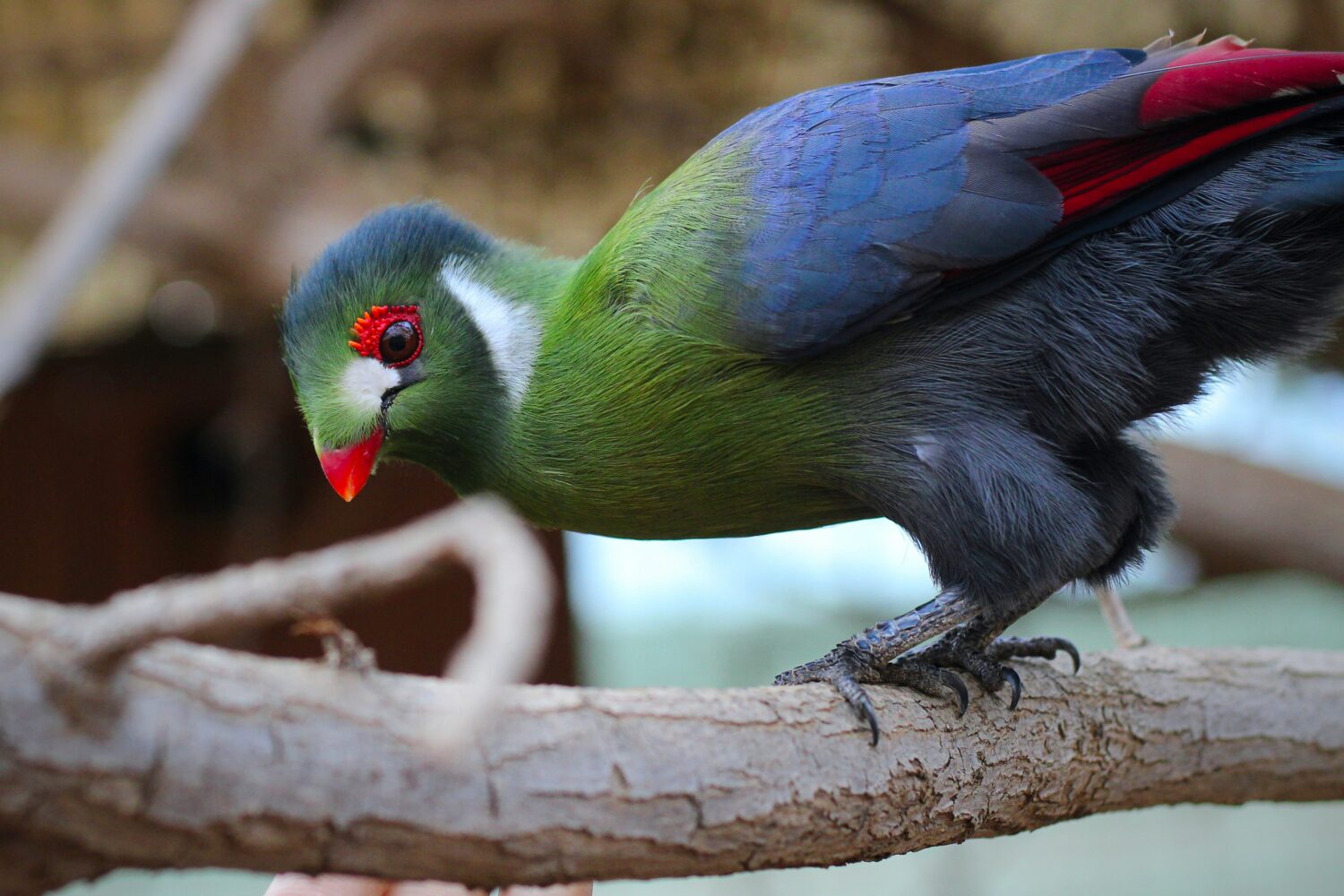
The Great Blue Turaco, known scientifically as Corythaeola cristata, holds the title of the largest turaco species on the African continent, measuring between seventy and seventy-six centimeters in length and weighing up to 1,231 grams, genuinely substantial dimensions for a forest bird. Its coloring is where it truly earns its reputation: a bold slate-blue body, a bright yellow breast band, a crimson-tipped bill, and a distinctive upright crest atop its head, combining into one of the most visually striking birds anywhere on the continent. The tail carries its own distinction as well, with blue and yellow feathers that have historically been prized locally as material for good-luck talismans, a detail that speaks to how deeply this bird has embedded itself in the cultural imagination of the communities living alongside its forest habitat.
Behavior: A Social, Tree-Bound Life
Great Blue Turacos are genuinely social birds, typically observed traveling in pairs or small groups moving through the forest canopy together rather than as solitary individuals. Despite their size, they’re limited fliers, their relatively short wingspan doesn’t support sustained flight particularly well, and as a result they’ve adapted to a life spent primarily climbing and moving through tree branches rather than soaring between them, descending to the ground mainly to forage or bathe. They’re active throughout the day, and their presence is often announced before it’s seen, a deep, resonant “koww-koww-koww” call that carries well through dense forest and gives experienced guides a reliable way to locate a group before spotting them visually.
Diet and Ecological Role
Great Blue Turacos feed primarily on fruit, making fruiting trees at forest edges and clearings some of the most reliable places to find them actively feeding, particularly in early morning hours when activity tends to peak. This fruit-heavy diet gives the species a genuine ecological importance as a seed disperser, helping regenerate forest vegetation as it moves between fruiting trees across its territory, a role shared by many of Uganda’s forest bird species but one that’s easy to overlook when simply admiring the bird’s appearance.
Where to See the Great Blue Turaco in Uganda
The species is found across forest and forest-edge habitat throughout much of Uganda, giving travelers several strong options depending on which part of the country their itinerary already covers.
Kibale National Park
Kibale National Park, already renowned as Uganda’s premier chimpanzee tracking destination, doubles as one of the country’s best locations for the Great Blue Turaco, with the park’s rainforest canopy offering ideal habitat and the main forest trail providing consistently good sighting opportunities. With over 375 bird species recorded in Kibale overall, a Great Blue Turaco sighting here often comes as one highlight among many during a single morning walk, making Kibale a genuinely efficient stop for travelers combining primate tracking with serious birding interest.
Entebbe Botanical Gardens
For travelers with limited time or those simply passing through before or after their main safari itinerary, Entebbe Botanical Gardens offers what several birding guides describe as the best close-range, well-lit viewing of Great Blue Turacos anywhere in the country. The gardens’ open canopy and large trees give photographers genuinely favorable conditions, a meaningful advantage over the denser forest interior of parks like Kibale or Bwindi, where sightings can be excellent but harder to photograph clearly given the more enclosed canopy.
Bwindi Impenetrable Forest
Bwindi Impenetrable Forest, primarily known for mountain gorilla trekking, also holds strong Great Blue Turaco populations, particularly around the Buhoma and Ruhija sectors, where forest edges and fruiting trees concentrate bird activity. For travelers already planning a gorilla trekking trip to Bwindi, a dedicated early morning birding walk around these forest edges offers a genuine chance to add this species to the trip without any additional travel.
Budongo Forest and Murchison Falls
Budongo Forest, within Murchison Falls National Park’s broader conservation area, also supports Great Blue Turaco populations alongside its well-known chimpanzee tracking activity, giving travelers on a Murchison-focused itinerary a realistic chance at the species without needing to travel to western Uganda’s forest parks specifically. Additional records place the species around Queen Elizabeth National Park and the forests of the Rwenzori foothills as well, reflecting just how broadly distributed this bird is across Uganda’s forested habitat.
Best Time and Technique for a Sighting
The wet season, roughly March through May, is often highlighted as a particularly strong window for Great Blue Turaco sightings, since the birds tend to be more active during this period and the lush green vegetation provides a genuinely photogenic backdrop for any photos captured. That said, the species is resident year-round across its Ugandan range rather than migratory, meaning a sighting remains realistic regardless of season, and early morning visits to forest edges near fruiting trees consistently produce the best results, since this is when feeding activity, and therefore visibility, peaks. Listening for the bird’s distinctive call before attempting to spot it visually is a technique experienced guides rely on heavily, since the sound often gives away a group’s location well before they’re visible through the canopy.
Conservation Status and Threats
The IUCN currently lists the Great Blue Turaco as a species of Least Concern, reflecting its relatively wide distribution and healthy overall population across equatorial Africa. That said, this status shouldn’t be mistaken for a lack of threats entirely. Habitat destruction, driven by forest clearance for timber and agricultural expansion, has already begun affecting populations in parts of the species’ range, including reported declines in Nigeria, and the bird is also hunted in some areas for its meat and its distinctive feathers, which continue to be sought after in local trade markets. Uganda’s network of protected forests and national parks plays a genuine role in safeguarding the species’ habitat, and birding tourism specifically contributes to this protection by creating an economic incentive to preserve forest habitat rather than clear it.
Uganda’s Wider Turaco Family
The Great Blue Turaco is the largest and most visually dramatic of Uganda’s turaco species, but it’s far from the only one worth knowing about. Uganda hosts seven recognized turaco species in total, including Ross’s turaco, the black-billed turaco, the white-crested turaco, the Rwenzori turaco, the eastern grey plantain-eater, and the bare-faced go-away bird, each with its own distinct range and appearance across the country’s varied habitats. For serious birders, seeing all seven species across a well-planned Uganda birding itinerary is a genuinely achievable goal, and the Great Blue Turaco, given how widely distributed and relatively easy to locate it is compared to some of its rarer relatives, tends to be one of the first species checked off that list.
Building a Birding Stop Into a Standard Safari Itinerary
What makes the Great Blue Turaco particularly appealing for travelers who aren’t dedicated birders is how easily it fits into an itinerary built primarily around other activities. A gorilla trekking morning in Bwindi, a chimpanzee tracking day in Kibale or Budongo, or even a brief layover stop at Entebbe Botanical Gardens before or after a flight all offer realistic opportunities to see this species without requiring a dedicated birding-focused trip. For travelers who do want to prioritize birding more specifically, adding an early morning nature walk to any of these locations, timed around peak activity hours, meaningfully improves the odds of a strong, photographable sighting.
If you’re interested in adding dedicated birding time to your Uganda safari, whether to specifically seek out the Great Blue Turaco or to work toward the full seven-species turaco checklist, our team at Murchison Falls Park Safari can build this into your itinerary alongside gorilla trekking, chimpanzee tracking, or classic savannah game drives. Contact us to start planning a Uganda safari that gives Uganda’s spectacular birdlife the attention it deserves.
For more on Uganda’s wildlife beyond the headline species, our guides on the serval cat, African civets and genets, and Budongo Forest chimpanzee tracking are all available, here and pair well with this guide.