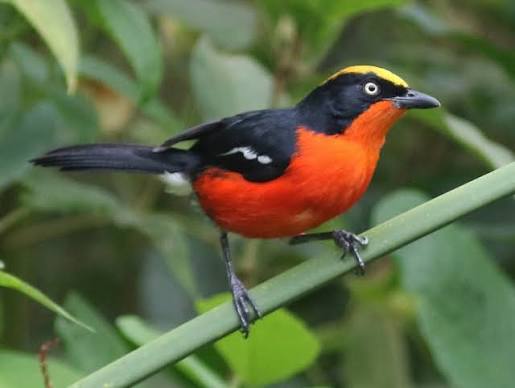
Papyrus Gonolek and Uganda’s Wetland Birding Hotspots
Ask a serious birder what draws them to Uganda’s wetlands and the shoebill usually comes up first, and understandably so. But the shoebill has company in these papyrus swamps that’s just as revealing about why Uganda’s wetland birding matters, a smaller, brilliantly colored bird called the Papyrus Gonolek, one of a handful of species found almost nowhere else on Earth outside this specific habitat. Understanding this bird, and the wetlands it depends on, offers a genuinely different entry point into Uganda’s birding scene than the classic savanna checklist most visitors arrive expecting.
Meeting the Papyrus Gonolek
The Papyrus Gonolek, scientifically known as Laniarius mufumbiri, is a striking bird carrying bold red and yellow plumage that stands out sharply against the green-and-brown backdrop of dense papyrus reedbeds. It belongs to a genuinely exclusive club: the Lake Victoria biome restricted species, a group of roughly a dozen birds worldwide whose entire range is tied specifically to papyrus swamp habitat around Lake Victoria and a handful of connected wetlands, meaning the Papyrus Gonolek can’t simply be found in generic wetland habitat elsewhere in Africa the way many water birds can. This restricted range is precisely what makes the species a genuine target for serious birders working through an East African checklist, rather than an incidental sighting picked up alongside more common wetland birds.
Where the Papyrus Gonolek Lives
True to its name, the Papyrus Gonolek depends specifically on papyrus reedbeds, the dense stands of tall sedge that dominate Uganda’s most significant wetlands. This isn’t a bird that tolerates degraded or fragmented wetland habitat well, making its presence at a given site a genuinely useful indicator of that wetland’s overall ecological health. Uganda’s largest and most accessible papyrus swamps, concentrated around Lake Victoria’s northern shores, provide exactly the kind of intact habitat this species requires, and its consistent presence at these sites has made it something of a flagship species for Uganda’s broader wetland conservation efforts.
Mabamba Swamp: The Country’s Premier Wetland Birding Site
Mabamba Swamp, also known as Mabamba Bay Wetland, sits on the northern shores of Lake Victoria roughly thirty-five to forty kilometers west of Entebbe, and it has developed into Uganda’s single most visited and most reliable wetland birding destination. The swamp holds official Ramsar status as a Wetland of International Importance, and its papyrus-dominated habitat, explored by canoe through narrow channels cut into the reeds, supports over 300 recorded bird species. While the shoebill stork draws the majority of visitors, Mabamba’s deeper value for serious birders lies in its concentration of biome-restricted specialists, with the Papyrus Gonolek sitting alongside species including the white-winged swamp warbler, northern brown-throated weaver, and Carruthers’s cisticola.
What a Mabamba Birding Trip Involves
A typical Mabamba visit runs as a half-day or full-day excursion from Entebbe or Kampala, with local guides from the Mabamba Wetland Ecotourism Association leading canoe-based tours through the papyrus channels. Beyond the shoebill and Papyrus Gonolek, a canoe trip through Mabamba typically reveals African jacana, malachite kingfisher, blue-headed coucal, purple swamphen, African marsh harrier, and, during the northern hemisphere winter months from October through March, substantial numbers of Palearctic migrant species passing through. The swamp’s proximity to Entebbe, close enough for a straightforward half-day trip without cutting into a broader safari itinerary, makes it one of the most convenient serious birding experiences available anywhere in Uganda.
Beyond Mabamba: Uganda’s Other Wetland Hotspots
While Mabamba dominates most birders’ itineraries given its accessibility, Uganda’s wetland birding extends considerably further, and understanding the broader network gives a fuller picture of where to prioritize time depending on your specific interests.
Lake Opeta Wetland System
The Lake Opeta Wetland System in northern Uganda holds a genuinely unique distinction: it’s the primary habitat for Fox’s Weaver, Uganda’s only true endemic bird species, found nowhere else on Earth. For birders specifically working through Uganda’s endemic and near-endemic checklist, this wetland represents an essential, if more remote, addition to a serious itinerary.
Lake Nakuwa Wetland System
Lake Nakuwa, another significant wetland system, supports large numbers of waterfowl and functions as an important breeding ground for numerous migratory species, adding further depth to Uganda’s wetland conservation network beyond the more heavily visited Mabamba site.
Nabajjuzi Wetland
The Nabajjuzi Wetland, near Masaka, is particularly known for hosting Uganda’s national bird, the grey crowned crane, giving it a specific draw for travelers interested in this iconic, endangered species beyond the more general wetland birding experience Mabamba offers.
Murchison Falls National Park’s Wetland Edges
Beyond the Lake Victoria basin, Murchison Falls National Park offers its own wetland birding value, with shoebills occasionally recorded along the park’s Nile-adjacent papyrus and swamp habitat, alongside the park’s broader reputation for over 450 recorded bird species across its full range of savannah, riverine, and wetland ecosystems. Travelers already building an itinerary around Murchison’s classic game drives and boat cruise get a meaningful wetland birding bonus without needing a separate dedicated trip.
Why These Wetlands Matter Beyond Birding
Uganda’s Ramsar-listed wetlands, including Mabamba and its connected sites, serve a function well beyond supporting rare bird species. These papyrus ecosystems play a genuine role in flood control, water purification, and supporting local livelihoods through fishing and sustainable harvesting practices, making their conservation a matter of broader environmental and community importance rather than a narrow birding interest alone. The Papyrus Gonolek’s continued presence at a given wetland site functions as a useful, visible marker of that ecosystem’s overall health, giving conservationists and researchers a practical indicator species to track alongside more detailed environmental monitoring.
Best Time to Visit for Wetland Birding
Uganda’s wetland birding remains viable year-round, given the relatively stable habitat conditions papyrus swamps maintain regardless of season, though the months from October through March bring an added dimension in the form of substantial Palearctic migrant activity, as birds arriving from Europe and northern Africa pass through or overwinter in Uganda’s wetlands. This migratory overlay adds meaningfully to the species count achievable on a single wetland birding trip during these months, while the core resident specialists, including the Papyrus Gonolek and shoebill, remain observable throughout the year.
Building Wetland Birding Into a Broader Uganda Itinerary
Given Mabamba’s proximity to Entebbe, it fits naturally as either the opening or closing activity of a broader Uganda safari, a strong way to begin a trip immediately after landing or to fill a final morning before an international departure. Travelers with a deeper birding focus can extend this into a dedicated circuit, combining Mabamba with Queen Elizabeth National Park, which holds Uganda’s highest overall bird species count at over 600, and Semuliki National Park, home to the country’s specific Albertine Rift forest specialists, creating a genuinely comprehensive Uganda birding trip that spans wetland, savanna, and forest habitat across a single itinerary.
If you’re planning a Uganda birding trip and want to build in a visit to Mabamba Swamp for the Papyrus Gonolek and shoebill, alongside the country’s other major wetland and forest birding hotspots, our team at Murchison Falls Park Safari can design an itinerary around exactly the species and habitats that matter most to you. Contact us to start planning a Uganda birding safari built around the country’s most rewarding wetland ecosystems.
For more on Uganda’s exceptional birdlife, our guides on the Great Blue Turaco, the Black Bee-eater and Semuliki National Park, and Murchison Falls National Park’s game drives and boat cruises are all available, here and pair well with this guide.