

Retirement Safari: Uganda Travel Tips for Older Adventurers
Retirement often brings exactly the combination that a Uganda safari rewards: the time to travel properly, the patience to appreciate a slower pace, and finally enough flexibility to plan a trip that’s been on the list for decades. What stops many older travelers from booking, though, isn’t lack of interest, it’s uncertainty about whether their age or fitness level will actually hold up to the physical demands people associate with African safaris, particularly gorilla trekking. The reality is considerably more encouraging than most assume. There is no upper age limit anywhere in Uganda’s safari or trekking regulations, and with the right preparation and the right operator, a retirement safari can be one of the most rewarding trips of a lifetime rather than a physical ordeal to brace for.
There Is No Upper Age Limit for Gorilla Trekking
The single most important fact for older travelers considering a Uganda safari is this: gorilla trekking has no maximum age requirement. The Uganda Wildlife Authority enforces a strict minimum age of fifteen, but there is no corresponding ceiling on the other end, and operators across Uganda routinely guide travelers in their seventies, eighties, and even nineties into Bwindi Impenetrable Forest. The oldest recorded person to complete a gorilla trek at Bwindi was reportedly ninety-four years old, a detail worth holding onto if age is the thing giving you pause. What matters far more than the number of candles on your last birthday cake is your general health, your honesty about your own physical limitations, and how well your trip is planned around them.
How Uganda’s Parks Accommodate Older Trekkers
Uganda’s gorilla trekking system has built-in flexibility specifically designed to accommodate a wide range of fitness levels, and this flexibility works strongly in favor of older travelers. Each morning, park rangers assign trekking groups to specific gorilla families based on an assessment of the group’s fitness at the ranger briefing, and this allocation process allows older or less mobile trekkers to be matched with gorilla families known to reside closer to the trailhead, meaningfully shortening the walk required. Requesting an easier gorilla family assignment when booking, and being upfront with your guide about your fitness level and any physical limitations, is one of the simplest and most effective things an older traveler can do to shape the day in their favor.
 The Sedan Chair Option
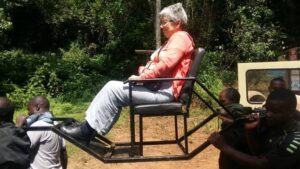 The Sedan Chair Option
For travelers with more significant mobility concerns, Uganda’s parks offer a sedan chair service, in which a team of trained porters carries the trekker through the forest on a specially designed chair. This option costs more than a standard porter hire, but it removes the physical trekking demand almost entirely, allowing travelers who might otherwise assume gorilla trekking is out of reach to still reach a gorilla family and experience the encounter itself. It’s worth arranging this in advance with your operator rather than assuming it can be sorted out on the day, since porter teams need to be organized ahead of the trek.
Porters Are Worth Hiring Regardless of Fitness
Even travelers in reasonably good shape benefit from hiring a local porter for the trek, and this is a piece of advice that applies just as usefully to older travelers as anyone else. Porters carry your daypack, offer a steadying hand on steep or slippery sections, and are drawn from local communities around the park, meaning the modest fee directly supports the people living alongside the forest. For older trekkers in particular, having that extra support on hand removes a meaningful amount of the physical strain and anxiety that can otherwise overshadow the experience.
Preparing Your Body Before the Trip
A retirement safari rewards a bit of physical preparation in the weeks before departure, and this doesn’t need to mean an intense fitness regimen. Regular walking, ideally on varied terrain rather than flat pavement, in the month or two before your trip helps build the stamina and balance that gorilla trekking’s uneven forest trails demand. Breaking in a pair of sturdy, comfortable hiking boots well before the trip matters just as much as fitness itself, since new boots on trek day are one of the most common sources of avoidable discomfort for travelers of any age. If you manage any ongoing health conditions, a conversation with your doctor about the physical demands of trekking, at altitude and in humid forest conditions, is worth having before you book, so you can plan around your own specific limitations rather than general assumptions.
Choosing an Itinerary That Matches Your Pace
One of the most valuable things a retirement-focused Uganda itinerary can do is deliberately reduce the amount of ground covered each day compared to a standard, more compressed itinerary built for younger, faster-paced travelers. Building in an extra day for road transfers between parks, rather than trying to cover the same distance in one long push, allows for a more comfortable pace and the chance to enjoy scenic stops along the way rather than treating transit days purely as time to be endured. Travelers who’d rather minimize road time altogether can also consider flying between key points, such as into Murchison Falls’ airstrips or the gorilla trekking region, cutting hours of driving down to a short flight and preserving energy for the activities that matter most.
Murchison Falls: An Easier Alternative or Complement to Trekking
For older travelers who want a rich wildlife experience without the physical demands of forest trekking, Murchison Falls National Park offers an excellent foundation for a retirement safari. Game drives are entirely vehicle-based, boat cruises to the base of the falls involve no walking beyond boarding the boat, and the park’s open savannah terrain makes for comfortable, low-exertion wildlife viewing throughout the day. Many retirement-focused itineraries pair a few relaxed days at Murchison Falls with a gorilla trekking component later in the trip, front-loading the itinerary with lower-intensity wildlife experiences before building up to the more physically demanding forest trek.
Health and Travel Preparation Specific to Older Travelers
Older travelers should give a bit more attention than younger travelers might to a few specific health logistics before departure. A yellow fever vaccination certificate is required for entry into Uganda, and it’s worth discussing the vaccine directly with your doctor well ahead of the trip, since some older travelers with certain health conditions may need a medical waiver rather than the standard vaccine, a conversation best had months rather than days before departure. Comprehensive travel insurance that specifically covers medical evacuation is worth prioritizing for any Uganda trip, but it matters especially for older travelers, given the more remote nature of some of the parks and the value of having a clear evacuation plan in place should anything go wrong. Packing a clearly labeled supply of any regular medications, with enough buffer for potential delays, and carrying a copy of relevant medical information are simple steps that add real peace of mind without adding much to your packing list.
Choosing the Right Operator for a Retirement Safari
Perhaps the single biggest factor in how well a retirement safari goes is the operator you travel with, and it’s worth being direct with any operator you’re considering about your age, fitness level, and any specific concerns before booking. Operators experienced with senior travelers will typically offer customized vehicles with more comfortable seating and easier entry and exit, guides briefed specifically on pacing a trip around an older traveler’s needs, and itineraries that build in more rest time between activities than a standard package might. This kind of tailored planning costs little to arrange but makes a meaningful difference in how enjoyable, rather than exhausting, the trip actually feels.
Common Concerns Older Travelers Raise, Addressed Honestly
A few concerns come up consistently among older travelers considering a Uganda safari, and most have straightforward answers. Altitude is a real factor in parts of the gorilla trekking region and higher-elevation areas like Bwindi, and travelers with cardiovascular or respiratory conditions should discuss this specifically with their doctor rather than assuming it won’t be an issue. Uganda’s equatorial climate means warm days and cooler mornings and evenings year-round, generally manageable for most travelers, though the humidity in forest regions can feel more taxing than the drier savannah parks. Concerns about medical support in remote areas are reasonable, and this is exactly where working with an established operator matters, since experienced companies maintain clear protocols and relationships with medical evacuation services for exactly this scenario.
Building a Retirement Safari Itinerary
A well-paced retirement safari itinerary often runs longer than a standard trip, not because there’s more to see but because the days themselves move more gently. A typical structure might begin with a few unhurried days at Murchison Falls National Park, covering game drives and a Nile boat cruise at a relaxed pace, before continuing toward the gorilla trekking region with an extra transfer day built in rather than a long single push. From there, the trek itself can be planned around an easier gorilla family assignment, a hired porter, or a sedan chair depending on individual fitness, with a rest day built in immediately afterward rather than another activity stacked on top. This kind of pacing, deliberately slower than a standard itinerary, tends to produce a trip that feels genuinely restorative rather than one that needs a vacation of its own to recover from.
If you’re planning a retirement safari to Uganda and want an itinerary genuinely built around your own pace and comfort, our team at Murchison Falls Park Safari can design a trip that balances relaxed wildlife viewing with a well-supported gorilla trekking experience, arranging porters, sedan chairs, or easier trekking routes as needed. Contact us to start planning a Uganda safari suited to exactly how you want to travel.
For more on planning your trip, our guides on gorilla trekking permits and preparation, Murchison Falls National Park’s game drives and boat cruises, and the best time of year to visit for wildlife viewing are all available on murchisonfallsparksafari.com and pair well with this guide.