

Uganda Safari and Zanzibar Beach: The Perfect Two-Week Combo
There’s a reason so many seasoned Africa travelers end up pairing these two destinations rather than choosing between them. A Uganda safari and Zanzibar beach extension gives you the two experiences that, together, make East Africa worth crossing an ocean for: dense, rewarding wildlife encounters on the mainland followed by total physical stillness on a white-sand coastline where the biggest decision of the day is which beach bar serves the best sundowner. Two weeks is the sweet spot for this combination. It’s long enough to do Uganda properly, including gorilla trekking, without rushing through it, and it still leaves five or six unhurried days on Zanzibar to actually recover from the early morning game drives before flying home.
What makes this pairing work logistically, more than almost any other safari-and-beach combination in Africa, is the flight connection. Entebbe and Zanzibar are linked by direct, nonstop service operated by both Uganda Airlines and Air Tanzania, with a flight time of under two hours. There’s no need to route through Nairobi, Dar es Salaam, or Addis Ababa just to get from the savannah to the sand, which is a genuine advantage over combos involving destinations like the Seychelles or Mauritius that require longer connecting itineraries. This guide walks through exactly how to structure the two weeks, what each leg costs, and the visa and logistics details that trip up travelers who haven’t combined these two countries before.
Why Uganda and Zanzibar Complement Each Other So Well
 Uganda earns its nickname, the Pearl of Africa, through sheer biodiversity packed into a relatively small, walkable, drivable country. Within a single week you can realistically track mountain gorillas in Bwindi Impenetrable Forest, watch chimpanzees swing through Kibale’s canopy, and catch tree-climbing lions and Nile crocodiles along the Kazinga Channel in Queen Elizabeth National Park, or alternatively spend a few days in Murchison Falls National Park watching the Nile force itself through the narrow gorge known as the Devil’s Corridor while giraffes and elephants graze the surrounding savannah. It’s an intense, activity-driven kind of travel, often involving early wake-up calls and long game-drive hours on rough roads.
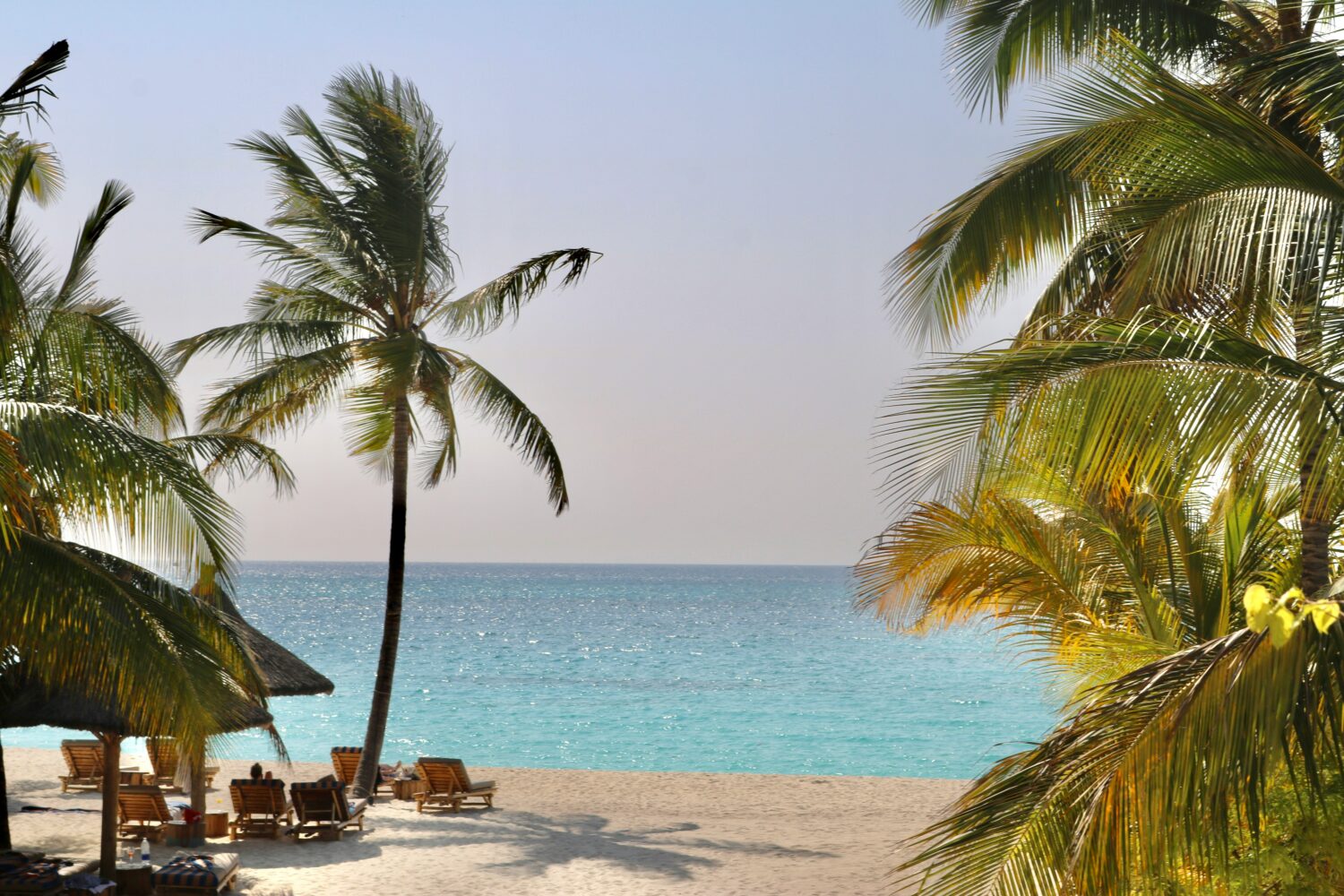
Zanzibar exists as the perfect counterweight to that intensity. Stone Town’s narrow alleys and spice markets offer a half-day of cultural texture if you want it, but the archipelago’s real draw is its beaches: powder-soft sand, warm turquoise water, and a slower pace built around swimming, snorkeling, and doing very little at all. Travelers who try to cram both experiences into one country, or who skip the beach leg entirely, often report the same thing afterward: the safari portion is exhilarating but exhausting, and having a dedicated stretch of pure relaxation afterward changes the entire feel of the trip. If you’re weighing Zanzibar against other beach add-ons, our comparison of Uganda combined with other beach destinations breaks down how Zanzibar stacks up against the Seychelles and Mauritius on cost, flight time, and overall value.
Structuring the Two Weeks: A Realistic Split
The most common and most effective structure for this trip allocates roughly eight to nine days to Uganda and five to six days to Zanzibar, with one travel day connecting the two. Trying to squeeze Uganda into less than a week means sacrificing either the gorilla trekking permit day or a proper visit to one of the savannah parks, and neither is worth cutting given how far most travelers have flown to get here.
 A typical opening covers arrival into Entebbe, an overnight near the airport or in Kampala to recover from the international flight, and then a transfer the following morning toward Murchison Falls National Park in the north. Two full days here allow time for a game drive through the delta plains, home to giraffes, buffalo, and elephants, plus the boat cruise to the base of the falls, an activity that consistently ranks as one of the most memorable moments of a Uganda itinerary. From there, most itineraries head south toward Kibale National Park for chimpanzee tracking, then continue to Bwindi Impenetrable Forest for the centerpiece of the whole trip: a day spent trekking to a habituated gorilla family. Many travelers add Queen Elizabeth National Park between Kibale and Bwindi as a natural stopover, using it for a game drive and the Kazinga Channel cruise before continuing south. If you want the exact routing and driving times between these parks, our full breakdown of a nine-day Uganda gorilla and wildlife itinerary lays out the day-by-day logistics in detail.
After the final park day, travelers typically fly back to Entebbe from a regional airstrip rather than driving the full distance again, saving a full day that can instead be spent in Zanzibar. From Entebbe, the nonstop flight to Zanzibar takes under two hours, landing you at Abeid Amani Karume International Airport in the early afternoon with plenty of daylight left to settle into a beachfront room and watch the sunset over the Indian Ocean. The remaining five to six days are yours to structure loosely: a day or two in the northeast around Nungwi or Kendwa for swimming and water sports, a couple of days on the quieter east coast around Paje or Jambiani if you want kitesurfing or a slower pace, and perhaps a half-day excursion into Stone Town for its UNESCO-listed old quarter, spice tour, and seafood night market.
Flights, Booking Windows, and What They Cost
Because Uganda Airlines and Air Tanzania both operate the Entebbe-to-Zanzibar route directly, this leg of the trip is refreshingly simple compared to booking connections through a third country. Combined, the two carriers run roughly five flights a week on this route, so it’s worth checking both schedules rather than defaulting to whichever airline shows up first in a search engine. Fares fluctuate significantly by season, with the cheapest one-way tickets typically found in August and September during Zanzibar’s shoulder season, and the highest prices clustering around the December holidays and the January-to-February peak. Travelers who prefer connecting service through Kenya Airways, Ethiopian Airlines, or RwandAir have that option too, though it adds a layover and generally costs more than the direct routing.
The international leg into Uganda is a separate consideration entirely, and one worth planning early since seat availability on the handful of true nonstop European routes into Entebbe, via Uganda Airlines from London Gatwick, Brussels Airlines from Brussels, and KLM from Amsterdam, tends to tighten up months in advance during peak season. For travelers coming from outside Europe, connecting through Doha with Qatar Airways or through Nairobi with Kenya Airways are the two most reliable options. Our dedicated guide to flights into Uganda and the cheapest months to travel covers routing options from a wider range of source markets in more depth.
Visas, Entry Requirements, and the Details People Forget
Visa planning for this combo requires two separate approvals rather than one, since Uganda and Tanzania, which governs Zanzibar, are not part of the same tourist visa scheme despite both being East African Community members. Most nationalities need a Uganda e-visa, applied for online in advance, and a separate Tanzania tourist visa that costs fifty dollars for most passport holders and one hundred dollars for US citizens on the multiple-entry option. The good news is that a single Tanzania visa, whether obtained online beforehand or on arrival, covers entry to both the mainland and Zanzibar, since Zanzibar is a semi-autonomous region rather than a separate visa jurisdiction. Citizens of East African Community member states, including Kenya and Rwanda, generally enter Tanzania and Zanzibar visa-free, which is worth checking against your specific passport before assuming you need to pay anything at all.
A few Zanzibar-specific requirements catch travelers off guard. Since 2024, all international visitors arriving in Zanzibar must carry mandatory local travel insurance, purchasable in advance through the official government portal or on arrival for roughly forty-five dollars, regardless of whatever travel insurance you already hold. Because Uganda is classified as a yellow fever risk country, immigration officials in Tanzania sometimes check for a valid yellow fever vaccination certificate when travelers arrive from Entebbe, so it’s worth carrying that document even if you weren’t asked for it on the Uganda side. For the full rundown on Uganda’s own e-visa process, payment methods, and common application mistakes, see our detailed post on Uganda e-visa requirements and processing times.
Budgeting the Combined Trip
Cost is naturally the first question most travelers ask once the itinerary starts taking shape, and the honest answer is that it varies enormously depending on lodge category and how many parks you cover in Uganda. As a rough framework, the Uganda leg is typically the more expensive half of the trip once you factor in park entrance fees, the gorilla trekking permit, which alone runs several hundred dollars per person, and 4×4 vehicle hire with a driver-guide for the multi-park circuit. Zanzibar, by contrast, offers a genuinely wide spread of accommodation options, from simple beachfront guesthouses to five-star resorts, meaning the second half of the trip can flex significantly to match whatever budget is left after the safari portion. Travelers looking to understand exactly what the Uganda side costs before adding Zanzibar on top should start with our complete guide to Uganda National Parks entry fees and permit pricing, which breaks down every park fee, vehicle charge, and activity permit you’ll encounter.
When to Travel for the Best of Both Destinations
Timing this combo well means finding the overlap between Uganda’s dry seasons, roughly December through February and June through September, and Zanzibar’s own best weather windows, which largely mirror the same months while avoiding the long rains that hit the archipelago between March and May. June through September stands out as the strongest overall window, coinciding with Uganda’s prime gorilla trekking conditions, drier park roads for game drives, and calm, dry weather across Zanzibar’s beaches. December into early February works nearly as well and has the added appeal of warmer water temperatures on the coast, though it does coincide with higher demand and pricing on both the Uganda park circuit and Zanzibar’s beachfront resorts, so booking several months ahead is worthwhile if you’re targeting that window.
Putting It All Together
The appeal of this two-week combination isn’t just that Uganda and Zanzibar happen to sit within a short flight of each other. It’s that the two halves of the trip genuinely serve different purposes, and doing them back to back, rather than choosing one or the other, gives you a far more complete and far less exhausting experience of East Africa than either destination delivers alone. Getting the logistics right, from flight timing to the two separate visa applications to the right balance of park days versus beach days, is really the only thing standing between you and a trip that runs seamlessly rather than one that leaves you scrambling at a border post. If you’d like help building a version of this itinerary tailored to your travel dates, budget, and preferred parks, our team can put together a full day-by-day plan with pricing for both the Uganda and Zanzibar legs. Get in touch through Murchison falls park safari to start planning, or explore our existing Uganda multi-destination safari packages to see how a Zanzibar extension fits into a full itinerary and price quote.