Uganda National Parks Entry Fees: Full Price List by Park
Anyone planning a trip to the Pearl of Africa eventually runs into the same question: how much does it actually cost to get into Uganda’s national parks? The Uganda National Parks entry fees are set centrally by the Uganda Wildlife Authority, known simply as UWA, and they apply uniformly across the country’s ten national parks and dozen wildlife reserves. Yet because the rates differ by park category, nationality, and age bracket, first-time travelers often find the fee structure confusing until they see it laid out clearly. This guide breaks down every park, every visitor category, and every extra charge you’re likely to encounter, so you can budget your Uganda safari accurately before you ever set foot at a gate.
Before diving into individual parks, it helps to understand how UWA organizes its pricing. Uganda’s protected areas are grouped into tariff categories, currently running from Category A+ down to Category D, with each tier reflecting a park’s popularity, infrastructure, and conservation costs. Within every category, fees are further split by visitor status: Foreign Non-Residents, Foreign Residents holding a valid Ugandan work permit, citizens of other African countries under the Rest of Africa bracket, and East African Community citizens, who pay in Ugandan shillings rather than dollars. Children between five and fifteen years old receive a reduced rate at every park, while children under five enter free of charge. These figures are valid under the tariff structure running through June 2026, though UWA reserves the right to revise pricing without extensive notice, so always confirm current rates with your tour operator before finalizing your budget.
Murchison Falls National Park Entry Fees: Category A+
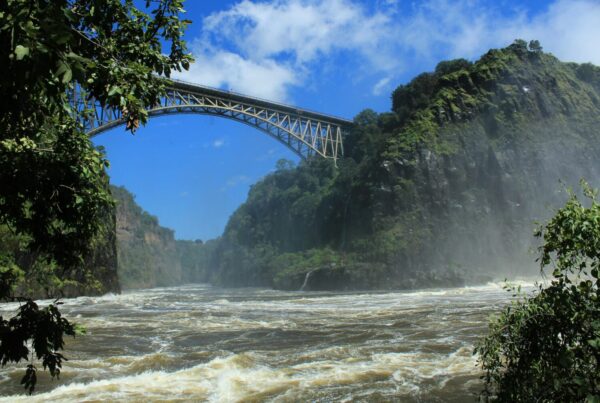
Murchison Falls National Park sits in a tariff class of its own, labeled Category A+, which was introduced specifically because of the park’s size, popularity, and the sheer volume of both tourism and transit traffic passing through it. As Uganda’s largest and oldest national park, home to the thundering Devil’s Corridor where the Nile forces itself through a narrow rock gorge, it commands the highest entrance fee in the country. Foreign Non-Resident adults pay forty-five US dollars per person for twenty-four hours of access, while Foreign Residents pay thirty-five dollars. Visitors from other African nations pay thirty dollars, and East African citizens, including Ugandans, pay twenty-five thousand shillings. Children aged five to fifteen pay roughly half the adult rate across each category, and Ugandan school groups pay a heavily subsidized three thousand shillings per pupil, with university and tertiary groups charged five thousand shillings.
It’s worth noting that this Murchison Falls National Park entry fee covers only park access itself. Popular add-on activities such as the boat cruise to the base of the falls, guided game drives, and the hike to the Top of the Falls viewpoint are billed separately. If you’re mapping out a full itinerary, our detailed breakdown of Murchison Falls activities and costs explains exactly how these charges stack once you factor in the launch cruise and game drives together. Anyone comparing parks purely on price should keep in mind that Murchison’s premium reflects genuinely exceptional wildlife density, including the Big Five and over 450 recorded bird species, which for most travelers more than justifies the extra few dollars over a standard Category A park.
Category A National Parks: Queen Elizabeth, Bwindi, Mgahinga, Kibale, Kidepo, and Lake Mburo
Six of Uganda’s most visited parks fall under the standard Category A pricing tier: Queen Elizabeth National Park, Bwindi Impenetrable National Park, Mgahinga Gorilla National Park, Kibale National Park, Kidepo Valley National Park, and Lake Mburo National Park. Across all of these, Foreign Non-Residents pay forty dollars for adult entry, Foreign Residents pay thirty dollars, Rest of Africa visitors pay twenty-five dollars, and East African citizens pay twenty thousand shillings. Children pay twenty dollars for foreign non-resident and resident categories, five dollars for African visitors, and five thousand shillings for East African children. As with Murchison, school groups and tertiary students receive discounted rates of three thousand and five thousand shillings respectively.
Queen Elizabeth National Park, famous for its tree-climbing lions in the Ishasha sector and the Kazinga Channel boat cruise, uses this standard Category A entrance fee, though visitors chasing specific wildlife experiences like lion tracking or the hippo census pay considerably more on top of the base entrance charge. If you’re combining a Queen Elizabeth visit with time in Murchison Falls, it’s worth reading our guide on planning a multi-park Uganda safari itinerary, which lays out realistic routing between the two parks along with combined cost estimates.
Bwindi Impenetrable National Park and Mgahinga Gorilla National Park technically share the Category A entrance structure, but in practice almost every visitor to these two parks is there for gorilla trekking, which carries its own separate permit fee of eight hundred dollars for Foreign Non-Residents, seven hundred dollars for Foreign Residents, five hundred dollars for Rest of Africa visitors, and three hundred thousand shillings for East African citizens. That gorilla permit already bundles in the park entrance fee for the day, so trekkers don’t pay the standard Category A rate on top of it. This distinction trips up a lot of first-time planners, so if gorilla trekking is on your itinerary, our dedicated piece on gorilla permit costs and booking timelines walks through exactly what’s included and what isn’t.
Kibale National Park, Uganda’s premier destination for chimpanzee tracking, follows the same logic. The standard Category A entrance fee applies to general park visits, but chimp tracking permits run two hundred fifty dollars for Foreign Non-Residents and two hundred dollars for Foreign Residents, with the chimpanzee habituation experience priced even higher at three hundred dollars. Kidepo Valley National Park, tucked into Uganda’s remote northeastern corner, charges the standard Category A entrance fee as well, though because of its distance from Entebbe most visitors also budget for a domestic flight or a long overland drive, plus a pickup fee if arriving by air. Lake Mburo National Park, the smallest and most accessible of Uganda’s savannah parks given its proximity to the Kampala–Mbarara highway, rounds out this category and makes an easy add-on for travelers short on time.
Category B National Parks: Rwenzori Mountains, Semuliki, and Mount Elgon
The Category B tier covers Rwenzori Mountains National Park, Semuliki National Park, and Mount Elgon National Park, along with several smaller wildlife reserves. Entrance here is noticeably cheaper: Foreign Non-Residents pay thirty-five dollars, Foreign Residents pay twenty-five dollars, Rest of Africa visitors pay twenty dollars, and East African citizens pay fifteen thousand shillings. Children’s rates drop further still, and Ugandan student groups pay just fifteen hundred shillings.
These three parks are less about game drives and more about specialized activities. Mount Elgon National Park draws hikers and mountain bikers tackling the extinct volcano’s caldera, with hiking fees running an additional fifty dollars per day for foreign visitors on top of the base entrance charge, and rock climbing or the Bushiyi trail excursion priced higher still. Interestingly, the Kapkwai sector of Mount Elgon falls under its own Category D and offers free entry, a detail many travelers miss entirely. Rwenzori Mountains National Park, home to Africa’s third-highest peak and the legendary Mountains of the Moon, charges similar activity add-ons for its various trekking routes. Semuliki National Park, the least visited of the three, is known for hot springs and excellent birding rather than mountaineering, and its lower footfall is reflected in the modest entrance price.
Category C Reserves and Free Access Sites
Beyond the ten flagship national parks, Uganda maintains a network of wildlife reserves under Category C, including Ajai, Bokora, Bugungu, East Madi, Kabwoya, Karuma, Kigezi, Kyambura, and Matheniko. These charge a flat rate regardless of nationality: ten dollars for foreign visitors and twenty-five hundred shillings for East African citizens, making them by far the most budget-friendly protected areas in the country. They’re rarely part of standard safari itineraries but can be worthwhile for travelers with specific birding or research interests, or those looking to extend a trip without straining their budget.
Vehicles, Boats, and Additional Charges Travelers Often Overlook
Entrance fees only tell part of the cost story. Every vehicle entering a park is charged separately, with rates depending on whether it’s foreign or Ugandan registered. A standard saloon car pays forty dollars if foreign-registered or twenty thousand shillings if Ugandan-registered, while tour company 4×4 vehicles pay a flat one hundred fifty dollars regardless of the number of passengers inside. Murchison Falls carries an additional ten-dollar vehicle surcharge on top of the standard rate, a detail that catches self-drive travelers off guard if they haven’t budgeted for it in advance.
Boat and launch activities carry their own fee schedule too. The classic launch cruise to the base of Murchison Falls, and the equivalent Kazinga Channel cruise in Queen Elizabeth, cost thirty dollars for Foreign Non-Residents, twenty-five dollars for Foreign Residents, and twenty dollars for Rest of Africa visitors, with a minimum group charge applying if your party is small. Self-drive visitors also need to budget for game drive fees even without a guide: a self-guided game drive costs ten dollars per vehicle per day, while hiring a UWA ranger guide for a private vehicle runs twenty to twenty-five dollars depending on residency status. Night game drives, only available if you’re staying inside the park, cost more again and require a mandatory UWA guide.
For travelers planning an extended stay in Uganda, UWA also sells annual park entrance passes, which apply to Foreign Residents and East African citizens only. An individual annual pass costs three hundred fifty dollars, a couple’s pass six hundred dollars, and a family pass, covering up to four children, eight hundred dollars. These passes don’t cover activity fees like gorilla tracking or chimp permits, but for expatriates living in Uganda who visit parks regularly, the math works out favorably after just a handful of trips.
How Payment Works and What to Bring to the Gate
UWA has moved steadily toward cashless payment at park gates, with credit card machines, mobile money through Airtel and MTN, and bank transfers all accepted at most entry points. That said, connectivity in remote areas like Kidepo can be unreliable, so carrying a backup of US dollars or Ugandan shillings in cash is still sensible practice. If you’re traveling with a licensed tour operator, park fees are typically bundled into your safari package and paid on your behalf, which removes the guesswork entirely. Every entrance ticket is valid for exactly twenty-four hours from the time of issue, and staying beyond that window means paying for an additional day, so it’s worth timing your entry deliberately if you’re on a tight schedule. Also remember that children are officially defined as travelers aged five to fifteen, with anyone younger admitted free, and that entrance fees are entirely separate from activity permits like gorilla tracking, chimpanzee tracking, or mountain climbing, which are priced and booked independently.
Planning Your Uganda Safari Budget Around These Fees
Once you line up entrance fees against vehicle charges, activity permits, and accommodation, it becomes clear why working with an experienced local operator pays off, both in accuracy and in avoiding costly surprises at the gate. Fee categories, exchange rates, and even park classifications have shifted before and will likely shift again after the current tariff period ends in mid-2026, so treat any price list, including this one, as a planning baseline rather than a locked-in quote. If you’d like a tailored cost breakdown for your specific route, whether that’s a focused Murchison Falls itinerary or a longer loop through Queen Elizabeth, Kibale, and Bwindi, our team can put together a full quote that bundles park fees, permits, transport, and lodging into one transparent number. Reach out through Murchison falls park safari to start planning, or browse our existing Uganda safari packages to see how these fees translate into real itinerary pricing. Getting the numbers right early means you spend less time doing arithmetic at the park gate and more time watching for lions in the long grass, which, after all, is the entire point of the trip.