
Uganda Safari for Introverts: Quiet, Low-Stimulation Itinerary Ideas
Most safari marketing leans hard into the same handful of images: crowded viewing decks at a lion sighting, bustling lodge bars, group game drives packed with chatty strangers comparing camera lenses. For a lot of travelers, that’s exactly the appeal. For others, it’s precisely what they’re hoping to avoid. A Uganda safari for introverts doesn’t mean a lesser experience or a compromise on wildlife encounters, it means a deliberately different structure, one built around fewer people, slower pacing, and long, uninterrupted stretches of quiet rather than a packed schedule designed to maximize activity. Uganda, as it happens, is unusually well suited to this kind of trip, partly because several of its finest parks receive a fraction of the visitor traffic seen in more famous East African destinations, and partly because its lodge culture leans toward small, intimate properties rather than large resort-style camps. This guide walks through how to build a genuinely calm, low-stimulation Uganda itinerary from the ground up.
Why Uganda Naturally Suits Quieter Travel
Uganda’s tourism industry hasn’t reached the scale of Kenya’s or Tanzania’s more famous circuits, and that’s a genuine advantage for travelers seeking a quieter experience rather than a marketing shortfall to work around. Vehicle density at wildlife sightings tends to be noticeably lower here than at comparable moments in the Serengeti or the Maasai Mara, where a single leopard sighting can draw a dozen vehicles within minutes. In Uganda’s savannah parks, it’s entirely normal to watch a herd of elephants or a pride of lions with only your own vehicle present, or perhaps one other in the distance. That lower density extends to lodges too, most of Uganda’s safari accommodation consists of small, owner-run camps with a handful of rooms or tents rather than sprawling resort-style properties, which naturally limits the number of other guests you’ll encounter at meals, on trails, or around a fire pit in the evening.
This isn’t a coincidence of geography so much as a reflection of Uganda’s slightly different position in the safari market. Travelers drawn here tend to be looking for something a bit more specific, gorilla trekking, birding, a particular landscape, rather than a first-time, checklist-style safari experience, and the destinations and lodges have developed accordingly. For introverted travelers, that translates directly into an environment where solitude and quiet aren’t things you have to fight for against a crowd, they’re simply the default texture of the trip.
Choosing the Right Parks for a Low-Stimulation Itinerary
Not every Ugandan park offers the same level of quiet, and building the right itinerary starts with choosing destinations that match this travel style rather than assuming any park will do. Kidepo Valley National Park, tucked into Uganda’s remote northeastern corner near the South Sudan and Kenya borders, stands out as the country’s quietest major park by a wide margin. Its distance from Entebbe, requiring either a domestic flight or a long overland journey, naturally filters out casual or time-pressed travelers, which means the handful of visitors who do make it out there often have vast, dramatic landscapes of golden savannah and volcanic ridgelines almost entirely to themselves. For an introverted traveler with the time and budget for it, a few days in Kidepo can feel less like a wildlife safari and more like a genuine retreat into open space and silence.
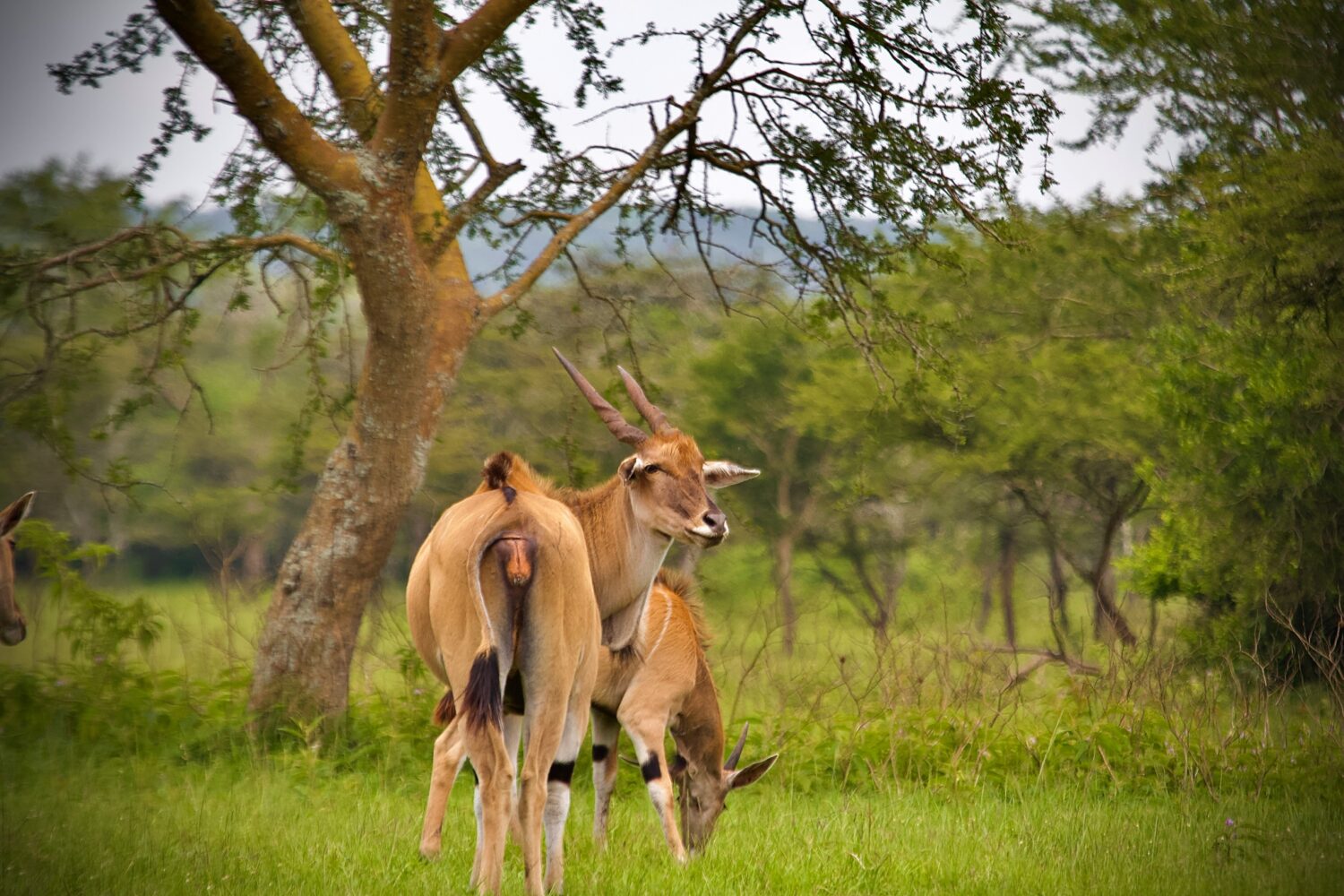
Closer to the main circuit, Lake Mburo National Park, Uganda’s smallest savannah park, offers a similar though gentler version of the same appeal. Its rolling hills and acacia woodland see considerably less traffic than Queen Elizabeth or Murchison Falls, and its compact size means game drives can be shorter and more relaxed rather than stretching across hours of driving between sightings. Murchison Falls National Park, while more visited than either Kidepo or Lake Mburo, still offers meaningful pockets of quiet if you plan around it thoughtfully, particularly by choosing early morning or late afternoon game drive slots when fewer vehicles are on the delta plains, and by selecting accommodation on the quieter northern bank of the Nile rather than clustered near the busier southern access points. Our detailed guide to Murchison Falls activities and how to plan around them is worth reading alongside this one if you’re weighing how to build quiet moments into a Murchison-based itinerary specifically.
Timing Your Trip to Avoid Crowds Entirely
Beyond choosing quieter parks, timing your visit around Uganda’s shoulder and low seasons meaningfully changes the character of an itinerary for introverted travelers. April, May, and November, the wetter months that many travelers deliberately avoid, bring noticeably thinner crowds across every park in the country, along with the kind of dramatic, moody weather that suits slow, reflective travel rather than the high-energy pace of peak season. Even within the busier June-to-September and December-to-February windows, traveling on weekdays rather than weekends, and choosing the very first or last game drive slots of the day, consistently produces quieter encounters than midday drives during the peak of the season.
Gorilla trekking deserves a specific note here, since it’s one of the few Uganda activities with genuinely fixed daily numbers regardless of season, with only eight visitors permitted per habituated family per day. That built-in limit means even peak-season gorilla trekking never feels like a crowd in the way a popular game drive sighting might, but choosing a less-visited sector like Nkuringo or Ruhija over the more popular Buhoma and Rushaga sectors can still meaningfully reduce the number of trekking groups you encounter on the trail itself. Our guide to gorilla trekking permits and how sector choice affects the experience breaks down these sector differences in more depth if gorilla trekking is part of your plan.
Lodge Selection: The Detail That Matters Most
If there’s one decision that shapes the day-to-day feel of an introvert-friendly Uganda trip more than any other, it’s lodge selection, and it’s worth spending real time on this rather than treating accommodation as an afterthought once the parks and activities are settled. Small, intimate camps with fewer than a dozen rooms create a fundamentally different social atmosphere than larger lodges built around communal dining and group activities. Look specifically for properties that offer private meal options or in-room dining rather than mandatory shared tables, private verandas or decks facing the bush rather than communal social areas as the main outdoor space, and spacious grounds where guest tents or cottages are meaningfully spread apart rather than clustered close together.
Many of Uganda’s best lodges for this kind of traveler sit slightly off the most obvious tourist routes, favoring settings deep within a park’s quieter zones over locations positioned for maximum convenience or social buzz. It’s worth asking directly, when booking, about the total number of rooms at a property and its typical occupancy during your travel dates, since a lodge with twenty rooms running at half capacity during shoulder season can feel just as quiet as a naturally small property, and this kind of specific question often gets a more useful answer than a general inquiry about “how quiet is it there.”
Structuring the Itinerary Itself Around Rest, Not Just Activity
A genuinely low-stimulation Uganda itinerary isn’t just about choosing quiet places, it’s about building the schedule itself with enough breathing room that the trip doesn’t become its own source of overstimulation regardless of how peaceful the destinations are. This means resisting the pull toward packing every single day with a game drive, a boat cruise, a nature walk, and a sundowner all in sequence, and instead building in genuine downtime, an afternoon with nothing scheduled, an extra night at a favorite lodge rather than moving on immediately, or a slower transfer day built around the drive itself rather than treating travel time as dead time to be minimized.
Solo introverted travelers in particular benefit from communicating this preference clearly to their operator from the very start of the planning process, since a standard itinerary template is often built assuming maximum activity density, and a good operator can adjust pacing considerably once they understand that’s not the goal. Reducing the number of parks visited in favor of longer stays at fewer locations tends to serve this kind of traveler far better than an ambitious circuit covering five or six destinations in ten days, even if that means seeing a somewhat narrower slice of Uganda’s overall wildlife diversity.
Activities That Suit a Quieter Travel Style
Certain Uganda activities lend themselves naturally to solitude and slow pacing in a way that others simply don’t. Nature walks and guided bird walks, widely available across most parks including Murchison Falls, Bwindi, and Kibale, move at a deliberately unhurried pace and typically involve small groups of two or three rather than a full vehicle of travelers. Canoe trips, offered at several lodges around Lake Mburo and in the wetlands near Bwindi, offer a similarly quiet, self-paced alternative to a standard vehicle-based game drive, with nothing but the sound of water and birdlife for company. Early morning walks before other guests are awake, an option at many smaller lodges, give introverted travelers a genuinely private window into a property’s surroundings before the day’s activity schedule begins in earnest.
Even within more social activities like the boat cruise to the base of Murchison Falls, choosing an early departure slot rather than the busier midday option meaningfully reduces the number of other travelers sharing the experience. Chimpanzee tracking in Kibale, while inherently a small-group activity by design, similarly rewards early booking for the first trekking group of the day, both for wildlife activity levels and for a quieter, less crowded start to the excursion.
Traveling Solo Versus With a Small, Familiar Group
Many introverted travelers gravitate toward solo Uganda trips specifically because it removes the social negotiation that comes with group travel, and Uganda handles solo travelers well, with most lodges and operators well accustomed to arranging private vehicles and guides for a single traveler rather than requiring a minimum group size. That said, solo travel isn’t the only path to a quiet trip. Traveling with one or two familiar companions, a partner, a close friend, or a small family group, while deliberately avoiding larger group tours or shared-vehicle safaris, achieves much the same effect, since the core source of overstimulation for most introverted travelers tends to be unfamiliar social demands rather than simply the presence of other people. Requesting a private vehicle and guide rather than joining a shared group tour is worth prioritizing regardless of whether you’re traveling solo or in a small group, since it gives you full control over pacing, stops, and how much conversation happens throughout the day.
Bringing It All Together
Building a genuinely quiet, low-stimulation Uganda safari comes down to a handful of compounding decisions rather than any single trick: choosing parks with naturally lower visitor density like Kidepo and Lake Mburo, timing your trip around the shoulder seasons when even the busier parks thin out considerably, selecting small, intimate lodges over larger resort-style properties, and structuring the itinerary itself with real breathing room rather than packing every hour with activity. None of these choices come at the expense of Uganda’s core appeal, the wildlife, the landscapes, the gorilla and chimp encounters, they simply reshape how you experience all of it, trading a busier, more social version of the trip for one built around space, silence, and your own pace.
If this kind of trip sounds like the right fit for you, our team has experience building itineraries specifically around quieter parks, smaller lodges, and unhurried pacing, and we’re happy to put together a route tailored to exactly this travel style. Get in touch through Murchison falls park safari to start planning a calmer, more spacious Uganda safari, or browse our existing Uganda safari packages for a sense of how a well-paced, low-stimulation itinerary comes together from start to finish.