
Ndali Crater Lakes Canoeing: Fort Portal’s Hidden Gem
Ask travelers what draws them to Fort Portal and most will say the same thing: it’s the gateway to Kibale Forest and chimpanzee trekking. That’s true, but it also means most people drive straight past one of western Uganda’s genuinely underrated landscapes without ever stopping. Scattered across the hills just south of town lies the Ndali-Kasenda Crater Field, a cluster of more than sixty volcanic lakes filling craters carved by explosions thousands of years ago, and threaded through banana plantations, coffee farms, and patches of dense indigenous forest. Few travelers on a standard Uganda safari ever paddle a canoe across one of these lakes, and that’s precisely what makes the experience worth building into your itinerary rather than skipping past it on the way to Kibale.
A Landscape Built by Violence, Softened by Time
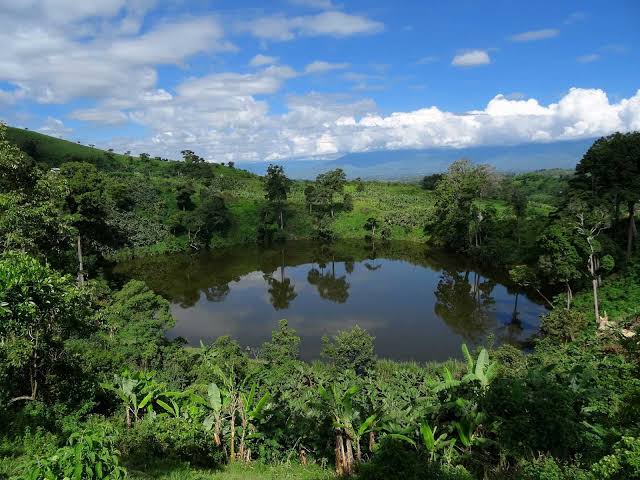
The Ndali-Kasenda Crater Field sits between Kibale Forest National Park and the foothills of the Rwenzori Mountains, and like the crater lakes found further south near Queen Elizabeth National Park, it owes its existence to volcanic explosions that tore through the landscape roughly eight to ten thousand years ago. These weren’t lava-producing eruptions in the conventional sense — they were violent steam and gas explosions triggered when rising magma met underground water, blasting out deep circular depressions and scattering ash and debris around their rims. Over the millennia that followed, rainfall gradually filled many of these craters, transforming what were once raw volcanic wounds into some of the most strikingly beautiful small lakes anywhere in East Africa, each ringed by green hills, farmland, and in several cases, genuinely untouched forest.
What makes this particular crater field distinctive, beyond its sheer density of lakes, is how thoroughly it’s woven into the daily rhythm of local life. Unlike a park-bound wilderness area, the Ndali-Kasenda region is genuinely lived-in, with coffee and banana farms running right up to the lake edges in places, and small communities whose economies and daily routines have adapted around this unusual, lake-studded terrain for generations.
Lake Nyinambuga: The Lake on the Currency Note
Of all the lakes in the crater field, Lake Nyinambuga holds a particular claim to fame — its image appears on Uganda’s twenty-thousand-shilling banknote, making it one of the country’s most recognizable natural landmarks even among Ugandans who’ve never visited in person. The lake’s striking blue-green water, framed by steep green hills, is genuinely one of the more photogenic settings in western Uganda, and it’s home to Ndali Lodge, a well-known hilltop property set on a narrow ridge overlooking the water from roughly a hundred meters above. While Nyinambuga itself is better known for its viewpoints and lodge setting than as a primary canoeing lake, it anchors the wider crater field both geographically and, for many travelers, as the first lake they encounter when exploring the region.
Lake Nkuruba: Forest, Wildlife, and Water Together
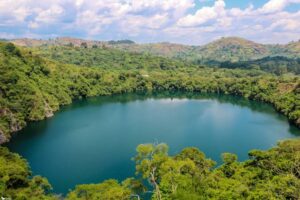 Roughly twenty-five kilometers south of Fort Portal, Lake Nkuruba is one of the crater field’s most consistently recommended stops, and for good reason. The lake sits surrounded by dense indigenous forest that has remained largely untouched, a rarity in a region where farmland has crept up to the edges of most other craters, and that forest cover supports a genuine concentration of wildlife rarely associated with a lake visit in Uganda. Black-and-white colobus monkeys and vervet monkeys move through the canopy around the water’s edge, and the surrounding forest hosts well over two hundred recorded bird species, making Nkuruba a legitimate birdwatching destination in its own right rather than simply a scenic stop. The Nkuruba Nature Reserve, a community-run eco-site with budget-friendly camping and simple accommodation, anchors visits to the lake and has become a meaningful source of local income and conservation funding, with proceeds supporting both forest protection and community education initiatives in the surrounding area.
Guided nature walks from Nkuruba extend to Mahoma Falls and to a viewpoint locally known as the “Top of the World,” a raised vantage point between the Kibale-Kamwenge and Ndali roads offering sweeping views across the wider Rift Valley landscape, including the distant Kichwamba Escarpment and Lake George. For travelers who want a full morning or afternoon combining water, forest, and genuinely rewarding wildlife spotting in one relatively compact area, Nkuruba is difficult to beat.
Lake Nyabikere: The Lake of Frogs
A short drive from Fort Portal town itself, Lake Nyabikere takes its name — translating roughly to “the lake of frogs” — from the chorus of amphibian calls that fills the air as the sun sets each evening, an atmospheric detail that tends to stick with visitors long after they’ve left. Nyabikere is one of the more easily accessible lakes in the crater field and is specifically well suited to swimming and canoeing, with scenic trails winding through nearby villages and banana plantations that make for a pleasant walk before or after time on the water. Several guesthouses in the immediate area, including Crater Valley Kibale and lakeside campsites, offer comfortable, low-key accommodation for travelers who want to base themselves directly at the lake rather than commuting out from Fort Portal town each day.
Canoeing Across the Crater Field
Canoeing is genuinely one of the signature activities across several lakes in the Ndali-Kasenda field, offering a completely different vantage point on this volcanic landscape than a viewpoint hike or lodge terrace provides. Paddling out onto the still, often glassy water of lakes like Nyabikere or the deep, clear waters near Kyaninga puts you directly at the base of the crater walls, looking straight up at forested slopes and farmland ringing the water on every side, a perspective that photographs and hiking trails around the rim simply can’t replicate. The lakes themselves are generally calm, sheltered by their crater walls from significant wind, making them well suited to relaxed, unhurried paddling rather than anything technically demanding, which in turn makes canoeing here accessible to a wide range of fitness levels and travel styles, from couples looking for a quiet, romantic afternoon on the water to families traveling with older children.
Beyond simple recreation, gliding across one of these lakes by canoe offers genuine opportunities for wildlife observation from water level, with birdlife along the shoreline, including kingfishers and herons, often more visible and approachable from a quiet canoe than from a noisier vehicle or a busy walking trail. Several lakes in the region also support light mountain biking routes connecting them, giving more active travelers the option to combine a canoe outing on one lake with a bike ride to a neighboring crater the same day.
Kyaninga and the Deeper, Clearer Waters
Near Kyaninga Lodge, one of the region’s standout luxury properties, sits a deep, remarkably clear crater lake that has become known specifically for excellent swimming and canoeing conditions, its water considerably more transparent than several of the crater field’s shallower, more sediment-rich lakes. This clarity, combined with the lake’s depth, makes it a particularly appealing stop for travelers who want to actually swim rather than simply paddle across the surface, and the surrounding forest, home to both black-and-white colobus and red-tailed monkeys, adds a layer of wildlife interest to what would already be a genuinely beautiful swimming spot on its own merits.
Why This Region Pairs So Naturally With Chimpanzee Trekking
The Ndali-Kasenda Crater Field’s location, sitting directly between Kibale Forest National Park and Fort Portal town, makes it one of the most efficient cultural and scenic additions available to travelers already planning a chimpanzee trekking trip in the area. Rather than treating a Kibale visit purely as a primate-focused stopover, building in a half day or full day among the crater lakes gives travelers a genuinely different kind of experience within the same regional base, without requiring additional long-distance driving or a separate overnight relocation. Many travelers find that alternating an intensive activity like chimpanzee trekking or the chimpanzee habituation experience with a slower, water-based day among the crater lakes creates a far better-paced itinerary than stacking consecutive high-intensity forest days back to back.
Where to Stay Among the Craters
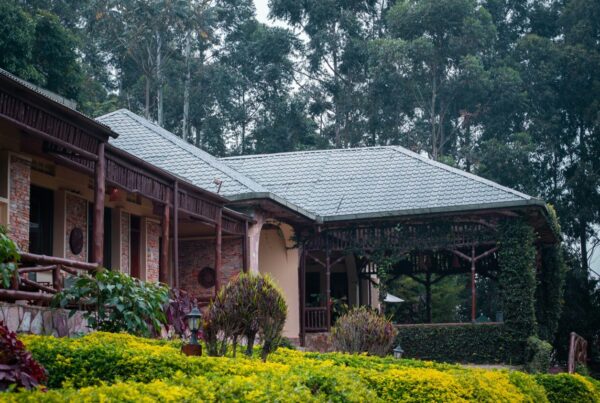
Accommodation options across the Ndali-Kasenda region span a genuinely wide range, from Ndali Lodge’s well-known hilltop setting overlooking Lake Nyinambuga to Kyaninga Lodge’s more contemporary luxury cottages, Papaya Lake Lodge’s boutique-style rooms with panoramic multi-lake views, and Lake Nkuruba’s community-run, budget-conscious eco-camp. This range means the crater lakes work equally well as a stop for travelers building a higher-end circuit through western Uganda and for more budget-focused backpackers looking for an atmospheric, affordable base near Kibale. Choosing a lodge situated directly on or near one of the more canoe-friendly lakes, rather than simply the most famous or photogenic one, is worth prioritizing if paddling is a genuine priority for your visit rather than an incidental add-on.
Practical Notes for Visiting
Because the crater field spans a genuinely wide area with more than sixty individual lakes, not all of equal accessibility, working with a local guide or your safari operator to identify which specific lakes are realistically reachable and suited to your interests, whether that’s canoeing, swimming, birdwatching, or simply scenic viewpoints, makes a meaningful difference to how smoothly the day unfolds. Several of the region’s smaller, more remote lakes are genuinely difficult to reach without local knowledge of the network of farm tracks and footpaths connecting them, while the more established lakes like Nkuruba, Nyabikere, and Nyinambuga are straightforward to access with basic guidance. Packing swimwear, a change of clothes, and reef-safe sunscreen is worth doing if swimming is part of your plan, and given the region’s elevation and generally mild climate relative to the hotter savanna parks, mornings and early afternoons tend to offer the calmest water and best canoeing conditions before any afternoon cloud buildup rolls in.
Building the Crater Lakes Into a Broader Uganda Itinerary
For travelers whose primary safari destination is Murchison Falls National Park, the Ndali-Kasenda Crater Field sits considerably further south and west, making it a natural addition for those extending their trip into a broader western Uganda circuit that includes Kibale Forest for chimpanzee trekking, rather than a simple side trip from Murchison Falls itself. Many travelers structure exactly this kind of multi-region itinerary, opening with the raw power and open savanna wildlife of Murchison Falls in the north before heading south and west toward Kibale, the surrounding crater lakes, and onward to Queen Elizabeth National Park or Bwindi Impenetrable National Park, creating a genuinely comprehensive picture of Uganda’s geographic range within a single, well-sequenced trip.
Our team at Murchison Falls Park Safari can help build exactly this kind of multi-region itinerary, connecting the northern savanna experience of Murchison Falls with a western Uganda extension that includes Kibale’s chimpanzee trekking and a day or two among the Ndali-Kasenda crater lakes. Reach out through our contact page to start planning a trip that includes this kind of scenic and cultural variety alongside your core wildlife activities, or browse our current Murchison Falls safari packages to see how our anchor northern itinerary typically comes together before extending west. If you’re mapping out the cost of a longer, multi-region Uganda circuit, our guide to estimating your Uganda safari cost by month is worth reading alongside this one, and if chimpanzee trekking is already part of your plan, our guide to the chimpanzee habituation experience in Kibale Forest pairs naturally with a crater lakes stop on the same leg of your trip.
Uganda’s national parks understandably dominate most safari itineraries, but the Ndali-Kasenda Crater Field offers something genuinely different: a quieter, slower, water-centered day in one of the country’s most visually distinctive landscapes, easily reached, rarely crowded, and consistently underrated by travelers who don’t know to look for it.