
Chimpanzee Habituation Experience in Kibale Forest
Most safari activities in Uganda give you a fixed, tightly regulated window with wildlife — an hour with mountain gorillas, an hour with a chimpanzee family — and then you’re moved along. The chimpanzee habituation experience in Kibale Forest National Park breaks that mold entirely. Instead of a single scheduled hour, you spend the better part of a full day embedded with a wild chimpanzee community and the researchers who study them, following the same troop from the moment they wake in their overnight nests through their entire morning routine of feeding, socializing, and territorial behavior. For travelers who’ve already done a standard primate trek and want something deeper, or for anyone whose priority on a Uganda safari is genuine behavioral immersion rather than a checklist encounter, this is arguably the single most rewarding primate activity available in the country.
What Habituation Actually Means
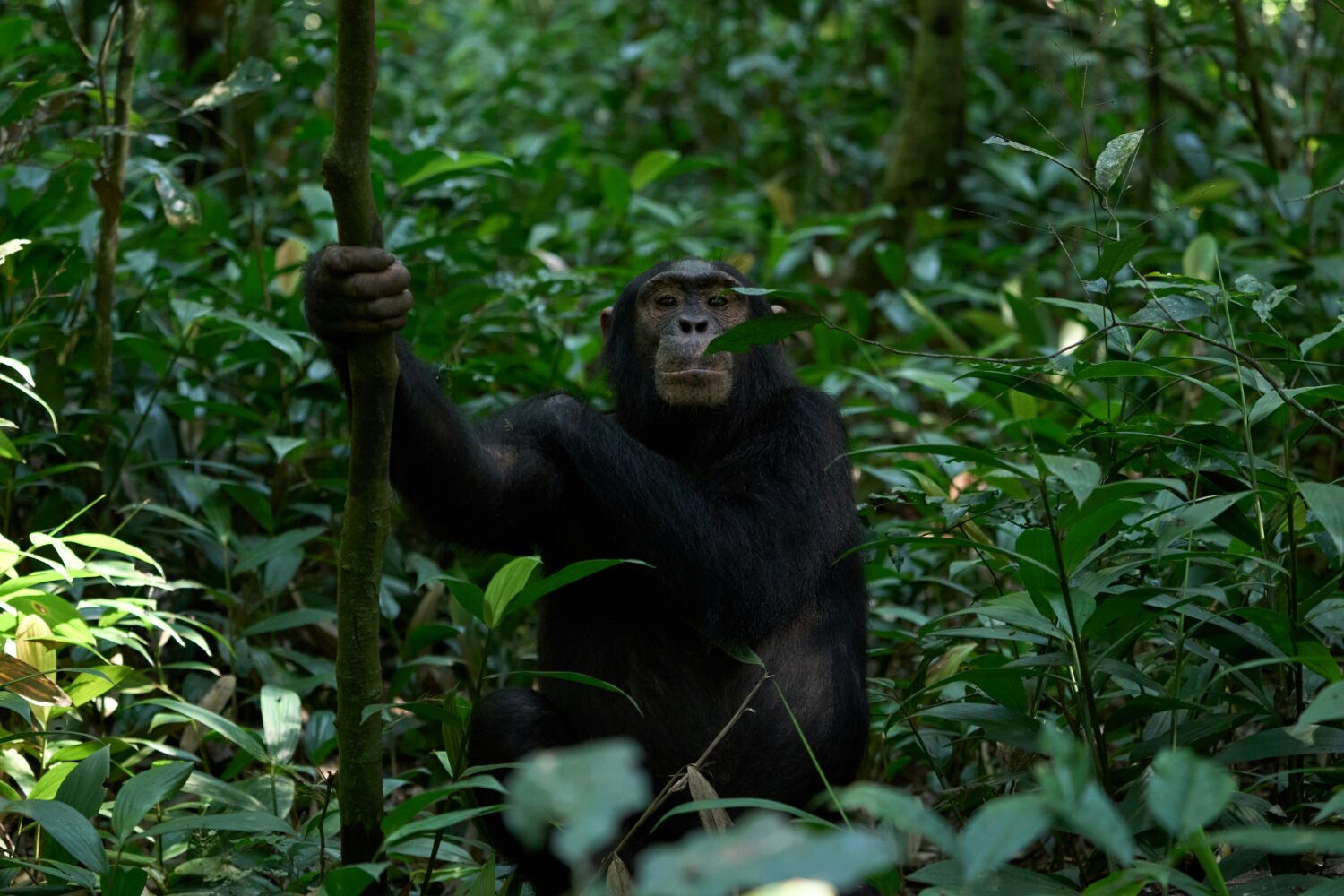
The term “habituation” refers to the multi-year process by which wild chimpanzees are gradually acclimated to human presence, allowing researchers and eventually tourists to observe them at close range without triggering the flight or defensive responses a truly wild, unhabituated troop would show. This isn’t a quick process — it typically takes around two years of consistent, patient exposure by park researchers and rangers before a chimpanzee community reaches the point where human observers can move alongside them through the forest without disrupting their natural behavior. Kibale National Park has invested in this process for decades, and the payoff is a set of chimpanzee communities that behave essentially as they would if no observers were present at all, which is precisely what makes the habituation experience so different from a typical wildlife encounter.
Where the standard chimpanzee trekking permit gives you a single, tightly bounded hour with a family once they’ve been located, the habituation experience puts you inside their actual daily rhythm. You’re not viewing a snapshot of chimpanzee life — you’re following the unfolding of an entire morning, with all its unpredictability, social complexity, and occasional drama intact.
Why Kibale Forest Is the Place for This
Kibale National Park, located in western Uganda near the town of Fort Portal, has earned its reputation as the “Primate Capital of the World” for good reason, hosting an estimated fifteen hundred chimpanzees along with twelve other primate species within a relatively compact stretch of tropical forest. That density, combined with the park’s long-running chimpanzee research program based out of Kanyanchu, makes it Uganda’s most reliable and best-studied location for exactly this kind of extended primate encounter. While chimpanzee habituation experiences do exist at a smaller scale in Uganda’s Budongo Forest and Kalinzu Forest Reserve, Kibale remains the flagship destination, offering the highest sighting reliability, the most extensively studied chimpanzee communities, and infrastructure genuinely built around this specific activity rather than treating it as a secondary offering.
The forest itself adds considerably to the experience beyond the chimpanzees. Kibale’s canopy shelters an exceptional range of birdlife, including sought-after species like the African pitta and green-breasted pitta that draw dedicated birders from around the world, along with red colobus and black-and-white colobus monkeys, l’Hoest’s monkeys, and forest elephants moving through the same dense understory you’ll be walking through during your morning with the chimps.
How the Day Actually Unfolds
A habituation experience begins earlier than standard trekking, typically with a briefing at the Kanyanchu Visitor Center well before dawn, since the goal is to locate your assigned chimpanzee community at or near their overnight nesting site before they wake and begin their day. This early start is deliberate and important — arriving after the chimps have already left their nests means missing the specific behaviors researchers most want observers to see, including the initial morning vocalizations and the group’s characteristic movement patterns as they begin foraging.
From that point, your small group, accompanied by an experienced ranger-guide and often a researcher familiar with the specific community’s individual members and social dynamics, follows the chimpanzees through the forest for several hours, adjusting pace and distance to their movement rather than the reverse. You’ll watch feeding behavior, grooming rituals that reinforce social bonds within the troop, and the vocal exchanges chimpanzees use to coordinate across dense forest, along with the occasional flash of the more dramatic side of chimpanzee social life, including dominance displays and territorial calls that can be startling in their intensity and volume at close range. Because you’re moving with a habituated but genuinely wild group rather than observing captive or semi-captive animals, no two habituation days follow quite the same script, which is a meaningful part of the appeal for repeat visitors and serious wildlife photographers.
Group Size and What Makes This Feel Different
One of the most significant practical differences between the habituation experience and standard chimpanzee trekking is group size. Where standard treks can involve a somewhat larger party moving together, habituation groups are capped at a strict maximum, typically limited to just a handful of visitors per research group on any given day. This smaller, more intimate group size changes the character of the entire experience — there’s less shuffling for position, less competition for a clear sightline, and considerably more opportunity for the accompanying researcher or ranger to actually engage with your questions about individual chimpanzee personalities, family relationships within the troop, and the broader research being conducted on the community you’re following. For travelers who found a standard one-hour gorilla or chimp trek satisfying but ultimately too brief to properly settle into the experience, this structural difference is often the single biggest draw.
Permit Costs and What They Include
As of 2026, a chimpanzee habituation permit for Kibale National Park costs three hundred US dollars per person for foreign non-residents, compared to two hundred fifty dollars for the standard one-hour trekking permit. Foreign residents of Uganda and East Africa typically pay a somewhat reduced rate, and East African Community citizens pay considerably less, reflecting Uganda’s tiered pricing structure across nearly all its wildlife permits. It’s worth noting that permit pricing is set by the Uganda Wildlife Authority and does periodically adjust — travelers planning trips further out should confirm current rates with a licensed operator before finalizing a budget, since UWA has signaled further increases to habituation pricing are planned for the years ahead. The permit fee itself covers ranger and researcher guide services along with park entrance, though it does not include transport, accommodation, or meals, all of which need to be arranged separately as part of a broader itinerary.
Given the extended, immersive nature of the activity relative to standard trekking, most experienced travelers and operators consider the price difference genuinely worth it — you’re paying roughly twenty percent more for what typically amounts to three to four times the duration with the chimpanzees, along with a meaningfully deeper, research-oriented framing of the entire encounter.
Booking and Availability
Because group sizes are deliberately kept small, habituation permits are considerably more limited in daily availability than standard trekking permits, and they sell out faster during Uganda’s peak dry-season months of June through September and December through February. Booking three to six months ahead of your intended travel dates is a sensible default for peak-season trips, while shoulder and rainy-season travel, particularly April, May, and November, tends to offer more availability along with occasional reduced pricing on standard permits, though habituation slots remain limited regardless of season given the smaller daily capacity. Because all foreign non-resident permits must be purchased through a licensed Uganda Wildlife Authority channel or a properly accredited tour operator, working with an established operator rather than attempting to book independently tends to be both simpler and safer, particularly given the advance planning required around transport and lodge availability in the Kibale area.
Who This Experience Is Actually For
The habituation experience demands more physically and logistically than standard trekking, and it’s worth being honest about who it suits best. The early start, often requiring departure from your lodge well before sunrise, combined with several hours of sustained forest walking that can involve uneven terrain, dense vegetation, and occasional fast-paced movement to keep up with an active chimpanzee troop, means a reasonable baseline of fitness matters more here than it does for a standard one-hour trek. As with all chimpanzee trekking activities in Uganda, a minimum age requirement applies, generally set at twelve years old, making this a genuinely viable family activity for parents traveling with older children or teenagers, unlike gorilla trekking’s stricter fifteen-year minimum.
Wildlife photographers, conservation-minded travelers, and anyone who found a standard primate trek compelling but too brief tend to get the most out of this experience specifically, since the extended timeframe allows for a level of patience and observation that a single scheduled hour simply doesn’t accommodate. Families or first-time safari travelers with limited time may find standard trekking a more efficient use of a tightly packed itinerary, reserving the fuller habituation experience for a return trip or for travelers building a longer, primate-focused circuit through western Uganda.
Building Kibale Into a Broader Uganda Itinerary
Kibale National Park sits roughly five to six hours by road from Kampala or Entebbe, or around forty-five minutes by domestic charter flight into the nearby Kasese airstrip, and its location in western Uganda makes it a natural complement to a broader circuit rather than a standalone destination. Many travelers combine a Kibale stay with Queen Elizabeth National Park immediately to the south, known for its own excellent game viewing and the unusual tree-climbing lions of the Ishasha sector, before continuing on to Bwindi Impenetrable National Park for gorilla trekking. For travelers building their itinerary around Murchison Falls National Park as the primary safari destination, Kibale can be added as a westward extension, giving you the raw scale and savanna wildlife of Murchison Falls alongside the deep forest primate experience Kibale specifically offers, creating a genuinely varied trip that touches both of Uganda’s signature safari environments rather than concentrating entirely on one.
A short visit to the nearby Bigodi Wetland Sanctuary is a popular and worthwhile add-on for travelers already in the Kibale area, offering a gentler, community-run walking tour through wetland habitat known for excellent birdlife and additional primate sightings, and it pairs naturally with either a standard trek or a habituation morning without requiring a separate overnight stay.
What to Bring and How to Prepare
Given the physical demands and extended forest time involved, packing appropriately matters more for a habituation day than for most other Uganda safari activities. Sturdy, broken-in hiking boots with real ankle support and grip are essential given the uneven, often muddy forest floor, along with lightweight, long-sleeved clothing in neutral colors to manage both insect exposure and the dense vegetation you’ll be moving through. A daypack with water, snacks, rain protection, and a reasonably compact camera setup rounds out the essentials, and given the extended duration, packing enough food and water for a genuinely full morning in the forest, rather than the lighter provisioning a one-hour trek requires, is worth planning for specifically.
Planning Your Kibale Experience
The chimpanzee habituation experience rewards travelers willing to build real time into their itinerary for it, both in terms of the activity itself and the logistics of reaching western Uganda from wherever else your safari takes you. Our team at Murchison Falls Park Safari can help you build a full itinerary that combines Murchison Falls with a Kibale extension, securing habituation permits well ahead of your travel dates and coordinating the transport and lodging that make a multi-park circuit work smoothly. Reach out through our contact page to start planning, or browse our current Murchison Falls safari packages to see how a Murchison-anchored trip typically comes together before adding Kibale to the itinerary. If you’re still mapping out your overall trip budget across multiple parks, our guide to estimating your Uganda safari cost by month is a useful next step, since Kibale’s permit pricing and travel logistics factor meaningfully into a longer, multi-destination Uganda itinerary.
Few wildlife experiences anywhere in the world offer the combination of depth, unpredictability, and genuine scientific context that a full day with Kibale’s habituated chimpanzees provides. For travelers who want their safari to go beyond a scheduled encounter and into something closer to a real morning inside a wild chimpanzee community’s life, this is the activity Uganda does better than almost anywhere else on the continent.