Defassa Waterbuck: Uganda’s Ring-Marked Antelope
Among the many antelope species that graze across Uganda’s savannahs and riverbanks, few carry as distinctive a signature as the Defassa waterbuck. Recognizable at a glance by its shaggy grey-brown coat and the broad white patch that spreads across its rump rather than forming the ring seen in its close relative, the common waterbuck, this large antelope is one of the most reliable and rewarding sightings on a Uganda safari. Found in substantial numbers along the Nile in Murchison Falls National Park and scattered through several other protected areas, the Defassa waterbuck offers travelers a chance to observe complex herd dynamics, dramatic territorial behavior, and a genuinely striking animal that photographs beautifully against Uganda’s golden grasslands.
This guide takes a close look at everything worth knowing about the Defassa waterbuck, from its physical identification and unusual defensive adaptations to its social structure, habitat preferences, and the best places in Uganda to encounter healthy, thriving populations. Whether this is your first time hearing the name or you have already spotted one grazing near the riverbank during a game drive, understanding this antelope adds real depth to the broader story of Uganda’s savannah ecosystems.
Identifying the Defassa Waterbuck
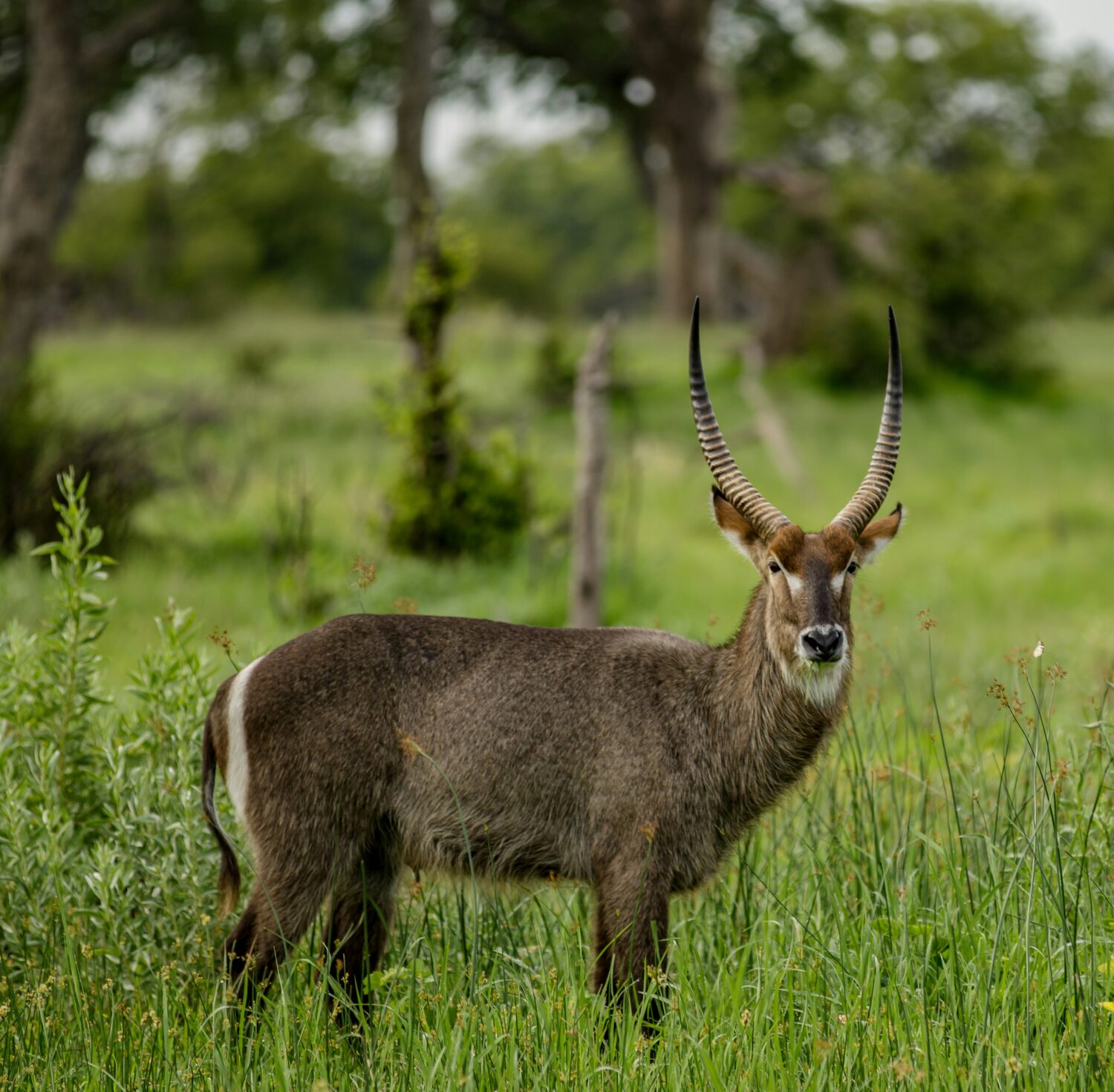
 The Defassa waterbuck is one of two recognized subspecies of waterbuck found across Africa, distinguished from the common waterbuck primarily by its rump marking. Where the common waterbuck displays a crisp white ring encircling its rear, the Defassa variety instead shows a solid white or pale patch covering the rump, without the complete circular outline. This single feature has become the easiest field identifier for guides and visitors alike, and spotting the difference is often one of the small satisfactions of a longer Uganda safari itinerary.
Beyond this marking, the species is a substantial antelope, with males standing up to 1.3 meters at the shoulder and weighing as much as 260 kilograms, considerably larger than most other antelope sharing its habitat. Its coat is coarse and shaggy, ranging from grizzled grey to reddish brown, and emits a distinctive musky odor that many researchers believe developed as a natural deterrent against predators. This oily secretion coats the hair and is thought to make the animal’s flesh less palatable to lions and other carnivores, though it does little to entirely eliminate predation pressure. Only males carry the long, ridged, forward-curving horns that can reach up to a meter in length, a feature used both in territorial disputes and as a strong visual identifier when scanning a mixed herd from a safari vehicle.
A Life Tied Closely to Water
True to both its common and scientific naming, the waterbuck rarely strays far from a reliable water source. Unlike many savannah antelope that can survive extended periods away from rivers or lakes, the Defassa waterbuck depends on daily access to water and is almost always found within a few kilometers of a river, lake, or wetland. This dependency shapes its entire distribution pattern within Uganda, explaining why the species is so consistently seen along the Nile corridor within Murchison Falls National Park, where the river provides both a year-round water source and the lush grassland grazing the species favors.
This close tie to water also plays into one of the species’ most notable defensive behaviors. When threatened by predators such as lions or hyenas, waterbuck will frequently flee directly into water, using rivers and swamps as a refuge that many pursuing predators are reluctant to follow into. This strategy is not foolproof, since crocodiles present their own considerable danger along Nile-adjacent habitats, but it remains a defining survival tactic that distinguishes waterbuck behavior from that of drier-adapted antelope species like impala or oribi.
Grazing Habits and Habitat Preferences
The Defassa waterbuck is primarily a grazer, feeding on a range of grasses found in the floodplain and woodland-edge habitats it favors. It shows a particular preference for taller, coarser grass species that many other grazing animals tend to avoid, a dietary niche that reduces direct competition with species like kob and hartebeest that favor shorter grazing lawns. During the drier months, waterbuck will supplement their diet with browse from nearby shrubs and forbs, though grass remains the dominant component of their diet year-round.
Habitat selection tends to favor a mosaic of open grassland interspersed with denser vegetation and woodland cover close to water. This combination provides both grazing opportunity and refuge from the heat of the day, along with cover from predators during vulnerable resting periods. Riverine woodland fringes, floodplain grasslands, and the edges of swampy wetlands all represent prime waterbuck habitat, conditions found extensively within the Nile-adjacent sections of Murchison Falls National Park.
Social Structure and Territorial Behavior
Waterbuck society is organized around a fascinating mix of territoriality and loose herd association that varies significantly by sex and age. Adult males establish and defend territories, particularly in prime riverside habitat where female groups are most likely to pass through during their daily movements. These territories are held not necessarily to guarantee exclusive food access but rather to maximize mating opportunities with female herds moving through the area, a strategy known among researchers as resource-defense polygyny.
Territorial males will patrol boundaries, engage in ritualized displays, and occasionally clash directly with rival males using their impressive horns. These confrontations, while sometimes dramatic to witness on a game drive, rarely result in serious injury, since both animals typically follow established ritualized combat patterns that allow for a clear resolution without excessive risk. Younger, non-territorial males often form bachelor groups on the periphery of prime habitat, waiting for the opportunity to challenge an established territory holder or claim unoccupied ground as they mature.
Female waterbuck, along with their offspring, move in loose herds that are not tied to a fixed territory in the way males are. These groups shift gradually across the landscape, moving through the territories of different males over time, which creates the mating opportunities territorial males depend on. Calves are born after a gestation period of roughly eight months, with births occurring somewhat evenly throughout the year rather than in a tightly defined breeding season, though slight peaks often align with periods of maximum grass availability following seasonal rains.
Where to See Defassa Waterbuck in Uganda
Murchison Falls National Park stands as the premier destination for observing this species in Uganda, with substantial populations concentrated along the delta region where the Victoria Nile meets Lake Albert, as well as throughout the northern bank game drive circuits. The combination of permanent river access, expansive floodplain grassland, and relatively low tourist density compared to more famous safari circuits elsewhere in Africa makes this park an outstanding location for extended, unhurried waterbuck observation. Visitors on a boat cruise toward the base of Murchison Falls itself often spot substantial waterbuck herds grazing along the riverbanks, offering a different perspective than typical vehicle-based game drives.
Queen Elizabeth National Park also hosts healthy waterbuck populations, particularly around the Kazinga Channel, where the same water-dependency that draws the species to the Nile in Murchison Falls applies equally well to this channel connecting Lake Edward and Lake George. Lake Mburo National Park, known for its comparatively compact size and high density of wildlife, similarly offers strong waterbuck sightings, often at remarkably close range given the park’s more intimate game-viewing conditions. Across all three parks, early morning and late afternoon game drives tend to offer the best viewing opportunities, since waterbuck are most actively grazing during these cooler periods and tend to rest in shaded cover during the heat of midday.
Best Time of Year for Sightings
Because Defassa waterbuck do not undertake the kind of long-distance seasonal migrations seen in some other African antelope species, sightings remain consistently good throughout the year within their core habitat areas. That said, the dry seasons, generally December through February and June through September, tend to concentrate wildlife more visibly around permanent water sources as temporary pools and seasonal streams dry up elsewhere in the landscape. This concentration effect can make waterbuck, along with the wider array of species sharing riverine habitat, easier to locate and observe in larger numbers during these drier months.
Visitors traveling during the wetter months should not be discouraged, however, since the lush green backdrop of the rainy season creates strikingly beautiful photography conditions, and waterbuck remain present near their preferred water sources regardless of rainfall patterns. Newborn calves are also more likely to be spotted following the peak grass-growth periods associated with rains, adding an extra layer of interest for visitors hoping to observe herd dynamics and young animals during their trip.
Conservation Status and Ecological Role
The Defassa waterbuck is currently classified as a species of least concern, with stable populations across much of its East African range, including within Uganda’s well-protected national parks. This relatively secure status stands in contrast to the more significant conservation pressures facing other Ugandan wildlife, and reflects the effectiveness of sustained habitat protection along key river systems like the Nile corridor running through Murchison Falls National Park.
Ecologically, waterbuck play a meaningful role in maintaining grassland health through their grazing patterns, particularly their preference for taller grass species that might otherwise outcompete the shorter grasses favored by other grazers. This creates a form of natural habitat partitioning that supports greater overall biodiversity within shared grassland ecosystems. Waterbuck also serve as an important prey base for lions and other large predators along the Nile corridor, forming a key link within the broader Murchison Falls food web that ultimately supports the park’s impressive predator populations as well.
Tourism revenue continues to play a direct role in sustaining the conservation infrastructure that protects waterbuck habitat, funding ranger patrols, community conservation programs, and the ongoing management of Murchison Falls National Park and similar protected areas. Every safari booking, boat cruise, and guided game drive contributes in some measure to the continued health of the ecosystems these animals depend on.
Including Waterbuck Sightings in Your Uganda Safari
For travelers building a Uganda itinerary, the Defassa waterbuck fits naturally into virtually any Murchison Falls safari, given how consistently the species appears along both the delta boat cruise route and the standard northern bank game drive circuit. Unlike more elusive species that require specialized forest walks or exceptional luck, waterbuck sightings are close to guaranteed for visitors spending even a single full day exploring the park’s riverside habitats, making this an excellent species for travelers hoping to fill out a comprehensive wildlife checklist without excessive searching.
Photographers in particular tend to appreciate the species for the striking contrast between its shaggy dark coat and the pale rump patch, especially in the warm light of early morning or late afternoon game drives. Territorial males observed near river crossings or grazing at the edge of woodland cover often provide especially compelling compositions, particularly when captured alongside the sweeping backdrop of the Nile or the golden floodplain grasses that define much of Murchison Falls’ northern sector.
Our guides at Murchison Falls Park Safari know the specific stretches of riverbank and grassland where waterbuck herds and territorial males are most reliably found, and we build game drive routes and boat cruise timing around maximizing quality sightings for every guest, regardless of whether wildlife photography or general safari enjoyment is the primary goal.
Start Planning Your Murchison Falls Safari
If you are ready to witness the Defassa waterbuck alongside the full range of wildlife that makes Murchison Falls National Park one of Uganda’s most rewarding safari destinations, our team is ready to help design an itinerary suited to your travel dates, interests, and pace. Contact us today to build a Uganda safari that combines classic game drives, a Nile boat cruise toward the base of the falls, and the chance to observe these ring-marked antelope up close in one of Africa’s most scenic river ecosystems. Whether you are visiting Uganda for the first time or returning to explore beyond the country’s famous primates, a well-planned trip to Murchison Falls delivers wildlife encounters that stay with travelers long after they return home.