Giant Forest Hog: Uganda’s Largest and Rarest Wild Pig
Deep within the tangled undergrowth of Uganda’s forested national parks lives a creature that few visitors ever get to see, yet one that ranks among the most fascinating mammals on the African continent. The giant forest hog is not merely another wild pig rustling through the bush. It is the largest wild swine species on Earth, a shy and largely nocturnal giant that has managed to remain something of a mystery even to seasoned safari guides. For travelers who have already ticked off lions, elephants, and giraffes on previous trips, encountering this elusive animal offers something genuinely rare: a sighting that even many Ugandans have never experienced firsthand.
This guide explores everything worth knowing about the giant forest hog in Uganda, from its physical characteristics and unusual social behavior to the specific parks where sightings are most likely, the best times to visit, and how this remarkable animal fits into the wider story of Uganda’s forest conservation. Whether you are a dedicated wildlife photographer chasing rare captures or simply a curious traveler planning a Uganda safari, understanding this overlooked giant adds an entirely new dimension to your trip.
Meeting Uganda’s Largest Wild Pig
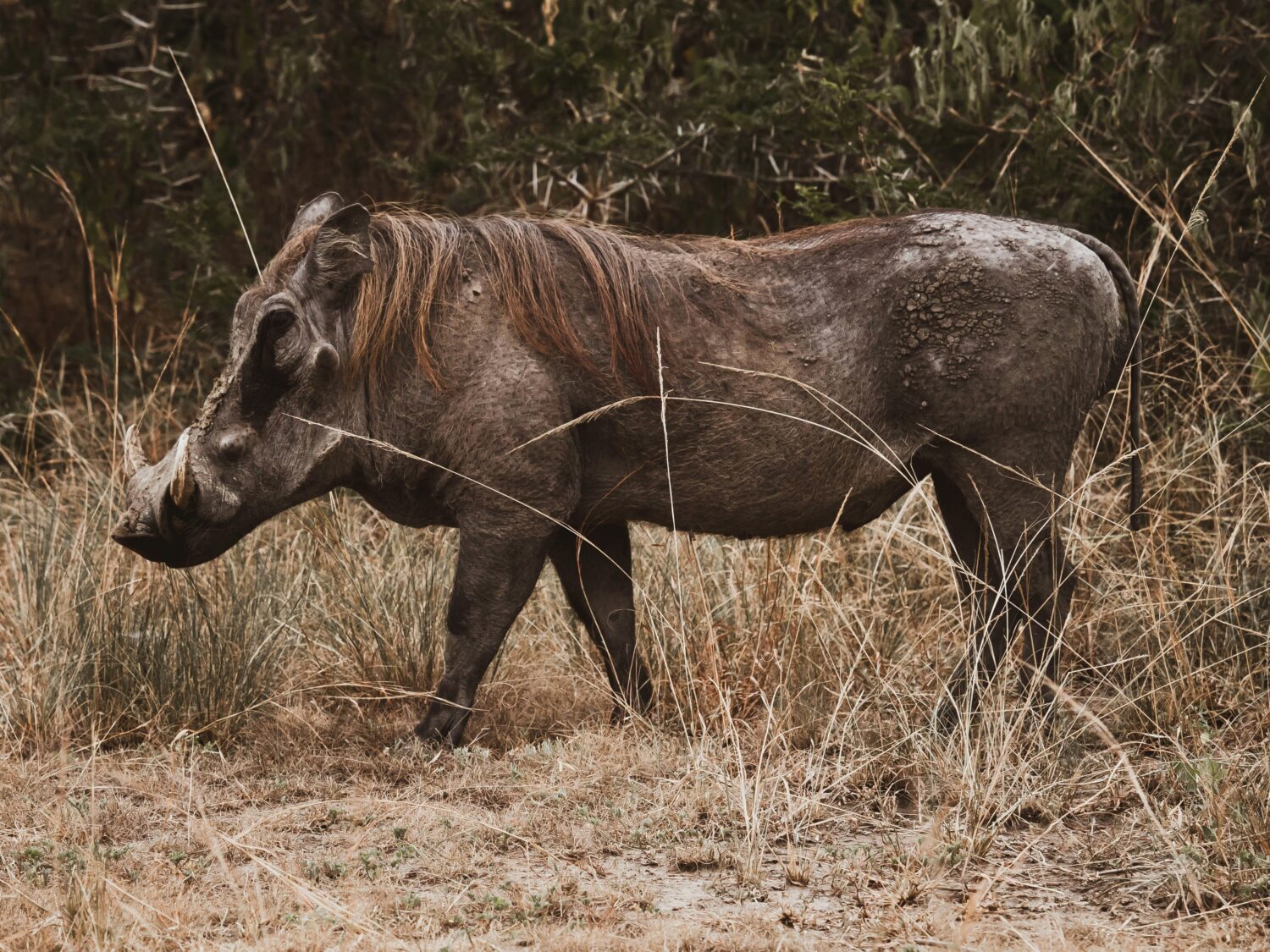
 Weighing in at up to 275 kilograms and stretching over 1.8 meters in length, the giant forest hog dwarfs its more commonly seen cousins, the warthog and the bushpig. Where warthogs trot confidently across open savannah with their tails raised like little flags, the giant forest hog prefers the shadows. Its body is covered in coarse, dark bristly hair that can appear almost black in low forest light, and mature males develop pronounced facial swellings below the eyes that give them a strikingly rugged, almost prehistoric appearance. These facial ridges, along with slightly curved tusks, are used in occasional sparring matches between males, though serious injuries from these contests are uncommon.
Unlike warthogs, which are largely diurnal and thrive in open grassland, the giant forest hog is a creature of dense cover. It favors montane forest, bamboo thickets, and swampy forest edges where thick vegetation offers both concealment and a steady supply of its preferred foods. This preference for closed habitats is precisely why sightings remain so difficult to come by, even within protected areas where the species is known to be present. Guides often describe hearing this animal rustling through undergrowth long before ever glimpsing it, and even experienced trackers can spend days in prime habitat without a confirmed sighting.
A Diet Built for Forest Life
Despite its formidable size, the giant forest hog is a herbivore, feeding primarily on grasses, herbs, sedges, and fallen fruit found along forest floors and clearings. It is particularly fond of fresh green shoots that emerge after rain, and family groups will often travel considerable distances within their home range to reach recently rained-upon feeding grounds. Unlike warthogs, which frequently kneel to root for tubers and bulbs underground, the giant forest hog does relatively little digging, instead grazing more like a small forest antelope than a typical pig. This dietary pattern ties the species closely to healthy, undisturbed forest ecosystems, making its presence a useful indicator of overall habitat quality within a protected area.
Because much of its feeding activity happens at dawn, dusk, or even after dark, travelers hoping for a sighting need to time their forest walks and game drives carefully. Early morning departures, just as light filters through the canopy, tend to offer the best odds, since this is when family groups are often still active near clearings before retreating into deeper cover for the heat of the day.
Social Structure and Family Life
One of the more surprising aspects of giant forest hog behavior is its strong social cohesion. Unlike solitary forest antelope species, these hogs typically live in family groups known as sounders, which can include anywhere from a handful to over a dozen individuals. These groups are usually led by a dominant boar and consist of related females and their offspring, forming tight-knit units that forage, rest, and move through the forest together. This group structure offers protection against predators such as leopards, which occasionally target younger or weaker individuals but generally avoid confrontations with a full, alert sounder.
Communication within these groups relies heavily on vocalizations and scent marking. Individuals grunt, squeal, and use a range of low guttural sounds to stay in contact while moving through thick vegetation where visual contact is often impossible. Scent glands near the face and feet allow hogs to mark territory boundaries and communicate reproductive status, an adaptation particularly useful in dense forest environments where visibility is limited to just a few meters in any direction.
Breeding is not strictly seasonal, though births often coincide with periods of higher rainfall when food is most abundant. A litter typically consists of two to four piglets, born in a carefully constructed nest of vegetation that the mother builds in advance. These nests provide protection from predators and the elements during the vulnerable first days of a piglet’s life, after which the young begin following the sounder on its daily foraging routes.
Where to Find Giant Forest Hogs in Uganda
Uganda remains one of the more reliable countries in Africa for encountering this species, largely thanks to the extensive forest habitat protected within its national parks. Murchison Falls National Park holds particular significance here, since the riverine forest sections along the Nile, especially in the Rabongo Forest and Kaniyo Pabidi areas, provide exactly the kind of dense, moist habitat this species favors. Travelers combining a Murchison Falls safari with a forest walk in these sections stand a genuine chance of an encounter, particularly during early morning outings when guides know to move slowly and listen for movement in the undergrowth rather than relying on sight alone.
Beyond Murchison Falls, Kibale Forest National Park, renowned primarily for its chimpanzee population, also hosts giant forest hogs within its dense forest interior. Bwindi Impenetrable National Park, famous worldwide for mountain gorilla trekking, likewise shelters populations of this elusive pig within its montane forest zones, though as with most sightings of this species, an encounter here should be treated as a fortunate bonus rather than a guaranteed outcome of the trip. Mgahinga Gorilla National Park, with its bamboo-heavy slopes, offers similarly suitable habitat, reflecting the species’ broader preference for high-altitude forest across the Albertine Rift region.
Because giant forest hogs are neither actively baited nor habituated to vehicles in the way that many savannah species are, patience and realistic expectations matter enormously. Guides who specialize in forest walks, rather than standard game drives, tend to have the sharpest eye for the subtle signs, fresh tracks, disturbed leaf litter, distinctive droppings, that indicate a sounder has recently passed through an area.
The Best Time to Visit for a Sighting
Timing a Uganda safari around the dry seasons, roughly December through February and June through September, generally improves wildlife visibility across the country, including in forest habitats where thinner undergrowth during drier months can make movement easier to detect. That said, the giant forest hog remains active year-round, and forest walks conducted at first light regardless of season tend to yield the best results. Rainy season visits bring their own advantages too, since fresh vegetation growth draws hogs toward forest edges and clearings in search of tender shoots, occasionally making them slightly easier to spot near trail margins.
Travelers serious about photographing this species should plan for early starts, appropriate telephoto equipment given the low light conditions typical of forest interiors, and above all, patience. Unlike the instant gratification of a lion sighting on open plains, a giant forest hog encounter often rewards those willing to move quietly, wait, and trust an experienced guide’s instincts.
Conservation Status and Why This Species Matters
While not currently classified among Africa’s most endangered mammals, the giant forest hog faces mounting pressure from habitat loss as forest cover across East Africa continues to shrink under agricultural expansion and human settlement. Uganda’s national park system plays an outsized role in the species’ long-term survival, since protected forest blocks like those found in Murchison Falls, Kibale, and Bwindi represent some of the last large, intact habitats where sounders can roam without significant disturbance.
Local conservation efforts within these parks, including anti-poaching patrols and community-based tourism initiatives that give surrounding populations a direct economic stake in forest preservation, have helped stabilize populations in several key areas. Responsible tourism plays a genuinely meaningful role here. Park entrance fees and guided walk fees contribute directly to conservation funding, while community lodges and local guide employment create tangible incentives for forest protection at the village level. Travelers who choose forest walks specifically to seek out species like the giant forest hog are, in a very direct sense, helping fund the very habitat protection that keeps this animal from disappearing.
A Rewarding Addition to Any Uganda Safari Itinerary
For travelers building a Uganda itinerary, the giant forest hog works particularly well as a complementary highlight rather than a standalone destination draw. Pairing a Murchison Falls safari, with its dramatic waterfall views, boat cruises along the Nile, and classic savannah game drives, with a dedicated forest walk through Rabongo or Kaniyo Pabidi adds genuine variety to the trip while offering a real shot at this rare sighting. Similarly, travelers already planning gorilla trekking in Bwindi or chimpanzee tracking in Kibale can extend those forest experiences slightly to include areas known for hog activity, turning an already remarkable primate encounter into an even richer wildlife day.
Working with an experienced local operator matters enormously here, since knowledge of specific trails, recent sighting reports, and optimal timing can be the difference between a frustrating blank walk and a genuinely memorable encounter. Our team at Murchison Falls Park Safari has guided countless travelers through the exact forest sections where this species is most active, and we tailor early morning walks specifically around maximizing the odds of a sighting for guests who list the giant forest hog among their safari priorities.
Planning Your Visit
If encountering one of Africa’s most overlooked giants sounds like the kind of experience that would elevate your Uganda trip, now is the time to start planning. Forest walks focused on rare and elusive species require careful scheduling around park permits, guide availability, and seasonal conditions, so early booking gives our team the best opportunity to build an itinerary genuinely suited to this goal. Reach out to us to design a Uganda safari that combines the classic highlights of Murchison Falls with a dedicated search for the giant forest hog and other forest specialists that rarely make it onto standard tourist checklists. Whether this is your first African safari or your fifth return trip in search of something new, few sightings offer the same sense of genuine discovery as watching a sounder of these remarkable animals move quietly through the Ugandan forest.