Is a Uganda Safari Still Good Value? A Cost Breakdown
Uganda has spent years marketing itself as the more affordable route into East African safari travel, cheaper gorilla permits than Rwanda, generally lower lodge rates than Kenya or Tanzania, and a reputation as the budget-conscious traveler’s answer to the region’s headline destinations. With permit prices and lodge rates having climbed steadily in recent years, it’s a fair question to ask directly: is that reputation still accurate in 2026, or has Uganda simply gotten expensive alongside everywhere else? This breakdown walks through the actual numbers, piece by piece, so you can judge the value question for yourself rather than take a marketing claim at face value.
The Gorilla Permit: Uganda’s Single Biggest Line Item
For any itinerary including gorilla trekking, the gorilla trekking permit is the largest individual expense in the entire trip, and it’s worth understanding upfront rather than being surprised by later. As of 2026, a gorilla trekking permit in Bwindi Impenetrable National Park or Mgahinga Gorilla National Park costs 800 US dollars per person for foreign non-residents, a price that’s held steady through much of the year according to Uganda Wildlife Authority pricing. Some operators note this figure can drop somewhat during low season months, though travelers should confirm current pricing directly given how permit fees are set centrally and subject to periodic revision.
What the Permit Actually Includes
The 800-dollar fee isn’t purely an entry ticket; it covers park entrance for the day, an assigned ranger guide, advance trackers who locate the gorilla family before your group arrives, and a full hour with the gorillas once found. Roughly seventy-five percent of this fee is directed toward gorilla conservation itself, with the remainder split between government administration and a meaningful share returned to communities living around the park, meaning the cost genuinely funds the conservation infrastructure keeping gorilla populations stable rather than functioning as a flat, unallocated entry fee.
Comparing Uganda’s Permit to Rwanda and Congo
Context matters enormously here, and this is where Uganda’s value proposition becomes clearest. A comparable gorilla permit in Rwanda’s Volcanoes National Park costs 1,500 US dollars, nearly double Uganda’s price for what is, from a wildlife perspective, an extremely similar experience. The Democratic Republic of Congo offers the cheapest permits of the three countries, generally cited around 450 US dollars, though DRC’s gorilla trekking comes with meaningfully different infrastructure, safety considerations, and accessibility that most travelers weigh carefully before choosing that route. For a couple choosing Uganda over Rwanda purely on permit cost, the savings run to around 1,400 US dollars, enough to fund several additional days of safari elsewhere in the country.
 Chimpanzee and Other Primate Permits
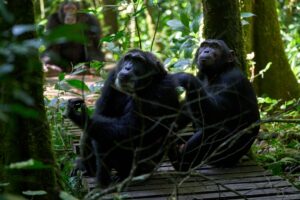
Beyond gorillas, Uganda offers considerably more affordable primate trekking options. A chimpanzee tracking permit in Kibale National Park, widely regarded as Uganda’s premier chimp destination with sighting success rates around ninety-five percent, runs approximately 250 US dollars. Budget-conscious primate enthusiasts can save further by tracking chimpanzees in Budongo Forest near Murchison Falls National Park instead, where permits typically run 100 to 150 dollars less than Kibale, with a still-respectable sighting success rate around eighty percent. Golden monkey trekking at Mgahinga adds a further, considerably cheaper option at around 60 US dollars for travelers wanting to round out their primate experiences without a major additional expense.
Accommodation Costs Across Every Tier
Lodging represents the most variable piece of any Uganda safari budget, and understanding the actual range across tiers helps set realistic expectations for what different budget levels actually buy.
Budget Accommodation
Budget lodges and guesthouses across Uganda’s parks generally run from around 50 to 150 US dollars per night, covering options like community rest camps and simpler tented accommodation. Properties in this tier typically include full board and basic but clean facilities, and Uganda’s budget accommodation ecosystem, including camps like Red Chilli Rest Camp near Murchison Falls, has developed into a genuinely functional network rather than an afterthought for cost-conscious travelers.
Mid-Range Accommodation
The mid-range tier, where most travelers ultimately land, generally runs from around 150 to 400 US dollars per night, covering comfortable lodges with private bathrooms, reliable power, and typically a pool, along with better vehicles and more spacious game-viewing setups than the budget tier offers. Multiple sources describe this tier as offering the strongest overall value in Uganda’s accommodation market, delivering a genuinely comfortable, well-serviced experience without luxury-tier pricing.
Luxury Accommodation
At the top end, luxury lodges start around 400 to 600 US dollars per night and can climb well past 2,000 dollars at the most exclusive properties, generally featuring private concessions, personalized service, gourmet dining, and, increasingly, domestic flight transfers between parks rather than long road journeys. Properties in this category deliver a genuinely different kind of experience centered on exclusivity and seclusion rather than simply better amenities at the same pace of travel.
Daily Cost Ranges by Travel Style
Pulling accommodation, transport, park fees, and meals together, most cost guides converge on a similar overall daily range. Budget travelers should plan for roughly 250 to 350 US dollars per person per day, mid-range travelers around 400 to 700 dollars per day, and luxury travelers anywhere from 800 to 1,500 dollars or more per day, with these figures typically including full-board accommodation, professional guiding, and 4×4 ground transport, but excluding international airfare and primate trekking permits, which are calculated separately given their scale.
Full Trip Cost Examples
Translating daily rates into complete trip budgets makes the numbers considerably more concrete. A seven-day budget primate and wildlife trip, self-driven and without gorilla trekking, generally runs between 1,200 and 2,000 US dollars per person. A seven-to-eight-day mid-range itinerary including a gorilla permit, driver-guided transport, and mid-range lodging typically lands between 2,800 and 4,500 dollars per person. A ten-day luxury itinerary combining gorilla and chimpanzee permits, premium lodges, and domestic flights between parks generally runs from 6,000 to 10,000 dollars or more per person. None of these figures include international airfare to Entebbe, which varies considerably depending on point of origin.
Additional Costs Travelers Often Miss
A handful of costs regularly catch first-time Uganda travelers off guard, worth planning for explicitly rather than discovering mid-trip. Transport to the actual trailhead isn’t included in any permit fee, and most travelers arrange this either through their operator or as a private vehicle rental. Domestic flights to reach more remote areas, useful for saving time on longer itineraries, typically run 200 to 400 US dollars per person each way. Porters for gorilla and chimpanzee treks cost 15 to 30 dollars plus a tip, genuinely worth the modest expense given how much easier they make the physical trek, particularly on muddy terrain. Visa costs, whether the standard single-entry eVisa or the East Africa Tourist Visa for a multi-country trip, add a further line item worth budgeting separately from the core safari cost.
How to Get More Value Without Cutting Corners
A few practical strategies can meaningfully reduce total trip cost without compromising the core experience. Traveling in low season, generally April, May, and November, often brings discounted gorilla and chimpanzee permits alongside lower accommodation rates, though it’s worth weighing this against wetter trail conditions and the fact that gorilla permits during these periods typically aren’t reschedulable if plans change. Traveling in a larger group meaningfully reduces per-person costs, since vehicle and guide fees are fixed regardless of group size and simply split more ways as the group grows, with per-person pricing often dropping twenty to thirty percent moving from two travelers to a group of four to six. Building an itinerary that starts in Entebbe and ends in Kigali, rather than looping back to the same starting point, can also save meaningful drive time and associated fuel and guide costs for travelers combining Uganda with a Rwanda extension.
So, Is Uganda Still Good Value in 2026
Weighing all of this together, Uganda’s core value proposition holds up well relative to its regional competitors, even as absolute prices have risen alongside global travel costs generally. The gorilla permit alone represents a genuine, quantifiable savings of nearly half compared to Rwanda for what is, in wildlife terms, a comparable experience, and Uganda’s accommodation market offers a genuinely broad and functional range across every budget tier, rather than skewing almost entirely toward the luxury end the way some competing destinations do. The honest answer is that Uganda remains meaningfully more affordable than its most obvious point of comparison, without requiring travelers to sacrifice much in terms of wildlife quality or trip logistics to access that value.
If you’re weighing a Uganda safari against other East African options and want a realistic, itemized budget built around your specific priorities, our team at Murchison Falls Park Safari can put together a transparent cost breakdown for your trip, whether you’re aiming for budget, mid-range, or luxury travel. Contact us to start planning a Uganda safari that fits your actual budget rather than a generic price range.
For more on planning your trip, our guides on gorilla trekking permits and preparation, Uganda’s Big Seven wildlife, and combining Murchison Falls with other parks in a single itinerary are all available, here and pair well with this cost breakdown.