

Iteso People of Eastern Uganda: Traditions and Travel Tips
Eastern Uganda tends to get flattened in most travel planning into a single stop for the Imbalu ceremony or a stretch of road between Kampala and the Kenyan border. That does a disservice to one of the region’s largest and most historically distinct communities. The Iteso people, Uganda’s second largest ethnic group by population, occupy a broad stretch of the country’s east, and their story, agricultural rather than pastoral, Nilotic in language but shaped by centuries of contact with neighboring Bantu groups, offers a genuinely different cultural thread for travelers willing to venture off the standard safari circuit.
Who Are the Iteso
The Iteso, sometimes called the Teso, are a Nilotic ethnic group whose homeland, known as Teso, spans eastern Uganda and extends into western Kenya. A person from Teso is referred to as an Etesot if male or an Atesot if female, while Iteso is the plural term for the people as a whole, and their language, Ateso, belongs to the Eastern Nilotic language family. Ateso sits within the same broader linguistic branch as the languages spoken by the Karamojong, Turkana, Jie, and Dodoth, all part of what linguists group as the Teso-Karamojong cluster, and this shared ancestry explains a good deal about how the Iteso relate to their neighbors even today. In Uganda, the Iteso number more than 1.7 million people, making them the country’s second largest ethnic group after the Baganda, while a substantial Iteso population, estimated at several hundred thousand, lives across the border in Kenya, primarily in Busia County.
Origins and Migration
Iteso oral tradition places their origins somewhere in present-day South Sudan or Ethiopia, with the community migrating south over a period of centuries that is impossible to date precisely. One widely repeated account holds that the Iteso separated from the Karamojong at some point during this southward movement, a split old enough that the two groups no longer share the clan names and ritual customs still found among the Karamojong and the related Jie people. Historians generally agree the Iteso were established in what is now northeastern Uganda by roughly the mid-eighteenth century, after which further waves carried them south into the districts they occupy today. What sets the Iteso apart from most of their linguistic relatives is that they never adopted a transhumant or purely pastoral lifestyle; agriculture has shaped Iteso social and economic life for as long as cattle have shaped that of the Karamojong, and this early commitment to farming is one of the clearest threads running through Iteso identity from the pre-colonial period to the present.
Where the Iteso Live Today
The Iteso homeland, known locally as the Teso sub-region, covers a cluster of districts in eastern Uganda including Soroti, Kumi, Katakwi, Amuria, Serere, Ngora, Bukedea, Kaberamaido, and parts of Pallisa and Tororo. Soroti functions as the unofficial cultural and commercial capital of the sub-region and is the most practical base for travelers looking to explore Iteso communities directly. A further Iteso population sits across the Kenyan border in Busia County, a division that traces back to a 1902 colonial-era boundary adjustment that transferred part of eastern Uganda into western Kenya and split the Iteso people between two colonial administrations, even though the cultural differences between the Ugandan and Kenyan branches of the community remain relatively minor.
Traditional Life and Livelihoods
Where many of Uganda’s Nilotic-speaking groups built their traditional economies around cattle, the Iteso built theirs around the land. Finger millet and sorghum have long served as the community’s staple crops, later supplemented by cassava, which colonial agricultural officers encouraged as insurance against famine and which was typically cooked alongside millet and sorghum rather than replacing them outright. Iteso households traditionally divided agricultural labor along clear lines, with women managing kitchen gardens and gathering wild foods such as mushrooms, while men took primary responsibility for herding cattle, a role that persisted even as farming became the community’s dominant economic activity. This agricultural identity became even more pronounced in the early twentieth century, when the Iteso adopted the ox plow with striking speed after cotton was introduced as a cash crop, a shift that Ugandan colonial records and later historians both point to as evidence of just how quickly Iteso farmers restructured their economy around a new opportunity. Cotton, alongside millet, remains closely associated with the Teso sub-region’s agricultural reputation to this day.
Social Structure and the Impact of Colonial Rule
Before colonial contact, Iteso society was organized around a clan system and an age-grade structure that governed leadership, ritual responsibility, and social obligation across generations. Much of that traditional organization was disrupted at the end of the nineteenth century when the Teso sub-region came under the control of Baganda agents acting on behalf of the British colonial administration, a period that saw the age-grade system and much of the pre-colonial territorial structure significantly weakened. British administrators subsequently introduced a system of appointed chiefs to govern the region, altering the traditional Iteso leadership model considerably, though elders continued, and continue today, to hold real authority over cultural and spiritual matters within their communities even as formal governance shifted elsewhere.
Marriage, Naming, and Everyday Customs
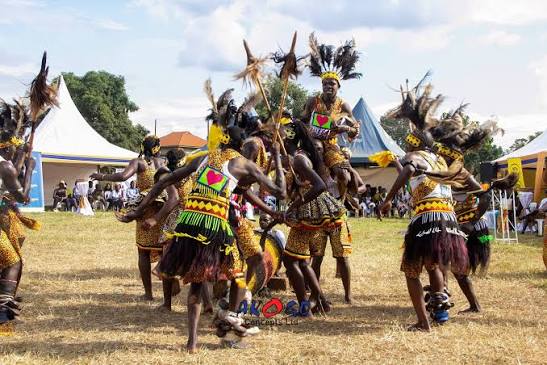
Marriage occupies a central place in Iteso social life, and traditional practice placed the arrangement of unions firmly in the hands of parents rather than the individuals involved. A key element of this process was etele, the bride wealth paid by the groom’s family, typically in the form of cattle and goats, a custom that carried significant weight in cementing relationships not just between two individuals but between their respective families and clans. Traditional dress reflected the community’s agricultural and pastoral blend as well, with women historically wearing etoogo, a skirt made from softened tree bark, and men wearing simple loincloths known as elesu, garments that have largely given way to modern clothing but that remain part of ceremonial and cultural dress during festivals and heritage events.
Music, Dance, and Oral Tradition
Storytelling, music, and dance run through nearly every aspect of Iteso communal life, and these art forms serve a purpose well beyond entertainment. Traditional songs, known as elim, and dances called akogo are performed at ceremonies and community gatherings, often accompanied by instruments including the thumb piano, or adungu, and various drums, and these performances have long functioned as a way of transmitting history, values, and social norms from one generation to the next. Specific songs carry specific social messages, with some pieces built around themes of unity across the Teso community, others centered on respect for elders, and still others devoted to gratitude and care for the older generation, illustrating how deliberately Iteso oral culture has been used to reinforce communal values over time.
Visiting the Teso Sub-Region
For travelers, the Teso sub-region rewards a slower, more immersive style of visit rather than a quick pass-through. Soroti, roughly four to five hours from Kampala by road, serves as the natural entry point and offers reasonable accommodation and access to the surrounding rural districts where traditional Iteso life is most visible. Cultural tours into the sub-region often include visits to traditional homesteads, sometimes referred to locally as etogo, where visitors can see subsistence farming practices firsthand, take part in activities such as basket weaving, and observe or join traditional food preparation methods still used in rural Teso households today. These are genuine working communities rather than staged cultural centers, which means the experience tends to feel considerably more authentic than more heavily commercialized cultural tourism sites elsewhere in the country, though it also means visitors should arrange visits through a knowledgeable local guide who can make appropriate introductions and help navigate customs around hospitality and photography.
Combining Teso with a Wider Eastern Uganda Itinerary
The Teso sub-region sits within reasonable striking distance of several other major eastern Uganda attractions, making it a natural addition to a broader regional itinerary rather than a standalone destination. Travelers heading toward Mount Elgon, Sipi Falls, or the Imbalu ceremony grounds near Mbale can extend their route through Soroti and the surrounding Teso districts with only a modest detour, gaining a very different cultural perspective in the process, since Iteso agricultural traditions and social structures contrast sharply with the Bagisu customs found further south around Mount Elgon. Similarly, travelers combining a western Uganda wildlife circuit through Murchison Falls National Park with an eastern cultural leg will find that a Teso sub-region stop fits comfortably into a longer overland route across the country, particularly for visitors with two weeks or more who want their Uganda trip to cover culture as thoroughly as wildlife.
A Community Worth Slowing Down For
The Iteso rarely feature prominently in Uganda’s international tourism marketing, and that absence says more about how safari itineraries have historically been built than about the depth of what the community has to offer. A people with a documented migration history stretching back to South Sudan and Ethiopia, an agricultural tradition sophisticated enough to have adopted the ox plow ahead of many of their neighbors, and a rich body of music and oral tradition still actively practiced today deserve more than a passing mention on a map. For travelers who have already covered Uganda’s headline wildlife parks and are looking for a deeper, more textured understanding of the country, time spent in the Teso sub-region offers exactly that.
If you’re planning a trip through eastern Uganda and want to include the Teso sub-region alongside destinations like Mount Elgon, Sipi Falls, or Murchison Falls National Park, our team at Murchison Falls Park Safari can help you design a route that balances cultural depth with wildlife highlights. Contact us to start building an itinerary that gives eastern Uganda’s communities, not just its parks, the attention they deserve.
For further reading on eastern Uganda’s cultural landscape, our guides on the Imbalu circumcision ceremony of the Bagisu people, Karamojong culture in the northeast, and planning a multi-region Uganda safari are available on murchisonfallsparksafari.com and pair naturally with a Teso sub-region visit.