One-Month Uganda Safari and Volunteer Itinerary
A one-month trip to Uganda is long enough to do something most travelers never get to: actually live somewhere for a while, not just pass through it. Thirty days is enough time to track chimpanzees in the morning and spend an afternoon painting a classroom wall with kids who’ll remember your name by the second week. It’s enough time to watch the Nile crash through the narrow gap at Murchison Falls, then spend ten days somewhere quieter, working alongside a local community rather than photographing it from a vehicle window. That combination — genuine safari time paired with genuine volunteer work — is exactly what a well-built one-month Uganda safari and volunteer itinerary should deliver, and it’s worth laying out in detail because the pacing matters as much as the destinations do.
This is what a realistic, well-sequenced month looks like, built around Murchison Falls National Park as the anchor safari experience, with volunteer placement time and a gorilla trekking extension woven in around it.
Arriving and settling in (days 1 to 3)
Most itineraries like this begin at Entebbe International Airport, and the first two or three days are best spent easing into the country rather than launching straight into either safari or volunteer work. A night in Entebbe or Kampala gives jet-lagged travelers a chance to recover, and it’s a good window to handle logistics: picking up a local SIM card, exchanging currency, and meeting with the volunteer coordinator or safari operator to confirm the details of the weeks ahead. Kampala itself is worth a day of exploring if time allows, from the Uganda Museum to the markets around Owino, and it gives a useful contrast to the pace of the rest of the trip.
By day three, most travelers are ready to head out toward their first real stop, and Murchison Falls National Park is a natural place to begin, since it sets the tone for the wildlife side of the trip before the volunteer placement begins.
Murchison Falls National Park (days 4 to 7)
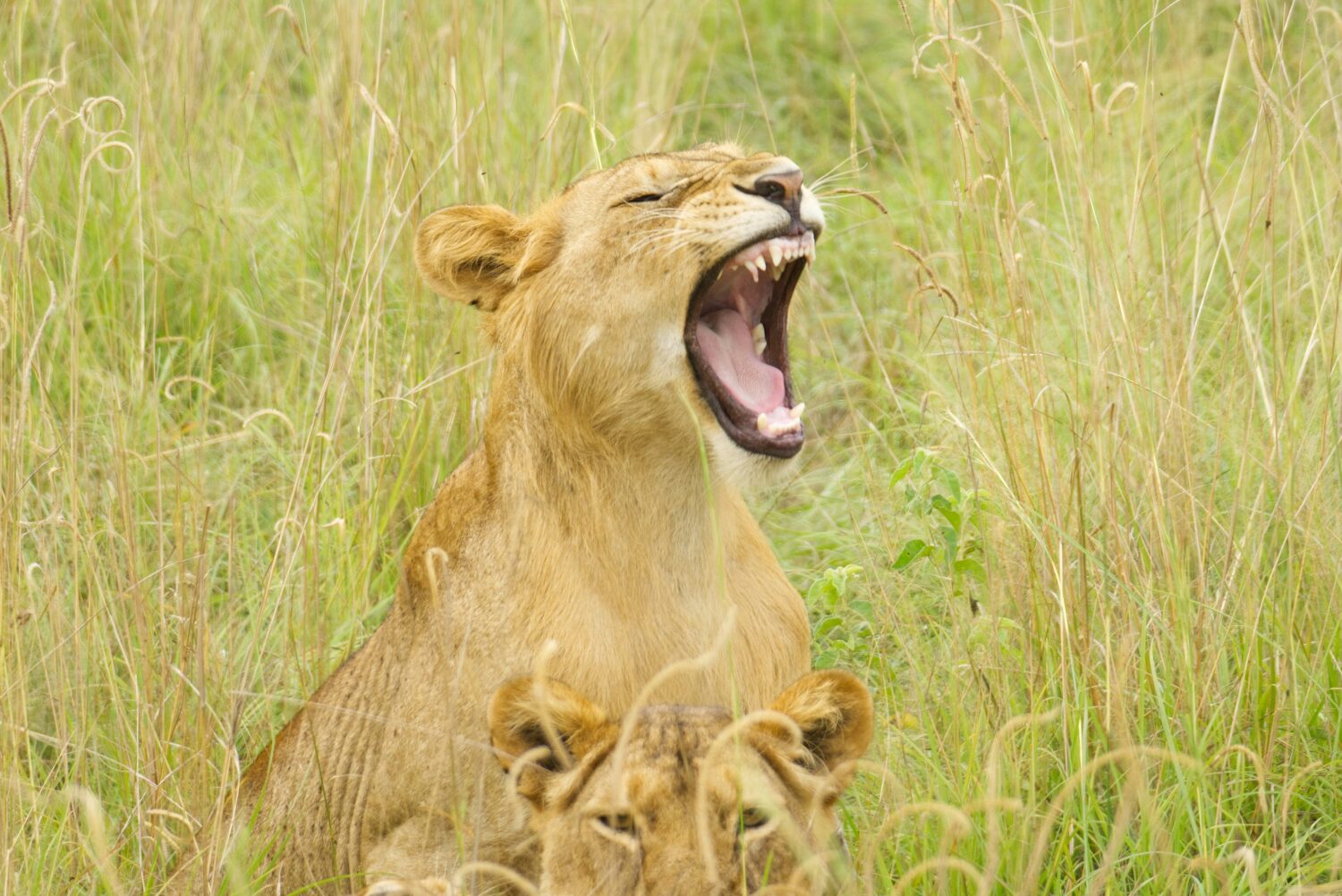
Four days at Murchison Falls is enough to properly experience Uganda’s largest national park without feeling rushed. The drive up from Kampala, or a short light aircraft transfer for those short on time, brings travelers into a park defined by the Nile itself, which narrows dramatically and forces its way through a gap barely eight meters wide before dropping more than 40 meters into the gorge below. Mornings are best spent on game drives across the park’s northern sector, where lions, elephants, giraffes, and large herds of buffalo are common sightings, while afternoons are ideal for the boat cruise along the Nile toward the base of the falls, which also offers some of the best hippo and crocodile viewing in the country.
A hike to the top of the falls, where the full force of the Nile is visible from just meters away, is worth building into one of these days, and travelers with an extra day to spare sometimes add a chimpanzee trekking excursion in the nearby Budongo Forest, which sits within striking distance of most Murchison Falls lodges. By day seven, most travelers are ready to shift gears from wildlife-watching to something more hands-on, which is where the volunteer portion of the month begins.
Settling into the volunteer placement (days 8 to 21)
This middle stretch, roughly two weeks, is the heart of the trip and the part that distinguishes a Uganda volunteer and safari trip from a standard vacation. Volunteer placements in Uganda vary widely depending on interest and skill set, and it’s worth choosing one that genuinely matches what a traveler can offer rather than picking the most marketed option. Community development and education placements are common and well-suited to travelers without specialized training, often involving classroom support in rural primary schools, English conversation practice, or helping build and maintain school infrastructure. Travelers with medical, nursing, or public health backgrounds sometimes find placements at rural clinics, though these typically require proof of qualifications arranged well in advance. Conservation-focused placements exist too, particularly around wildlife monitoring or community-based conservation projects near park boundaries, which appeal to travelers who want their volunteer time to connect more directly with the wildlife they’ve just spent a week watching in Murchison Falls.
Popular placement regions include areas around Jinja, Fort Portal, and the communities bordering Uganda’s western parks, each offering a genuinely different day-to-day rhythm. A typical placement day might start early with breakfast at a homestay or volunteer house, several hours of the actual project work in the morning, a break through the hottest part of the afternoon, and often a second block of activity or community time in the late afternoon. Weekends during this stretch are usually free, and many volunteers use them to explore nearby towns, visit Jinja for white-water rafting on the Nile, or simply rest, since the pace of volunteer weeks, while rewarding, is genuinely more tiring than a standard safari schedule.
It’s worth being honest about expectations here: meaningful volunteer work is rarely dramatic in the way people imagine before they arrive. It’s steady, sometimes repetitive, and its value comes from consistency over the full two weeks rather than any single standout day. Travelers who go in expecting that kind of quiet, sustained contribution tend to come away from this stretch feeling like the most personally significant part of the whole month.
Transitioning south toward gorilla country (days 22 to 24)
With the volunteer placement complete, the itinerary shifts back into safari mode, and the journey south toward Bwindi Impenetrable National Park takes a few days depending on the route chosen. Many travelers break the journey with a stop in Queen Elizabeth National Park, which sits conveniently between the western volunteer regions and Bwindi. A day or two here allows for a boat cruise along the Kazinga Channel, known for some of the highest concentrations of hippos and birdlife in East Africa, along with the chance to spot the tree-climbing lions in the park’s Ishasha sector, a behavior rarely seen anywhere else on the continent.
This transition period also gives travelers a mental reset between the volunteer work and the physically demanding trek that’s coming next, which is worth building into the schedule deliberately rather than rushing straight from placement to trailhead.
Gorilla trekking in Bwindi Impenetrable National Park (days 25 to 27)
For most travelers, this is the emotional high point of the month. Bwindi’s dense, ancient forest is home to roughly half the world’s remaining mountain gorilla population, and the trek to reach a habituated family, followed by an hour observing them at close range, is unlike anything else on a Uganda itinerary. Permit costs are worth budgeting for carefully: as of the current tariff period, standard gorilla trekking permits run $800 per person for foreign non-residents, with a discounted rate of $600 available during the low-season months of April, May, and November, though those discounted permits can’t be rescheduled once booked. Permits must now be arranged through a licensed Ugandan tour operator rather than booked directly, which is worth factoring into planning timelines, since availability during peak months can be tight and permits are increasingly required to be paid in full at the time of booking rather than held.
The trek itself can range from a relatively short walk to several hours of steep, muddy forest hiking depending on where the gorilla family happens to be that day, so building in a rest day either side of the trek is a sensible way to handle the physical demand, especially coming directly off two weeks of volunteer work.
Winding down and departure (days 28 to 30)
The final days of the month are best kept deliberately light. Many travelers use this stretch to return toward Entebbe via Lake Mburo National Park, a smaller and less crowded reserve that makes for a relaxed final safari stop, with the option of a guided walking safari, something not permitted in most of Uganda’s larger parks due to the presence of dangerous predators. Others prefer to spend their last few days back in Entebbe, near Lake Victoria, simply decompressing before the flight home. Either way, it’s worth resisting the urge to cram one more activity into the final 48 hours; a month this full deserves a gentle close rather than a rushed one.
Practical considerations for a month-long trip
A trip of this length involves more planning than a standard one- or two-week safari, and a few details are worth addressing early. A Uganda e-visa should be arranged well in advance of departure, and travelers combining this with visits to Kenya or Rwanda should look into the East Africa Tourist Visa, which covers multiple countries under a single application. Vaccination requirements, particularly yellow fever, should be confirmed with a travel clinic months ahead of departure, since some volunteer organizations and immigration checkpoints require proof of vaccination on arrival. Travel insurance that specifically covers both safari activities and volunteer work is essential, as standard tourist policies don’t always extend to placement-based volunteering, and it’s worth checking this detail with the insurer directly rather than assuming coverage applies.
Budgeting for a month like this varies enormously depending on lodge tier, volunteer program fees, and which additional activities are added along the way, but travelers should expect gorilla permits, park entrance fees, and volunteer program costs to make up the bulk of fixed expenses, with accommodation and transport forming the more flexible portion of the budget.
Building your own version of this month
Every traveler’s version of this itinerary will look slightly different depending on how much time they want in each park, which volunteer sector genuinely fits their skills, and whether chimpanzee trekking, white-water rafting, or additional wildlife parks get added along the way. What matters most is the sequencing: enough time at Murchison Falls to properly experience it before the volunteer placement begins, a placement long enough to feel like real contribution rather than a token visit, and a closing safari stretch that doesn’t feel rushed after two demanding weeks of hands-on work.
If you’re weighing up how to structure a month like this around your own interests, our team can help build an itinerary from the ground up, coordinating your Murchison Falls safari days, gorilla permit booking, and volunteer placement logistics into a single, well-paced trip. Reach out through our contact page to start the conversation, or browse our Murchison Falls safari packages to see how the wildlife portion of a longer trip typically comes together. For travelers who’d rather keep the trip entirely safari-focused without a volunteer component, our Uganda safari tours page outlines shorter itineraries that still combine Murchison Falls with Bwindi and Queen Elizabeth National Park.
A month in Uganda, structured this way, tends to leave people with a very different kind of memory than a standard safari does. The wildlife encounters are still there, still every bit as remarkable, but they sit alongside something quieter and more personal: a classroom, a project, a community that became familiar over two weeks rather than two hours. That combination is hard to replicate in a shorter trip, and it’s exactly what makes a full month worth the extra planning it takes to get right.