Uganda Safari: Gorilla Trekking vs Game Drive
Uganda offers two of the most powerful wildlife experiences in Africa: gorilla trekking in misty mountain forests and game drives across open savannah landscapes. Both experiences deliver completely different safari emotions, environments, and levels of physical engagement. Choosing between them depends on your travel style, expectations, and the kind of wildlife encounter you want.
This guide explores gorilla trekking vs game drive Uganda, helping you understand the differences, similarities, costs, difficulty levels, and how each experience fits into a complete safari itinerary that includes destinations like Murchison Falls National Park.
Overview of Gorilla Trekking vs Game Drive in Uganda
Uganda stands out as one of the few destinations in Africa where travelers can experience both mountain gorillas and classic savannah wildlife within a single trip. This combination creates a safari diversity that is hard to match anywhere else in the world.
The debate around gorilla trekking vs game drive Uganda is not about which experience is better, but rather which experience suits your travel goals. Gorilla trekking takes you deep into dense rainforests to observe endangered mountain gorillas in their natural habitat. Game drives take you across open landscapes to observe large mammals like elephants, lions, giraffes, and buffalo.
Gorilla trekking feels intimate, slow, and physically demanding. Game drives feel relaxed, wide-ranging, and visually expansive. Both experiences require different preparation levels, costs, and expectations.
Most safari itineraries combine both activities. Travelers often start with game drives in parks like Murchison Falls or Queen Elizabeth before continuing to Bwindi Impenetrable Forest for gorilla trekking. This combination offers a complete picture of Uganda’s biodiversity.
What Is Gorilla Trekking in Uganda?
Gorilla trekking in Uganda takes place in Bwindi Impenetrable Forest and Mgahinga Gorilla National Park. It involves hiking through dense rainforest terrain to locate a habituated gorilla family and spending a limited time observing them.
The experience begins early in the morning with a briefing from Uganda Wildlife Authority rangers. Small groups are assigned to specific gorilla families based on fitness level and location. The trek can last anywhere from one hour to several hours depending on gorilla movement.
The forest environment is dense, humid, and uneven. Trekking requires physical effort, but the reward is direct observation of mountain gorillas in their natural habitat.
When comparing gorilla trekking vs game drive Uganda, gorilla trekking stands out for emotional intensity. Observing gorillas interact, feed, and move within their family groups creates a rare wildlife connection that feels personal and deeply immersive.
Only a limited number of permits are issued daily, which helps protect gorilla populations and maintain controlled tourism levels.
What Is a Game Drive in Uganda?
A game drive is a safari experience conducted in a 4×4 vehicle across Uganda’s national parks, particularly in Murchison Falls National Park, Queen Elizabeth National Park, and Kidepo Valley National Park.
Game drives take place early in the morning or late in the afternoon when wildlife is most active. A professional guide navigates through designated tracks while travelers observe animals in open savannah environments.
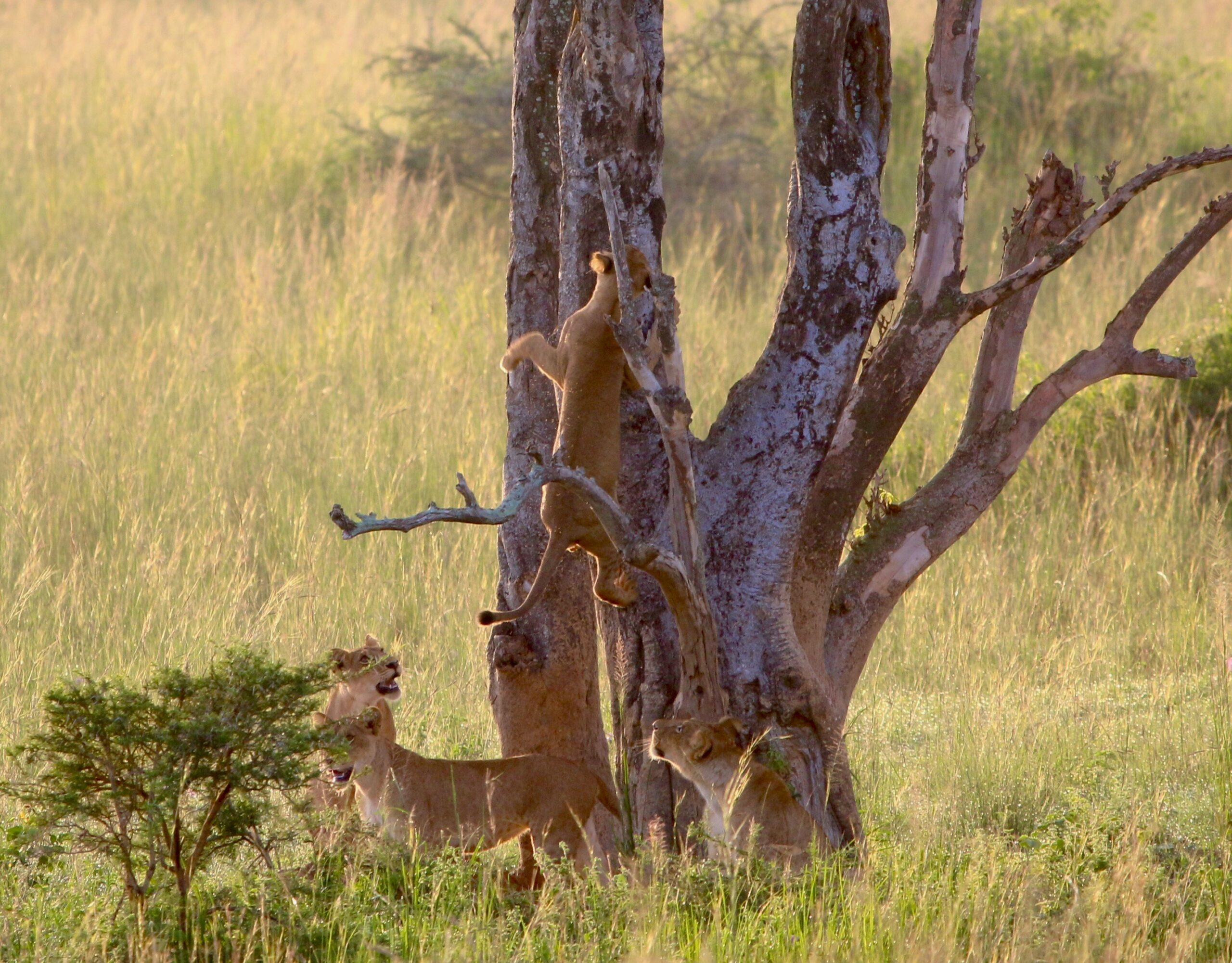
In Murchison Falls National Park, game drives offer sightings of elephants, lions, giraffes, buffalo, antelopes, and numerous bird species. The landscape is wide, open, and easy to navigate compared to forest trekking environments.
When evaluating gorilla trekking vs game drive Uganda, game drives offer broader wildlife diversity within a single experience. Travelers see multiple species in a short time without physical strain.
Game drives are suitable for families, older travelers, and anyone seeking a relaxed safari experience with maximum wildlife visibility.
Physical Demand and Accessibility Differences
One of the biggest differences between gorilla trekking and game drives lies in physical effort and accessibility.
Gorilla trekking requires moderate to high physical fitness. The terrain includes steep slopes, muddy paths, thick vegetation, and unpredictable weather conditions. Some treks can last several hours before reaching the gorilla family.
Game drives require minimal physical effort. Travelers remain seated in safari vehicles throughout the experience, with only short stops for photography or observation.
In the context of gorilla trekking vs game drive Uganda, accessibility plays a major role in decision-making. Game drives suit all age groups and fitness levels, while gorilla trekking requires preparation and stamina.
However, both experiences remain well-managed by Uganda Wildlife Authority and professional safari operators who ensure safety and guidance throughout.
Wildlife Encounters: Close-Up vs Broad Viewing
Wildlife viewing differs significantly between gorilla trekking and game drives, both in scale and emotional intensity.
Gorilla trekking offers close-up encounters with mountain gorillas. Travelers observe facial expressions, social interactions, grooming behavior, and family dynamics at close range. The experience feels intimate and highly focused on one species.
Game drives provide broader wildlife diversity. Travelers may see lions hunting, elephants moving in herds, giraffes feeding on acacia trees, and hippos resting in riverbanks. The experience covers multiple ecosystems within a single outing.
When comparing gorilla trekking vs game drive Uganda, gorilla trekking delivers depth of interaction, while game drives deliver variety of species.
Murchison Falls National Park adds a unique dimension to game drives with its river ecosystem, where land and water wildlife intersect.
Cost Differences Between Gorilla Trekking and Game Drives
Cost plays a significant role in safari planning, especially for international travelers.
Gorilla trekking permits in Uganda are among the most expensive safari activities due to conservation needs and limited availability. The cost supports gorilla protection, ranger salaries, and community conservation programs.
Game drives are more affordable and typically included in safari packages. Costs depend on park entry fees, vehicle hire, guide services, and accommodation.
When analyzing gorilla trekking vs game drive Uganda, gorilla trekking represents a premium wildlife experience, while game drives offer more flexible budgeting options.
Many travelers combine both experiences to balance cost and variety, creating a more complete safari itinerary.
Emotional Experience and Travel Impact
Both gorilla trekking and game drives offer strong emotional connections, but they differ in intensity and style.
Gorilla trekking often creates a deeply emotional experience. Observing gorillas in their natural habitat, especially silverbacks and family interactions, leaves a lasting impression on travelers.
Game drives offer excitement and anticipation. Wildlife sightings happen throughout the journey, creating moments of discovery rather than a single focal encounter.
In the comparison of gorilla trekking vs game drive Uganda, gorilla trekking feels personal and reflective, while game drives feel dynamic and exploratory.
Many travelers describe gorilla trekking as life-changing, while game drives are often described as essential safari experiences.
Best Destinations for Each Experience in Uganda
Uganda offers distinct locations for both gorilla trekking and game drives.
Gorilla trekking takes place in Bwindi Impenetrable Forest and Mgahinga Gorilla National Park in southwestern Uganda. These forests are dense, mountainous, and rich in biodiversity.
Game drives are best experienced in Murchison Falls National Park, Queen Elizabeth National Park, and Kidepo Valley National Park. Each park offers different landscapes and wildlife concentrations.
Murchison Falls National Park stands out due to its combination of savannah game drives and Nile boat safaris.
Understanding gorilla trekking vs game drive Uganda helps travelers choose destinations based on experience type and itinerary length.
Combining Gorilla Trekking and Game Drives in One Safari
Most Uganda safari itineraries combine both gorilla trekking and game drives for a complete wildlife experience.
A typical itinerary may start with game drives in Murchison Falls National Park, followed by a journey to Bwindi for gorilla trekking. This combination provides both savannah and forest ecosystems in one trip.
Combining both experiences allows travelers to understand Uganda’s full biodiversity range. It also balances physical activity with relaxed wildlife viewing.
Safari operators like Murchison Falls Park Safari design itineraries that integrate both experiences seamlessly.
When planning gorilla trekking vs game drive Uganda, many travelers discover that the best choice is not either-or, but both.
Which Experience Should You Choose?
Choosing between gorilla trekking and game drives depends on travel preferences, fitness levels, budget, and time availability.
Gorilla trekking suits travelers seeking rare, intimate wildlife encounters and are prepared for physical activity and higher costs.
Game drives suit travelers who prefer comfort, variety, and broader wildlife viewing without physical exertion.
When evaluating gorilla trekking vs game drive Uganda, there is no single best option. Each experience offers unique value and contributes differently to a safari journey.
Many travelers ultimately choose both experiences to enjoy the full spectrum of Uganda’s wildlife.