Uganda’s Big Seven Explained: Big Five Plus Gorillas and Chimpanzees
Ask most travelers what they associate with an African safari and the classic Big Five usually comes up first: lion, leopard, elephant, buffalo, and rhino. Uganda checks that box, but it also offers something almost no other African country can claim alongside it, genuinely accessible encounters with two of humanity’s closest living relatives. Combine the traditional Big Five with mountain gorillas and chimpanzees, and you arrive at what many Uganda-based operators now call the “Big Seven,” a framing that captures exactly why this country punches so far above its size on the continent’s wildlife map. This guide walks through what the Big Seven actually means, where each species lives in Uganda, and how a single, well-planned itinerary can realistically bring you face to face with all of them.
Where the Big Five Term Comes From
The Big Five label has nothing to do with popularity rankings or size, despite how it’s often assumed. The term originated with big-game hunters in the nineteenth century, who used it to describe the five African animals considered the most dangerous and difficult to hunt on foot: the lion, leopard, African elephant, Cape buffalo, and rhinoceros. The hunting context has long since faded from relevance, and today the phrase survives purely as shorthand for the five most sought-after wildlife sightings on an African safari, pursued now with cameras rather than rifles. Uganda’s inclusion in Big Five conversations sometimes surprises travelers who associate the country primarily with primates and forests, but its savannah parks hold four of the five species in solid numbers, with the fifth requiring a specific, well-managed detour.
The Big Five in Uganda, One Species at a Time
Lions
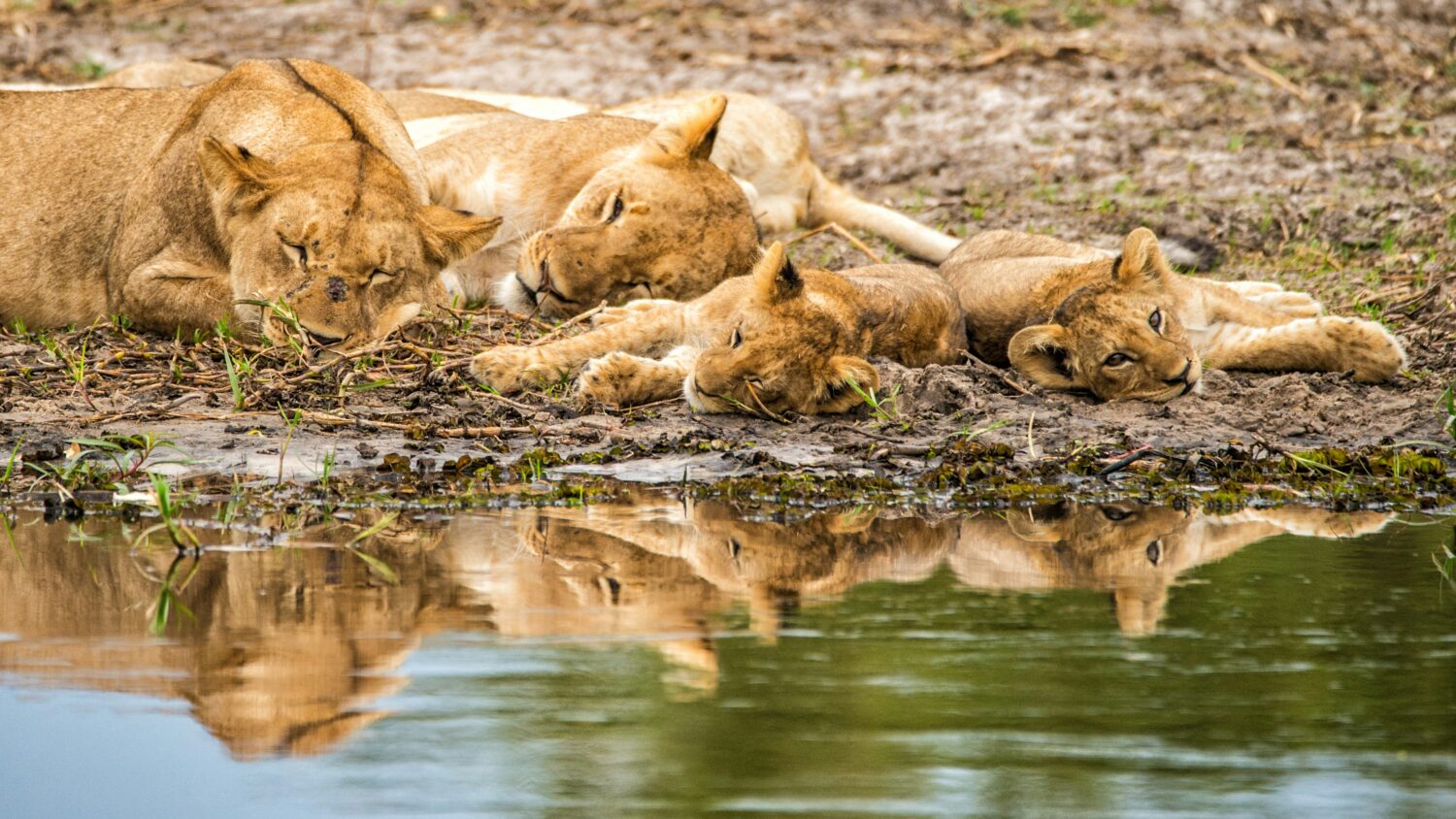
Uganda’s lion populations are concentrated in its two flagship savannah parks. Queen Elizabeth National Park is famous specifically for the tree-climbing lions of its Ishasha sector, where lions have developed the unusual habit of resting in the branches of fig trees during the heat of the day, a behavior rarely seen elsewhere on the continent and one of the most photographed sights in Ugandan wildlife tourism. Murchison Falls National Park offers strong lion sightings as well, particularly across its open, Borassus palm-dotted plains north of the Nile, while Kidepo Valley National Park in Uganda’s remote northeast rounds out the country’s best lion territory, with prides regularly seen in the Narus Valley.
Leopards
Leopards are the most elusive of Uganda’s Big Five by nature rather than by scarcity, since their solitary, largely nocturnal habits make them harder to spot than lions or elephants regardless of location. Murchison Falls’ riverine woodland offers good leopard habitat, with sightings often coming from careful scanning of thick tree branches rather than open ground, while Queen Elizabeth National Park, Kidepo Valley, and even the smaller Lake Mburo National Park all hold resident leopard populations. Patience and a good guide matter more here than in almost any other Big Five sighting.
Elephants
 African elephants are among the more reliably seen Big Five species in Uganda, with substantial herds moving through Murchison Falls National Park’s savannah and woodland habitats along the Nile, and further strong populations in Queen Elizabeth National Park, particularly around the Kasenyi plains and the Kazinga Channel. Kidepo Valley also holds notable elephant numbers, giving travelers several realistic opportunities across a standard itinerary.
Buffalo
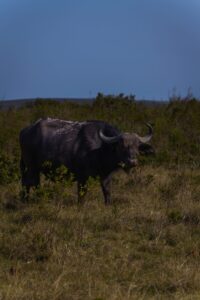 Cape buffalo are widespread across nearly every Ugandan savannah park, and travelers are unlikely to complete a game drive in Murchison Falls, Queen Elizabeth, Kidepo Valley, or Lake Mburo without encountering at least one herd. Queen Elizabeth’s Kazinga Channel is a particularly strong buffalo-viewing location, since large numbers gather near the water and are easily observed both from vehicles and during the channel’s popular boat cruise.
Rhinos
Rhinos are the one Big Five member that requires a dedicated detour, since Uganda’s southern white rhino population was wiped out entirely in the wild during the 1980s. Today, the country’s only wild rhino population lives at Ziwa Rhino Sanctuary, a dedicated conservation area roughly on the route between Kampala and Murchison Falls National Park, where a reintroduced and actively protected population is viewed on foot during a guided rhino tracking walk rather than from a vehicle. Because Ziwa sits conveniently along the standard road route north to Murchison Falls, most itineraries built around completing the Big Five simply add a stop here on the way, rather than treating it as a separate trip.
Why Gorillas and Chimpanzees Complete the Big Seven
What sets Uganda apart from most of its Big Five competitors on the African continent is the presence of two great ape species within easy reach of the same trip, an offering that turns a standard Big Five safari into something considerably richer.
Mountain Gorillas
Mountain gorillas are found in only a handful of locations worldwide, and Uganda’s Bwindi Impenetrable Forest holds roughly half of the world’s remaining population, spread across several habituated family groups available for guided trekking. A smaller number of gorillas are also trackable at Mgahinga Gorilla National Park in Uganda’s far southwest, near the borders with Rwanda and the Democratic Republic of Congo. Gorilla trekking is a permit-controlled activity, booked well in advance given limited daily permit numbers, and it carries a minimum age requirement of fifteen for participants, a detail worth keeping in mind for families planning a Big Seven itinerary with younger children.
Chimpanzees
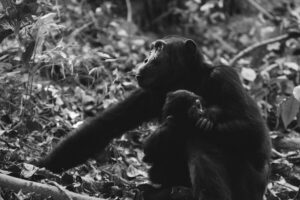 Chimpanzee tracking is considerably more accessible than gorilla trekking, both in terms of cost and geographic spread. Kibale National Park is widely regarded as Uganda’s premier chimpanzee destination, with high habituation success rates and strong sighting odds, while Kyambura Gorge, tucked into the eastern edge of Queen Elizabeth National Park, offers a convenient chimpanzee tracking option for travelers already exploring that park’s savannah wildlife. Budongo Forest, within Murchison Falls National Park itself, adds a third strong chimpanzee tracking location, meaning travelers can pursue this Big Seven member without adding significant extra distance to a Murchison-focused itinerary.
Building a Single Itinerary Around the Big Seven
Given how the Big Seven species are distributed, a well-planned Uganda itinerary can realistically bring most or all of them within reach of a single trip, typically running somewhere between eight and fourteen days depending on how much time is allocated to trekking permits and travel between parks. A common structure begins with arrival in Entebbe, followed by rhino tracking at Ziwa Rhino Sanctuary en route north, then two to three days in Murchison Falls National Park covering game drives, a Nile boat cruise to the base of the falls, and chimpanzee tracking in Budongo Forest. From there, travelers typically continue toward Kibale National Park for a dedicated chimpanzee tracking day, before finishing in Queen Elizabeth National Park for tree-climbing lions, elephants, and a Kazinga Channel cruise. Travelers with additional time and a strong interest in completing the full Big Seven then extend the trip southwest to Bwindi Impenetrable Forest for gorilla trekking, turning what began as a Big Five safari into a genuinely complete Big Seven experience.
Timing Your Trip Around Wildlife and Permit Availability
Uganda’s dry seasons, roughly June through September and again from December through February, generally offer the easiest game viewing conditions across the savannah parks, with drier terrain making animals easier to spot and roads easier to navigate. Gorilla and chimpanzee trekking, by contrast, remain viable year-round, since forest ecosystems support tracking activity in both dry and wet seasons, though trails can be considerably muddier during the rains. Because gorilla permits are limited and issued on a set daily quota per park, travelers building a Big Seven itinerary around this activity should book permits several months ahead of a planned trip, particularly for travel during the peak dry season windows when demand runs highest.
Practical Tips for a Big Seven Safari
Photography-focused travelers should prioritize a telephoto lens for savannah game drives, where distance between vehicle and animal is often significant, alongside a smaller, versatile lens for the closer-range encounters typical of gorilla and chimpanzee trekking. Binoculars earn their keep across every stage of a Big Seven trip, from spotting distant elephants on the Murchison plains to picking out a leopard resting in distant tree cover. Morning and late afternoon remain the strongest windows for savannah game drives generally, while gorilla and chimpanzee trekking typically depart early to maximize the day’s tracking window before the primates move deeper into the forest.
A Uganda Safari Built for the Full Big Seven
Few countries in Africa allow a single, reasonably paced itinerary to combine classic Big Five savannah wildlife with gorilla and chimpanzee trekking, and Uganda’s compact geography is a large part of why this works so well here. A trip that might require multiple countries elsewhere on the continent can be built entirely within Uganda’s borders, moving efficiently between Murchison Falls, Ziwa, Kibale, Queen Elizabeth, and Bwindi without excessive backtracking, and that efficiency is exactly what makes the Big Seven concept such a natural way to frame a Uganda safari for travelers deciding where to focus their time and budget.
If you’re planning a Uganda safari built around seeing the Big Five alongside gorillas and chimpanzees, our team at Murchison Falls Park Safari can design an itinerary that sequences your parks efficiently, secures your gorilla trekking permits well ahead of time, and makes the most of every game drive along the way. Contact us to start building your Big Seven safari today.
For more on planning each piece of this itinerary, our guides on Murchison Falls National Park game drives and boat cruises, Queen Elizabeth National Park’s tree-climbing lions, gorilla trekking permits and preparation in Bwindi, and chimpanzee tracking in Kibale National Park are all available on murchisonfallsparksafari.com and pair directly with this guide.