Black-and-White Colobus Monkey: Uganda’s Most Photogenic Primate
Few animals in Uganda’s forests reward a camera lens quite like the black-and-white colobus monkey. With its glossy jet-black coat set against flowing white mantles of fur, a dramatic white-tufted tail nearly a meter long, and a habit of leaping dramatically between high branches with that tail streaming behind like a silk ribbon, this striking primate has earned a reputation among photographers and casual travelers alike as one of the most visually arresting animals found anywhere in the country’s forests. Unlike Uganda’s more famous primates, mountain gorillas and chimpanzees, which typically require a dedicated trekking permit and a demanding hike deep into the forest, black-and-white colobus monkeys are frequently spotted with remarkable ease, often within minutes of entering the right patch of forest.
This guide takes a detailed look at what makes the black-and-white colobus monkey such a compelling subject for any Uganda safari, covering its physical characteristics, social behavior, diet, and the specific parks where sightings are most reliable, along with practical guidance for travelers hoping to capture their own memorable photographs of this genuinely spectacular primate.
Getting to Know Uganda’s Most Striking Monkey
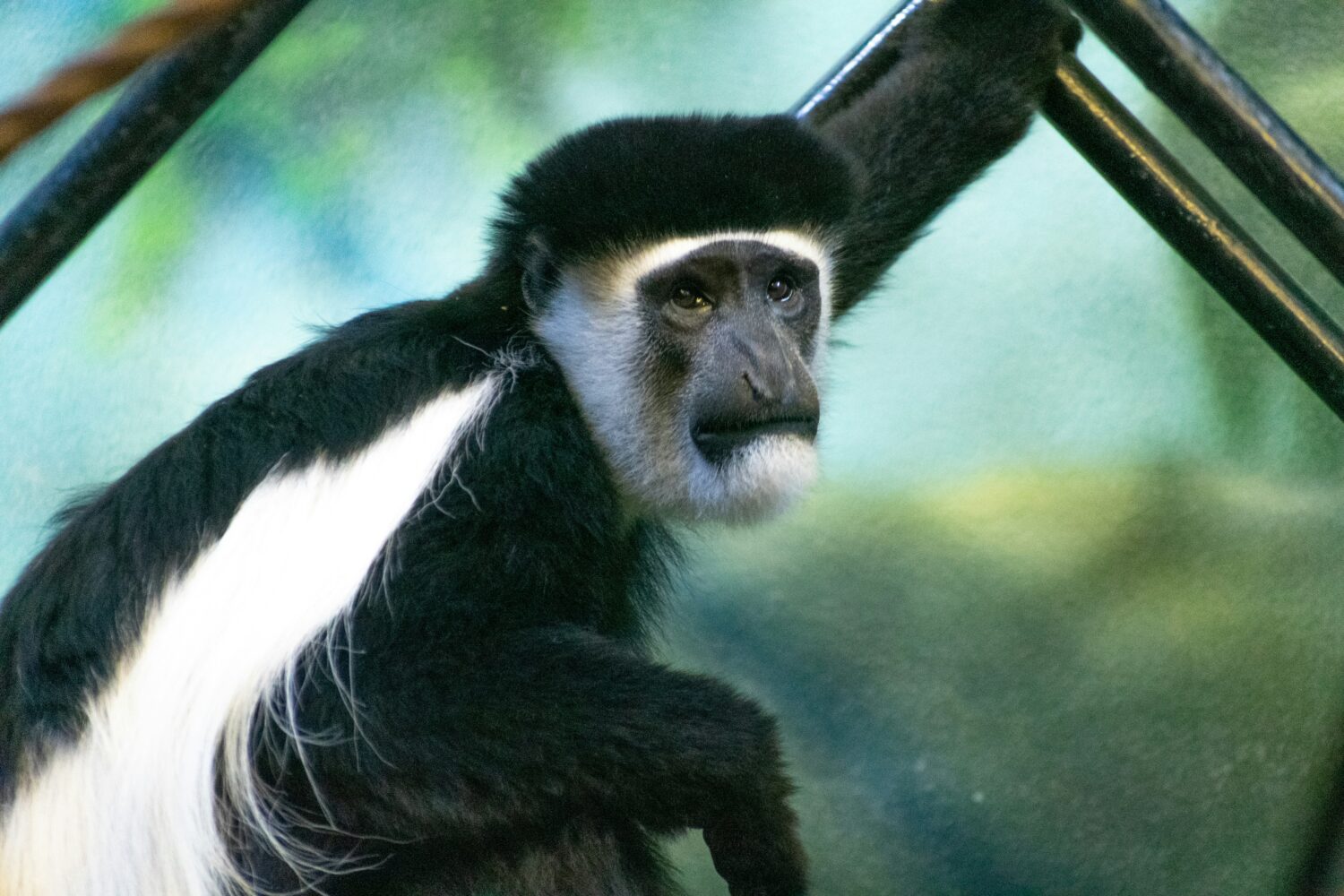
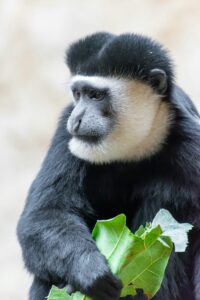 The black-and-white colobus monkey, known scientifically as Colobus guereza and often referred to locally as the guereza, is instantly recognizable even to travelers with little prior knowledge of African primates. Adults display a deep black body coat contrasted sharply by white fur framing the face, a white mantle draping across the shoulders and back, and a long, bushy white tail that can measure nearly as long as the animal’s entire body. Newborn infants are born with a strikingly different appearance, arriving with all-white fur and a pink face before gradually developing their adult black-and-white coloring over the following months, a transformation that offers an interesting bonus observation for travelers lucky enough to spot a family group with a very young infant.
One particularly distinctive anatomical feature sets colobus monkeys apart from virtually every other primate species found in Uganda: they lack thumbs entirely. This might initially seem like a significant disadvantage, but it is in fact a specialized adaptation perfectly suited to their arboreal lifestyle. Their hand structure functions more like a hook, allowing for exceptionally efficient, rapid movement through the forest canopy, and it is this adaptation that gives colobus monkeys their name, derived from the Greek word for maimed or mutilated, a reference to their reduced digits. Far from being a limitation, this hook-like grip enables colobus monkeys to leap distances of up to fifteen meters between branches, using their dramatic tail as a stabilizing rudder mid-air, a sight that consistently ranks among the most memorable wildlife moments travelers report from a Uganda forest walk.
Diet and Daily Life in the Canopy
Black-and-white colobus monkeys are dedicated folivores, meaning their diet consists overwhelmingly of leaves, supplemented with fruit, flowers, and occasional shoots and twigs depending on seasonal availability. This leaf-heavy diet sets them apart from many of Uganda’s other primate species, and it has shaped much of their physiology and behavior in fascinating ways. Digesting large volumes of leaves, including some genuinely toxic foliage that would cause serious harm to many other animals, requires a specialized multi-chambered stomach that functions somewhat similarly to that of a cow, allowing bacteria within their digestive tract to break down cellulose and neutralize plant toxins that would otherwise be indigestible or dangerous.
This dietary specialization also explains much of the colobus monkey’s daily rhythm. Because leaves provide relatively low caloric density compared to fruit or insects, colobus monkeys spend considerable portions of the day resting to allow digestion, alternating between periods of active feeding and long stretches of stillness high in the canopy. This pattern actually benefits travelers hoping for a good, extended sighting, since a resting troop tends to remain in a visible location for far longer than a fast-moving group of red-tailed monkeys or baboons might.
Social Structure and Group Behavior
Colobus monkeys live in cohesive social groups typically ranging from eight to fifteen individuals, generally structured around several adult males alongside a larger number of females and their offspring. Female colobus monkeys often form close, lasting bonds with one another within the group, contributing to a relatively stable social structure compared to some other primate species. Young males typically leave their natal group before reaching full maturity, either joining a bachelor group of similarly aged males or living a more solitary existence until an opportunity arises to challenge for a breeding position within an established group.
Communication within colobus troops relies heavily on vocalization, and the deep, guttural roaring calls produced by adult males, particularly at dawn, rank among the more distinctive sounds of Uganda’s forest interiors. These calls, used to establish territorial boundaries and communicate a group’s location to neighboring troops, often carry a considerable distance through dense forest, and travelers on an early morning forest walk frequently hear this vocalization well before spotting the group responsible for it.
Where to See Black-and-White Colobus Monkeys in Uganda
Uganda offers an unusually wide range of reliable locations for observing this species, a considerable advantage for travelers who want guaranteed sightings without dedicating an entire day to a specialized primate trek. Kibale Forest National Park, frequently described as the primate capital of Africa given its remarkable total of thirteen distinct primate species, holds a particularly large and easily observed population of black-and-white colobus monkeys, with troops often spotted near the park’s main briefing area even before a formal forest walk begins.
Bwindi Impenetrable National Park, while primarily famous for mountain gorilla trekking, also hosts numerous colobus troops inhabiting the forest edges and tree canopies along established gorilla trekking trails. This makes colobus sightings a genuine bonus for many travelers already visiting Bwindi specifically for gorilla trekking, adding a memorable secondary primate encounter to what is already typically the highlight of an entire Uganda trip. Mgahinga Gorilla National Park similarly hosts colobus populations within its montane and bamboo forest zones, where the dense canopy cover offers natural protection while still allowing for excellent sightings during guided hikes.
Queen Elizabeth National Park adds a further reliable location, particularly around the forested sections near Kyambura Gorge, where travelers already tracking chimpanzees or exploring the gorge’s dramatic sunken forest frequently encounter colobus troops moving through the surrounding canopy. Budongo Forest Reserve, within Murchison Falls National Park, rounds out the country’s most productive colobus viewing locations, with well-established forest trails offering excellent opportunities for observation, photography, and behavioral study alongside the reserve’s broader primate population, including its notable chimpanzee community.
Tips for Photographing Colobus Monkeys
Given the species’ visual drama, colobus monkeys reward photographers who take a little extra time and care with their approach. Because these monkeys spend so much time resting between feeding bouts, patience during a forest walk often pays off considerably more than rushing between sighting opportunities. Early morning visits tend to offer the best light filtering through the forest canopy, along with the added bonus of catching territorial vocalizations that can help guides locate a nearby troop before it becomes visible.
Because the species’ defining features, the flowing white mantle and the dramatic tail, are best captured mid-motion, photographers hoping for a truly striking image should be ready to shoot in quick succession when a colobus leaps between branches, since the animal’s characteristic tail-trailing jump only lasts a fraction of a second. A fast shutter speed and a willingness to take numerous shots in a short burst dramatically improves the odds of capturing this signature movement cleanly.
Conservation Status
The black-and-white colobus monkey, sometimes referred to by the more specific name mantled guereza, is currently classified as a species of least concern, reflecting relatively stable populations across much of its East African range, including within Uganda’s well-protected forest reserves and national parks. This contrasts with some of the colobus family’s more threatened relatives found elsewhere on the continent, and reflects the effectiveness of sustained forest protection across Uganda’s major primate habitats. Continued habitat protection, anti-poaching enforcement, and community-based conservation initiatives across parks like Kibale, Bwindi, and Budongo all play a role in maintaining these healthy population levels, with tourism revenue from forest walks and primate tracking activities contributing directly to the funding that sustains this ongoing protection.
Combining Colobus Sightings With a Wider Uganda Itinerary
For travelers building a Uganda safari itinerary, black-and-white colobus monkeys work particularly well as a complementary highlight woven into activities already planned around other primates or classic game viewing. A Murchison Falls safari that includes a forest walk through Budongo Forest offers a natural opportunity to combine chimpanzee tracking with excellent colobus sightings in the same outing, while travelers already booked for gorilla trekking in Bwindi or chimpanzee tracking in Kibale can expect strong colobus encounters as a virtually guaranteed bonus alongside their primary primate activity.
Our guides know precisely which forest trails and times of day offer the strongest colobus sightings across each of these destinations, and we build itineraries that make the most of these opportunities without requiring travelers to sacrifice time from their core wildlife priorities.
Planning Your Uganda Primate Safari
If watching a black-and-white colobus monkey leap dramatically through the forest canopy sounds like the kind of moment worth building into your Uganda trip, our team can help design an itinerary that maximizes your chances of a memorable sighting alongside the country’s other iconic primates and classic game viewing. Contact us today to start planning a Uganda safari that combines the wildlife highlights of Murchison Falls National Park with forest walks and primate encounters across Budongo Forest and beyond. Whether colobus monkeys are the specific draw or simply a beautiful bonus alongside gorilla trekking or chimpanzee tracking, few primates anywhere in Africa offer quite the same visual spectacle as Uganda’s black-and-white colobus.