

Buganda Kingdom Cultural Tour: Kasubi Tombs and Beyond
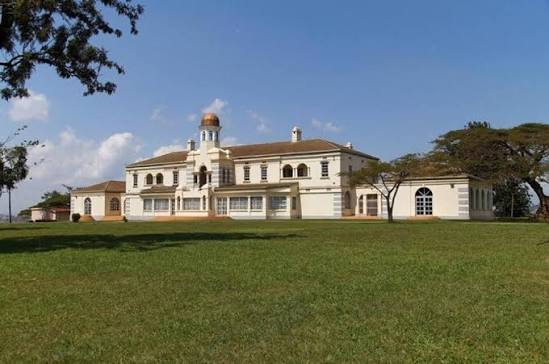
Long before most travelers head north toward the Nile and the game-rich plains of Murchison Falls, many begin their Uganda journey with a single morning in Kampala, and there is no better way to spend that morning than on a Buganda Kingdom cultural tour through the hills that still serve as the living heart of Uganda’s largest and most influential traditional kingdom. Anchored by the sacred Kasubi Tombs and radiating outward to the Kabaka’s palace, the royal parliament building, and the ceremonial road that connects them, this pocket of Kampala offers a depth of living history that few African capitals can match, and it pairs naturally with a safari itinerary heading toward Uganda’s northern parks.
Understanding the Buganda Kingdom Before You Visit
Buganda is the largest of Uganda’s traditional kingdoms and remains, to this day, the most politically and culturally significant, occupying the central region of the country that includes Kampala itself. The kingdom traces its royal lineage back through dozens of generations of kings known as Kabakas, a line that by most reckonings extends back centuries through oral history and, more verifiably, through written records beginning in the nineteenth century. The current Kabaka, Ronald Muwenda Mutebi II, is the thirty-sixth in this royal line and has reigned since being enthroned on July 31, 1993, at the traditional coronation site of Naggalabi in Buddo, a moment that marked the restoration of Buganda’s monarchy after nearly three decades in which Uganda’s kingdoms had been formally abolished by the post-independence government.
That abolition and restoration is itself a central thread running through everything a visitor encounters on a Buganda cultural tour. Buganda’s monarchy was stripped of legal recognition in 1966 following a period of escalating political conflict between the kingdom and Uganda’s national government, an episode remembered locally as the Kabaka Crisis, during which the reigning Kabaka, Edward Mutesa II, fled into exile as government forces moved against his palace. Uganda’s kingdoms remained abolished for almost thirty years until the 1993 restoration under President Yoweri Museveni, and this history of resilience, exile, and return gives nearly every site associated with the Buganda Kingdom an emotional weight that goes well beyond typical architectural sightseeing. Today, the Kabaka functions as a cultural and ceremonial leader rather than a political head of state, working alongside a Prime Minister known as the Katikkiro, currently Charles Peter Mayiga, and a traditional parliament called the Lukiiko that continues to meet and manage the kingdom’s cultural and developmental affairs.
Kasubi Tombs: The Spiritual Heart of Buganda
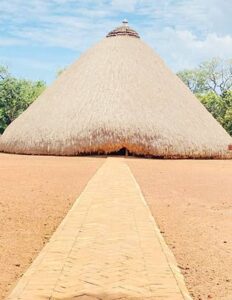 No Buganda Kingdom cultural tour is complete without a visit to the Kasubi Tombs, a UNESCO World Heritage site perched on Kasubi Hill just a few kilometers outside central Kampala, off the road toward Hoima. Known locally as the Muzibu Azaala Mpanga, the site was originally constructed in 1882 as a palace for Kabaka Mutesa I and was converted into a royal burial ground following his death two years later, and it remains the final resting place of four of Buganda’s kings, including Mutesa I himself, Mwanga II, Daudi Chwa II, and Sir Edward Mutesa II, the very king whose exile marked the kingdom’s darkest modern chapter.
The site earned UNESCO World Heritage status in 2001, recognized as an outstanding example of a traditional building constructed almost entirely from organic materials, including timber columns and an enormous, meticulously thatched roof wrapped in bark cloth. That distinction made the events of 2010 all the more devastating, when a fire tore through the main tomb building and reduced the central structure to ash, an loss that shocked the Baganda people and triggered a genuinely remarkable reconstruction effort. Uganda’s government, the Buganda Kingdom, and international partners including UNESCO collaborated on a painstaking rebuilding program that trained a new generation of craftspeople in traditional thatching, woodworking, and bark cloth production, skills that had been at real risk of disappearing entirely. The reconstruction was completed in the summer of 2023, and in September of that year, the World Heritage Committee formally removed Kasubi Tombs from the List of World Heritage in Danger, confirming that the site had been restored to the standard required to maintain its full UNESCO status.
Visiting today, guests join a mandatory guided tour lasting roughly one to two hours, walking through grounds that remain a living, functioning spiritual site rather than a static museum. Inside the main tomb building, visitors encounter fifty-two distinct clan rings, each representing one of Buganda’s fifty-two traditional clans and each carrying specific ceremonial responsibilities tied to the site’s upkeep and rituals, a detail that captures just how deeply Kasubi’s significance is woven into the kingdom’s broader clan structure. The physical resting place of the kings themselves lies concealed behind a bark cloth curtain accessible only to close royal family members, preserving an element of sacred privacy even as the surrounding grounds welcome visitors daily. Guides on-site share both the traditional history of the tombs and firsthand accounts of the reconstruction process, giving visitors a rare window into how a UNESCO-listed heritage site can be rebuilt in a way that respects intangible cultural values, not simply architectural appearance.
Mengo Palace, Bulange, and the Royal Mile
 A short distance from Kasubi, on Mengo Hill overlooking Kampala, sits the Lubiri, more commonly known as Mengo Palace or by its local name, Twekobe, meaning working together. This sprawling royal compound, covering roughly four square kilometers, is the official residence of the Kabaka and was itself built through the collective effort of Buganda’s clans in the late nineteenth century, standing as a physical embodiment of the same clan unity celebrated inside the Kasubi Tombs. The palace grounds carry their own weight of difficult history, having endured attacks during the turbulent Kabaka Crisis, and visitors touring the site today can see underground tunnels added during the Idi Amin era, built as an escape route during a period of significant political danger for the kingdom.
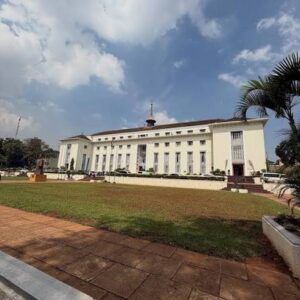
Directly connected to the palace by a straight ceremonial avenue known as the Royal Mile, or locally as Kabaka Anjagala Road, meaning the king loves me, sits the Bulange, the administrative headquarters and parliament building of the Buganda Kingdom. Constructed between 1955 and 1958, the Bulange houses the Lukiiko, the kingdom’s traditional legislative body, along with the offices of both the Kabaka and the Katikkiro. Guided tours through the building reveal photographs and artifacts spanning generations of Buganda kings, along with displays explaining the kingdom’s clan-based governance structure, a system of decision-making that predates Uganda’s colonial era entirely and continues to function alongside the modern Ugandan state today. The Royal Mile connecting the two sites is lined with posts representing each of Buganda’s clans, and the road itself is used during major kingdom celebrations, including the Kabaka’s birthday and coronation anniversary events, drawing thousands of visitors and reinforcing just how alive this cultural institution remains in contemporary Uganda.
Nearby, visitors can also extend their tour to Kabaka’s Lake, one of the largest hand-dug lakes anywhere in Africa, originally created to serve both leisure and defensive military purposes for the kingdom, adding another layer to a half-day itinerary that already combines sacred burial grounds, a working royal residence, and a functioning traditional parliament within a remarkably compact area of Kampala’s historic hills.
Beyond the Palace: Rounding Out a Full Cultural Day
Travelers with a full day to dedicate to Buganda’s heritage often extend their itinerary to include Namirembe Cathedral, Uganda’s oldest Anglican cathedral, and Rubaga Cathedral, both perched on neighboring hills within easy reach of the palace complex, reflecting the way Kampala’s historic hills each carry their own distinct chapter of the country’s religious and cultural history. Local craft markets around Mengo offer another worthwhile stop, giving visitors the chance to pick up Buganda-themed textiles and handmade souvenirs directly from the community surrounding the palace, an easy way to support local artisans while carrying home a tangible piece of the day’s experience.
For travelers visiting during specific dates on the kingdom’s cultural calendar, events such as the Kabaka’s Birthday Run or the annual Enkuuka New Year celebrations offer a rare chance to witness Buganda’s living traditions in full public display, complete with traditional music, ceremonial attire, and an atmosphere of genuine community celebration that no ordinary sightseeing day can replicate. Even outside these specific events, the palace grounds, Bulange, and Kasubi Tombs together offer more than enough substance for a rewarding half or full day of cultural immersion before continuing on to the rest of a Uganda itinerary.
Combining a Buganda Cultural Tour with Your Murchison Falls Safari
For most international travelers, Entebbe International Airport serves as the natural starting point for a Uganda trip, and Kampala’s Buganda heritage sites sit conveniently along the route north toward Murchison Falls National Park, making a cultural stop in the capital a genuinely efficient addition rather than a detour requiring separate planning. Many travelers choose to spend their arrival day exploring Kasubi Tombs, Mengo Palace, and the Royal Mile before setting off the following morning toward Murchison Falls, using the cultural tour both as a meaningful introduction to Uganda and as a practical way to recover from international travel before the safari itself begins in earnest.
At Murchison Falls Park Safari, we regularly build a Kampala cultural morning into our clients’ broader itineraries, arranging knowledgeable local guides for Kasubi Tombs and the Mengo Palace complex before transferring travelers north toward the falls, game drives, and Nile boat cruises that make Murchison Falls one of Uganda’s flagship safari destinations. Reach out to our team today to start planning a Uganda itinerary that opens with a genuine Buganda Kingdom cultural tour and closes with the roar of the Nile crashing through Murchison Falls, giving you a trip that captures both the human history and the natural spectacle that make this country so extraordinary.