

Nyero Rock Paintings: Uganda’s Ancient Rock Art
Tucked into a quiet cluster of granite outcrops in eastern Uganda’s Kumi District, the Nyero rock paintings represent one of the country’s most significant yet quietly overlooked cultural treasures. While Uganda’s tourism reputation rests overwhelmingly on its wildlife, mountain gorillas, chimpanzees, and the dramatic scenery of Murchison Falls National Park, this collection of ancient rock art offers travelers something entirely different: a direct window into the artistic and spiritual lives of communities who inhabited this landscape centuries, and possibly millennia, before recorded history began. For travelers with an interest in archaeology, deep history, or simply a desire to experience a genuinely different side of Uganda beyond its national parks, Nyero rewards a detour with a site unlike anything else in the country.
This guide takes a close look at what makes Nyero’s rock art so significant, covering the site’s history, the debate surrounding its age and authorship, the specific rock shelters and their distinctive artwork, and practical guidance for travelers hoping to visit this remarkable but still relatively little-known corner of eastern Uganda.
A Site Shrouded in Genuine Mystery
 Few aspects of Nyero’s history are more fascinating, or more genuinely debated among researchers, than the question of exactly how old this rock art actually is and who created it. Various sources and researchers place different estimates on the paintings’ true age, with some scholarly assessments dating the most well-preserved artwork to before 1250 CE, while other estimates, based on the broader tradition of geometric rock art found across the region, suggest certain elements may stretch back several thousand years, with some assessments placing the earliest markings at Nyero as far back as three thousand years or more. This considerable range in dating reflects the genuine difficulty of precisely aging rock art of this kind, along with the likelihood that different panels within the site were created across multiple distinct periods rather than in a single sitting.
The question of authorship carries a similarly unsettled quality. Local Iteso communities living in the surrounding Kumi and Ngora districts today are not believed to be the original creators of the paintings, having settled in the region well after the rock art itself was created. Instead, researchers and local tradition generally attribute the artwork to the indigenous Batwa people, who inhabited this part of Uganda prior to the arrival of Bantu-speaking communities that today make up the majority of the country’s population. Some earlier researchers speculated the paintings might trace back to San hunter-gatherer communities more commonly associated with rock art traditions in southern Africa, though this theory remains disputed rather than definitively established. What can be said with greater confidence is that the artistic style at Nyero fits within a broader, geographically widespread tradition of geometric rock art rendered in red pigment, a style found scattered across east, central, and parts of southern Africa, generally associated with Late Stone Age hunter-gatherer cultures across the wider region.
Rediscovery and Documentation
While local communities living near Nyero had long been aware of the paintings’ existence, treating certain rock shelters as significant sites within their own local tradition, formal documentation of the site by outside researchers dates to 1913, when British explorer C.W. Hobley recorded the paintings as part of what became known as the Teso Report. This rediscovery brought Nyero to wider academic attention, and the site has since been recognized as among the most important and thoroughly documented examples of rock art found anywhere in Uganda, eventually earning a place on UNESCO’s Tentative List of World Heritage Sites in recognition of its considerable archaeological and cultural significance.
Exploring the Rock Shelters
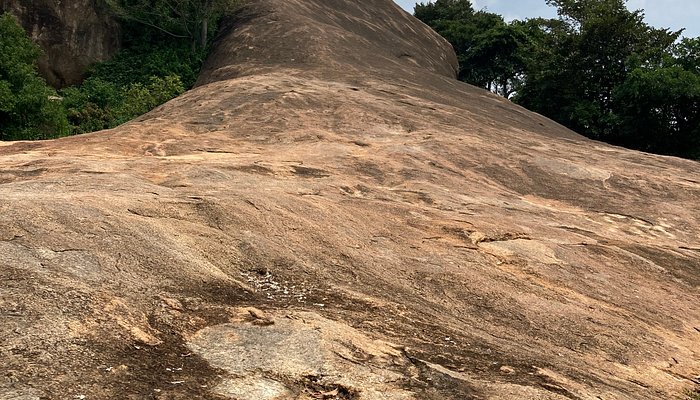
Nyero’s rock art is distributed across a series of rock shelters formed within a striking granite outcrop known locally as Moru Ikara. While the wider site actually comprises as many as six distinct shelters, early documentation and subsequent tourism development focused primarily on three principal shelters, generally referred to simply as Nyero 1, Nyero 2, and Nyero 3, each offering visitors a somewhat different artistic and physical experience.
Nyero 2 is typically regarded as the site’s most visually striking shelter, featuring the greatest concentration of well-preserved painted imagery across its smooth granite surface. Visitors here can make out geometric patterns, concentric circles, and what some researchers interpret as depictions of human figures engaged in dance or ceremonial activity, alongside animal imagery that may include stylized depictions of creatures such as zebra. Nyero 3, located a short distance further north, offers a considerably more intimate encounter with the artwork, requiring visitors to crouch low to enter the shelter itself. Once inside, a particularly well-preserved geometric design comes into view, a pattern of white-painted concentric circles surrounded by radiating lines that together create a striking, almost sun-like visual effect. This specific design has achieved a degree of genuine national recognition beyond the site itself, having been featured on Uganda’s 1,000-shilling banknote, a detail that surprises many visitors encountering the original artwork in person for the first time.
Beyond the painted panels themselves, the broader Nyero site rewards visitors willing to climb the main rock outcrop, which offers genuinely expansive three hundred sixty degree views across the surrounding eastern Ugandan landscape, a worthwhile reward for the physical effort involved and a scenic complement to the historical and archaeological focus of the visit itself.
Interpreting the Artwork
Across the various shelters, Nyero’s rock art broadly falls into three recognizable categories: geometric patterns, including the concentric circles and radiating line designs found most prominently at Nyero 3, animal depictions, and human figures, some apparently engaged in dance or other communal activity. Researchers studying rock art of this general type across Africa, Europe, Asia, and Australia have generally concluded that such imagery likely carried genuine religious or spiritual significance for the communities that created it, functioning as more than purely decorative expression. While the precise meaning behind Nyero’s specific symbols remains a matter of ongoing scholarly interpretation rather than settled fact, the sheer consistency and deliberate placement of the geometric designs across multiple shelters suggests a genuinely intentional visual language rather than random or purely improvisational markings.
Threats to Preservation
Like many ancient rock art sites around the world, Nyero faces ongoing preservation challenges stemming from a combination of natural weathering, erosion, encroaching vegetation growth, and, in some cases, vandalism by visitors or nearby community members unaware of or indifferent to the artwork’s cultural and historical significance. These pressures pose a genuine long-term risk to the survival of some of the more fragile painted panels within the site, underscoring the importance of continued conservation attention and responsible visitor behavior for travelers fortunate enough to experience Nyero firsthand.
Practical Guidance for Visiting Nyero
The Nyero rock paintings sit roughly eight kilometers west of Kumi town, within what is now generally referred to as either Kumi District or the more recently created Ngora District, depending on the specific administrative boundary a given source references, situated approximately two hundred to two hundred fifty kilometers from Kampala. Travelers typically reach the site as part of a broader eastern Uganda itinerary, with the paintings representing a particularly worthwhile stop for anyone traveling to or from Kidepo Valley National Park in the country’s remote northeast, given the relative convenience of incorporating a Nyero visit along this general route.
A small entrance fee applies for visiting the site, generally covering both formal park access and the services of a local guide who accompanies visitors between the different rock shelters, providing context and interpretation for the artwork along the way. Given the site’s genuinely limited visitor numbers compared to Uganda’s major wildlife destinations, travelers should expect a considerably quieter, more contemplative experience than a typical national park visit, with far fewer fellow tourists sharing the site during any given visit. Basic accommodation options are available in nearby Kumi town for travelers wishing to overnight in the area rather than treating Nyero as a purely day-trip stop along a longer journey.
Combining Nyero With a Wider Uganda Itinerary
Given its location in eastern Uganda, Nyero works particularly well as a cultural and historical addition to itineraries already routing through this part of the country, most notably for travelers heading toward or returning from Kidepo Valley National Park, Uganda’s most remote and arguably most spectacular wilderness destination. Rather than treating the considerable overland journey to Kidepo as purely functional transit time, a stop at Nyero transforms a portion of that drive into a genuinely worthwhile cultural detour, offering a meaningful contrast to the wildlife-focused activities that otherwise dominate a typical Uganda safari itinerary.
For travelers with a particular interest in archaeology, deep history, or simply experiencing a side of Uganda entirely distinct from its famous national parks, Nyero offers a genuinely rewarding two-hour stop capable of reframing an entire trip’s understanding of the country’s human history alongside its celebrated wildlife heritage.
Planning Your Visit to Nyero Rock Paintings
Incorporating Nyero into a broader Uganda itinerary, particularly alongside a journey toward Kidepo Valley National Park, requires thoughtful route planning to ensure this often-overlooked cultural site receives the time it genuinely deserves rather than being rushed through as an afterthought. Our team can help build an itinerary that weaves Nyero’s ancient rock art into a wider northern and eastern Uganda circuit, giving your trip a meaningful cultural and historical dimension alongside its wildlife highlights. Contact us today to start planning a Uganda safari that includes a visit to Nyero rock paintings, connecting the country’s deep human history with the wildlife-rich landscapes of Murchison Falls National Park, Kidepo Valley National Park, and the wider Uganda safari circuit.