The Classic Combo: Gorillas, Chimps and Big Game in One Trip
For travelers trying to decide which single Uganda safari best captures the country’s full range of wildlife experiences, one itinerary consistently rises to the top: the combination of mountain gorilla trekking, chimpanzee tracking, and classic big game viewing, all within a single, well-paced trip. This is Uganda’s signature safari format, and for good reason. Few other countries on Earth allow travelers to move between three genuinely distinct wildlife experiences, dense mountain forest, tropical rainforest canopy, and open savannah, without ever leaving national borders or sacrificing meaningful time to long-haul transfers.
This guide walks through what makes the gorillas, chimps and big game combination such an enduringly popular way to experience Uganda, covering how a well-structured itinerary typically flows, what each leg of the trip actually involves, current permit costs and timing considerations, and how our team approaches building this kind of itinerary for clients. Whether this is your first Uganda safari or you are finally adding the primate trekking legs to a country you already know for its savannah wildlife, understanding how these three experiences fit together will help you plan a trip that makes the most of every day in the field.
Why This Combination Works So Well
 Uganda’s geography is what makes this particular combination possible in the first place. The country’s southwestern corner holds Bwindi Impenetrable National Park and Mgahinga Gorilla National Park, home to the mountain gorillas that draw so many travelers to Uganda in the first place. A short distance northeast, Kibale Forest National Park holds the highest concentration of chimpanzees found anywhere in East Africa, while Queen Elizabeth National Park, sitting between the two, adds savannah game drives, a boat cruise along the Kazinga Channel, and, for travelers who want a third primate encounter, an additional chimpanzee tracking option within Kyambura Gorge. Further afield, Murchison Falls National Park in the north rounds out the big game experience with dramatic Nile River scenery, some of Uganda’s most productive game drives, and its own chimpanzee tracking opportunity within Budongo Forest.
This clustering of ecosystems within a manageable driving distance is what separates Uganda from many other African safari destinations, where gorilla trekking, chimpanzee tracking, and savannah game viewing might otherwise require entirely separate trips to different countries. A well-designed Uganda itinerary can weave all three together into a single, continuous journey, typically spanning eight to twelve days depending on how much time travelers want to dedicate to each leg.
Gorilla Trekking: The Centerpiece Experience
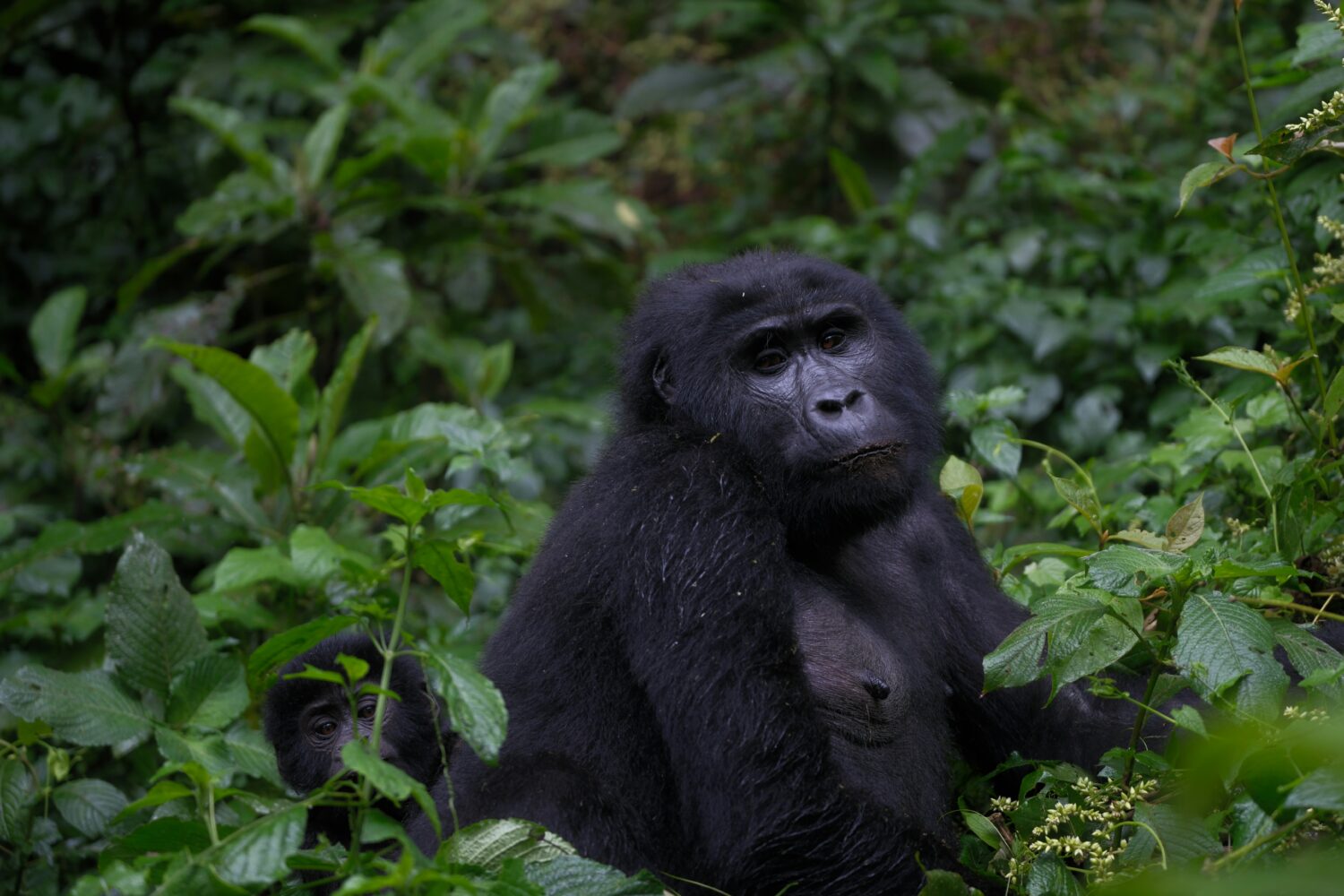
Mountain gorilla trekking remains the undisputed highlight of most Uganda itineraries, and for many travelers, it is the single experience that justifies the entire trip. Treks depart from one of several sectors within Bwindi Impenetrable National Park, or from Mgahinga Gorilla National Park further south, with rangers leading small groups through dense forest terrain in search of one of the park’s habituated gorilla families. Trek duration varies considerably depending on where a particular family happens to be on a given day, ranging anywhere from a relatively short walk to a demanding multi-hour trek through steep, muddy terrain, but the reward, an hour spent in the presence of a wild gorilla family, consistently ranks among travelers’ most emotionally powerful wildlife experiences anywhere in the world.
A standard gorilla trekking permit currently costs eight hundred dollars per person for foreign nonresidents, with a notable low-season discount bringing the price down to six hundred dollars during April, May, and November. Given the significant cost and the limited number of daily permits issued across Bwindi’s various sectors, booking well in advance, ideally several months ahead for peak season travel, is essential for travelers hoping to secure their preferred trekking date.
Chimpanzee Tracking: A Different Kind of Primate Encounter
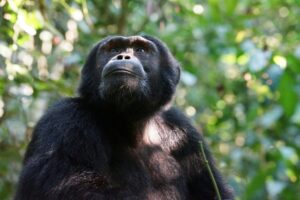 Where gorilla trekking rewards patience and a single, profound encounter, chimpanzee tracking in Kibale Forest National Park offers something more dynamic. Kibale holds the highest concentration of chimpanzees found anywhere in East Africa, with well over a thousand individuals living across the park’s forest, and several fully habituated communities that make for consistently high encounter success rates. Unlike the more solitary, ground-based behavior typical of gorilla families, chimpanzees are considerably more active and vocal, moving through the forest canopy, calling to one another across long distances, and displaying the kind of energetic social behavior that makes for genuinely thrilling wildlife viewing.
A standard Kibale chimpanzee tracking permit currently costs two hundred and fifty dollars per person for foreign nonresidents, with a low-season discount bringing this down to two hundred dollars during the same April, May, and November window that applies to gorilla permits. Travelers looking for a lower-cost or less crowded alternative can consider tracking chimpanzees within Kyambura Gorge in Queen Elizabeth National Park instead, priced at around one hundred dollars per person, or within Budongo Forest inside Murchison Falls National Park, generally the most affordable option of the three and a natural fit for travelers whose itinerary already includes time in the north. For travelers with sufficient time and budget, combining two of these three chimpanzee tracking locations within a single trip offers an interesting way to compare encounter styles across different forest ecosystems.
Big Game Viewing: Savannah, River, and Open Plains
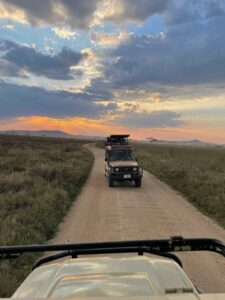
The third leg of this classic combination shifts entirely away from forest tracking and into the kind of open-vehicle game drives most travelers associate with a traditional African safari. Queen Elizabeth National Park, conveniently positioned between Bwindi and Kibale, offers excellent game drives through its Kasenyi plains, along with a boat cruise along the Kazinga Channel that reliably delivers close encounters with hippos, crocodiles, elephants, and an outstanding variety of waterbirds. Travelers with extra time can extend into the park’s Ishasha sector in search of its famous tree-climbing lions, a genuinely rare behavioral quirk found in only a handful of locations across the entire African continent.
For travelers seeking Uganda’s most complete big game experience, extending the itinerary north to Murchison Falls National Park adds another dimension entirely. Here, dramatic boat cruises toward the base of the falls itself, combined with game drives across the park’s northern bank, deliver strong sightings of elephant, giraffe, buffalo, and lion against the sweeping backdrop of the Victoria Nile, along with the park’s own Budongo Forest chimpanzee tracking option for travelers who want to fold a third primate encounter into this stretch of the trip.
A Sample Structure for This Combination
While the exact sequencing depends heavily on individual travel dates, flight availability, and personal priorities, a well-balanced version of this itinerary generally begins in the southwest with two to three nights around Bwindi Impenetrable National Park, allowing a buffer day in case a rescheduled trek becomes necessary due to weather or trail conditions. From there, most itineraries continue north to Queen Elizabeth National Park for two nights of game drives and a Kazinga Channel cruise, before continuing on to Kibale Forest National Park for a dedicated chimpanzee tracking day. Travelers with additional time then continue north to Murchison Falls National Park for a final two to three nights, closing the trip with big game drives and a Nile boat cruise before returning to Entebbe for departure.
This structure typically spans somewhere between eight and twelve days depending on how much time is allocated to each park, and it can be shortened by dropping either the Murchison Falls leg or one of the secondary chimpanzee tracking locations, or extended by adding additional nights in any single park for travelers who prefer a slower pace with more buffer time built in.
Timing Considerations for This Itinerary
Uganda’s two dry seasons, roughly December through February and June through September, generally offer the most comfortable trekking conditions across both Bwindi and Kibale, with drier trail conditions making the physically demanding forest sections of this itinerary considerably more manageable. That said, travelers focused primarily on cost savings might instead consider the April, May, or November low season, when both gorilla and chimpanzee permits carry meaningful discounts, trail conditions remain entirely trekkable with appropriate footwear, and overall visitor numbers across the parks tend to be noticeably lower.
Because this itinerary combines several time-sensitive, permit-limited activities across multiple parks, advance planning matters considerably more here than for a straightforward single-park safari. Gorilla and chimpanzee permits should ideally be secured several months ahead of a planned peak-season trip, and lodge availability across Bwindi, Queen Elizabeth, and Kibale can fill up correspondingly early during the busiest months of the year.
Who This Itinerary Suits Best
This combination naturally appeals to first-time Uganda visitors who want to experience the country’s full range of wildlife rather than choosing a single narrow focus, along with dedicated wildlife photographers and nature enthusiasts drawn by the sheer variety of encounters packed into a relatively compact geographic area. Couples and families traveling together also tend to appreciate the natural pacing this itinerary offers, alternating between physically demanding forest treks and more relaxed game drive days, which helps prevent the kind of trip fatigue that can set in when every day involves strenuous activity.
Travelers with more limited time or budget can still capture much of what makes this combination special by focusing on just two of the three experience types, most commonly gorilla trekking paired with either chimpanzee tracking or big game viewing, rather than attempting all three within a shorter trip.
Planning Your Gorillas, Chimps, and Big Game Safari
Sequencing gorilla trekking, chimpanzee tracking, and big game viewing across multiple parks within a single, efficiently paced Uganda itinerary requires careful coordination of permits, park entry logistics, and travel time between destinations. Our team has extensive experience building exactly this kind of itinerary for clients, ensuring every leg of the trip receives adequate time while keeping unnecessary transfers and dead time to a minimum. Contact us today to start planning a Uganda safari that combines mountain gorilla trekking, chimpanzee tracking, and classic big game viewing into a single, comprehensive journey through some of Africa’s most remarkable wildlife landscapes. For travelers wanting to experience the full breadth of what Uganda has to offer in one well-designed trip, this classic combination remains difficult to beat.