Uganda vs Zimbabwe Safari: Wildlife and Cost Compared
Uganda and Zimbabwe rarely get compared directly, and that is a bit of a missed opportunity, since both rank among Africa’s most respected safari destinations for genuinely different reasons. Zimbabwe has built its reputation on some of the finest walking safaris and highest wildlife densities on the continent, centered around Hwange National Park and the Zambezi River’s Mana Pools. Uganda has built its reputation on primate trekking, dramatic river scenery, and remarkable biodiversity packed into a compact, accessible country. A Uganda vs Zimbabwe safari comparison, done properly, is less about which destination is “better” and more about which particular strengths matter most to you. This guide breaks down the real differences in wildlife, cost, travel style, and logistics between the two.
Wildlife: Elephant Density vs Primate Diversity
 Zimbabwe’s single most defining wildlife credential is elephants, and specifically the sheer scale of Hwange National Park’s population, home to an estimated forty-five thousand or more elephants, among the largest concentrations found anywhere on the continent. Combined with strong lion and painted wolf, or African wild dog, populations, exceptional plains game diversity for a landlocked country, and Mana Pools’ UNESCO World Heritage status along the Zambezi River, Zimbabwe delivers genuinely world-class Big Five and predator viewing, particularly during the dry season from July through October when animals concentrate predictably around Hwange’s waterholes. Mana Pools adds a further dimension unique among Africa’s premier parks: its famous “big game approaches,” where elephants standing on their hind legs to reach fruit pods along the Zambezi floodplain create some of the most photographed wildlife moments in African safari photography.
Uganda’s wildlife story runs on a different axis entirely. Murchison Falls National Park offers solid, reliable elephant, buffalo, and lion sightings across its northern savannah sector, alongside a Nile hippo and crocodile population that rivals anything found along the Zambezi, but Uganda’s genuine differentiator is primates. Home to roughly half the world’s remaining mountain gorillas, trackable in Bwindi Impenetrable National Park, plus strong chimpanzee populations at Kibale Forest and within Murchison Falls’ own Budongo Forest, Uganda offers an entire category of wildlife encounter that Zimbabwe simply does not have. There is no equivalent anywhere in Zimbabwe to spending an hour with a habituated gorilla family, and this single fact is often the deciding factor for travelers choosing between the two destinations, since it represents an experience category rather than merely a different species on a checklist.
Walking Safaris and Ground-Level Wildlife Encounters
If there is one area where Zimbabwe holds a clear, well-earned edge, it is the walking safari, a tradition the country pioneered and continues to do exceptionally well. Guided bush walks through Hwange’s private concessions and Mana Pools’ floodplain are a signature part of the Zimbabwe safari experience, offering a genuinely different, more intimate and immersive form of wildlife encounter than a vehicle-based game drive, with professional walking guides trained to interpret tracks, read animal behavior at close range, and move safely through terrain shared with elephants, lions, and buffalo on foot. Mana Pools in particular is built almost entirely around this style of travel, combining walking safaris with canoe trips along the Zambezi for an experience that feels distinctly more adventurous and hands-on than a typical vehicle safari.
Uganda offers walking activities as well, including nature walks within several parks and the entirety of gorilla and golden monkey trekking, both of which are inherently on-foot experiences through forest terrain, but Uganda’s walking safari culture is not as centrally built into the country’s overall safari identity the way it is in Zimbabwe. Travelers specifically prioritizing extended walking safaris as the core of their trip, rather than as a supplementary activity alongside vehicle-based game drives, will generally find Zimbabwe the stronger match for that particular travel style, while Uganda’s on-foot experiences tend to be concentrated specifically around primate trekking rather than general big-game bush walking.
Cost: Comparing Two Different Structures
Zimbabwe safari costs vary enormously depending on style, and this range is worth understanding clearly. Standard multi-day Victoria Falls and Hwange packages, covering accommodation, meals, game drives, and guiding, can be found in the range of a few hundred dollars per day for mid-range options, while longer, multi-park itineraries combining Hwange, Mana Pools, and Victoria Falls at premium bush camps and lodges commonly run considerably higher, often reaching several hundred to over a thousand dollars per person per day for top-tier, exclusive-use concessions and camps, particularly those including internal charter flights between parks, which are common given the distances and remote airstrip access involved in reaching destinations like Mana Pools.
Uganda’s cost structure centers heavily around one specific, fixed expense that has no real Zimbabwe equivalent: the eight-hundred-dollar gorilla trekking permit for foreign visitors. Outside of gorilla trekking, a Uganda safari focused on Murchison Falls and the northern circuit can be built across a genuinely wide range of budgets, from modest mid-range lodges to high-end private safaris, generally without requiring the same internal charter flights that Zimbabwe’s more remote parks often demand, since Uganda’s parks connect via road relatively efficiently for a country of its size, or via a comparatively short domestic flight. For travelers not including gorilla trekking, a Uganda safari centered purely on Murchison Falls can often be structured at a lower overall daily cost than an equivalent multi-park Zimbabwe itinerary reaching Hwange, Mana Pools, and Victoria Falls together, largely because Uganda’s northern circuit does not require the same degree of remote-airstrip logistics that Zimbabwe’s more scattered, less road-connected parks often involve.
For travelers weighing exactly this kind of transport-driven cost difference within Uganda itself, our comparison of fly-in versus road safari options for Murchison Falls breaks down precisely how flying versus driving affects the overall trip budget, a useful parallel to the charter-flight-heavy logistics that often drive up costs on a comparable multi-park Zimbabwe itinerary.
Getting Around: Road Networks and Internal Logistics
Zimbabwe’s premier wildlife areas, particularly Mana Pools and the more remote sections of Hwange, are often reached via light aircraft charter between dedicated bush airstrips, a logistics pattern shared with several of southern Africa’s premier safari countries, since road distances and terrain between these more scattered, remote parks make flying the practical default for multi-park itineraries rather than an optional upgrade. Victoria Falls, by contrast, is easily reached by international flight directly into Victoria Falls International Airport, making it a natural, well-connected starting or ending point for a Zimbabwe circuit.
Uganda’s parks, while still often requiring either driving or a domestic flight depending on distance, tend to connect somewhat more efficiently by road for a traveler building a multi-park circuit within a single region, particularly around the northern and western parks including Murchison Falls, Queen Elizabeth, and Kibale Forest, which sit within a few hours of each other by road rather than requiring separate charter flights between each stop. Gorilla trekking in the far southwest remains the exception, requiring either a considerably longer road journey or a domestic flight given the distance from Uganda’s other major parks, a logistics pattern that echoes Zimbabwe’s charter-flight-dependent structure for reaching its more remote destinations.
Best Time to Visit Each Destination
Zimbabwe’s dry season, roughly July through October, is unambiguously the strongest period for wildlife viewing, since the same water scarcity that concentrates elephants and other game around Hwange’s waterholes drives the country’s best sightings, with the driest months also offering the clearest views of Victoria Falls’ rock formations, even as water volume over the falls themselves is considerably reduced compared to the post-rainy season months.
Uganda’s equatorial climate produces less dramatic seasonal wildlife concentration effects than Zimbabwe’s more pronounced dry season, with Uganda’s two dry seasons, roughly December through February and June through September, offering the easiest road conditions and strongest overall game viewing without the same degree of extreme heat-driven waterhole concentration that defines destinations like Hwange. This makes Uganda a somewhat more forgiving destination for travelers whose available dates fall outside the absolute peak dry-season window, since Uganda’s wetter months bring lush scenery and strong birding rather than as pronounced a wildlife-viewing disadvantage as the equivalent off-season period represents in Zimbabwe.
Combining the Two, or Choosing Between Them
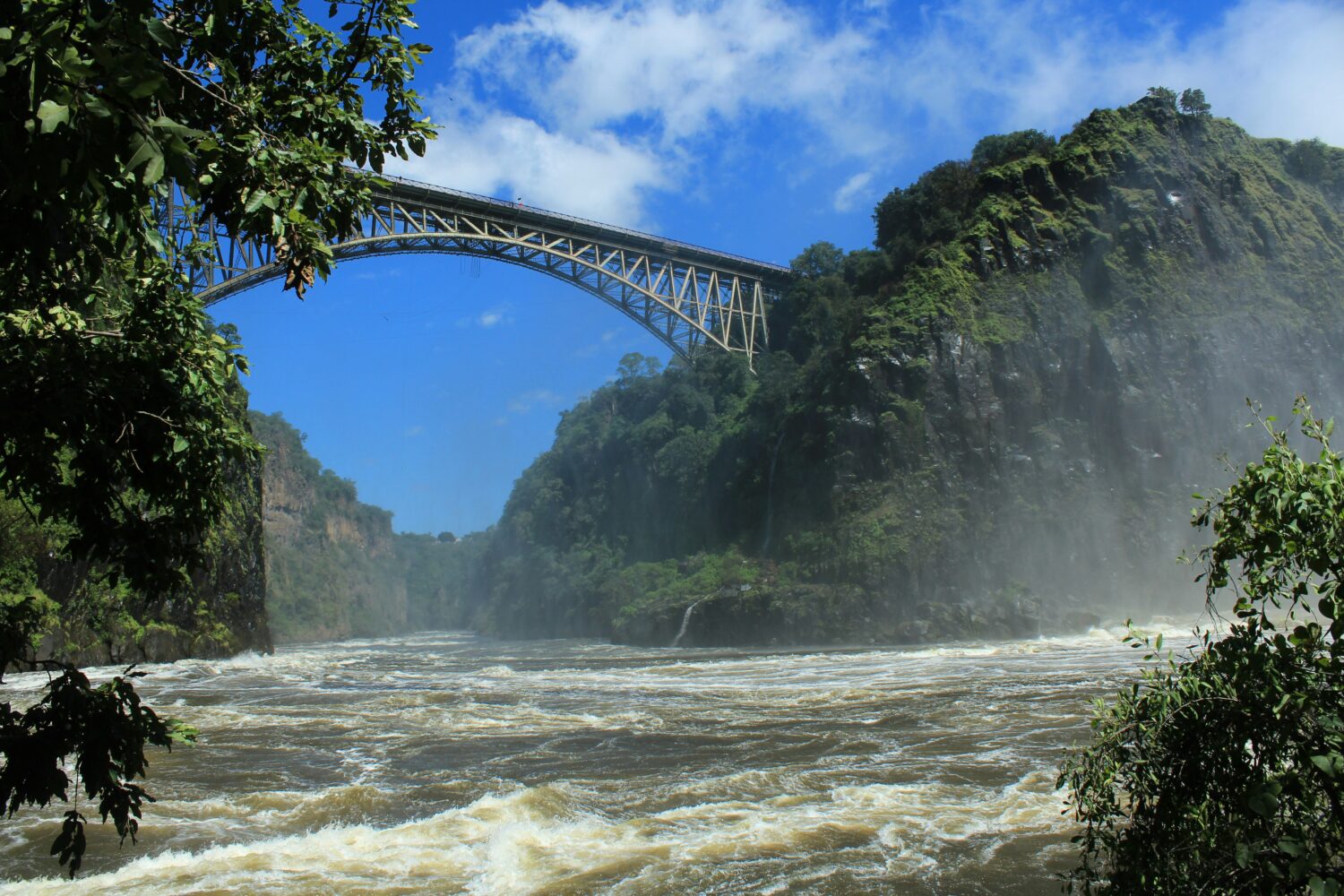
Some well-traveled safari-goers with the time and budget for an extended African journey do combine Uganda and Zimbabwe within a single, longer trip, precisely because the two destinations offer such genuinely distinct experiences rather than overlapping ones, pairing Uganda’s primate trekking and Nile scenery with Zimbabwe’s walking safaris and elephant-dense parks along the Zambezi. For most travelers working within a single, focused trip, though, the choice comes down to priorities: travelers whose primary goal is gorilla trekking, chimpanzee tracking, or a broader primate-focused itinerary should choose Uganda without hesitation, since Zimbabwe offers no comparable experience. Travelers prioritizing extended walking safaris, the highest possible elephant densities, and the specific appeal of Victoria Falls alongside Zambezi River wildlife will likely find Zimbabwe the stronger fit for that particular kind of trip.
What a Well-Built Uganda Itinerary Delivers
For travelers already leaning toward Uganda, the country’s real strength lies in combining several genuinely distinct wildlife experiences within a single, moderately sized country: strong Big Five-adjacent game viewing at Murchison Falls, one of Africa’s most dramatic river and waterfall settings, chimpanzee tracking accessible directly within that same park, and, for travelers extending further, mountain gorilla trekking in Bwindi, an experience with no real equivalent anywhere in southern Africa. Our guide to Big Five versus Big Seven safari planning in Uganda walks through exactly how these different wildlife experiences fit together into a well-paced Uganda itinerary, useful groundwork for travelers deciding how much of Uganda’s full range to include in their trip.
Travelers weighing how gorilla trekking specifically fits into an overall Uganda budget, given how much that single permit shapes the total trip cost, may also find our guide on private versus group gorilla trekking useful, since it breaks down exactly how trip structure affects overall cost in a way directly comparable to the private-versus-shared camp decisions that shape a Zimbabwe safari budget as well.
Making the Right Choice for Your Trip
Neither Uganda nor Zimbabwe is the objectively superior safari destination, and each rewards a genuinely different kind of traveler. Zimbabwe delivers exceptional elephant density, world-class walking safaris, and the singular spectacle of Victoria Falls, all built around a well-established, highly professional safari infrastructure. Uganda delivers a primate-trekking experience unmatched outside its immediate neighbors, a dramatically scenic river and waterfall setting, and a genuinely wide range of biodiversity packed into a compact, relatively easy-to-navigate country. Knowing which of these strengths matters most to your own travel priorities is the real decision worth making before booking either trip.
If Uganda’s combination of Murchison Falls wildlife, the Nile, and the possibility of gorilla trekking sounds like the trip you are after, our team can help you build an itinerary that makes the most of everything the country offers.
Ready to start planning a Uganda safari built around what makes the country genuinely distinctive? Reach out and let us help you design a trip around Murchison Falls, the Nile, and Uganda’s primate-rich forests.